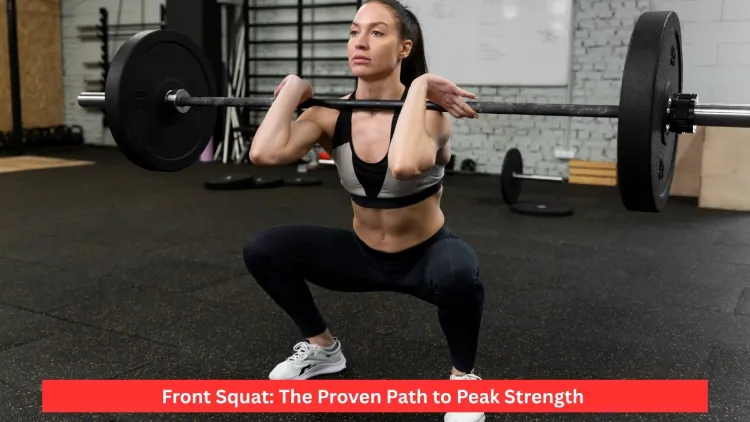

The front squat is a great lower-body movement that targets the quads, glutes, core, upper back, and postures, balance, and mobilizes the body. It’s great for building strength, improving athletic performance, and improving overall fitness when performed correctly, regardless of whether you are using a barbell, dumbbells, or a front squat machine.
- What is a Front Squat?
- Why the Front Squat Is So Popular
- Front Squat Benefits
- Front Squat Muscles Worked
- Front Squat Muscles Worked Table
- Who Should Do Front Squats?
- Front Squat With Dumbbells Muscles Worked
- Single Dumbbell Front Squat
- Front Squat With Dumbbells vs Barbell
- Front Squat vs Back Squat for Glutes
- Common Front Squat Mistakes
- Final Thoughts
- Frequently Asked Questions
What is a Front Squat?
A front squat is a compound lower-body exercise performed with the barbell over the front of the shoulders, as opposed to the top of the upper back. This posture will promote a tall back and engage the front of the thighs, buttocks, core, and upper back.
The front squat has a wide variety of applications in strength training, bodybuilding, Olympic lifting, CrossFit, and fitness. It has the added benefit of aiding balance, mobility & squat technique too, making it a great exercise for both beginners and experienced lifters.
The front squat can be used for the following purposes:
- Strength training
- Bodybuilding
- CrossFit
- Olympic weightlifting
- Athletic conditioning
- General fitness
Why the Front Squat Is So Popular
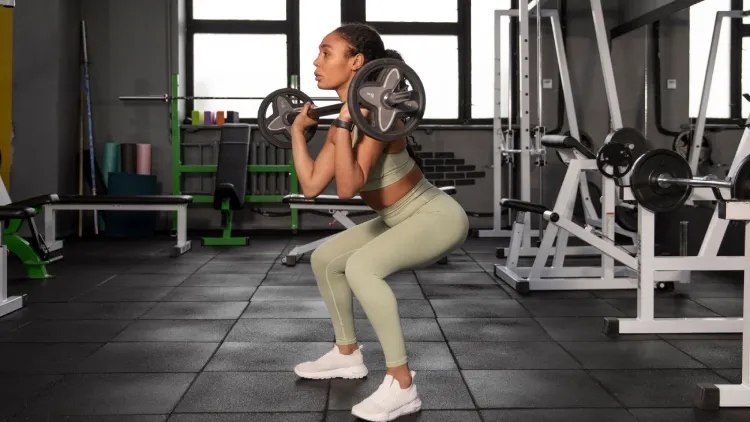
However, the popularity of the front squat has seen a huge surge in the past ten years. It is a common recommendation for fitness practitioners as a workout that yields great results with a beneficial form of movement.
There are many reasons why the palopean lift is popular with so many lifters:
- Builds stronger quadriceps
- Tightens the core muscles
- Develops posture and balance
- Enhances athletic performance
- Places less stress on the lower back
- Can complete normal and functional activities
Excellent Muscle Development
The front squat is a squat movement that works the quadriceps slightly more directly than other squat variations. Mechanically, there is an increased pull on the front of the thighs, which is designed to stimulate the development of skeletal muscle fibers, while the knees move more forward in front of the body and the torso remains held straight.
Benefits include:
- Increased quadriceps size
- Better lower-body strength
- Improved knee stability
- Enhanced leg definition
Superior Core Activation
Carrying the weight on the front of the body keeps the muscles in the abs, the obliques, and the muscles that stabilize the spine working as a unit throughout the movement. The front squat is also one of the best exercises that athletes can do for strong core function.
It helps improve:
- Core stability
- Balance
- Spinal support
- Overall lifting performance
Better Posture
Over time, poor posture can result from sitting too long, the weakening of the muscles in the upper back, and pulling heavy objects up with the back and neck instead of the shoulders and arms. Front squat helps to build an erect trunk position and to provide a skill set for how to keep the spine aligned under an external load.
Postural benefits include:
- Upright torso
- Neutral spine
- Stronger upper back
- Improved body alignment
Useful for Athletes
Front squats have become a well-known workout for football, rugby, basketball, and soccer players, athletes from martial arts, and track and field, as it aids in producing explosive power, acceleration, balance, and control.
Athletic improvements include:
- Greater explosive power
- Faster acceleration
- Better agility
- Improved coordination
Less Stress on the Lower Back
The front squat is generally used to generate less compression and shear than the heavy back squat because of the more upright body posture used. Though none of the resistance exercises is totally free from loading on the spine, lifting them properly ensures that the loading is distributed effectively.
Advantages include:
- Reduced forward lean
- Better spinal alignment
- Improved lifting mechanics
- It can be easier for many lifters
Transfers to Daily Activities
Lower body muscles are needed for standing up from a chair, walking up and down stairs, lifting grocery carts, and picking things up off the floor. Front squats build the movement pattern that comes across to these regular activities, making this exercise useful for any adult.
Everyday benefits include:
- Easier stair climbing
- Better balance
- Improved functional strength
Easier to move around for everyday needs!More mobility for everyday activities.
Front Squat Benefits
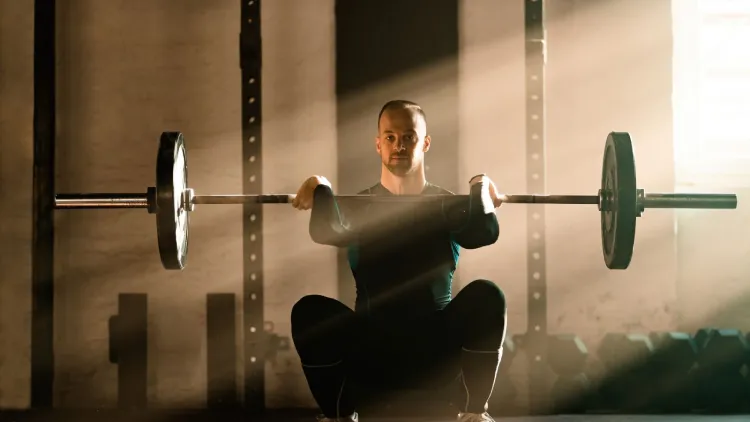
Strengthening your legs is just the beginning of the benefits of the front squat. A full-body exercise that enhances strength, co-ordination, stability, mobility, posture, and athletic skills.
Let’s take a deeper look at some of the main advantages of the front squat.
Builds Stronger Quadriceps
One of the best benefits of the front squat is outstanding quadriceps building.
The knees are pushed past the toes more during this movement than they are with back squats, as the torso remains vertical. This puts more emphasis on the quadriceps and is a great exercise to develop muscular thighs.
To enhance, there are the following benefits of stronger quadriceps:
- Faster sprinting
- Higher vertical jumps
- Improved knee stability
- Better cycling performance
- Increased lower-body strength
The front squat is more commonly used within a bodybuilding routine for leg exercises, as it is the most beneficial for the hypertrophy of the quadriceps.
Develops a Powerful Core
The front squat is a great exercise that can shape the core in a similar way to the squat can shape the legs.
Your core is constantly engaged:
- Rectus abdominis
- Internal obliques
- External obliques
- Transverse abdominis
- Erector spinae
Over time, this helps to enhance posture, stability during lifting, and all functional strength without endless abdominal isolation exercises.
Encourages Better Posture
The modern lifestyle is concerned with spending extended periods of time hunched over desks, which can lead to poor posture and round shoulders.
The front squat, of course, teaches:
- Upright chest
- Neutral spine
- Elevated elbows
- Strong upper back
- Proper head position
These positions during each rep will reinforce healthier movement patterns, which transfer to outside the gym each day.
Improves Athletic Performance
Athletes appreciate exercises that make them more powerful and increase their coordination.
The front squat is a beneficial exercise for building the following:
- Explosive leg drive
- Acceleration
- Jumping ability
- Change of direction
- Running efficiency
- Force production
These characteristics make it a popular exercise for a variety of sports performance training programs.
Supports Healthy Mobility
Good mobility is vital for efficient movements.
Frequently performing front squats will increase the flexibility in:
Greater mobility often translates into safer lifting mechanics and improved movement quality.
Builds the deltoids (upper back)
Many people think front squats work the leg muscles exclusively.
The upper back actually constantly stabilizes the barbell.
Muscles involved include:
- Trapezius
- Rhomboids
- Rear deltoids
- Rotator cuff stabilizers
This will help develop a stronger upper back and ultimately give your DNA better posture and a helping hand when performing movements such as deadlifts, rows, cleans, and overhead presses.
Promotes Balanced Leg Development
Be careful: Front squats can help to detect and slowly correct strength imbalances between the left and right legs.
Asymmetry is a factor that could be related to the power and effectiveness of the movements.
May be appropriate for Some Older Adults
With proper supervision and modified for the individual’s ability level, squat-type movements can be useful to preserve leg strength, balance, and independence as individuals get older. Squat variations use body weight or light loading, and younger people and older people generally use them as part of a complete workout.
Those with osteoporosis, arthritis, previous injuries, or chronic pain should see a qualified health care professional or physical therapist first before starting resistance training. The choice of exercise needs to be determined by each person’s health and mobility at all times.
Front Squat Muscles Worked
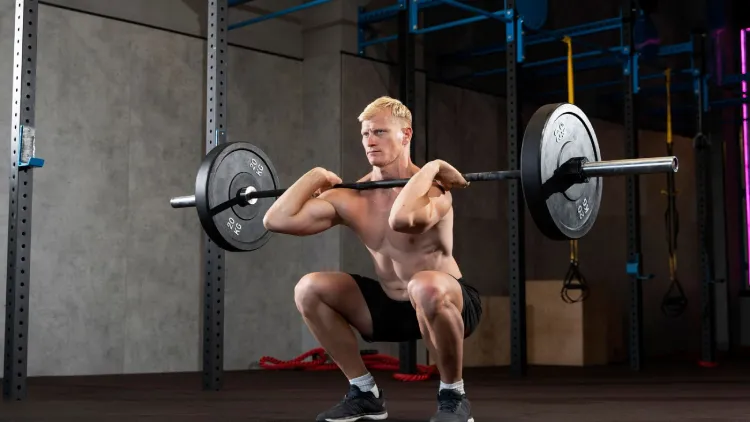
When taken in the context of the muscles used in the front squat, it can better be understood as to why this exercise is one of the best compound ones.
Instead of working a single muscle group, the front squat helps to simultaneously build several muscles.
Primary Muscles Worked
Quadriceps
The exercise is done mainly by the quadriceps.
It is important to note that the stretch of the knees during this exercise causes these muscles to work strongly, and because the torso is upright, it involves these muscles in the exercise.
Gluteus Maximus
The glutes not only produce strong hip extension but also aid in maintaining pelvic stability.
Great glutes work on the stable overall development of:
- Sprint performance
- Jumping power
- Hip stability
- Lower-body strength
Core
The core will resist a forward collapse in all reps.
Muscles that have to do with this include:
- Rectus abdominis
- Obliques
- Transverse abdominis
- Erector spinae
Secondary Muscles Worked
There are several more muscles that are used to help and support the movement.
These include:
- Hamstrings
- Hip adductors
- Calves
- Upper trapezius
- Rhomboids
- Deltoids
- Forearms
- Hip flexors
The combination of these muscles enables you to balance, hold the barbell, and execute every rep with control.
Front Squat Muscles Worked Table
| Primary Muscles | Supporting Muscles |
| Quadriceps | Hamstrings |
| Glutes | Calves |
| Core | Upper Back |
| Adductors | Trapezius |
| Hip Flexors | Shoulders |
| Abdominals | Forearms |
Who Should Do Front Squats?
A front squat can be used for a variety of fitness levels if done correctly and with the right weight.
It is widely recommended for treating:
- Experienced squatters learning squat mechanics
- Individuals with intermediate to advanced experience %)
- Olympic weightlifters
- CrossFit athletes
- People who strive for quadriceps development and growth
- Team-sport athletes who are interested in gaining power and speed
- People who work out at the gym for recreation and want well-rounded lower body workouts
Individuals might find that they require adjusting the exercise or selecting a different exercise version. For instance, if you lack wrist mobility, you can perform a cross-arm grip or lifting back movements with dumbbells, or maybe start with a goblet squat or front-loaded squats with dumbbells and then migrate to one with a barbell.
People with arthritis, osteoporosis, or chronic joint pain should consult with their health care professional to come up with a safe squat variation and training level for their particular condition.
Front Squat With Dumbbells Muscles Worked
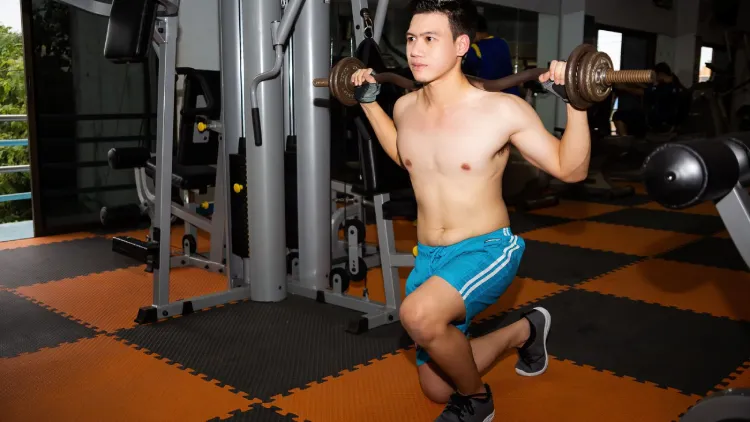
The dumbbell front squat targets muscles almost identical to those that the front squat with a barbell does.
Primary muscles include:
- Quadriceps
- Glutes
- Core
- Hip adductors
Supporting muscles include:
- Hamstrings
- Calves
- Deltoids
- Forearms
- Upper back
- Trapezius
Use of separate dumbbells imposes greater stabilisation demands, making it a good choice to promote improved balance.
Single Dumbbell Front Squat
Another dumbbell exercise is the single-dumbbell front squat.
Instead of two dumbbells, have one against your chest or on one shoulder.
Benefits include:
- Increased core activation
- Improved anti-rotation strength
- Better unilateral stability
- Beginner-friendly technique
- Ideal for at-home exercises
Some trainers even employ this twister to prime their clients for front squat with high weights.
Front Squat With Dumbbells vs Barbell
When comparing front squat with dumbbells vs barbell, each variation offers distinct advantages.
| Dumbbells | Barbell |
| Easier for beginners | Better for maximal strength |
| Lower wrist stress | Greater loading potential |
| Better balance training | More efficient progression |
| Home gym friendly | Olympic lifting specific |
| Improves coordination | Ideal for advanced lifters |
If your goal is learning a technique or training at home, dumbbells are an excellent option. For maximum strength and athletic performance, the front squat with barbell remains the gold standard.
Front Squat vs Back Squat for Glutes
Many lifters ask which exercise is better for building glutes.
The answer depends on training goals.
The back squat tends to generate more glute activation for the following reasons:
- More weight can be lifted with heavier weights
- Hip flexion is increased
- Further extension of the hips is needed
The squat is currently still effective in developing the glutes, but they focus a bit more on the quadriceps.
Combining both exercises can yield the greatest body influence for the bottom side of the body.
Common Front Squat Mistakes
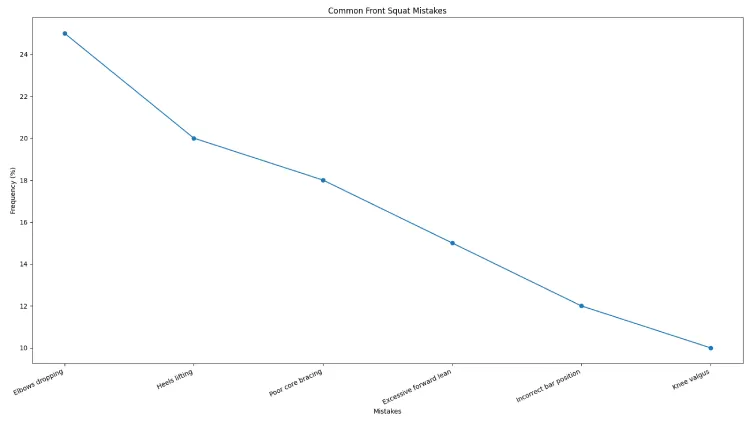
- Elbows down: Elbows are not allowed to droop and let the bar roll forward.
- Leaning forward: Keep your chest upright and tighten your abdomen.
- Knees caving in: Do not have your knees aligned inwards with your toes.
- Excessive weight: Control technique before an increase in weight.
- Front rack position: Place the bar properly on the shoulders and have a solid grip.
- Not being at a proper depth: Squat roughly to parallel with good technique.
Final Thoughts
The front squat is a very effective movement to develop leg strength, core stability, and athletic performance. To obtain maximum effect, whether you are performing a barbell front squat, front squat with dumbbells, or any other variation you are going to perform, ensure that the movement is done properly. Begin with a light weight, practice proper technique, and add weight when confident. If performed regularly, the front squat can be one of the most helpful and important exercises in your training program.
Frequently Asked Questions
1. Does it require more work to do the front squat than the back squat?
Yes. Front squat requires much more core activation, balance, and mobility, making it tougher for a lot of people.
2. What muscles does the front squat work?
The front squat works the quads, glutes, core, upper back, and hamstrings.
3. Can beginners do front squats?
Yes. Newbies should begin by performing a lightweight front squat utilizing dumbbells to ensure they are performing the exercise with correct form.
4. What is the most important benefit of performing a front squat?
Front squats promote more leg strength, improved posture, core stability, and better athletic ability.