
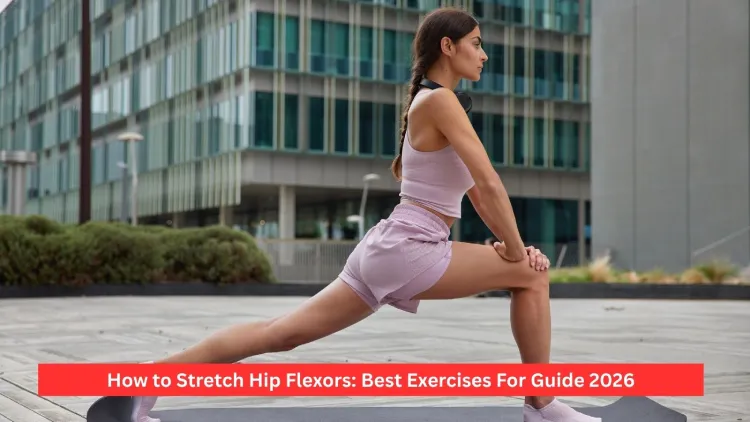

For those who have limited time, here is the crux: Working on the hip flexor stretches is very critical if you sit consistently, experience stiffness in the hips, lower back, or when you stroll or exercise. There are a few common reasons that people develop tight hip flexors: 1) too much time sitting down, 2) weak glutes, and 3) not getting enough variety in movements. Each holding stretches, such as kneeling lunges, couch stretches, and active glutes, can make a big difference in increasing flexibility, decreasing discomfort, and keeping you feeling better postured. While it takes consistent practice for most to achieve improvement, it can be done within 2-4 weeks.
- 1. Kneeling Hip Flexor Stretch
- 2. Low Lunge Stretch
- 3. Couch Stretch
- 5. Hip Extension Stretch or Glute Stretch
- 5. Glute Bridge (Active Release Movement)
- 7. Piriformis stretch bent over
- Hip Flexor Stretch (Warm-Up Movement) #7
- How many times should hip flexors be stretched?
- Some common errors that you should avoid
- Final Thoughts
- Frequently Asked Questions
1. Kneeling Hip Flexor Stretch
When getting started on learning how to stretch hip flexors properly and safely, the kneeling hip flexor stretch can come in quite handy.
How to do it:
- Start in a half-kneel.
- Rest one knee on the floor and the other foot in front of you.
- Core is engaged, body is also upright.
- Push your hips forward slowly, but do not lean your upper body.
- Maintain stretch on each side for 20-40 seconds.
Why it works:
It specifically stretches the hip flexor muscles, particularly the iliopsoas group, where the tension is usually felt. In stretching hip flexors, this exercise allows you to stretch the hip flexor in a controlled and stable manner.
What you may feel:
A good, but not too harsh, stretch of the front of the hip. If you feel it in your lower back, it is typically indicative of poor posture.
Additional insight:
One of the most common problems with tight hips is lower back compensation. That is why folks who have desk jobs and sit most of the time tend to suffer from back pain. This stretch will help balance out the hip flexors so that we can learn how to do this movement.

2. Low Lunge Stretch
The low lunge is another variation of the kneeling stretch, and a very effective way to stretch the hip flexors deeper.
How to do it:
- Place one foot in front of the other, into a lunge.
- Lower back knee onto the ground.
- hips stay level as you maintain a lifted chest.
- Gently, push hips forward.
Why it works:
This exercise widens the hip joint, stretches the hip flexors, and the surrounding connective tissues. This movement can help increase the mobility and posture of the hip flexors, at the same time when mastered in practice.
It alleviates the following symptoms:
Hip flexor tightness is associated with difficulty getting up from sitting. This routing directly frees up that restriction.
Important note:
Avoid leaning forward. It is not about hip compression, but rather hip extension.
3. Couch Stretch
The couch stretch is among the deepest and most effective stretches to understand how to stretch hip flexors for long-term flexibility.
How to do it:
- Put one foot flat against a wall or couch, behind you.
- Step the other foot forward into a lunge stance.
- Hold your waist up.
- Squeeze the pelvis forwards.
Why it works:
This will keep the hip flexors in a deep stretch – particularly important for those who have prolonged sitting.
Real-life relevance:
The leading cause of tight hip flexors is sitting for a long period of time. It is an acute lengthening stretch to undo the adaptive shortening.
Caution:
Start slowly. This is a very strenuous stretch, and should be added slowly when you start stretching your hip flexors.
5. Hip Extension Stretch or Glute Stretch
Great choice for travelling every day and around the office.
How to do it:
- Stand upright.
- Step back foot into split into a split.
- Keeping the front knee slightly flexed.
- Slowly move the pelvis forward.
Why it works:
Practices hip flexor stretching without getting onto the floor.
Practical benefit:
This stretch is for quick resetting, as it can reduce hip tightness daily.
Connection to symptoms:
This can occur as hip flexor tightness, which mimics stiffness or pulling in the front of the thigh. This motion is used to slowly let go of the tension.
5. Glute Bridge (Active Release Movement)
This is a vital piece to the puzzle if you want to know how to stretch the hip flexors properly, though this is not a direct stretch.
How to do it:
- Lie on your back.
- Keep knees bent, raise feet to the floor.
- Press the buttocks with the buttock muscles.
- Maintain for about 2 seconds, then lift down.
Why it works:
Hip flexor tightness can be caused by weak glutes. But if glutes aren’t activated, then the hip flexors work too hard and become tight.
Key insight:
Many times, hip tightness is not only the muscle that is shortened, but also the imbalanced muscle. Therefore, the best hip flexor stretches should be accompanied by strengthening other muscle groups.
7. Piriformis stretch bent over
Passive stretch helps to decrease deep tension.
How to do it:
- While lying down flat, lie close to a bed or high surface.
- Bring one knee to one’s chest.
- With the other leg hanging off the surface.
- Capture and alternate sides.
Why it works:
This position will help the hip joint open with the use of gravity.
When to use it:
Perfect for pushing back stress on the body for the night or after excessive sitting.
Pain interpretation:
Discomfort that is acute and not stretching could be a sign of overuse of hip flexor muscles, which is common in runners or cyclists.
Hip Flexor Stretch (Warm-Up Movement) #7
This is very important for athletes or those getting ready for activities.
How to do it:
- Get into a lunge stance.
- Bead’s hips gently rotate back and forth.
- Repeat controlled motion.
Why it works:
Dynamic, or moving, exercise is used to warm up the hip flexors for deeper exercise before static movement.
Role in flexibility:
It helps in enhancing blood flow and eliminates stiffness, making hip flexor stretches more effective overall.
How many times should hip flexors be stretched?
It is important to remember that more is not the route to better results from how to stretch hip flexors – consistency is key. Here are some factors: tight hip flexors form gradually due to the effects of sitting and inactivity; therefore, they must be stretched regularly & repeatedly to get better.
- Short sessions daily work best: Even 5–10 minutes per day can make all the difference to ease up tightness and enhance mobility.
- Warm-Up Before Exercise: Light Dynamic Movement towards Warm-Up Hips.
- Following exercise: Implement slower static stretches to increase flexibility and/or to release tension.
- Expected results: After 2-4 weeks, most individuals experience an increased range of motion and relaxation of tension with regular practice.
The principles of doing eccentric hip extensors properly will involve consistently practising them over time, not necessarily at a high volume on a single day.

Some common errors that you should avoid
Small mistakes will either hinder or exacerbate tightness when knowing how to stretch the hip flexors. The majority of the problems are because of haste or lack of quality movement in place of controlled movement.
Using the hips in the arch too high, not the lower back: This is the most frequent error. Individuals think that they are stretching the hip flexors, but they really are compressing the lower back. Do NOT move from the BACK.
- Breathing is actually breathing: When your body is relaxed, so are the tight hip flexors. Your muscles remain tight if you do not breathe (taking in air) – you can only stretch so much. Slow breathing is effective in releasing tension.
- Moving too fast: If it moves too fast, too deep, it can cause muscle guarding – contracting rather than relaxing. Incorporating hip flexor stretching exercises, try to make moves slow and steady.
- Failure to plan for muscle imbalance: When the hip flexors are tight, so are the glutes. A tightness will reappear if you only extend without strength exercises.
- Failure to perform warm-up exercises: Cold muscles are not so stretchy. The elimination of a couple of light dynamic movements before stretching makes the routine safer and more effective.
These errors can hinder improvement over the course of time and prevent the hips from becoming tighter.

Final Thoughts
Restoring balance in the body is more important than doing some hip flexor stretches, and learning how to do this is not as simple as stretching your right hip flexor a handful of times. Tight hip flexors are frequently the result of not varying movement patterns, weak supporting muscles, and extended sitting. Stiffness in the front part of the hip, pain in the lower back, impaired function, and sometimes pain when walking or standing.
Other strengthening exercises are active, such as glute bridges, and take the form of regular stretching to reverse the tension over time. Most people experience a significant improvement in hip flexor health, mobility, and comfort within a matter of weeks after consistently practicing the stretches. Do it consistently and correctly for pain relief, at least for sport, or when trying to posture up.
Frequently Asked Questions
1. How to Loosen Tight Hip Flexors?
There are times when you need to stretch and exercise your hip flexors to a state of release. To stretch lengthwise and give balance exercises, movements such as kneeling hip flexor, low lunges, couch stretch, and the glute bridge may be helpful. This is a critical aspect of hip flexor flexibility when doing non-pilates developmental exercises.
2. How long will it take the hip flexor tightness to dissipate?
Most people see improvement in 2–4 weeks with regular exercise. But it’ll take longer in the case of prolonged sitting or sitting with a bad posture. Practicing how to stretch hip flexors requires regular daily stretching in order to get the most out of it.
3. Do tight hip flexors lead to back pain?
A low pelvis will certainly cause lower back tension, yes, a tight hip flexion will pull the pelvis forward. This frequently results in discomfort or stiffness. This strain can be minimized with proper stretching and is a critical component of the safe stretching of hip flexors.
4. Do hip flexors release with walking?
Walking will help to improve hip movement a little, but this will only have limited effects and generally is not sufficient to release hip tightness. It is best done in conjunction with directed stretches. Walking should be used to supplement means, not be your only solution, if your ultimate desire is to stretch your hip flexors.



6 thoughts on “How to Stretch Hip Flexors: Best Exercises For Guide 2026”
When some one searches for his required thing, thus he/she wishes to be available that in detail,
therefore that thing is maintained over here.
Thank you! We always try to provide detailed and helpful information for everyone.
Wonderful, what a web site it is! This weblog provides helpful facts to us, keep it up.
Thank you so much for your kind words! We’re glad you found the information helpful.
I really like your blog.. very nice colors & theme. Did you
create this website yourself or did you hire someone to do it for you?
Plz answer back as I’m looking to design my own blog and would like to know where u got this from.
cheers
We really appreciate your feedback! Yes, this website is designed by our company. We also offer professional web design services, so if you’re planning to build your own blog, feel free to reach out, we’d be happy to help.