
The trapezius is a giant upper back muscle that helps move the shoulders, stabilize the neck, hold the head in position, and contribute to the strength and stability of the upper body. From building muscle to improving posture and sports performance, there are exercises for the trapezius muscles that can help. While the trapezius muscle is commonly known for shrugging, it actually has several functions. You will learn the most effective trapezius workouts, correct exercises, common chopper mistakes, and exercise tips.
- What is the trapezius?
- Benefits of Trapezius Exercises
- Warm-Up for training trapezius
- Best Trapezius Exercises
- Sample Trapezius Workout
- Common mistakes while performing trapezius exercises
- Training Tips for Bigger Traps
- Beginner Trapezius Workout
- Advanced Trapezius Workout
- Conclusion
- Frequently Asked Questions
What is the trapezius?
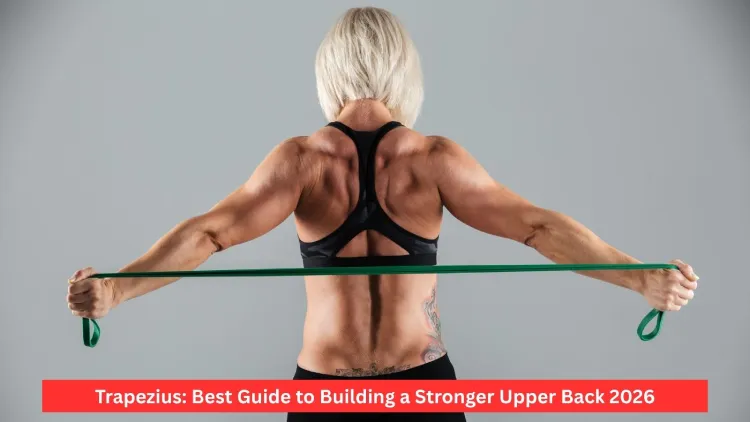
Trapezius, or “traps,” is the name given to this large diamond-shaped muscle, which stretches from the base of the skull down through the upper back and across the shoulders. It’s key to the movement of the shoulder, supports the neck, and affects the posture and stability of the upper body.
The trapezius is divided into 3 parts:
- Upper trapezius: Elevates the shoulder and aids in neck movement.
- Middle trapezius: Draws shoulder blades toward each other and helps maintain good posture.
- Lower trapezius: A stabilising and lowering action of the shoulder blades during overheads.
Each section works a specific part of the trap, so a balanced trapezius workout will incorporate exercises for the upper, middle and lower traps to achieve strength and good shoulder function.
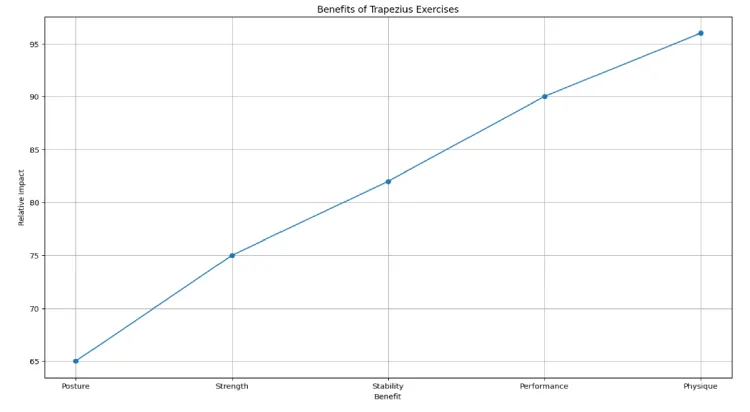
Benefits of Trapezius Exercises
Applying a trapezius routine to your routine of workout several benefits comes with several benefits, aside from enlarging the muscles. Good traps support and strengthen shoulder function, and allow for better functionality of the upper body for both sports and day-to-day activities.
Improves Posture
Well-developed trapezius muscles maintain the shoulder blades held tight against your back, and your spine in proper alignment. This can help prevent slouching and help you develop better posture, particularly if you sit at a desk for a starting while.
Builds Upper Body Strength
Important functions of the trapezius are pulling, lifting, and carrying heavy loads. Building strength in this muscle may help you when it comes to things such as rows, deadlifts, and pull-ups.
Enhances Shoulder Stability
Your shoulder blades are more stable when you have healthy traps, and your shoulders are easier to move. This can help to enhance the quality of movement and lower the risk of training-related injuries.
Supports Athletic Performance
Upper-back muscles are essential for throwing, climbing, rowing, and other sports-related activities. Properly trained trapezius muscles can enhance grip, power, and athletic abilities.
Creates a Powerful Physique
Good structure creates a more round, more muscular look for the upper body. They provide balance to the entire body by giving substance to the upper back and neck, whilst highlighting the shoulder fit.
Warm-Up for training trapezius
Warm up your trapezius for 5-10 minutes before starting to work it out. A good warm-up session circulates the blood, helps loosen up the shoulder mobility, and reduces the likelihood of strains or injuries when working out. It also enables you to do each exercise under better control and technique.
The following warm-ups are recommended:
- Arm circles
- Band pull-aparts
- Shoulder rolls
- Cat-cow stretches
- Scapular push-ups
- Light dumbbell shrugs
Perform each movement using controlled movements for 30-60 seconds. Once you have loosened up your shoulders and upper back, you will know you’re ready to start working out.
Best Trapezius Exercises
1. Dumbbell Shrugs
Dumbbell shrugs are one of the top exercises for developing the upper trapezius. They enable each side of the body to function independently, which helps to develop muscle balance and strength. Lift up your shoulders straight instead of rolling the shoulders.
How to Perform
- Place dumbbells in each hand.
- Do not bend your arms and keep your chest up.
- Raise your shoulders to your ears as high as possible.
- Check for and abort any traps at the top if they are there.
- Slowly lower the weight back down to the starting position.
Sets: 3–4
Reps: 10–15
2. Barbell Shrugs
Barbell shrugs allow you to work with heavier weights than dumbbell shrugs and are great for providing a way to grow that the traps grow larger and stronger. Move gradually, thus focusing on the muscle that is being engaged.
Steps
- Grab a barbell so that your fingers are facing each other and over your hands.
- Your feet should be shoulder-width apart.
- Maintain an up and core positioned posture.
- Raise your shoulders towards the ceiling.
- Squeeze your traps during the second set.
- Reduce the height of the toys under control.
Sets: 4
Reps: 8–12
3. Farmer’s Carry
A functional training exercise designed to train the trapezius muscle effectively as well as train the grip, core stability, and overall body control. It replicates various actions such as carrying a heavy load or suitcase, or walking.
Instructions
- Hold heavy weights next to the sides.
- Keep your back straight and your shoulder blades retracted.
- Move slowly in good posture!
- Tighten your abs and don’t lean in.
- Then walk or run for the required length and then rest.
Distance: 20–40 meters
Rounds: 3–5
4. Face Pulls
Face pulls help strengthen the middle and lower trapezius and enhance shoulder health & posture. This is a good exercise for individuals who sit for extended periods.
Steps
- Secure a rope to the high cable station of a cable machine.
- Hold the rope in both of your hands.
- Draw the rope in towards your face.
- Tilt your elbows up all the way.
- Tighten the shoulder blades towards each other.
- Slowly return to the starting position.
Sets: 3
Reps: 12–15
5. Bent-Over Dumbbell Reverse Fly
The bent-over reverse fly is used for strengthening the back of the deltoid and the middle part of the trapezius. Controlled movement with light and moderate weights.
How to Do It
- Sit up straight from the hips.
- Grip a dumbbell with both hands, below chest.
- Keep both arms out to the side.
- Take a short break at the top.
- Slowly lower the dumbbells again.
Sets: 3
Reps: 12–15
6. Upright Rows
Upright rows build strength in the upper back muscles, or trapezius, and shoulders. If the shoulder feels uncomfortable, use a comfortable position, but don’t lift the weight through the shoulder too high.
Instructions
- Grab a barbell or dumbbells in front of the thighs.
- Lift the weight towards the chest.
- Leaders to move with elbows moving.
- Pause briefly.
- Reduce weight under control.
Sets: 3
Reps: 10–12
7. Cable Shrugs
Because the cable shrug offers constant tension to the trapezius muscle throughout the exercise, it is a great exercise to consider when you can’t fit dumbbells or a barbell into your workout.
Steps
- Facing a low cable machine.
- Grab the cable handle with two hands.
- Keep your arms extended.
- Shoulder shrug upwards.
- Maintain the raise for 1 second.
- Lower slowly.
Sets: 3
Reps: 12–15
8. Rack Pulls
Rack pulls are a compound lift that heavily engage the upper trapezius muscles, in addition to the back, glutes, and hamstrings. The range of motion is shorter than a deadlift, so heavier weights might be able to be lifted.
How to Perform
- Barbell on rack, shoulder-high to knees.
- Use both hands to hold the bar tight.
- Lift the chest, maintain an upright back position.
- Stand up by straightening out your legs at both hips and knees.
- Small springs at the top of traps; squeeze them.
- Carefully lower the bar as you’re doing.
Sets: 4
Reps: 5–8
9. Scapular Pull-Ups
Scapular pull-ups overdevelop the lower trapezius muscles, which are imperative for shoulder blade control but do not require a full pull-up. They are great for novices and sportsmen who want to enhance pulling strength.
Steps
- Do pull-ups on straight arms from a pull-up bar.
- Don’t let the elbows move away from each other.
- Shrug the shoulder blades to the ground and inwards.
- Hold at the summit for some time.
- Slowly come back to the starting position.
Sets: 3
Reps: 10–12
10. Prone Y Raise
Prone Y Raise is one of the Ideal isolation lower trapezius counterparts. It helps stabilize your shoulder, boosts your posture and muscular balance, which is perfect to add to your upper body workout.
Instructions
- Get onto an incline bench facing forward on your stomach.
- Will carry light dumbbells or do it without weights.
- Place your dominant hand over your shoulder with your other hand up to the sky and raised, making a “Y” shape.
- Bring your thumbs together, with the pressure on the palms pointing up.
- Hold your position for a few seconds at the top.
- Slowly and controlled reduction of the arm.
Sets: 3
Reps: 12–15
Sample Trapezius Workout
| Exercise | Sets | Reps |
| Dumbbell Shrugs | 4 | 12 |
| Face Pulls | 3 | 15 |
| Barbell Shrugs | 4 | 10 |
| Farmer’s Carry | 4 | 30 sec |
| Reverse Fly | 3 | 15 |
| Prone Y Raise | 3 | 15 |
Common mistakes while performing trapezius exercises
The right techniques are just as critical as the right exercises! Here are some common mistakes to avoid while training the trapezius, to even the most intensive training and decrease the risk of injury.
During shrugs, roll shoulders straight up and down – avoid rolling, as this offers little benefit and can unnecessarily stress shoulder joints.
- Overloading: When this occurs, the student may not be using the proper form or is not undersizing the loads to optimize muscle activation. Pick a light weight and concentrate on the form.
- Movement of wrist/hand swing the body: Do not rely on body momentum for lifting the weight. Maintain slow, controlled movements (Let the trapezius do most of the work)
- Doing partial reps: Full range of motion reps – do full reps where the technique allows muscle to engage the most.
- Not training the lower traps: While more focus is typically placed on the upper traps, the lower ones are just as important. Add some exercises for the middle and lower portion of the trapezius, such as adding face pulls and prone Y raises.
- Poor posture when performing lifts: Without compromising the intent of the lift, maintain a straight back, core engaged, and a lifted chest for all lifts.
- Going too fast: With slow, controlled reps, you activate the muscles and decrease the risk of injuries.
- Warm-ups: Get your shoulders and upper back more mobile before you train and avoid muscle strains.
Training Tips for Bigger Traps
Creating tighter and more precise traps requires a steady approach, technique, and progressive overload.
For best results, bear the following points in mind:
- Perform the exercise in a slow, controlled manner rather than trying to rush through multiple sets.
- At the top of each repetition, squeeze the trapezius, building the most contraction you can.
- Add weight slowly as you get stronger and continue to maintain good form.
- Train your traps 1–2 times per week and allow enough time for recovery between workouts.
- To maximize muscle activation, make sure to use correct form on all exercises.
- Complete the range of motion on each rep for increased strength and muscle building.
- Provide exercises that work upper, mid, and lower trapezius for balanced development.
- Build your training with proper protein, water, and rest to aid recovery.
Beginner Trapezius Workout
For beginners to strength training, begin with a basic workout plan to learn proper form and then progressively add weight. Do this exercise session 1-2 times a week with 60-90 sec of rest after each set.
- Dumbbell Shrugs – 3 × 12
- Face Pulls – 3 × 15
- Bent-Over Reverse Fly – 3 × 12
- Farmer’s Carry – 3 × 20 meters
This is a very easy workout that will strengthen the trapezius, enhance posture, and create a strong base for more challenging exercises.
Advanced Trapezius Workout
Expert practitioners aiming to gain greater muscle and strength could benefit from the use of the following routine, which sacrifices isolation for heavy compound exercises to work on every section of the trapezius.
- Rack Pulls – 5 × 5
- Heavy Barbell Shrugs – 5 × 8
- Face Pulls – 4 × 15
- Cable Shrugs – 4 × 12
- Prone Y Raises – 4 × 15
- Farmer’s Carry – 5 rounds
Challenge with difficulty, proper form, and step up resistance over time. Doing this exercise is regular will enhance the strength and thickness of the traps along with providing overall back strength and shoulder stability.
Conclusion
A strong trapezius helps make your shoulders stable, strengthens the upper body, and helps to maintain good posture. Shrugs are a good example of an exercise, but you should have exercises that target the upper, middle, and lower parts of the muscle. With correct technique and continuous training, the use of exercises such as face pulls, farmer’s carries, reverse flies, rack pulls, and Y raises can lead to stronger, healthier traps, as well as performance and aesthetic benefits.
Frequently Asked Questions
Which exercise will give the quickest growth to trapezius?
The trap posture is maximally developed during heavy shrugs on a barbell and during rack pulls (along with face pulls and farmer’s carries).
How often should I work trapezius?
Most people would receive benefits from training trapezius 1-2 times a week, with a minimum of 48 hours in between each workout.
Is it possible to work out with traps using ONLY dumbbells?
Yes. The dumbbell shrug, dumbbell reverse fly, dumbbell farmer walks, and dumbbell Y raises are great exercises for the trapezius muscle that can be done with only dumbbells.
Do face pulls train the trapezius?
Yes. I’m almost sure that the face pulls are mainly aimed at the middle and lower traps and stimulate the rear shoulder and rotator cuff to a small degree.