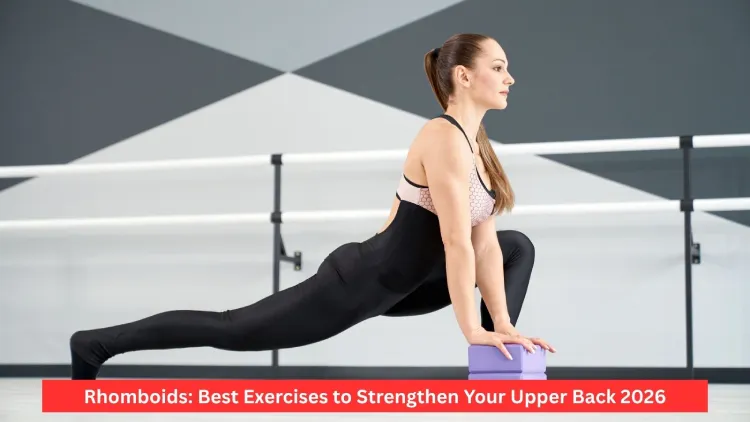

You need to strengthen the rhomboids, which are the upper back muscles, to help you achieve correct posture, shoulder stability, and enhance pulling power. They are not usually considered to be the first things to strengthen for training; however, they can become weak and lead to poor posture. The best rhomboid strengthening exercises can enhance upper-body performance and help maintain healthy shoulder movement. Find out which are the best exercises for your rhomboids, how they should be done, and some rhomboid training tips and advice to keep you safe and maximise your build of the rhomboids.
- What are the Rhomboids?
- Benefits of Strengthening the Rhomboids
- Signs Your Rhomboids Need More Attention
- Warm-Up Before Rhomboid Exercises
- Best Rhomboid Exercises
- Sample Rhomboid Workout Routine
- Stretching the Rhomboids
- Self-Massage for Tight Rhomboids
- Common Causes of Rhomboid Tightness
- Can Poor Posture Affect the Rhomboids?
- Are Rhomboids Difficult to Build?
- Progressive Overload
- Common Mistakes
- Recovery Tips
- Is Rhomboid workout?
- Rhomboid Pain and Exercise
- Recognizing Weak Rhomboids
- Understanding Rhomboid Strains
- Sleep and Recovery
- Nutrition for Stronger Rhomboids
- Tips for Faster Progress
- Safety Tips
- Conclusion
- Frequently Asked Questions
What are the Rhomboids?
There are two rhomboids in the upper back between the shoulder blades. There are two: the rhomboid major and rhomboid minor. They are congruently used to pull the shoulder blades towards the back and stabilize the shoulder and help with good posture.
Whenever you do a rowing exercise, or pull something toward the body, or squeeze your shoulder blades together, your rhomboids are doing their job. These muscles are involved in numerous activities of daily living and in exercises performed in the gym; strengthening these muscles optimizes upper body function.
Muscle fatigue, poor posture, poor pulling strength, and rounded shoulders can all result from weak rhomboids. Well-developed rhomboids, however, produce an upper back that is balanced and stable for better athletic performance and daily living.
Benefits of Strengthening the Rhomboids
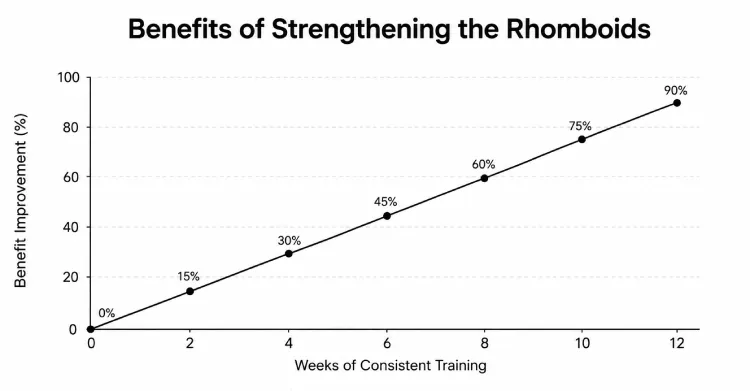
The rhomboids are trained for a lot more than just making your upper back stronger. These muscles are important in the mechanics of the shoulder, posture, and in the quality of the movement.
Improves Posture
Better posture is one of the foremost advantages of strengthening your rhomboids. The well-developed rhomboids draw the shoulders backwards and make it easier to keep the spine upright all day long.
Increases Upper-Body Strength
The rhomboids play an important part in many pulling exercises. Building them enhances rowing power, pull-ups, deadlifts, and many other aspects of fitness.
Enhances Shoulder Stability
The rhomboids lie between the shoulder blades and are important for controlling their stability in pressing and pulling actions. Greater stability minimises avoidable change of movement and will enable the other muscles to deliver force more effectively.
Reduces Muscle Imbalances
The lifestyle of modern times tends to cause tightness in the chest muscles alongside weakness and lack of strength in the upper-back muscles. Rhomboid exercises revitalize the balance of muscles by strengthening back muscles.
Supports Athletic Performance
Swimming, baseball, racquet sports, rowing, wrestling, and climbing are sports where better pulling power and shoulder control are gained from stronger rhomboids.
Signs Your Rhomboids Need More Attention
Most people will experience an increase in problems with either their posture or their shoulders due to their weak rhomboids.
Common signs include:
- Rounded shoulders
- Difficulty keeping the chest upright
- Shoulder blades sticking outward
- Poor rowing strength
- Fatigue during pulling exercises
- Upper back tightness after sitting
- Difficulty squeezing the shoulder blades together
While not necessarily a sign of injury, these signs can suggest that strengthening and mobility work of the rhomboids may be helpful.
Warm-Up Before Rhomboid Exercises
A good warm-up can warm the muscles to prepare for activity and decrease the risk of injury.
Before exercises, practice an increased blood flow for 5-10 minutes. You can do a bit of gentle exercise and then do dynamic motions of the shoulders.
A good warm-up should include the following exercises:
- Arm circles
- Shoulder rolls
- Band pull-aparts
- Scapular wall slides
- Cat-cow stretch
- Resistance band rows
- Light face pulls
The end point is to avoid fatigue before your principal workout and remain active in the rhomboids.
Best Rhomboid Exercises
1. Seated Cable Rows
One of the best cable row exercises to develop stronger rhomboids is the seated cable row. Constant cable resistance keeps the muscles under constant tension throughout each rep.
How to Perform
- Lying on the machine, keep your feet stable.
- Maintain an upright chest.
- Hold the handle in a neutral position with a neutral grip.
- Draw the handle down towards the lower ribs.
- Push your shoulder blades together.
- Slowly move back to the starting position.
Benefits
- Excellent rhomboid activation
- Improves posture
- Builds upper-back thickness
- Easy for beginners
- Adjustable resistance
2. Bent-Over Dumbbell Rows
Bent-over rows build the rhomboids, simulate the lat weight row, build the traps, strengthen the posterior delts, and work the biceps.
Steps
- Hold dumbbells with both hands.
- Lean over but keep your spine straight.
- Bring weights towards the waist.
- Stop, then press the shoulder blades together.
- Lower under control.
Tips
Avoid using momentum. Take advantage of your rhomboids; let them do most of the work and not the weights.
3. Chest-Supported Rows
With the chest-supported rows, pressure is taken off the lower back and focus can be placed on the rhomboids.
Why They’re Effective
Your chest is pressed against the bench,h which reduces the amount of body movement, which will increase muscle activation.
Instructions
- Stretch your arms out on an inclined bench with your face down.
- Carry dumbbells under your shoulders.
- Pull upwards and squeeze your shoulders.
- Lower slowly.
The exercise is great for weight newbies and intermediate weightlifters alike.
4. Resistance Band Pull-Aparts
Band pull-aparts are a simple but quite effective exercise for enhancing floppy rhomboids.
How to Perform
- Hold a resistance band at shoulder level.
- Do not have your elbows bent.
- Stretch the band.
- Pull shoulder blades in toward the spine.
- Slowly return.
Benefits
- Improves posture
- Strengthens and stretches the upper back and shoulders
- Great before workouts
- May be played virtually anywhere in the world!
5. Face Pulls
Face pulls target several upper back muscles and stress specifically the rhomboids and back of shoulders.
Proper Technique
- Attach a rope to a cable machine.
- Pull rope in toward face.
- Elbows should be raised.
- Squeeze the shoulder blades.
- Return slowly.
Face pulls are one of the best exercises to help heal the shoulder and fix posture.
6. Single-Arm Dumbbell Row
Training only one side allows you to improve muscle balance and activate the rhomboids more.
Steps
- Rest 1 knee on a bench.
- Use 1 hand to support oneself.
- Take hold of the dumbbell with the OPPOSITE hand.
- Tug in toward the hip.
- Pause at the top.
- Lower under control.
Pull using the elbow and not the hand to ensure more rhomboid engagement.
7. Inverted Rows
Inverted row exercises are a great workout using body weight to build rhomboids.
Instructions
- Stand under a strong bar.
- Hook the bar above shoulder width.
- Stand up straight.
- Approach the bar and draw the chest in to the bar.
- The shoulder blades.
- Lower slowly.
This exercise is beneficial for endurance of the upper back, and to the way it is pulled.
8. Reverse Dumbbell Flyes
The reverse flyes target the rhomboids and rear deltoids, so they’re a great accessory exercise.
How to Do Them
- Bend forward slightly.
- Hold light dumbbells.
- Lift arms out to the sides.
- Pause briefly.
- Lower slowly.
When using lighter weights: Keep form good and activate as many muscles as possible.
9. Barbell Rows
The rowing back with a barbell is one of the greatest compound exercises that you can do to build thickness in the back and the overall pulling power in the upper back.
Technique
- Hold the bar with a wide hand placement.
- Lean forward without arching back.
- Draw the bar down to your belly.
- Pull shoulder blades in toward each other.
- Lower slowly.
Heavy barbell rows can be a great way to build muscle in the rhomboids if done correctly.
10. Scapular Retractions
While this is a simple procedure, scapular retractions still convey proper movement of the scapula and activate the rhomboids.
Steps
- Stand upright.
- Draw your shoulder blades together.
- Maintain for a few seconds.
- Relax.
- Repeat.
This workout is especially beneficial for newbies with proper rhomboid activation.
Sample Rhomboid Workout Routine
A duration-designed workout improves strength and muscular growth. Train rhomboids two to three times a week, with recovery in between sessions.
Beginner Workout
- Resistance Band Pull-Aparts – 3 × 15
- Seated Cable Rows – 3 × 12
- Face Pulls – 3 × 15
- Reverse Flyes – 3 × 12
- Scapular Retractions – 3 × 15
Intermediate Workout
- Barbell Rows – 4 × 8–10
- Chest-Supported Rows – 3 × 10
- Single Arm Dumbbell Rows – 3 × 10 on each arm
- Face Pulls – 3 × 15
- Band Pull-Aparts – 3 × 20
Advanced Workout
- T-Bar Rows – 4 × 8
- Barbell Rows – 4 × 8
- Machine Rows – 3 × 10
- Incline Dumbbell Rows – 3 × 12
- Reverse Flyes – 3 × 15
Include 3 sets to near failure of TRX Rows. Add 3 sets to near failure of TRX Rows.
Increase the weight gradually while maintaining proper technique to continue building stronger rhomboids.
Stretching the Rhomboids
Just as strengthening, stretching is a vital part of this. Tight muscles can limit motion, make movement difficult, and can lead to discomfort around the shoulder blades.
Some good stretches are:
Child’s Pose
With hands at chest, sit back onto your heels. Hold for 20-30 seconds and take deep breaths.
Thread the Needle Stretch
Put one arm under your body and drop the shoulder towards the ground. This stretch works on the upper back and mobility.
Cross-Body Shoulder Stretch
Bring your arm across your chest; slowly pass your arm together with the other arm.
Cat-Cow Stretch
Take your time to make the transitions between arching and rounding your back. This exercise will help enhance motion along the spine and upper back.
Rest your rhomboids and stretch them out during rest or recovery days or after exercise.
Self-Massage for Tight Rhomboids
However, the rhomboids may tighten up as a result of prolonged sitting or heavy training. Light massage can help relax the muscles and increase circulation.
You can use:
- A foam roller
- A ball to shape the wall.
- Place a tennis ball between your back and the wall
- A gentle hand massage treatment by a qualified therapist.
Do it slowly; roll the muscles around the shoulder blades, and do not press hard into the spine.
If the pain gets bad or lasts a few weeks, come so that they can help you, rather than just treating it yourself.
Common Causes of Rhomboid Tightness
Several lifestyle habits can contribute to potential tight rhomboids; these include:
- Sitting for extended periods of time. Poor workstation setup
- Spending so much time looking at phones for long periods.
- Lack of exercise
- Weak upper-back muscles
- Overtraining without recovery
- Poor lifting technique
Regular exercise and posture improvements can help to prevent recurring tightness.
Can Poor Posture Affect the Rhomboids?
One of the most common causes of upper-back pain is poor posture.
Rounded shoulders cause the rhomboids to be stretched for a prolonged period of time. This can impair,r over time,e how well they can provide a solid foundation for the shoulder blades.
Exercises that build strength and support focus on posture will help realign them.
Simple habits include:
- Sitting upright
- Keeping TV screens at eye level.
- Including movement breaks every hour.Including 1-hour movement breaks.
- Doing bands around like pull-aparts all day.
Are Rhomboids Difficult to Build?
The rhomboids allegedly have been hard to develop, but it’s not true.
They’re great with progressive overload, proper nutrition, and sufficient rest. It’s important to stress rowing movements and to squeeze the shoulder blades together on each repetition instead of just lifting the weight.
People see an increase in strength before an increase in muscle size.
Progressive Overload
Continue to challenge the rhomboids by slowly adding intensity to the exercise.
Methods include:
- Adding weight
- Increasing repetitions
- Performing additional sets
- Improving exercise technique
- Reducing the raising phase’s speed.
- Boost the length of time the muscle is under tension
Don’t rush on to too much mass; either it won’t activate the muscle, or it will be likely to get injured.
Common Mistakes
There are a lot of people that are having trouble getting their rhomboids to fire and activate properly due to a lack of good exercise form.
Using Too Much Weight
Generally, heavy weights cause swinging instead of controlled moves.
Not Squeezing the Shoulder Blades
Just doing the lifting doesn’t work. Concentrate on squeezing the shoulder blades together.
Rounded Back
Keep a level back while performing rowing actions.
Rushing Repetitions
Slow, controlled reps are more muscle-engaging.
Ignoring Warm-Ups
Warm up correctly: advance workout performance by preparing muscles.
Neglecting Recovery
Frequent, daily performance training sessions can actually hinder progress and improvement rather than build them up.
Recovery Tips
Muscles grow during recovery, NOT exercise!
To help your rhomboids recover:
- Sleep for 7-8 hours at night.
- Eat enough protein
- Stay hydrated
- Stretch after workouts
- Take rest days
- Do light mobility exercises throughout the training sessions.
Soreness and small muscle ailment is ok after hard exercise and normally improve in a couple of days. If severe or chronic, however, the pain should be assessed by a health care professional.
Is Rhomboid workout?
The rhomboids allegedly have been hard to develop, but it’s not true.
They’re great with progressive overload, proper nutrition, and sufficient rest. It’s important to stress rowing movements and to squeeze the shoulder blades together on each repetition instead of just lifting the weight.
People see an increase in strength before an increase in muscle size.
Rhomboid Pain and Exercise
Although exercising is definitely among the finest methods to develop these rhomboids stronger, you need to know the difference between how these muscles should feel when you work them and if they cause you pain that could be coming from an injury. It is common for soreness after exercise to be mild and is common if you are starting up training or ramping up the level of your exercise. This pain typically subsides within 24-72 hours as a result of muscle recovery.
Adjustable carry receptors may also cause discomfort around the shoulder blades over long durations of both sitting at a desk or carrying heavy bags on one shoulder. Sitting for extended periods of time at a desk or carrying heavy bags on one shoulder can also cause discomfort around the shoulder blades,s as can repetitive overhead movements. By making a few lifestyle adjustments such as better posture, activity breaks, and strength training of upper back muscles, these problems will soon be alleviated.
If the pain is severe, sudden while exercising, or restricts your shoulder/arm motion, then stop exercising and give the area rest. Treading unsteadily on the dance floor could aggravate the situation.
Recognizing Weak Rhomboids
Rhomboids that are weak can impact more than just your workout. These muscles are important for maintaining support around your shoulder blades, and weakness may affect posture and everyday movements.
Some of the most common symptoms may include:
- Rounded shoulders
- Difficulty keeping your chest upright
- Shoulder blades that move excessively during pushing or pulling movements
- Reduced strength during rows or pull-ups
- Poor endurance in upper-back exercises
- Frequent upper-back fatigue after sitting for long periods
Adding these rowing, face pull, rep back, and band pulling exercises to your program slowly can enhance shoulder stability and strength if you notice these symptoms.
Understanding Rhomboid Strains
As with any muscle, if the rhomboids are overworked or stretched beyond their abilities, they can become strained. A strain can happen if you do any of the following: lift heavy objects, suddenly turn, not do exercises properly, or play a sport with a lot of pulling.
With a mild strain, there may be the sensation of discomfort and tenderness between the shoulder blades, as well as stiffness and discomfort. Severe strains can cause swelling, loss of strength, bruising, or increased pain as the body moves.
The time to recovery will depend on the severity of the strain. Typically, mild muscle strains recover within a few weeks if the muscle is tended to with rest, gentle stretching,g and slowly resuming and progressing in activities. Depending on the severity of the injury, a medical evaluation and a structured program may be in place to offer rehabilitation.
Be patient because rehabbing the tendon to deadlifts can take longer if you return to significant deadlifts too soon.
Sleep and Recovery
The rhomboids recover during exercise thanks to quality sleep.
Lying in the position that puts your spine in a neutral state can help decrease unnecessary stress on the upper back. You may find sleeping on your back on a small pillow under your head more comfortable, or sleeping on your side with a pillow between your arms more comfortable than sleeping on your stomach.
Gentle stretches in the morning as well as using better mattress support and changing your pillow height may help ease morning stiffness in the upper back.
Nutrition for Stronger Rhomboids
Rhomboids can’t be improved simply through exercise. Muscle repair and development rely on proper nutrition, which are the building blocks.
Focus on eating:
- Lean protein sources such as chicken, fish, eggs, and Greek yogurt
- Complex carbohydrates for workout energy
- Healthy fats from nuts, seeds, and olive oil
- Fruits and vegetables for vitamins and minerals
- Plenty of water throughout the day
Adequate protein intake aids in recovery from strength training and adequate hydration in general performance.
Tips for Faster Progress
Strengthening rhomboids requires regular practice, not elaborate exercises. If there are a few rules of engagement followed, it will definitely go a long way in the long run.
- Work the upper back about 1-2 times a week.
- Focus on the correct lift method, rather than on increasing the amount of weight used.
- Concentrate on squeezing your shoulder blades together for each repetition.
- Build up resistance over time to establish strength.
- Include equal amounts of pushing and pulling in your fitness regime.
- Stretch regularly to help keep shoulders mobile.
- Try to take movement breaks, especially when sitting in the same position for a long period of time.
Gradual change, such as the improvements made day after day, will often result in improvements that are apparent.
Safety Tips
It is always safe to train the rhomboids.
Remember these guidelines:
- Always warm up before any workout.
- Practice slow, controlled movements, rather than using momentum.
- Do not lift and wrench or lift heavy loads.
- Maintain tight tummy muscles when rowing.
- Keep your back straight.
- If you have sudden or intense pain, stop exercising.
- Progressively use more intensive training.
If the pain in your shoulder remains, you feel numbness, or if you have severe weakness or pain after a traumatic injury, you should see a qualified health care provider for an evaluation, as this could be a medical condition that requires treatment.

Conclusion
The rhomboids are important for proper posture, stabilising the shoulder blades and increasing the strength of the upper body. Regular practice of posture training such as rows, face pulls, and yourse flyes can help you not only gain improved posture, but back development as well. When used with appropriate warm-ups, stretches, and progressive overload, these exercises can provide you with maximum results. To safely strengthen the rhomboids, consistency,d good technique, and sufficient recovery are key. As rhomboids strengthen over time, they help maintain shoulder stability, facilitate proper movement, and decrease the possibility of muscle imbalances. This will lead to a more robust and well-toned upper back by incorporating rhomboids into your exercise regimen.
Frequently Asked Questions
1. Which exercise is best to see the rhomboids?
Some of the best exercises to isolate the rhomboids include seated cable rows, chest-supported rows, face pulls, barbell rows, and resistance band pull-aparts. Squeezing your shoulder blades on every rep further engages your muscles.
2. Is it possible to correct posture through strengthening the rhomboids?
Yes. If combined with good habits of daily movement, strong rhomboids contribute to improved posture and a decrease in the appearance of “rounded shoulders”.
3. How many times per week should I train Rhomboids?
Getting the rhomboids 1-2 times per week with adequate rest is most successful for most.
4. May beginners do rhomboid workouts?
Absolutely. For people just beginning strength training, it’s best to begin with bodyweight work, rubber-resistant bands, and machine rows to light weights before moving on to machine exercises with heavier weights.