
The second-best exercise for having stronger glutes, greater lower-body power, and enhanced athletic ability is the barbell hip thrust. It primarily focuses on the buttocks with additional benefits on the hip, core, and hamstring muscles. The barbell hip thrust is a popular exercise for glute development, for better posture, and lower-body strength with less spinal stress. Properly performed, the hip thrust exercise using a barbell can enhance hip stability, strength in lifting movements, sprinting, and quality of movement.
It can be particularly useful for individuals who have weak glutes or weak lower-body muscles. When performed alongside workout exercises such as squats and Romanian deadlifts, the barbell hip thrust could very well be one of the best exercises in a lower-body workout.
- What is the Barbell Hip Thrust?
- Muscles that are engaged during the Barbell Hip Thrust exercise
- The barbell hip thrust offers several advantages:
- How to Perform the Barbell Hip Thrust
- Some frequent hip thrusting errors that people make
- The ideal hip thrust positions for the barbell are shown
- Barbell Hip Thrust Variations
- Barbell Hip Thrusts - For Whom?
- So, how many times should you do Barbell Hip Thrusts per week?
- Equipment Needed
- Barbell Hip Thrust vs Glute Bridge
- To help your hip thrust exercises become more challenging, try these variations
- Recovering and easing tips
- Try to maintain knee strength and stability in the lower body
- Lower-Body Development: The no-doubt-important role of glutes
- The Importance of Compound Exercises
- Tips for building strong glutes effectively
- Final Thoughts
- Frequently Asked Questions
What is the Barbell Hip Thrust?
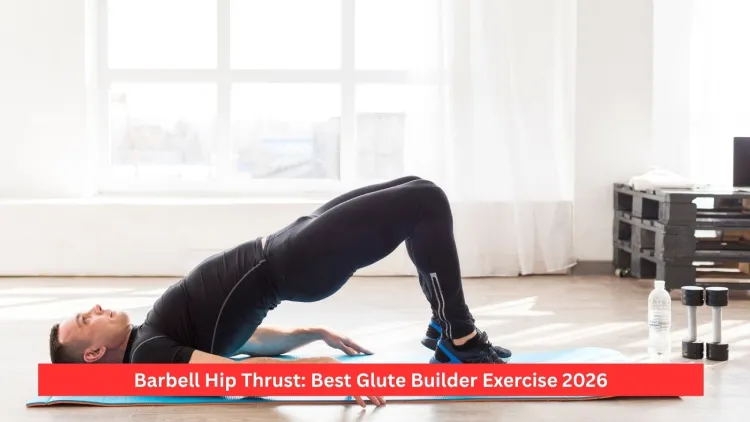
The barbell hip thrust is a resistance training move in which the upper back is lying flat on a bench, and the barbell is resting across the hips. The movement is to push the hips up to create a straight line along the body from the shoulders to the knees.
The emphasis of the exercise is to engage the gluteus, particularly by extending the hip. The barbell hip thrust continues to give constant attention to the posterior chain, unlike the squat, which is much more concerned with the quadriceps.
The movement begins sitting on the floor with the shoulders comfortably back on the bench. Hips stay up and under control while feet stay grounded. The glutes are powerfully engaged in the top position before the weight is lowered again.
The hip thrust with a barbell can be done either:
- Good activation load and endurance load.Proper activation weight and endurance weight.
- Moderate weights for strengthening muscles
- Strength and power in the heavyweight classes
The exercise is scalable and can be performed by beginners and advanced lifters.
The barbell hip thrust is one of the best glute exercises since it includes two of the following:
- Heavy loading potential
- Excellent glute activation
- Low spinal compression
- Straight leg mechanics (knees fully straight)
- Progressive overload opportunities
Some trainers even tout the barbell hip thrust as one of the best lower-body exercises to do, after the squat.

Muscles that are engaged during the Barbell Hip Thrust exercise
While the barbell hip thrust is primarily focused on the buttocks, there are a number of muscle groups involved in helping this exercise complete.
Primary Muscles
- Gluteus maximus
- Gluteus medius
- Gluteus minimus
Secondary Muscles
- Hamstrings
- Quadriceps
- Core muscles
- Hip stabilizers
- Lower-back stabilizers
The gluteus maximus is the most important muscle for hip extension. The glutes will be working most on the barbell hip thrust when there is full hip extension at the top of the movement.
Hamstrings support hip extension, and quadriceps help to stabilize the lower body. Movement throughout the lift stabilizes the spine with the core muscles.
The exercise is also used to activate the posterior chain, which is linked to the glutes’ weak insertion and therefore serves as a corrective exercise for when the glutes are weak.
Those who have weak glutes will experience:
- Poor posture
- Weak hip drive
- Knee instability
- Lower-back discomfort
- Reduced sprinting power
- Difficulty climbing stairs
- Limited athletic explosiveness
When done consistently and properly, the barbell hip thrust exercise can help tackle these problems.
The barbell hip thrust offers several advantages:
Superior Glute Activation
The hip thrust with a fable barre is considered one of the finest glute exercises. During hip extension, the glutes are under high tension with the movement, ensuring good muscle development and strengthening.
Not only is the exercise highly effective for researchers, but it has also been demonstrated to do an outstanding job of not only engaging the glutes, but it is just as effective as a lot of the standard leg exercises.
Increased Muscle Growth
You’re likely to find that many people are having issues growing their glutes because they simply do cardio or squats. The hip thrust with a barbell correctly trains the glutes, and the progressive overload is possible, which is important for muscle growth/hypertrophy.
If you’re one of those folks who asked themselves why the buttersocks are so hard to grow, you likely got the following reply:
- Insufficient resistance
- Poor glute activation
- Inconsistent training
Not yet having achieved progressiveness. Not having progressed in the workout.
Causes: Recovery and Poor Nutrition
The barbell hip thrust is a great exercise to alleviate a lot of these issues, with the glutes getting the attention and stress they deserve.
Better Athletic Performance
The barbell hip thrust is a great movement for athletes to work on:
- Sprint acceleration
- Vertical jump power
- Running speed
- Change of direction
- Explosive movement
The glute muscles generate hip extension forces and are important for athletic performance.
Assist with knee health. Give support for knee health.
Lack of strength in the glutes can affect your knees. If the hips don’t move well, the knees may take up the slack when moving.
Barbell hip thrust increases hip and glute strength that may help to promote better knee mechanics and movement patterns.
Individuals with weak knees tend to suffer from:
- Knee pain when walking up and down stairs.
- Instability while walking
- Difficulty squatting
- Reduced balance
Exercise discomfort at the place of the joint(s)
Building larger and more powerful glutes, along with the muscles that surround them, will lead to addressing these problems in time.
Lower Back Support
The glutes help stabilize the pelvis to be stabilized and maintain proper movement patterns. If the glute muscles are weak, then it may put more strain on the lower back.
The barbell hip thrust targets hip extension without placing too much compression on the spine, so it can benefit a lot of people who are looking to develop their lower body strength without loading the spine too much.
Improved Body Composition
The barbell hip thrust is a popular exercise for boosting lower-body aesthetics and muscle definition. A more balanced physique may also be achieved with stronger glutes and better posture.
The question some come up with regarding the hip thrusts is whether they give them a flatter tummy. The exercise itself will not burn belly fat, but strengthening the glutes and core will have a positive effect on posture, which will result in a more compact look to the waistline with proper nutrition and training.

How to Perform the Barbell Hip Thrust
It’s very crucial to learn proper technique to maximize the results and to minimize risk for injuries.
Step 1: Prepare the Bench
Make sure that a stable bench is placed behind you. The outside of the bench should comfortably support your upper back.
Step 2: Set the Barbell under your chest.
Sitting on the floor, roll the barbell across the hips. A thick barbell pad can be used to create a custom length to help lessen discomfort.
Step 3: Position your feet.
Position feet so they are roughly shoulder-width apart. At the top position, your shins should begin to move almost straight.
Step 4: Brace Your Core
Clasp hands around the waist and pull the abdomen in, and press the ribs down. Keep your back straight.
Step 5: Hip “Upside Up”
Extend heels and lift pelvis until torso is parallel to the floor.
Step 6: Squeeze the Glutes
At the top, squeeze the buttocks tightly, but not to an excessive degree, so it does not curve the body back too much.
Step 7: Under control.
Slowly lower the weight back down and do it again.
The barbell hip thrust should be controlled but not rushed and should NOT be sloppy.
Some frequent hip thrusting errors that people make
Using Excessive Weight
An overload will usually result in a reduction in range of motion, poor technique, and lower-back compensation.
Incorrect Foot Placement
Knee support can be compromised, and glute activation can decrease based on the feet’s position, too close or too far.
Poor Core Bracing
A small brace can cause some instability and some compensation in the spine.
Bouncing the Weight
Bouncing with too much energy can cause less tension and make for more risk of injury.
Ignoring Recovery
It is important to allow the barbell hip thrust enough recovery between daily sessions to prevent fatigue, as well as soreness and loss of performance.
Recovering muscles is necessary for good muscle growth, and though training them often can enhance their skills and activation, they need rest, too.
The ideal hip thrust positions for the barbell are shown
These workout ranges vary depending on the workout objective.
For Muscle Growth
- 3–5 sets
- 8–12 reps
- For Strength
- 4–6 sets
- 3–6 reps
For Endurance
- 2–4 sets
- 15–20 reps
There’s also an 8-8-8 glute workout, which works out the glutes in this manner:
- 8 full reps
- 8 partial reps
- 8-second hold/pulses
This style puts more time under tension and more glute fatigue!
The barbell hip thrust response to progressive overload and controlled repetition schemes is very good.

Barbell Hip Thrust Variations
Single-Leg Hip Thrust
This variation will aid in creating an overall unilateral strength and balance, along with highlighting muscular imbalances.
Pause Hip Thrust
Taking a break at the peak of the movement means that the contraction of the gluteus is greater and that time under tension is longer.
Banded Hip Thrust
Knee bands enhance the activation of the glute medius and hip stability.
Deficit Hip Thrust
Setting up more extensions and activation can help the muscles.
Smith Machine Hip Thrust
Offers additional sturdiness when utilized by novices or training users.
Dumbbell Hip Thrust
Great for at-home exercises and for lower levels of resistance.
Every variation has its own advantages and disadvantages according to training objectives and experience level.
Barbell Hip Thrusts – For Whom?
Athletes
The Barbell Hip Thrust exercise is performed by athletes to boost:
- Explosiveness
- Sprint speed
- Jumping power
- Hip strength
- Bodybuilders
The barbell hip thrust is one of the bodybuilders’ top favorites for glute growth.
Men
Hip thrusts for men have several benefits, including:
- Better athletic performance
- Stronger hips
- Increased lower-body power
- Improved deadlift lockout
- Better sprinting mechanics
Women
The barbell hip thrust is among the exercises many women do to make their glutes stronger and fuller. Due to its effectiveness in targeting the glutes and without heavy loading on the spine, the exercise is hugely popular in gyms.
Beginners
Lighter weights and direction can be used to teach beginners to move safely.
Older Adults
Hip strength is more critical with age for mobility, balance, and joint stability.
So, how many times should you do Barbell Hip Thrusts per week?
The barbell hip thrust is a beneficial exercise to perform 1-3 times a week for most people.
The frequency of the training is dependent upon:
- Recovery ability
- Training intensity
- Total workout volume
- Nutrition
- Sleep quality
AIMS: Perform hip thrusts daily, may progress to:
- Fatigue
- Reduced performance
- Hip soreness
- Overuse issues
Sometimes, however, the activists’ work is lighter and can be done on a more regular basis.
Muscles are not built during workouts; they are built during recovery.
Equipment Needed
The barbell hip thrust is a relatively simple exercise to perform, as it needs only the basic equipment needed to perform a barbell hip thrust.
- Olympic barbell
- Weight plates
- Bench
- Barbell pad
- Resistance bands (optional)
Certain gyms will likewise have specific hip thrust equipment.
Barbell Hip Thrust vs Glute Bridge
Barbell Hip Thrust
- An increased range of motion.
- Greater loading potential
- Decorated with Inserts and CFA
- Stronger peak contraction
- Glute Bridge
- Easier setup
- More beginner-friendly
- Reduced spinal demand
- Good period for activation work.
Both exercises can effectively strengthen the glutes.

To help your hip thrust exercises become more challenging, try these variations
Increase the loads of training to continue to develop.
Methods include:
- Adding weight
- Increasing reps
- Adding sets
- Slowing tempo
- Adding pauses
- Improving technique
One of the quickest methods for sexy, effective glute growth is to use progressive overload.
Recovering and easing tips
Before training:
- Complete hip mobility exercises
- Use bands to activate glutes.
- Warm up gradually
After training:
- Stretch hip flexors
- Stay hydrated
- Prioritize sleep
- Eat enough protein
Muscle development and joint health require recovery.
Try to maintain knee strength and stability in the lower body
Being able to perform well with strong glutes and hips is an important factor in knee function. There is often surrounding muscle weakness in a person due to the loss of strength in the knee.
Fresh knees can have symptoms including:
- Shaking during squats
- Pain during stairs
- Joint instability
- Difficulty balancing
- Reduced movement confidence
Core exercises (butterfingers with hips, hamstrings, and quadriceps) can strengthen the knees.
Some nutrients also promote healthy joints and muscles. Some may experience muscle weakness, not getting better quickly enough, and diminished muscle function due to a vitamin D deficiency.
Generally, the greatest exercises for strengthening the knee can provide:
- Step-ups
- Split squats
- Glute bridges
- Hip thrusts
- Leg extensions
- Controlled squats
Lower-Body Development: The no-doubt-important role of glutes
One of the strongest muscles in the body is the glutes, but some people find they have a hard time growing them.
The factors that influence the growth of the glutes are:
- Genetics
- Training intensity
- Exercise selection
- Nutrition
- Recovery
- Consistency
Muscle-building effort may be tougher for those with a more petite physique or a speedy metabolism.
The quickest glute growth is generally achieved by:
- Progressive overload
- Consistent resistance training
- High-protein nutrition
- Proper recovery
- Strong exercise selection
The barbell hip thrust is frequently coined as one of the best exercises to correct flat glutes, since it builds power and muscle stress in hip extension.
The Importance of Compound Exercises
Compound exercises are generally regarded as the backbone of lower-body training, and many trainers consider them as foundations.
There are popular compound lifts, such as:
- Squats
- Deadlifts
- Lunges
- Hip thrusts
- Split squats
Squats, often known as the king of leg workouts, are multi-joint exercises which train more than one muscle group at a time.
Other coaches like the hip thrust, as a great glute exercise, because it targets the glutes more effectively than almost every other exercise there is.
Usually, a lower leg exercise that works both legs is coupled with:
The combination of these movements builds strength, power, muscle, and stability.
Tips for building strong glutes effectively
It’s not a question of the muscles needing more than a few random exercises to get bigger. But the glutes need more than just a few exercises to grow.
Important principles include:
- Progressive overload
- Proper exercise selection
- Unimpeded range of motion.
- Adequate protein intake
- Recovery management
Glutes are receptive to:
- Heavy resistance
- Moderate-to-high training volume
- Consistent frequency
- Strong mind-muscle connection
The barbell hip thrust has everything it takes to create excellent glute growth.

Final Thoughts
The barbell hip thrust is one of the best lower-body exercises to build stronger glutes, boost athletic performance, strengthen knees, and power up the hips. It is valuable for beginners, athletes, bodybuilders, and people who enjoy fitness, which can reduce spinal stress and directly target the glutes.The barbell hip thrust can be a significant part of your training regimen, whether you are after strength, to fix up weak glutes, muscle development, good knee health, or just a stronger lower body.
Frequently Asked Questions
1. Does the barbell hip thrust work for strong glutes?
Yes, the hip thrust with a barbell is one of the best movements to stimulate and grow the glutes, as it puts your entire body weight on your glutes with a full bottom extension motion and lets you progressively overload your glutes.
2. Is the barbell hip thrust suitable for beginners to do?
The barbell hip thrust is an excellent exercise choice for beginners: light dumbbells or body weight can be used, and they can concentrate on good form and slow movements.
3. How many times a week do you want to perform barbell hip thrusts?
The typical individual will benefit from 1 – 3 sessions a week of barbell hip thrusts, depending on their amount of training, recovery, and fitness objectives.
4. Does the barbell hip thrust improve athletic ability?
Yes, the barbell hip thrust will not only help your hips and glutes grow stronger, but also enhance sprinting, jumping, and lifting ability as well.