
When it comes to how to improve posture, the greatest asset is a mix of strengthening weaker muscles, complementary to mobility-affecting exercises. Weak core muscles, restricted hip mobility, rounded shoulders, and a sedentary lifestyle are two of the main reasons for poor posture. Wall angels or chin tucks, planks, bird dogs, glute bridges, and band pull-aparts can help increase range of motion, balance, decrease muscle tension, and promote long-term spinal health. Most people start to feel the difference in posture, comfort,t and feel after a few weeks of regular use.
- How Long Does It Take to Improve Posture?
- Common Muscles Involved in Posture
- Best Exercises to Improve Posture
- Sample Posture Improvement Workout
- Benefits of Posture Exercises
- Common Mistakes When Trying to Improve Posture
- How Long Does It Take to Improve Posture?
- Final Thoughts
- Frequently Asked Questions
How Long Does It Take to Improve Posture?
Having a good posture isn’t just about standing up straight. The body’s ability to stay well aligned when sitting, standing, walking, exercising, ng and doing daily activities. Good posture enables muscles, joints, and ligaments to function efficiently and prevents undue strain on the body.
Poor posture can often be caused by modern lifestyles. There are lots of individuals out there who spend hours sitting at their desks, using their smartphones, or simply glaring at visual screens. These unhealthy habits, over time,e can create muscle imbalances which pull the body out of alignment. They can include rounded shoulders, a forward head, and too much arching in the lower back.
You need to correct these imbalances in order to learn how to improve posture. One of the best methods of doing this is exercise, which will not only hide the symptoms but also take corrective measures to cure the root problem.
As specific muscles begin to strengthen, they will be able to support the spine and maintain proper alignment throughout the day. At the same time, mobility exercises help return to a normal movement pattern and loosen tight areas.
A good posture exercise routine may offer multiple advantages:
- Improved spinal alignment
- Improved balance and coordination
- More flexibility and mobility.
- Enhanced athletic performance
- Reduced muscle tightness
- Greater body awareness
- Improved movement efficiency
- Improved overall appearance
As time goes on, the benefits can help make the activities of daily living easier and more comfortable.
Common Muscles Involved in Posture
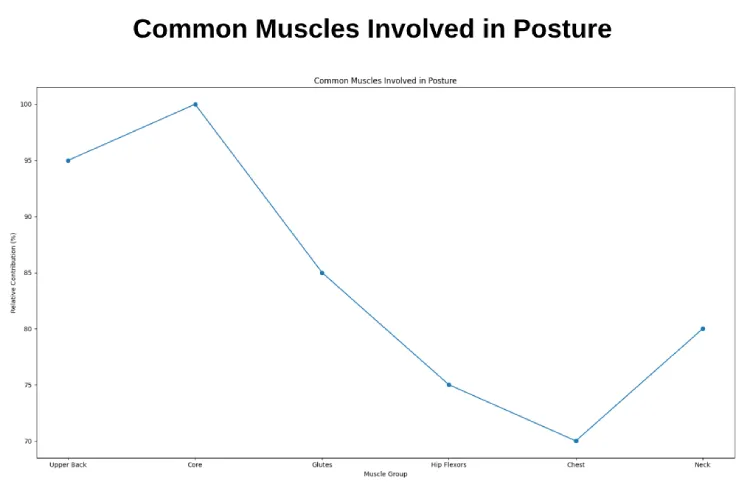
Recognizing the muscles that affect posture may help to understand the effectiveness of certain exercises.
Upper Back Muscles
The muscles on the upper back include rhomboids, middle trapezius, and lower trapezius. These muscles are used to retract the shoulders and keep them elevated.
In the absence of a muscular tonus, shoulders tend to round forward, and this gives a slouched appearance. One of the most essential things to do when learning to fix postures is to strengthen the upper back.
Core Muscles
The core consists of deep abdominal, oblique, and back muscles around the spine. These muscles provide the body’s natural support of the trunk.
A strong core helps to keep the spine stabilized during motion and to keep it aligned while you’re standing and sitting.
Glutes
The gluteal muscles have a great influence on pelvic control. A weak glute might cause a decreased quality of posture and also excessive strain on the lower back.
Tightening your bum works to make you more stable and helps you move healthily.
Hip Flexors
A long sitting (MSL) position tightens the hip flexors. Tight hip flexors pull the pelvis up and forward, which puts an exaggerated curve in the lower back.
Hip mobility can be enhanced by exercises, which may help to realign the pelvis properly.
Chest Muscles
Sitting for too long with poor posture causes the muscles in the chest to be shortened. Tight chest muscles lead to a rounded shoulder and limited shoulder range of motion.
Working on posture involves finding a balance between the anterior chest and posterior upper back.
Neck Muscles
The neck supports the weight of the head. Inadequate posture can put more strain on these muscles, resulting in a “forward head posture.”
Special exercises will strengthen muscles that keep the head in position.
Best Exercises to Improve Posture
1. Wall Angels
Wall angels are an excellent exercise to improve the alignment of the shoulders and the strength of the upper back. This exercise can help correct rounded shoulders, improve the strength of the upper spine, and promote proper posture.
How to Perform
- Stand with your back against a wall.
- Maintain head, shoulders,s and hips against the wall.
- Extend arms in and around the goalpost.
- Gently lift your arms.
- Go back to the starting position.
- Repeat for 10–15 repetitions.
Benefits
Wall angels allow for better shoulder mobility, strengthen the upper back, and help you be aware of correct posture. These are especially great for individuals who sit at work for an extended period of time.
2. Chin Tucks
The chin tucks focus on forward head posture, which is a frequent problem due to the overuse of mobile phones and computers.
How to Perform
- Sitting and standing with a good posture.
- Pull down your lower belly button.
- Don’t bend your head toward the ground.
- Wait 5 seconds.
- Relax and repeat.
Benefits
This exercise benefits the deeper muscles in the neck and promotes proper positioning of the head, ideally over the shoulders, diminishing the stress on the neck and upper back.
3. Bird Dog Exercise
The bird dog is a great core, glute, and lower back stability workout!
How to Perform
- Begin on all fours.
- Raise 1 arm in front.
- Straighten the other leg behind you.
- Do not bend your spine to one side or the other.
- Now balance for a few seconds and then turn to the other side.
Benefits
Bird dogs help improve balance, coordination,n and stability of the spine; strengthens important muscle groups needed for good posture.
4. Plank
Plank is one of the best exercises to strengthen your core and promote proper posture.
How to Perform
- Set up on your forearms and toes.
- Maintain straight alignment of your body.
- Squeeze the belly and hip muscles.
- Hold for 20–60 seconds.
Benefits
Planks work the shoulders, lower back, and abdominal muscles, helping to align the body from a straight position throughout the day.
5. Glute Bridge
Glute bridges work the glute muscles, essential to maintaining the stability of the pelvis/low back.
How to Perform
- Lie on your back.
- Mildly squat and put your feet on the floor.
- Raise the hips towards the ceiling.
- Squeeze your glutes at the top.
- Lower slowly.
Benefits
This exercise helps to improve the stability of the pelvis, supports the health of the lower back, and corrects muscle imbalances associated with standing and sitting posture.
6. Band Pull-Aparts
Band pull-aparts can be extremely useful for developing upper back and posterior shoulder strength.
How to Perform
- Place an exercise band in front of you.
- Stretch the band until your arms are stretched out.
- Pull the shoulder blades towards each other.
- Return slowly.
Benefits: The band pull-apart exercise is useful for reducing rounded shoulders, bringing the shoulders forward, and building muscles for maintaining good posture.
7. Superman Exercise
Superman workout works the muscles of the back of the body, such as the lower and upper back.
How to Perform
- Lie face down.
- Stretch arms and legs.
- Raise chest, arms, and legs just a bit.
- Hold briefly.
- Lower slowly.
Benefits
This is a movement that strengthens back muscles and increases the endurance of the back muscles, which helps to maintain an upright posture for longer periods.
8. Reverse Fly
Reverse flies work on the upper back and back of shoulder muscles, which can be weak in individuals with poor posture.
How to Perform
- Hold light dumbbells.
- Bend forward slightly.
- Raise your arms to the sides.
- Squeeze your shoulder blades together.
- Lower slowly.
Benefits
Reverse flies help to enhance muscles that pull the shoulders back and give improved upper-body posture.
9. Cat-Cow Movement
Cat Cow is a gentle exercise for mobility and flexibility of the spine.
How to Perform
- Start in all fours position.
- Round the back upwards.
- Bend the arch slowly in a downward direction.
- Continue moving smoothly.
Benefits
This exercise enhances freedom of the back, restores looseness, and prevents stiffening in the spine, which helps to keep the body in an optimal posture.
10. Dead Bug Exercise
Dead bugs help reinforce the deep core muscles and help the body develop a neutral spine.
How to Perform
- Lie on your back.
- Lift legs and arms.
- With one arm extended and the opposite foot extended.
- Go back, cross over to the other side.
Benefits
Dead Bugs are good for long-term, consistent posture improvement and promote core stability, coordination, and the control of spinal movement.
Sample Posture Improvement Workout
A structured workout routine can accelerate posture improvements. Perform the following routine three to four times per week.
| Exercise | Sets | Reps |
| Wall Angels | 3 | 15 |
| Bird Dog | 3 | 15 |
| Chin Tucks | 3 | 10 Each Side |
| Plank | 3 | 30–60 Seconds |
| Glute Bridge | 3 | 15 |
| Band Pull-Aparts | 3 | 15 |
| Superman | 3 | 12 |
| Reverse Fly | 3 | 12 |
| Cat-Cow | 2 | 10 |
| Dead Bug | 3 | 10 Each Side |
PPLING Ftote is more effective when consistent with low intensity. These are exercises that will give you better results if practiced regularly rather than every once in a while, with higher volume.
Benefits of Posture Exercises
Reduced Muscle Tension
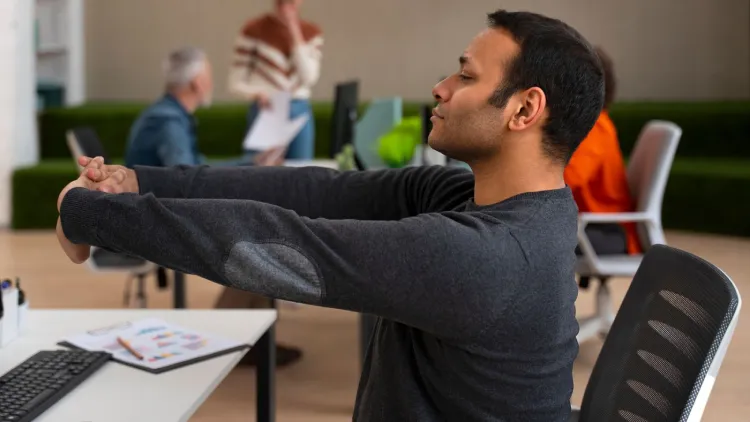
Some muscles have to work harder than they need to when poor posture occurs. This may cause stiffness, tightness, and pain.
Posture exercises enhance alignment and allow for smoother movements, with the main goal to decrease the additional strain on muscles that is caused by positioning.
Improved Appearance
Doing it standing up naturally gives one a more regal look and boosts the confidence level. Proper posture can make people feel better dressed on their first impression and increase self-confidence.
Better Balance
The postural muscles are very important in maintaining stability. Firming up these muscles aids in greater balance and coordination that will help in daily tasks.
Enhanced Athletic Performance
The way athletes position their bodies when making a throw is used to maximise how efficiently they are able to produce force when attacking. Improved posture can increase movement quality, improve strength production, and overall performance.
Less Back and Neck Stress
The release of stress to the spine will be less when the body is aligned correctly. This can decrease tension in the neck, shoulders, and lower back.
Increased Mobility
Some of the postural exercises are mobility exercises designed to increase flexibility and range of motion.
Common Mistakes When Trying to Improve Posture
Focusing Only on Stretching
Your knee is bent at 120° or less. Your knee is bent less than 120°.
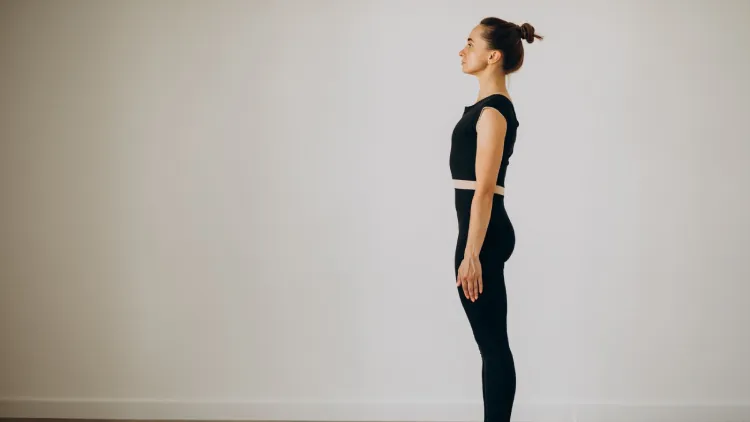
Stretching is thought to be enough to remedy poor posture in many people. Flexibility is vital, and strengthening the weak muscles is also crucial.
Inconsistent Exercise
Changes to posture happen over time. A lack of exercise often leads to slowed progress and is tough to follow up on. on
Poor Exercise Technique
If there are problems with the form, this will not improve effectiveness and may enhance the risk of injury. Tickler: Don’t be in a hurry for anything in the realm of quality movement.
Ignoring Core Strength
The core is the important anatomical area that forms the foundation of posture. The core training is the foundation for all other training performed. If core levels are not improved,d then so will all else.
Expecting Instant Results
Many people make the error when learning how to enhance posture, hoping for instant results. Making posture changes takes time, patience,ce and practice.
How Long Does It Take to Improve Posture?
These may come in various time frames depending on people. Results from a variety of factors, including consistency, activity level, muscle imbalances, and age.
Many people will see increased awareness of comfort in their posture within the first 2-4 weeks. After 6-12 weeks of regular exercise, one may notice physical changes that are more distinct.
The main thing is repetition. Several times per week, with posture exercise done several times, this results in gradual improvements and will become easier to maintain over time.
Also, keep in mind that posture is not that the body remains in one position. Proper posture is not only correct while seated at one particular time or place throughout the day, but it is also healthy. Frequent exercise will support the development of strength and endurance to support these movements.
Final Thoughts
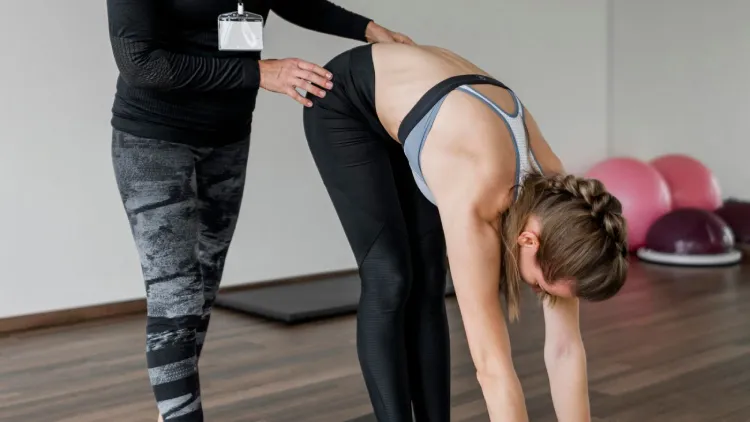
You don’t need a costly set of equipment or a complicated exercise routine to learn how to alter your posture. Common postural issues can be corrected by strengthening the muscles that support proper alignment through simple exercises that can be performed at the wall, on a mat, on a plank, with a glute bridge, or with a bird dog.
Consistency is the way to the bottom line. Regular posture exercises may reduce the likelihood of becoming unaware of one’s body position and may increase stability and help you maintain better posture while you are using your body throughout the day. Over time and with practice, these exercises can help you feel as though you’re reaching for the sky, moving with a purpose, and take care of your spine for the long haul.
Frequently Asked Questions
1. What is the best exercise for improving posture?
To strengthen body postural muscles, chin tucks, wall angels, plank,s and band pull-aparts are some of the best exercises for posture.
2. How many times a day is it advisable to practice posture?
Posture exercises work best if performed 3–4 times a week. Most people do. The duration of workouts is less important than consistency.
3. Are there exercises that can correct rounded shoulders?
Yes. Over time, upper back and rear shoulder muscle strength and mobility can help reduce rounded upper back shoulders over time.
4. Can posture exercises be done by novices?
Absolutely. Many of the posture exercises can be adapted to reduce or increase the challenge as a person’s fitness level changes, and increase over time as strength increases.