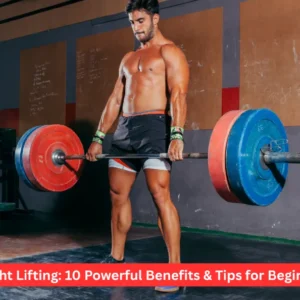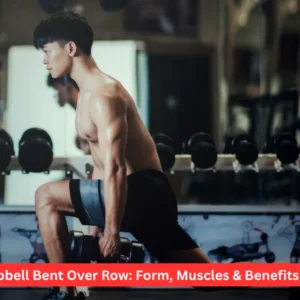
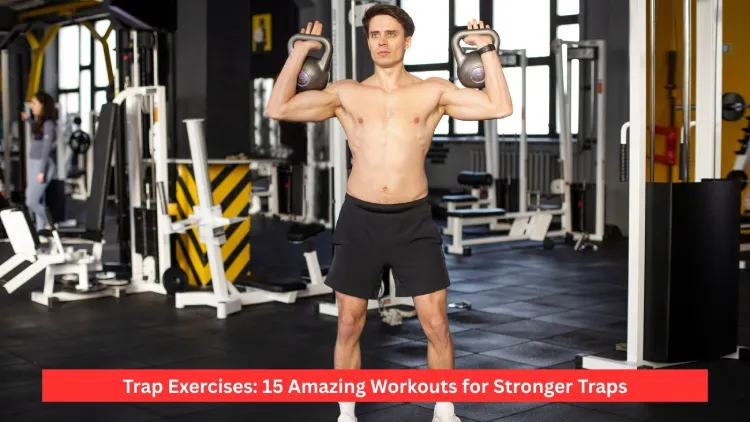

The absolute best trap exercises involve working all three parts of the trapezius, thus creating a more powerful, bigger, and more balanced trapezius. Perform compound exercises, incorporate isolation movements, maintain correct form, and progressively build up resistance. No matter what type of exercises you do with dumbbells to get the trapezius in a trapezius exercise, or upper trapezius exercises, for noticeable results, prioritize consistent workouts, a proper diet, and recovery in 8–12 weeks.
What Are Trap Exercises?
Trap Exercises are strength training exercises designed to target the trapezius muscles, or “traps”. The muscles stretch from the neck, across the shoulders, to the upper back and are extremely important in lifting, pulling, carrying, and shoulder stabilization.
Regular trap training will promote:
- Upper-body strength
- Shoulder stability
- Better posture
- Pulling power
- Muscle definition
These traps can be done with the following:
Exercises targeting the upper, middle, and lower traps provide complete trapezius development, not shrugs. This can benefit the development of healthier, well-rounded muscles and enhance performance.
Understanding the Trapezius Muscle
The trapezius muscle has three parts that help maintain the range of motion in the classic “neck” and support posture, strength, and function in the upper body.
- Upper Traps: shrugs, press/jacks, deadlifts with shoulder girdle motion.
- Middle Traps: Pull shoulder blades together and straighten posture.
- Lower Traps: Support overhead movement and stabilize shoulders.
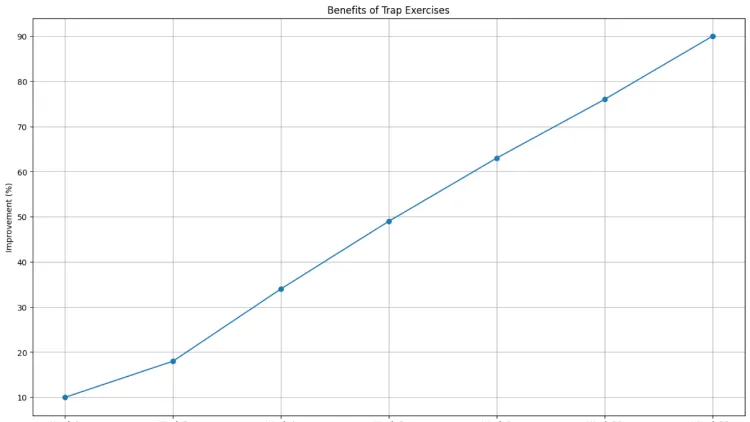
Benefits of Trap Exercises
Improve Posture
Trap exercises nurture proper alignment of the shoulders and spine. They’re able to alleviate tension in the upper back, which can occur as a result of prolonged sitting.
- Supports better posture
- Reduces rounded shoulders
- Improves spinal alignment
Build Bigger & Stronger Traps
Progressive overload combined with regular training will induce muscle growth and increase upper body strength.
- Builds muscle mass
- Increases upper-body strength
- Enhances muscle definition
Increase Pulling Strength
Good traps make compound movements such as deadlifts, rows, and pull-ups better.
- Boosts lifting power
- Improves grip strength
- Works well for heavy pulling movements
Supports Shoulder Health
A balanced trap will promote shoulder stability and help prevent muscle imbalances.
- Enhances shoulder stability
- Supports healthy movement
- Reduces injury risk
Boost Athletic Performance
Traps that are well developed will enhance power, balance, and overall athletic ability.
- Increases explosive strength
- Improves upper-body control
- Enhances sports performance
Reduce Neck Fatigue
A stronger trap helps to facilitate the movement of the neck and upper back during daily life activities.
- Reduces neck strain
- Relieves upper-back fatigue
- Improves daily comfort
Who Should Train Their Traps?
Almost anyone will enjoy doing traps, no matter how fit they are or how old they are.
Training for trapping may be particularly useful in the following situations:
- Individuals with a new understanding of lifting techniques and mechanics
- Bodybuilders are on the lookout for upper body thickness
- Powerlifters making big drills harder. Powerlifters are making huge lifts harder
- People are working them up to their levels! Worked-up CrossFitters!
- A worker who is seated properly at the computer
- Swimmers looking to improve shoulder endurance
- Players who need to improve their shoulder stability while playing tennis
- Martial artists are creating upper body strength
- People visiting a gym to develop well-rounded bodies
Trap training can be very helpful to women as well. With proper resistance training, you should not develop large muscles. On the contrary, they enhance upper body stability, muscular weight gain, shoulder development, and posture, along with the improvement of the functional activity of the upper body.
Later in this guide, you’ll find more effective exercises for women at a beginner level, and even exercises to use at home or in the gym.
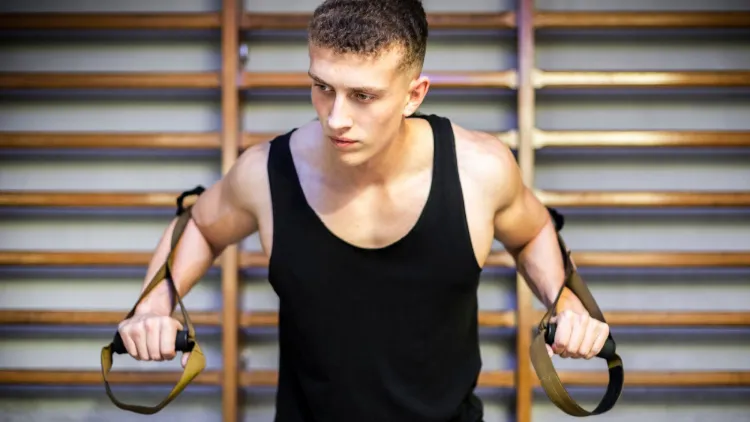
Best Trap Exercises
You’re not gaining strength in your traps from repetitious shrugs! The best training would include compound exercises, isolation exercises, and stability exercises that will work the upper, middle, and lower fibers of the trapezius. This combination is found to reduce muscular imbalances, strengthen shoulders, improve posture, and grow muscles.
The following exercises can be done by the novice as well as the advanced lifter. You don’t have to do them all in one exercise. Instead, select 4-6 exercises depending on your fitness and objective normally, increase weight or reps over time.
1. Dumbbell Shrugs
One of the most popular dumbbell trap workouts is dumbbell shrugs because both shoulders can move freely in a full range of motion. That can help correct strength imbalances and add greater muscle activation.
How to Perform
- Pick up a dumbbell in each hand, with arms straight.
- Foot position is shoulder-width apart, and stand erect.
- Raise your shoulders straight up, leaving elbows straight.
- Take a brief break at the top by squeezing your traps.
- Slowly decrease the weights to the starting position.
Muscles Worked
- Upper trapezius
- Levator scapulae
- Forearms
- Grip muscles
Recommended Sets & Reps
- Beginners: 3 × 12–15
- Intermediate: 4 × 10–12
- Advanced: 5 × 8–10
Common Mistakes
- Rolling the shoulders
- Using excessive momentum
- Lifting too quickly
- See Chapter 16 for a discussion about this
If your only equipment is basic, here are some of the most effective dumbbell at-home trap exercises. They need little room, and room can be incrementally added by adding more weight.
2. Barbell Shrugs
Since fewer dumbbell variations will allow you to lift heavy weights, barbell shrugs are great trap exercises for mass. Heavy resistance will work both the upper trapezius and improve grip and upper back strength.
How to Perform
- Grasp a barbell with an all-in-one/overhand grip.
- Stay up tall with a core that is tight.
- Lift the shoulder blades up towards the ears.
- Hold the contraction for 1 count.
- Set the bar low to be able to control it.
Benefits
- Supports muscle hypertrophy
- Increases pulling strength
- Improves deadlift lockout
- Develops thicker upper traps
3. Farmer’s Carry
One of the 3 best trap exercises is the Farmer’s Carry, but it’s a workout that’s underutilized.
Instructions
- With heavy dumbbells or kettlebells, hold at hip level.
- Stand straight and stand tall with your shoulder blades pushed backwards.
- Slowly walk for 30 – 60 seconds.
- Tighten your core and do not lean.
Muscles Worked
You’ll get a type of exercise that improves both the size and the muscle endurance because the weight is continuously balanced by your traps.
4. Rack Pulls
A Rack Pull is a variation of the Deadlift starting from a racked position at the knee. The movement is initiated from above, which means you may be able to move more weight, and you should focus more on the upper back and upper traps.
Benefits
- Builds thicker traps
- Improves grip strength
- Enhances deadlift performance
- Helps strengthen the back of the body
Keep your neck in a neutral position during the lift and do not jerk the bar from the rack.
5. Trap Bar Deadlift
The trap bar deadlift belongs to the neutral grip exercises, which stress the lower back minimally and yet activate the trapezius with maximum efficiency.
Why It Works
The trap bar supports the proper position of the load over the body and promotes an even development of the muscles used when working with this type of bar.
Primary muscles include:
- Trapezius
- Glutes
- Hamstrings
- Quadriceps
- Core
- Forearms
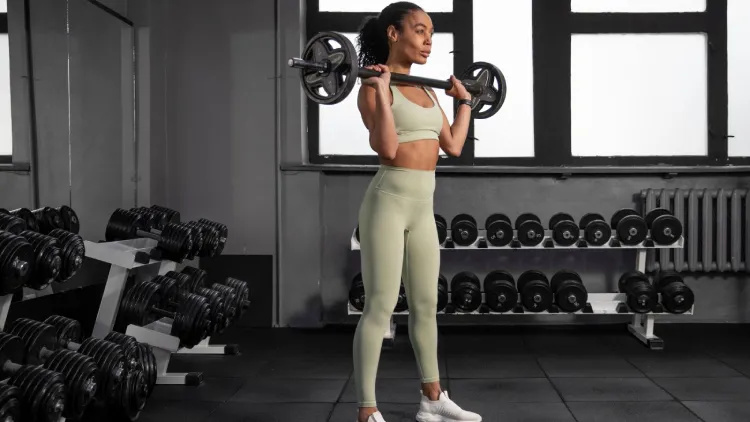
6. Upright Rows
These rows work to build strength in the shoulders and to put a lot of tension on the upper trapezius muscle.
Steps
- Hold a barbell or dumbbells in front of your thighs
- Lift the weight towards the chest
- Keep your elbows above the height of your wrists
- Slowly descend under control
Do not lift high if it hurts your shoulders!
When dumbbell upright rows are performed using moderate resistance and proper form, they are still good upper-trap exercises for people who prefer to use free weights.
7. High Pulls
High pulls are both explosive and for upper back development. They activate the fast-twitch muscles this is beneficial to athletes as well as people who wish to increase the strength of their traps.
Benefits
- Improves athletic power
- Develops explosive strength
- RAISES THE LIPS
- Enhances coordination
As this exercise is difficult, make sure you start with a lighter variation before progressing to heavier ones.
8. Face Pulls
Trap exercises, in particular face pulls, are one of the best shoulder health and posture movements of all.
Face pulls work the rear shoulders as well as engage the middle and lower trapezius.
Face Pull Muscles Worked
This exercise works mainly to build up the muscles of the:
Proper Face Pulls Form
- Secure a rope to a cable machine located at chest height.
- Tug the rope towards your forehead.
- At the end of the movement, spread your hands apart.
- Squeeze shoulder blades together.
- Return slowly.
It is more important to make face pulls with the correct form than to lift loads. Concentrate on the Gliding movement and retracting the scapula.
Face Pull Exercise Benefits
Regular face pulls will facilitate:
- Improve posture
- Support weak back and shoulders
- Reduce muscular imbalances
- Better shoulder mechanics all in all
- Increase upper-back endurance
If you don’t have cable equipment, a resistance band is a great face pull workout exercise that you can do without the machines.
When a cable station is not available, common face pull alternatives are band pull-aparts, reverse dumbbell flies, and TRX rows.
I’m sure a lot of people go to the gym and ask themselves which muscles the cable face pull targets. The answer is, it works mostly on the back of the shoulder muscles while recruiting quite a lot of muscles in the mid to lower part of the back of the shoulder.
9. Cable Shrugs
Cable shrugs are always under tension, which makes them great for time under tension.
Benefits include:
- Smooth resistance
- Continuous muscle activation
- Controlled movement
- Excellent finishing exercise
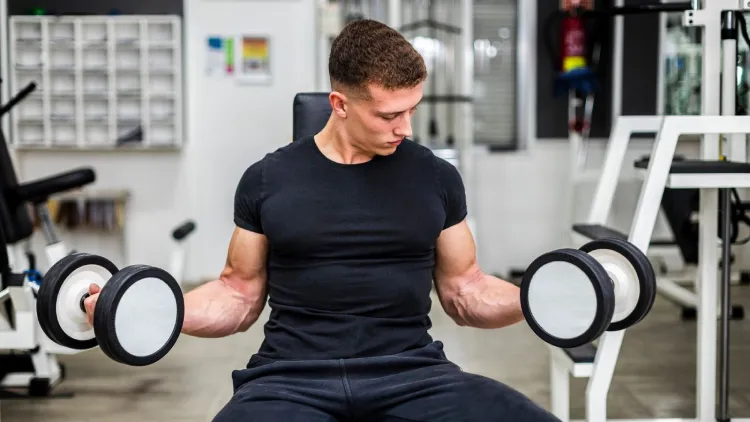
10. Seated Dumbbell Shrugs
Performing shrugs while seated causes less movement of the body, forcing the traps to do more of the work.
These are particularly good for people who want to go for controlled trap movements using dumbbells that women can easily use for their upper-body exercises.
11. Incline Dumbbell Y Raises
This move goes towards the lower trapezius muscle, which is frequently ignored when training the classic trapezius.
It’s one of the best dumbbell lower trap exercises and will correct muscular imbalances while simultaneously providing shoulder stability.
Wear light weights and ensure slow and controlled repetitions.
12. Reverse Dumbbell Flyes
The reverse flies are developed mainly on the back shoulders and also on the middle trapezius.
Benefits include:
- Better posture
- Improved shoulder stability
- Balanced upper-back development
- Increased muscular endurance
You can do this exercise in combination with face pulls when doing back workouts.
13. Cable Y Raises
Cable Y raises move both the lower traps and provide a great degree of motion.
The movement emphasizes control of the movement rather than the maximum load being lifted.
This exercise is commonly prescribed for post-shoulder instability athletes for reinforcement of proper movement with the scapula.
14. Scapular Pull-Ups
Scapular pull-ups are an easier bodyweight movement that targets the lower trapezius and doesn’t demand the same amount of pull-up ability.
Do not bend elbows, just move shoulder blades.
Benefits include:
- Improved scapular control
- Better pull-up performance
- Increased shoulder stability
- Stronger lower traps
15. Overhead Carry
Overhead carry combines shoulder stability with the constant activation of the traps.
Carry 1 or 2 dumbbells on top of your head and walk under control.
This movement strengthens:
- Upper traps
- Lower traps
- Core
- Rotator cuff
- Shoulders
Start off with lighter weights so that the user can keep an upright position during the workout.
Final Thoughts
The best trap exercises must target the whole trapezius, rather than just the upper trapezius. All these exercises can be performed with good form and progressive overload to increase upper-body strength and shape, enlarge the traps, and enhance posture, shoulder stability, and upper-body development. Be consistent, get plenty of recovery, and before long, you will see the difference.
Frequently Asked Questions
1. What are the best Trap exercises?
Better ways to build a stronger, bigger trap include dumbbell shrugs, barbell shrugs, face pulls, farmer’s carries, and trap bar deadlifts.
2. Do I need to bring my traps through the school?
Yes. Home exercises utilizing dumbbells, resistance, and bodyweight can be advantageous for trap exercises. Body resistance, resistance bands, and dumbbells can be utilized for trap exercises at home.
3. Trap exercises should be performed:
Installing traps 1–2 times a week and recovering well will result in the best trap performance.
4. Is it appropriate for novices to use trap exercises?
Yes. Utilizing proper weight-lifting techniques, beginners should begin with lightweight and gradually build up to heavier loads.