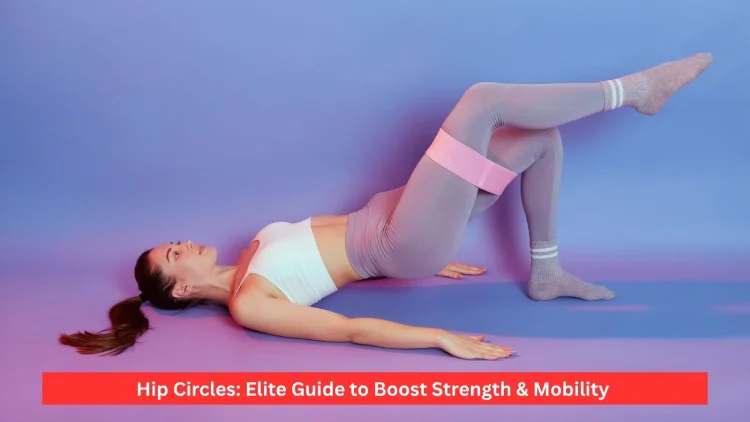

Hip circles are an easy mobility exercise that helps to develop flexibility, balance, posture, and strength in the lower body. They stretch the glutes, hip flexors, and core and limit stiffness, getting your body ready for movement. This guide helps you understand the advantages, the muscles that are used in hip circles, the correct technique procedure, and top variations of hip circles for every fitness level.
What Are Hip Circles?
Hip circles are a simple hip mobility exercise that begins with placing your hips into a circle to increase flexibility, joint mobility, and muscle activation. They are popularly used in the hip circles warm-up routine before working out, strength workouts, running, yoga, Pilates, and other physical activity.
The following are some of the benefits of this low-impact exercise:
- Enhances hip mobility AND flexibility
- Engages buttocks, hip flexors, and core muscles
- Improves range of movement of joints
- Provides range of motion relief for the hips after sitting for extended periods of time
- Improves balance, stability, and coordination
- Accurately prepares the body for exercise and movement throughout the day
The most outstanding benefit of hip circles is their versatility. They can be done in several ways, including:
- Standing hip circles
- Seated hip circles
- Hip circles while lying on your back. Hip circles lying face up
- Hip circles in all fours
- Dynamic hip circles
- Hip Circles Pilates variations
- Hip circles with Hip Bands (or hip circle bands)
Hip circles don’t need lots of equipment to practice, so they’re perfect for people who are new to exercise, athletes, the elderly, and all others seeking to enhance their hip mobility and movement quality.
Why Hip Circles Matter
Sitting for prolonged periods, sitting in a vehicle while driving, or sitting at a desk for long durations may cause the hips to tighten up and not move normally within their range of motion. Over time, this can impact your posture, movement, and overall physical function.
A lack of hip mobility may result in:
- Tight hip flexors
- Weak glute muscles
- Poor posture
- Lower back discomfort
- Reduced flexibility
- Having trouble squatting, lunging, and other activities of daily living (ADLs)
Hip circles are frequent exercises that keep the hip joints mobile, increase flow, flexibility, and mobilization of the hip muscles. These are a great addition to a warm-up, particularly before physical activity, before any sport, or long walks.
No matter your level of experience—and regardless of your age—conditioning the hips regularly can help you move more efficiently, balance better, and enjoy daily activities.
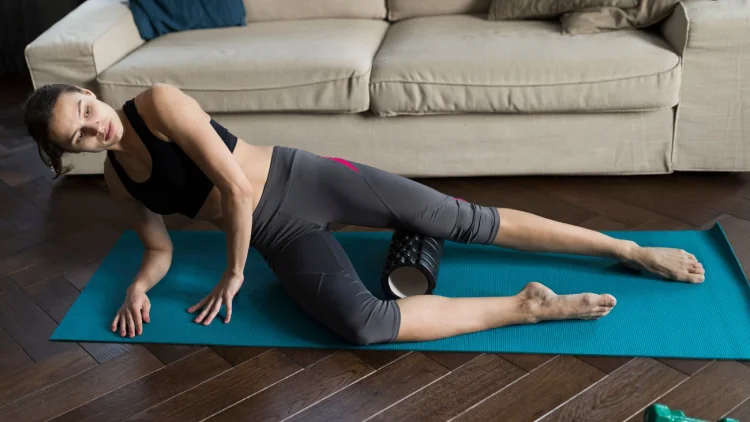
Hip Circles Benefits
Hip circles can increase familiarity with using the side hip, engage some important muscle groups, and prime those same muscles for movement. They are simple to carry out and are suitable for all fitness levels.
Some of the main hip circle benefits include:
- Promotes flexibility and mobility in the hips
- Stimulates the glutes, hip flexors, and core
- Prevents lower back problems
- Improves balance and stability
- Improves posture
- Increases blood circulation
- Does not become stiff when sitting for a long time
- Sets up the body for activities and physical games
- Helps optimal function for daily activities
Hip circles warm-up or hip circles exercise can assist with improving the ease of the body and enable you to do the exercise with more control.
Hip Circles Muscles Worked
The hip circles target many different muscle groups that contribute to hip movement, balance, and stability. With regular practice, these muscles can be strengthened and get activated to enhance mobility.
The main muscles targeted are:
- Gluteus Maximus: Provides strength for hip movements and stability.
- Gluteus Medius & Minimus: Balance and stability of your pelvis.
- Hip Flexors: Lift and move the thigh during the exercise.
- Adductors & Abductors: Control side-to-side hip movement.
- Tensor Fasciae Latae (TFL): Helps to rotate and stabilize the hips.
- Core alignment/s (Torso stability): Maintain a stable torso throughout the motion.
- Lower Back Stabilizers: Aid good posture and positioning of the spine.
These muscles work in concert to increase mobility, coordination, and lower body function.
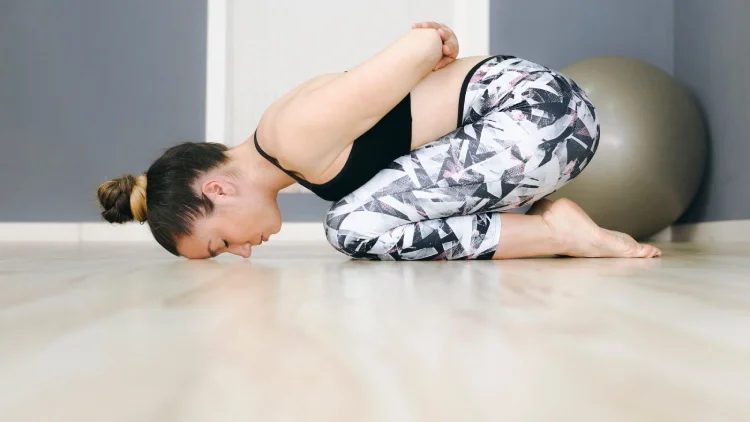
How to Do Standing Hip Circles
The standing hip circles exercise is the most frequent variation, is easy to learn, requires no equipment, and can be performed virtually anywhere. Standing hip circles, whether you are working out at home, training for a run, or getting ready for strength training, are a great way to improve mobility and activate the muscles around the hips.
This is a different movement from static stretches, where you do not allow your joints to move as much, but will allow your joints to move continuously. This also helps enhance balance, as it involves some stabilising through your body as you move your hips in controlled rotation.
Step 1: Find Your Starting Position
Your feet should be shoulder-width apart. Bend your knees don’t extend them straight, as the hip movement will not be as natural.
Relax your shoulders, and position your spine in its normal state. Do not lean forward or backwards.
Step 2: Engage Your Core
Rest hands atop hips or keep extended arms out to the sides for additional balance.
Stabilize torso throughout movement by engaging abs gently.
Step 3: Begin the Circular Motion
Center body weight a bit ahead.
Gradually press them towards the right side.
Continue moving them backward.
Arrive at the circle by passing it to the left, and then get back to the starting position.
Try to make large circles with your hips, but as still as you can with your body.
Step 4: Reverse the Direction
Once you have done 10-15 circles in one direction sell around and turn your hips in the other direction.
Exercising in both directions will maintain equality of movement and muscle activity.
Step 5: Recommended Repetitions
- Challenge beginners: 8–10 circles each direction to familiarize them with the track.
- Intermediate: 10 to 15 circles up and down
- Advanced: 15-20 circles clockwise/anti-clockward
One or two sets will suffice before your training session if you are using the exercise as a warm-up at home for hip circles.
The benefits of Standing Hip Circles
Regularly doing standing hip circles can be helpful:
- Enhance hip mobility and flexibility
- Engage core muscles before work
- Raise blood circulation to the hips
- Enhance balance and coordination skills
- Decrease stiffness from sitting for longer than normal
- Support healthy ways to move. Encourage healthier modes of movement
- Exercise caution when performing exercises that involve the lower body
The benefits of these standing hip circles make this an exercise that can be used by any fitness level – from beginner to competitive athlete.
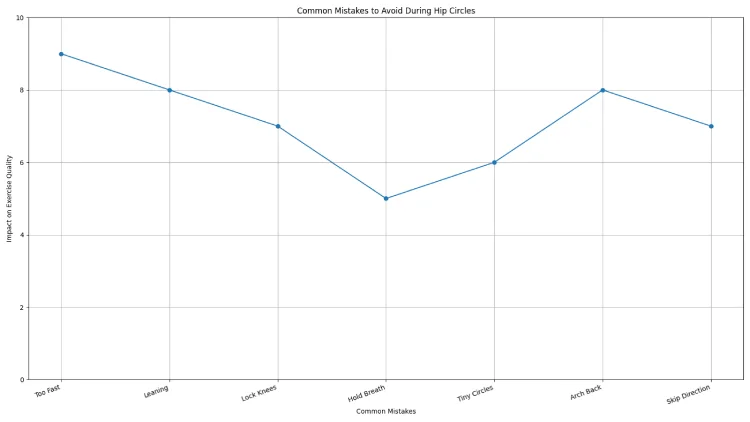
Common Mistakes to Avoid
Hip circles are generally beginner classes, but a wrong technique can lower their effectiveness. This focuses on your form, which is an important part of performing workouts to get the most out of each rep.
Moving Too Fast
A major error is to rush through the movement.
When quick circles are performed, they may be more momentum-driven than muscle-driven, which places a burden on the hips and less on the spine and legs. Rather, make controlled, slow circles, keeping the focus on quality and not speed.
Leaning Your Upper Body
The focus is to move the hips in a circular motion only the hips should be moving. If the shoulders and/or chest are moving also, the exercise will not be as effective.
Maintain an upright and stable torso during the exercise.
Locking Your Knees
When knees are locked, the hips cannot move as they should, and can put unnecessary strain on the joints.
Keep a slight bend in both knees to move more smoothly.
Holding Your Breath
Some people are not aware that they are holding their breath in mobility exercises.
Instead, breathe naturally. When starting the circle, inhale, and when finished, exhale.
Making Tiny Circles
Little circles restrict range of motion and limitations in mobility benefits.
Slowly increase the size of your circles as you get more and more comfortable, as your flexibility increases, not causing any pain or discomfort.
Arching Your Lower Back
Hips should swing freely, and core should control the spine.
Do not overarch or arch backwards.
Skipping One Direction
Circle clockwise and counterclockwise.
This allows for even distribution of mobility on both sides of the body.
Seated Hip Circles
There is difficulty for some people to do the exercises when standing. Thankfully, in the same way, circles while seated are an appreciable option for novices, office staff, older people, and individuals recuperating from lower extremity irritation.
This movement variation decreases the loading requirements but continues to promote joint mobility in the hips.
How to do seated hip circles
- Sit on a sturdy chair with feet on the floor and sit on the front edge of the chair.
- Maintain a straight back and relaxed shoulders.
- Gently rest hands on thighs or hips.
- Turn pelvis slowly in a circular pattern, allowing hips to follow.
- Do gentle circles around in one direction first before reversing direction.
- Slow movements, no forcing.
Seated Hip Circles Benefits
Hip circles in sitting position can be beneficial:
- Help stop stiffness when sitting for extended periods of time
- Improve pelvic mobility
- Add weight to the bottom of the knees
- Encourage better posture
- Grasp the significance of preparing the hips for use in standing tasks
- Improve body awareness
Seated hip-circles every hour are good for office workers to combat the negative effects of sitting too long in a chair.
Seated Hip Circles Exercises for Daily Mobility
Here is a basic seated mobility exercise that could be part of a mobility program:
- 10 hip circles clockwise
- 10 hip circles counterclockwise
- Gentle pelvic tilts
- Seated figure 4 stretch
- Deep breathing
If seated hip-circles exercises with seated figure-4 stretch can help increase flexibility and decrease the tension that might develop throughout the day, then it can be combined.
Seated Hip Circles Yoga
Many yoga teachers use Seated Hip-Circles Yoga movements in their gentle flows as a way to warm up the hips for deeper hip-opening yoga poses. The slow circles activate conscious movement and promote relaxation and awareness of the joints.
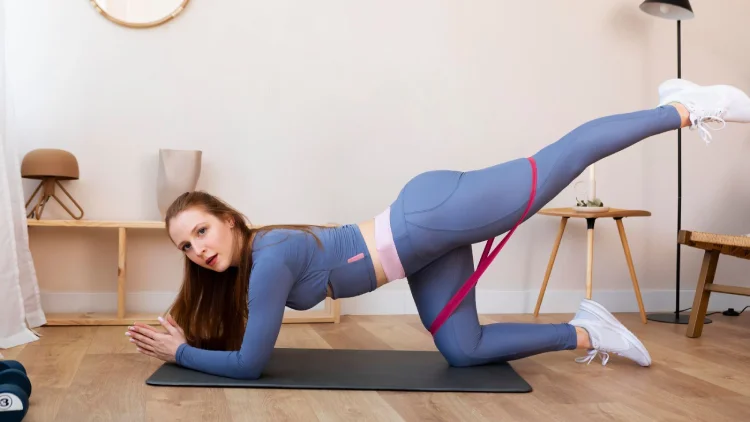
Hip Circles on All Fours
Hip circles while on all fours are one of the best mobility exercises to get hip control and joint stability in general. This variation helps you to shed a lot of weight from the hip joints and concentrate on smooth and controlled movement.
How To Do Hip Circles On All Fours
- Begin in the hands and knees position.
- Position your hands right under your shoulders.
- The knees are under the hips.
- Gently tuck in your abs.
- Quickly and completely raise 1 knee a few inches off the floor with the knee bent about 90 degrees.
- Slowly draw a large circle with your knee.
- Do all the reps on one leg before repeating with the other.
- Slowly move, but do not turn your torso so far.
Hip Circles on All Fours Benefits
There are several benefits of adding hip-circles to an all fours workout.
These include:
- Better hip mobility
- Improved joint control
- Increased glute activation
- Better pelvic stability
- Enhanced coordination
- Better muscle symmetry (left and right)
- Increased hip movement awareness
This variation is recommended by many PTs because it is less stressful on the lower back and creates isolation around the hip.
Hip Circles on All Fours Exercises
The following is a beginner workout:
- 8 circles clockwise
- 8 circles counterclockwise
- Repeat on opposite leg.
- Perform 2–3 sets.
Increase the size of each circle, making them larger, keeping it controlled as your strength will improve.
Quadruped Hip Circles Benefits
Flexibility is just one of the benefits of the quadruped hip circles.
These differences also help to increase the strength of the small supporting muscles around the hip joint, enhance coordination, and prepare the body for more challenging exercises like lunges, step-ups, and one-legged exercises.
Dynamic Hip Circles
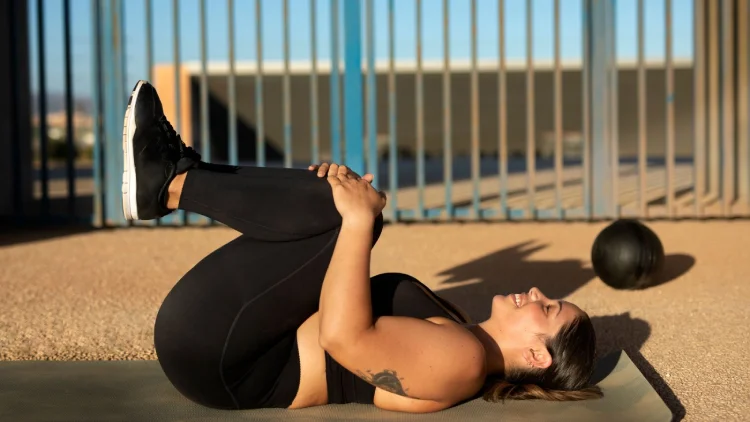
Dynamic hip-circles are done continuously, in a rhythm – an ideal exercise for before exercise or for sports.
The dynamic hip-circles are a little more active and raise the heart rate while getting the muscles ready for motion as opposed to slow mobility drills.
Dynamic Hip Circles Benefits
Try growing your warm-up with dynamic hip circles to help:
- Increase body temperature
- Improve joint lubrication
- Activate the glutes
- Get hips ready to go explosive
- Improve athletic performance
- Reduce stiffness
- Enhance coordination
Dynamic hip-circles are used by many runners, football players, basketball players, and martial artists before training sessions.
Dynamic Hip Circles Exercises
Examples of a dynamic warm-up could include:
- Standing hip-circles
- Walking knee hugs
- Leg swings
- Dynamic hip-circles
- Walking lunges
- Arm circles
- Bodyweight squats
These exercises complement each other to advance the whole body for fitness.
Dynamic Hip Circles at Home
Dynamic circles with the hips are one of the most beneficial home exercises since they don’t need any tools.
Just prickle out a little area, and perform:
- 15 hip-circles clockwise
- 15 hip-circles counterclockwise
- Repeat twice
The whole thing lasts less than 3 minutes and is a great hip warm-up.
Dynamic Hip Circles for Seniors
Dynamic Hip-Circles can also be a good exercise for the elderly, done at a slow pace and in a comfortable range of motion.
A support surface like a chair or countertop can be used for stability and promote safe movement.
Ongoing exercises could keep the joints loose and ease the way in normal tasks such as walking and going up and down stairs.
Final Thoughts
Hip circles are an easy and effective exercise for enhancing hip mobility, flexibility, and stability. They can be included as warm-up exercises, as part of the daily routine, or as exercises to improve movement they can help reduce stiffness and activate the main muscles. Be consistent, concentrate on good form, and have the long-term advantage of stronger, healthier hips.
Frequently Asked Questions
1. Are hip circles safe for beginners?
Yes, hip-circles are beginner exercises and are easy to execute if done properly.
2. How long should you do hip circles?
Try to achieve 10-15 circles each way, or 1-3 mins per circle.
3. Are hip circles a dynamic stretch?
Yes, hip-circles are a dynamic stretch that increases hip range of movement and prepares your body for exercise.
4. What muscles do hip circles work?
The glutes, hip flexors, core, adductors, and abductors are the primary targets of hip-circles.