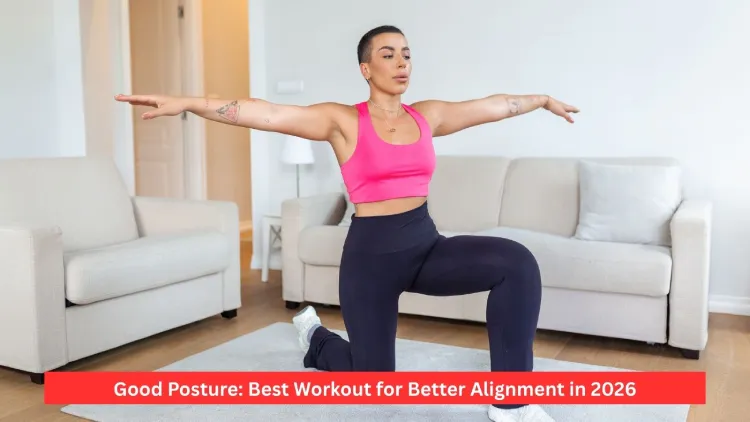

Good posture is the body’s natural pose in which stress is not placed on the muscles, joints, and spine. It’s not about sitting or standing upright; it’s about strengthening and mobilising the body so it’s easier to align. Factors associated with poor posture are typically excessive sitting time, poor muscle strength around the core and back of the body, tight chest and hips, and a lack of physical activity. Can cause pain, stiffness, and fatigue over time. The only way to fix a bad posture is by doing simple and straightforward exercises, which strengthen weak muscles and stretch tight ones consistently. There is no special equipment required, just a few minutes’ practice every day.
- The Importance of Exercise for Proper Posture
- 1. Wall Angels (Upper Back Activation)
- 2. Neck Alignment Exercise
- 3. Doorway Chest Stretch (Posture Opening Exercise)
- 4. Pushup (Lower Limb/PLMR Exercise)
- 5. Bird Dog (Spine Stability Exercise)
- 6. Cat-Cow Stretch (Spinal Mobility Exercise)
- 7. Glute Bridge (Lower Body Posture Support)
- 8. Shoulder Blade Squeeze (Upper Back Strength)
- Daily Posture Routine
- Benefits of Good Posture
- Common Mistakes in Posture Training
- Final Thoughts
- Frequently Asked Questions
The Importance of Exercise for Proper Posture
Many people think that good posture means to stand up straight, but rather it depends upon muscle balance.
Collapse due to weakness in muscles. Body muscles tighten and pull away from the body’s balance.
Here are some common reasons as to why individuals have poor posture:
Sitting for long periods in a hunched-over posture
- Weak core muscles
- Weak upper back & glutes
- Very tight chest and hip flexors
- Situational and regular use of the phone/ laptop.
- Not getting enough activity during the day.
- If the body is in an incorrect posture, it adopts this poor posture. This is the ‘normal’ posture over time.
Exercises should:
- Work on the weaker muscles (the back, core, and glutes).
- Tighten muscles in the neck, chest, and hips
- Enhance the awareness of body positioning
- The stability of the train during movement.
Even exercises designed to help hip strength and endurance (such as dumbbell forearm exercises) can benefit grip strength, and even enable you to hold up posture exercises like wall movements longer with better form.
Next, the fact that good posture has several advantages:
Easing neck and back pain.Lessening of neck and back acuteness.
- Better breathing efficiency
- A boost in self-esteem and self-image
- Higher energy levels
- Better spinal health
- Better digestion and improved circulation.
- Reduced injury risk

1. Wall Angels (Upper Back Activation)
Wall angels are one of the best exercises to correct rounded shoulders and forward head posture.
How to do it:
- Stand up against the wall.
- Maintain under-back head and upper back against the wall; press buttocks lightly against the wall.
- Raise arms to create “goals” or “door” shape
- Slowly move your arms up and down.
Why it works:
This is an upper back strengthening exercise and increases the shoulder range of motion. Immediately corrects slouching and long sitting.
Also, many of the people who exercise their forearms with dumbbells while doing shoulder stability drills like wall angels appreciate that improved arm positioning and control are achieved by having greater arm power, which in turn leads to improved wall angel effects.
Posture correction impact:
- Encourages proper posture of the shoulder girdle and prevents rounded shoulders.
- An ability to seek out and improve spine equality awareness
- Lowers the stiffness in the upper back.
Daily use:
Weeds will start to improve posture in weeks if you’re doing 10-15 controlled reps per day.
2. Neck Alignment Exercise
Chin tucking is critical in reducing the forward head posture – one of the most prevalent posture issues of today.
How to do it:
- Sitting or standing erect
- Gently pull back on the chin (as if making a double chin)
- Keep for several seconds.
- Release slowly
Why it works:
It supports the alignment of the head over the spine with strengthening of deep neck muscles.
A bad posture is where one’s head is pushed forward, particularly because of spending too much time in front of a screen. This exercise is a remediation of the stretch involving putting the neck into its neutral position.
Supporting strength training, such as Dumbbell Forearm Exercise,e alleviates the strain in the upper body stabilizers, which eases neck posture changes when spending extended periods of time at work.
Benefits:
- Reduces neck pain
- Improves head alignment
- Decreases tension headaches
3. Doorway Chest Stretch (Posture Opening Exercise)
How to do it:
- Stand in a doorway
- Rest your hands on both sides.
- Step forward slightly
- Feel chest stretch
Why it works:
Tightens the chest muscles, pulls the shoulders forward.
Posture improvement effect:
- Opens chest
- Improves breathing capacity
- Corrects rounded shoulders
Those who incorporate strength work, such as dumbbell forearm exercise,s typically gain a benefit because stronger arms/forearms constitute a better way to maintain posture while stretching and lifting.

4. Pushup (Lower Limb/PLMR Exercise)
How to do it:
- Lie face down
- Raise your body on your forearms and toes
- Keep body straight
- Hold position
Why it works:
Good posture starts with a strong core! The spine needs to be strong, or it would fall under gravity.
Posture benefits:
- Strengthens abdominal muscles
- Supports the lower back
- Improves full-body alignment
Strength in the grip and forearm with dumbbell forearm exercises allows you to possess more control and hold plank positions longer.
5. Bird Dog (Spine Stability Exercise)
How to do it:
- Begin on all fours (on hands and knees)
- Raise opposite arm and leg.
- Hold briefly
- Switch sides
Why it works:
It develops coordination and also stabilises the back when moved.
Posture benefits:
- Improves balance
- Strengthens the lower back
- Enhances core control
Dumbbell forearm exercises strengthen the forearms, which will enhance the stability of the hands in this motion.

6. Cat-Cow Stretch (Spinal Mobility Exercise)
How to do it:
- On hands and knees
- Arch back upward
- Later stand with the head up, and the center of the belly down
- Move slowly
Why it works:
It’s great at restoring flexibility, freeing up a tight back from sitting.
Posture benefits:
- Increases spinal mobility
- Reduces stiffness
- Improves posture awareness
In the mobility training aspect, dumbbell Forearm movements indirectly aid in improving wrists and grip stability in floor-based movements.
7. Glute Bridge (Lower Body Posture Support)
How to do it:
- Lie on your back
- Bend knees
- Lift hips upward
- Squeeze glutes
Why it works:
The pain in the lower back is due to poor “pelvic alignment,” which is streamlined by having weak glutes.
Posture benefits:
- Builds hip and buttock muscles.
- Supports spine alignment
- Mobilizes the lower back to relieve pressure in the back of the low spine.
These dumbbell forearm exercises can help develop greater grip and arm endurance, which can help an individual enjoy a better balance when performing other exercises in their entire body workout, such as glute bridges.
8. Shoulder Blade Squeeze (Upper Back Strength)
How to do it:
- Sitting or standing up straight
- Pull shoulder blades together
- Maintain for several seconds in the hold position.
Why it works:
It recruits the upper back muscles that help maintain good posture.
Posture benefits:
- Reduces rounded shoulders
- Improves upper back strength
- Encourages upright posture
Even non-isometric forearm exercises with dumbbells can help to improve the general stability of the upper body and thus help to guarantee consistency of posture.
Daily Posture Routine
One quick and easy practice:
- Wall Angels – 12 reps
- Chin Tucks – 15 reps
- Plank – 30–60 seconds
- Bird Dog – 10 reps on each side
- Doorway Stretch – 30 seconds
The important thing is consistency, rather than intensity. Over time, good posture is improved even if only practiced for a short time each day.
Upper limb movements that require strength, such as forearm exercises with dumbbells,s can be used alone to increase their endurance and help control their upper body position throughout the day.

Benefits of Good Posture
Maintaining a good posture allows you to use your body and muscles more efficiently, and decreases strain on your muscles, joints,s and spine, which makes it easier and more comfortable to move throughout the day. It helps to reduce the likelihood of experiencing pain in the neck and back, particularly among individuals who are not active and spend a lot of time sitting.
It also increases the capacity for adequate breathing because lungs have more space, and it makes them easier to expand, which can increase energy levels and decrease fatigue. Elevated posture will build up confidence as you will appear more balanced and awake when standing or seated upright.
Furthermore, proper body alignment allows efficient movement and reduces the effort needed for tasks and activities during the day. With regular use, it can also enhance concentration, diminish stress on the body, and aid in long-term spinal well-being.
Common Mistakes in Posture Training
The most frequent error made by a lot of people is attempting to get a straight position rather than developing strength and flexibility. This frequently results in stiff muscles and will not solve the underlying issue.
Another very common error is when one concentrates on a particular body part, such as the back, yet neglects moving chest muscles, a weak core, and the hips. When it comes to maintaining good posture, it’s all about balance.
Quick results are the other major expectation that people have, which prevents them from lasting. It takes time to improve posture, and without consistency, our progress is very slow.
Another problem that can occur while overtraining without sufficient rest is fatigue of the muscles involved in weight lifting, causing poor form when lifting weights.
Finally, good posture, correct screen height, ht and breaks from sitting can entirely counteract the benefits of even the best exercises.

Final Thoughts
Getting good posture is not something you can just do the same day. Develops with awareness, muscle balance, and regular exercises. There is more to posture than sitting up straight — training your body to sit straight automatically.
Focusing on strengthening weak muscles, stretching tight muscles,s and practising good movement patterns, it’ll improve! In 10-15 minutes a day of the posture exercises, your body slowly moves to a better position.
As the months go by, you might experience less neck/back pain, easier breathing, increased confidence, and smoother motion in everyday activities. Strength exercises of any type, such as dumbbell forearm exercise,s can aid stability and posture support.
Frequently Asked Questions
1. What is a good posture for us?
Key about Good Posture: It is a natural position of the body that is aligned with the ears, shoulders, spine, hips & ankles. It reduces the pressure on muscles and joints and helps the body to move freely without strain.
2. What should I do if I have a poor posture?
Walking around with bad posture can be corrected by using posture exercises regularly to strengthen weak muscles – such as the back muscles and core strength, and stretching tight muscles – such as chest and hip muscles. wall angels, plank,s and chin tucks are highly effective movements that can be done in a simple and easy manner throughout the day.
3. What are the signs of proper posture?
If your head isn’t forward-collapsing, your shoulders are relaxed (not rounded), you have no pain in your back, you likely have good posture. Another easy test is placing your chest, upper back,k and hips against a wall.
4. Which exercise is the most effective to alter posture?
No single exercise is the best; using a combination is best. Wall angels, planks, bird dogs, and chest stretches are very effective because they strengthen, flex, xx and line up the spine simultaneously.