

The legs push pull training system involves doing three workouts according to three movement parts – Push (Chest, Shoulders, Triceps), Pull (Back, Biceps), and Legs (Lower Body). Push-pull legs training is one of the best workout splits for beginners and intermediate or advanced trainees alike, as it allows them to optimize muscle building, strength, recovery, and efficiency of their workout.
- What Are Push-Pull Legs and How Do They Work
- Push Pull Legs Muscle Groups Explained
- Benefits of Push Pull Legs Training
- Push Pull Legs vs Other Leg Workouts
- Push Pull Legs Workout Plans and Variations
- Push Pull Legs Exercises Breakdown
- Home and Dumbbell Variations
- Push Pull Legs for Strength vs Hypertrophy
- At Home and Equipment-Free Push Pull Legs
- Push Pull Legs Results and Effectiveness
- Advanced Push Pull Legs Programming
- Push Pull Legs For Beginners & Women
- Common Mistakes in Push-Pull Legs Training
- Final Thoughts
- Frequently Asked Questions
What Are Push-Pull Legs and How Do They Work
Push-Pull Legs system methodically arranges exercises by movement patterns, providing well-rounded and efficient training that allows for easier post-workout recovery.
- Push: Pumps chest, shoulders, and triceps using pushing motions
- Pull: Concentrates on the back, biceps, and the back of the shoulders through pulling movements
- Legs: Quad, hamstrings, calves, and glutes
A split leg system with push and pull will help keep you from overtraining, help you recover better, and allow you to train various muscle groups several times during the week. There is usually a split between the leg day and the chest day, with some people beginning on a push-pull legs 3-day split, and others on a days on/days off split of push-pull legs 6-6. Many times there is a split in which the first day is legs and the second is chest, and for some people, the more experienced, it is days on/days off push-pull legs 6-6.

Push Pull Legs Muscle Groups Explained
A push pull legs workout plan is one that is well structured and groups muscles by major movement patterns. This not only makes exercise more efficient, but also helps promote recovery and enables you to train at a higher level all week long.
Push Day Muscles
Push day is targeted at pressing muscles:
- Chest (pectorals): chest presses, push-ups, and multiple variants of the chest fly.
- Shoulders (Deltoids): Overhead presses and lateral raises.
- Triceps: close-grip presses, dips, and triceps extensions.
Pull Day Muscles
Pull day focuses on the muscles of the pulling groups:
- Back (Lats, Traps, Rhomboids): Build width and thickness with pullups, rows, and lat rows (down).
- Biceps: Barbell curls, dumbbell curls, and hammer curls strengthen the arms.
- Rear Delts: Face pulls and reverse flys help develop shoulder balance and posture.
- Forearms (Optional): Tap into the overall pulling power by including a forearm drill.
Legs Day Muscles
Lower body strength, stability, and power develop in leg day:
- Quad muscles: Squats, leg presses, and leg extensions.
- Hamstrings: Romanian deadlifts, leg curls, and good mornings.
- Glutes: Hip thrusts, lunges, and Bulgarian split squats.
- Calves: Lower leg calf raises, standing and seated.
These times divide these muscle groups, and each one is given sufficient recovery time before it undergoes another training session. This is a well-designed balance to ensure that fatigue does not build up and that the working load is not exceeded, thus preventing overtraining and ensuring that strength and muscle can be developed regularly. This leg day muscle group is a good base to develop progressive training over the long term, regardless of whether you are doing 3, 4, or 6 days of leg day.
Benefits of Push Pull Legs Training
Some of the best workout splits are those that focus on push pull, namely the push pull legs training split is one of the best workout splits out. The primary advantages are:
1. Better Recovery
- Takes muscle groups apart to lessen fatigue
- Takes the time for each muscle to recover before the next workout
- Assists in reducing the potential for overtraining
2. Higher Training Frequency
- Allows you to build muscles up to 2 times a week
- It’s also good for people who are on a push pull legs 6-day split program
- Enables quicker muscle development and strength building
3. Balanced Muscle Development
- Provides balanced exercise to all major muscle groups
- Works to avoid muscle imbalances that occur as a result of unequal training
- Improves the level of general strength, posture, and symmetry
4. Appropriate for all fitness levels
- Simple and easy to adjust for novice, intermediate, and advanced weightlifters
- Good for beginners for a push pull legs or for bodybuilding with a high amount of pounds
- May be done 3, 4, 5, or 6 days a week
5. More Efficient Workouts
- Plans activities around the movement patterns for increased sequencing focus
- Reduces superfluous duplication of effort in sessions
- Makes fitness programmes more manageable and sustainable
Overall, the push-pull legs split is one of the best training programmes to build muscle, increase strength, and achieve efficient training efforts, therefore, it is one of the more recommended training programmes for long-term fitness progression.
Push Pull Legs vs Other Leg Workouts
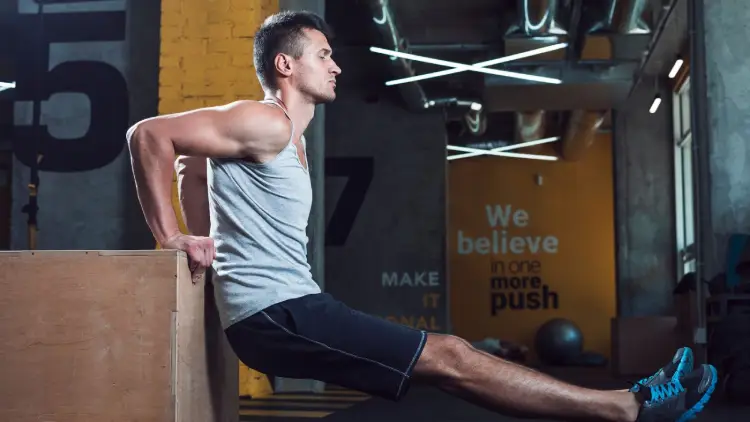
Push pull legs vs upper/lower, push pull legs vs full body, and push pull legs vs bro-split are common debates.
Push Pull Legs vs Upper Lower
- Upper Half-body focus
- PPL is more movement-based and refined
- PPL enables greater specialization
Some trainees even do both in an upper/lower push-pull legs split or upper/lower push-pull weeks split.
Push Pull Legs vs Full Body
Full-body training is good for beginners, while lacking volume specialization. However, a push pull legs workout split can be used to build the legs.
Push Pull Legs vs Bro Split
The muscles are injured by Bro once a week. PPL takes them for a ride, and their growth accelerates.
Push-Pull Legs vs Arnold Split
Arnold’s split is a higher-volume but less structured split. PPL is more well-rounded and sustainable.
In general, the majority of highly trained trainers favor push-pull legs versus upper/lower, due to versatility and recuperation benefits.
Push Pull Legs Workout Plans and Variations
The push-pull legs can split can be modified for various training routines and skill levels. You can tailor this program to fit the training of each individual, whether it’s 3 days or 6 days per week, and whether it’s for recovery or fitness.
Best for Beginners 3-Day Push Pull Legs Split
A beginner-friendly solution for beginners in strength training.
- Day 1: Push
- Day 2: Pull
- Day 3: Legs
- Activity Rest Days: As necessary
Benefits:
- Easy to follow
- Gives adequate rest intervals
- Helps build proper exercise technique and consistency
4-Day Push Pull Legs Routine (Flexible Schedule)
Very recommended for those looking for additional training volume, but who don’t want to go to the gym six days a week.
- Day 1: Push
- Day 2: Pull
- Day 3: Rest
- Day 4: Legs
- Day 5: Upper Body or Full Body
- Days 6–7: Rest
Benefits:
- Fits busy schedules
- Increases weekly training volume
- Provides additional recovery time
5-Day Push Pull Legs Split (Intermediate)
This variation is a push-pull legs variation with an additional upper or lower body session.
- Day 1: Push
- Day 2: Pull
- Day 3: Legs
- Day 4: Upper Body
- Day 5: Lower Body or Weak Point Training
- Days 6–7: Rest
Benefits:
- Perfect for those who are medium advanced in their training
- Increases volume more without tiring easily
- Emphasizes slow muscle groups, unless preferred otherwise
6-Day Push Pull Legs Split (Advanced)
The most popular push pull legs workout for maximizing muscle growth and strength.
- Day 1: Push
- Day 2: Pull
- Day 3: Legs
- Day 4: Push
- Day 5: Pull
- Day 6: Legs
- Day 7: Rest
Benefits:
- Works every muscle group 2 times each week
- Maintains a rate of growth and strength development in the most effective manner
- Ideal for complex training, recovery, and nutrition for experienced lifters
Pick an exercise that is appropriate for your fitness level, number of training days, and recovery time. But it isn’t as crucial as taking the biggest volume split.
Push Pull Legs Exercises Breakdown
An appropriate push pull legs exercise will include compound exercises as well as isolation exercises to work out both for building strength and for even distribution of strength throughout the muscles. Selecting the proper exercises guarantees that each key muscle group will be targeted properly.
Push Day Exercises
These workouts focus on the chest, shoulders, and triceps.
- Bench Press: Develops pressing strength and general chest power.
- Incline Dumbbell Press: focuses on the upper chest.
- Overhead Shoulder Press: Fights ups front and side delts.
- Lateral Raises: Target the side shoulders for broader shoulders.
- Dips with the triceps: to strengthen the lower chest and triceps.
- Triceps Pushdowns or Extensions: For additional arm size.
Pull Day Exercises
Pull workouts target the back, front of shoulders, and front biceps.
- Deadlift: learn total body strength and posterior chain.
- Pull-Up or Lat Pulldowns: Broaden back and increase lats.
- Barbell rows: increase back width and strength of pulls.
- Seated Cable Rows: work the middle back.
- Face pulls: Boost strength in the back delts and health in the shoulders!
- Bicep Curls: Isolate the biceps for arm growth.
Legs Day Exercises
Leg day workouts focus on strengthening and balancing the legs, as well as building muscle.
- Squats – The foundation of lower-body training.
- Leg Press – Builds quad strength with controlled movement.
- Walking Lunges – Improve balance while targeting the quads and glutes.
- Romanian Deadlifts – Focus on the hamstrings and glutes.
- Leg Curls – Isolate the hamstrings.
- Standing or Seated Calf Raises – Develop stronger calves.
Home and Dumbbell Variations
In the event you exercise at home, then dumbbell push pull legs is an exceptional alternative. There are options to get a full-body workout with just a dumbbell (such as dumbbell presses, goblet squats, Romanian deadlifts, one-arm rows, and shoulder presses)!
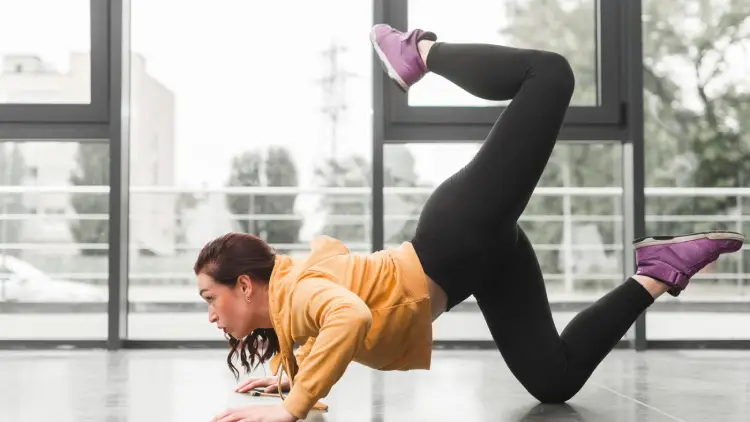
You can also do a push/pull legs bodyweight workout with the following movements:
- Push: Push-ups, dips, and pike push-ups
- Pull: Chin-ups, Pull ups and inverted rows
- Upper body: Dips, chest presses, and single-arm rowings
Properly planned, PUL (Push pull legs) can be used to get great results regardless of whether you are doing your training at a commercial gym or from home, just by taking the approach of progressive overload and sticking to a routine of exercising the same movement each day.
Push Pull Legs for Strength vs Hypertrophy
- Push/pull legs for steroidism, medium-weight, and many reps.
- Push/pull legs for strength is emphasized on a high number of repetitions and compound exercises.
- Both of these strategies can be used together for a push-to-pull bodybuilding workout with legs.
Deep work on push-pull-legs movements, as in the AthleanX training style, focuses on athletics that are functional and designed to prevent injury, such as those used by athletes.
At Home and Equipment-Free Push Pull Legs
The push-pull legs at home workout doesn’t require a full gym.
Here are some examples of a simple push pull legs exercise that can be performed:
The push pull legs routine dumbbell setup is additionally effective for muscle development.
Push Pull Legs Results and Effectiveness
The push pull legs will vary depending on steadiness, food ingestion, and recuperation.
Yes, push pull legs do work? Absolutely—when properly programmed.
Most lifters see:
- Improvements in strength within 4 weeks of ingestion and 6 weeks with training
- After 8–12 weeks, visible hypertrophy occurs
- Fat loss with added cardiovascular exercise.
The push pull legs cardio regimen is a good way to carry out a multi-faceted workout that increases endurance and burns fat while providing for your legs.
Advanced Push Pull Legs Programming
An Advanced Push Pull Legs workout includes:
- Periodization
- Progressive overload
- Volume cycling
You can also mix in:
- Core split training is the same as push pull legs core split.
- Hybrid routines such as upper-lower push-pull legs routine.
This can make it suitable for long-term training progression.
Push Pull Legs For Beginners & Women
A push-pull legs workout for women is similar but can be more directed toward glutes, core, and toning.
A push pull legs routine for beginners model contains lighter weight loadings, slower advancement, and form focus for the novices.
Push Pull Legs and Popular Fitness
There is a lot of fitness hype about fast transformations, go-viral routines, and fast weight loss plans. Often these are inspiring stories, but true success requires a structured push pull legs workout and good fitness habits over the long-term.
Key takeaways:
- Focus on consistency: A push pull legs workout plan is more effective in the long term than all those quick fads and extreme diets.
- Developing a well-rounded body: Push, pull, and leg work for even development of all the major muscle groups.
- Remember that the changes are going to be gradual: building muscle or losing fat takes time, carefully planned nutrition, and progressive training.
- Body weight exercises are worth it: Pushups, pull ups, and squats help build strength, endurance, and improve them even more when they are a part of an overall push pull legs workout schedule.
- To recover: Giving some rest days, hydrating, and sleeping are as important as exercise.
- Don’t fall for fitness myths: You will never see anywhere near a transformation or make as much progress in a month by taking a shortcut or using a miracle workout as you would in several months of disciplined training.
A push pull legs programme is a sound plan that will lead to strength, muscle, and fitness build-up, but not unrealistic expectations.
Common Mistakes in Push-Pull Legs Training
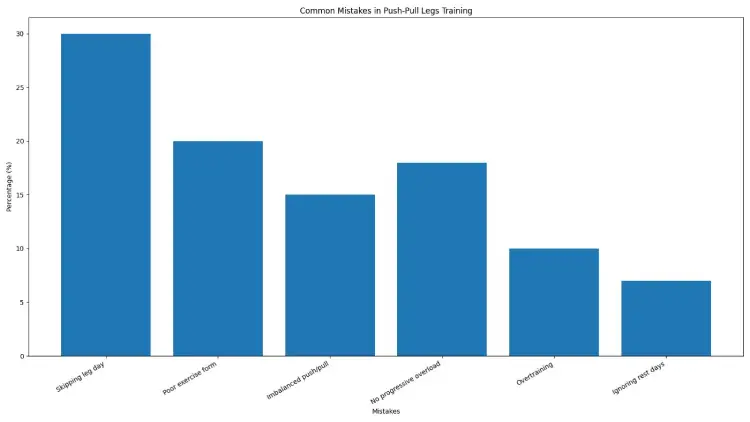
Although push-pull legs make for good, people mess up:
- Overtraining without rest
- Poor nutrition
- Ignoring progressive overload
- Random exercise selection
These can be eliminated for better push pull legs.
Final Thoughts
The push-pull legs program continues to be one of the best programs to engage beginners and advanced runners together. It is flexible, scalable, and scientific.
In any push-up-to-legs program, consistency is key – push-up-to-legs 3 days per week, push-up-to-legs 6 days per week, or an upper-lower program- you need to stick with it.
A push/pull legs training split is likely one of the most well-rounded and effective with regard to building strength, size, or fat loss.
Frequently Asked Questions
1. Would it be appropriate for beginners to do the push-pull legs split?
Yes. The push pull legs workout is a good beginner workout as it is easy to execute and has enough rest in between repets/exercises.
2. How many minutes did you estimate they would take in 2007?
Depending on experience, goals, and recovery, you may train 3, 4, 5, or 6 days a week.
3. Do I need to get exercise equipment to perform my push-pull workout at home?
Yes. An effective push/pull legs workout can be done at home using bodyweight exercises or dumbbells (or resistance tubing).
4. Do push-pull legs permit a bro split?
Yes, for the majority. Split trains with push-pull legs to target individual muscles more often in order to grow better and become stronger.