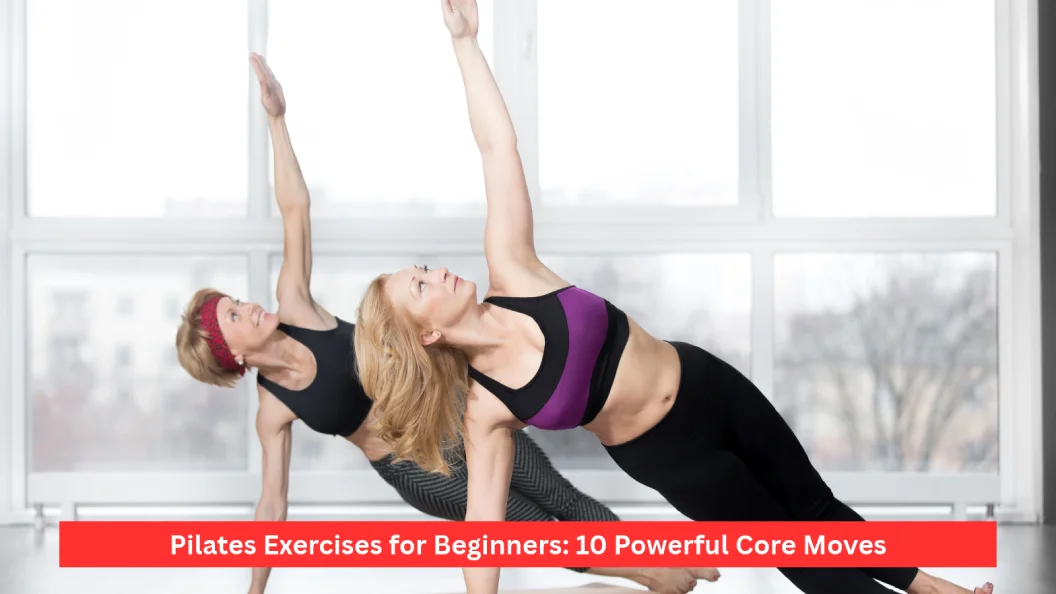

Looking to improve your core strength, balance, and flexibility? Pilates exercises are simple and low-impact exercises that can be done at home without expensive equipment. This is a guide to 10 simple Pilates exercises for beginners, how to do them correctly, and a simple exercise to do at home.
What Is Pilates?
Pilates is a type of physical exercise that was developed by Joseph Pilates in the early 20th century. It emphasizes controlled movements, breathing, concentration, and coordination to promote physical fitness.
With this type of exercise, which is done primarily for speed or using heavy weights, Pilates focuses on controlling movements and keeping the body aligned properly.
There are two kinds of Pilates:
Mat Pilates: Uses your body weight and gravity as resistance. The majority of exercises are done on an exercise mat.
Reformer Pilates: A modified machine that includes a moving platform, springs, and adjustable resistance to add and/or manipulate various movements.
Mat Pilates is ideal for novices, es as many of the movements can be done at home without any special equipment.
Benefits of Pilates Exercises
Adding Pilates to your fitness schedule can offer several benefits when practiced consistently.
1. Supports core strength: Many Pilates movements engage the abdominal and trunk muscles, helping develop muscular control and endurance.
2. Improves balance: Controlled movements challenge your ability to maintain stability while moving different parts of your body.
3. Encourages better body awareness: Pilates teaches you to pay attention to breathing, alignment, and movement quality.
4. Supports flexibility: Some movements take your joints and muscles through comfortable ranges of motion.
5. Provides low-impact exercise: Most beginner mat exercises avoid jumping and aggressive movements, making them a useful option for people who prefer gentler workouts.
Research has found that Pilates can improve abdominal muscular endurance compared with doing no exercise, although results vary between individuals and programs.
What Do You Need to Start Pilates at Home?
You don’t need expensive equipment to begin a beginner Pilates workout.
Here are a few useful items:
- Exercise mat: Provides cushioning and grip during floor exercises.
- Comfortable clothing: Choose clothes that allow your hips, knees, and shoulders to move freely.
- Small towel: Useful for additional knee support.
- Water bottle: Helps you stay hydrated.
- Optional resistance band: Can introduce additional resistance as your fitness develops.
A quiet space with enough room to extend your arms and legs is usually sufficient.
10 Best Pilates Exercises for Beginners
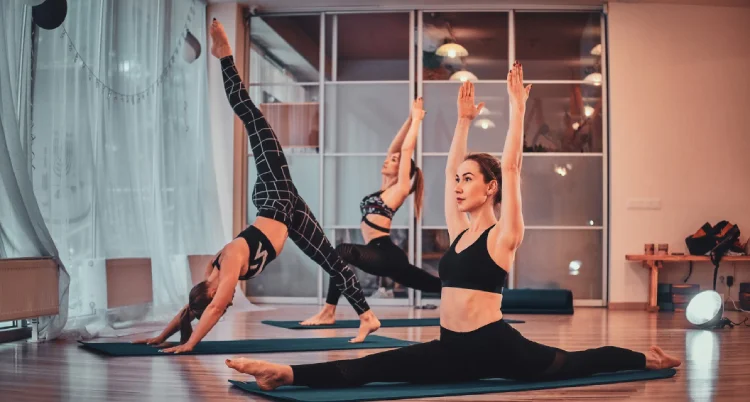
These mat Pilates exercises explore various sequences of movement such as core awareness, hip movement, spinal mobility, and balance. Do not rush or take risks to try to do as many as possible, but work at your own pace, concentrating on the correct technique.
1. Pilates Breathing
An important starting point is Pilates breathing, since it allows you to synchronise your breathing with your movements.
How to perform it:
- Lie face up with knees bent and feet flat on the floor.
- Keep arms relaxed at the sides of your body.
- Slowly inhale through the nose.
- Allow your rib cage to expand naturally.
- Slowly breathe out, and lightly press the abdominal muscles.
- Repeat, not holding your breath.
Suggested length of time: 5-8 cycles of slow breathing.
Instructions: This exercise enhances the awareness of breathing and readies the body for controlled Pilates movements.
Tips for beginners: Do not pull the abdomen in too much. Maintain normal and easy breathing.
2. Pelvic Curl (Shoulder Bridge)
Pelvic curl is a simple exercise that targets the glutes, hamstrings, and trunk muscles.
How to perform it: Lie on your back with knees bent.
- Set your feet hhip-widthapart on the floor.
- Let arms fall at the sides of the body.
- Gently arch the pelvis and lift the hips off the mat.
- Only lift hips as far as they can be controlled.
- Gently lower back and hips.
Recommended repetitions: 8–10 repetitions.
Benefits: Develops hip movement control and engages the muscles supporting your pelvis.
A beginner’s hint: Do not push your lower back into a painful arch position; keep your feet flat.
3. Knee Folds
Knee folds are useful for beginners learning to maintain a stable trunk while moving one leg.
How to perform it:
- Lie on your back with your knees bent.
- Place your feet flat on the floor.
- Gently engage your abdominal muscles.
- Slowly lift your right foot until your knee moves above your hip.
- Lower your foot back to the starting position.
- Repeat with your left leg.
Recommended repetitions: 8–10 per leg.
Benefits: Practices abdominal control and coordination between your legs and trunk.
Beginner tip: Keep your pelvis steady instead of allowing your lower back to move excessively.
4. Pilates Toe Taps
Toe taps are a popular Pilates core exercise that introduces controlled leg movement while your trunk remains stable.
How to perform it:
- Lie on your back with your knees bent.
- Lift your legs into a tabletop position, with knees above your hips.
- Keep your arms relaxed beside your body.
- Slowly lower your right foot toward the floor.
- Lightly tap the floor with your toes.
- Return your leg to the starting position.
- Repeat with the opposite leg.
Recommended repetitions: 6–8 per side.
Benefits: Challenges the abdominal muscles to maintain trunk control during leg movement.
Beginner modification: Keep one foot on the floor while moving the other leg.
5. Chest Lift Preparation
This is an easy exercise for the abdominal area as it doesn’t involve a sit-up.
How to perform it:
- If you’re lying on your back, bend your knees.
- Rest your hands on the back of your head for support.
- Maintain a good elbow spread.
- Take a deep breath in to set up.
- Exhale and raise your head and upper shoulders gently.
- Relax your neck and look at your knees.
- Lower your upper body slowly.
Recommended repetitions: 6–8 repetitions.
Benefits: exercises abdominal muscles and trains control over upper-body movement.
Tip for beginners: Don’t pull your neck forward; keep your hands on your head to support your neck.
6. Single-Leg Stretch
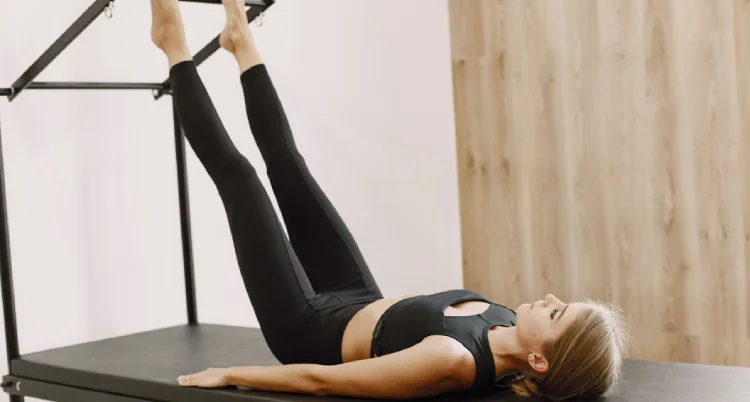
Single-leg stretch is a combination of alternating leg movement plus abdominal engagement.
How to perform it:
- While on your back, draw both knees to your chest.
- Lift your head and shoulders slightly, if comfortable.
- Draw one knee to your chest.
- Extend the opposite leg forward without forcing your lower back.
- Return the extended leg and cross over to the other side.
- Continue alternating slowly.
Recommended repetitions: 6–8 on each side.
Benefits: Works the abdominal muscles and coordination.
Modification for beginners: Maintain head/shoulders on the mat during the exercise.
7. Supine Spine Twist
This gentle movement introduces rotation while your upper body remains supported by the mat.
How to perform it:
- Lie on your back with your knees bent and feet flat.
- Extend your arms out to the sides.
- Keep your shoulders comfortably against the mat.
- Slowly allow both knees to move toward your right side.
- Return to the center.
- Repeat toward your left side.
Recommended repetitions: 6–8 per side.
Benefits: Encourages controlled trunk rotation and comfortable spinal movement.
Beginner tip: Move only as far as you can while keeping your shoulders relaxed.
8. Side-Lying Leg Lifts
Side-lying leg lifts are useful for working the muscles around your hips, including the gluteal muscles.
How to perform it:
- Lie on your left side with your legs extended.
- Support your head with your left arm.
- Keep your hips stacked comfortably.
- Slowly lift your right leg upward.
- Pause briefly without twisting your body.
- Lower your leg with control.
- Repeat and switch sides.
Recommended repetitions: 8–12 per side.
Benefits: Develops hip strength and movement control.
Beginner tip: Keep the movement small and avoid rolling your upper body backward.
9. Swimming Preparation
It is a beginner-friendly adaptation of a Pilates back-body exercise, called swimming preparation. It works on Coordination and Stability.
How to perform it:
- Get on your hands and knees.
- Put your hands under your shoulders.
- Place your knees under your hips.
- Stretch out your right arm in front.
- Slowly extend your left leg backward.
- Keep your body stable and hold for a short time.
- Move back to the starting position and cross the other way.
Recommended repetitions: 6–8 per side.
Benefits: Works the back muscles, glutes, and stabilizers of the trunk.
Novice tip: Try placing a water glass on the bottom of your back. Don’t rotate your hips or arch too far.
10. Spine Stretch Forward
The spine stretch forward is an exercise from Pilates that is seated and uses controlled movement of the spine in conjunction with breathing.
How to perform it:
- Sit on your mat, legs comfortably extended in front of you.
- Spread your feet out about hip-width.
- Place arms at shoulder level and extend outwards.
- Inhale to prepare.
- Breathe out and slightly round the upper back in front.
- Extend arms forward, but not to a distance that is forced.
- Gradually come back to sitting up straight.
Recommended repetitions: 5–8 repetitions.
Benefits: Promotes spinal mobility and lengthens back muscles and shoulder muscles.
If sitting up is challenging, bend your knees slightly or sit on a folded towel (a beginner modification).
Beginner 15-Minute Pilates Routine
You can combine several of these Pilates moves into a short home workout.
| Exercise | Time |
| Pilates breathing | 1 minute |
| Pelvic curl | 2 minutes |
| Knee folds | 1 minute |
| Toe taps | 2 minutes |
| Chest lift preparation | 1 minute |
| Single-leg stretch | 2 minutes |
| Side-lying leg lifts | 2 minutes |
| Swimming preparation | 2 minutes |
| Spine stretch forward | 2 minutes |
| Total | 15 minutes |
Move slowly and take short breaks whenever necessary. Beginners can start with fewer repetitions and gradually increase their workload as they become more comfortable.
Try this routine two or three times per week initially, allowing your body to adjust between sessions.
Common Pilates Mistakes to Avoid
Even simple Pilates exercises require attention to technique. Avoid these common mistakes:
- Holding your breath: Breathe naturally and coordinate your breathing with each movement.
- Moving too quickly: Slow movements make it easier to maintain control and alignment.
- Overarching your lower back: Use a comfortable range of motion and avoid forcing your spine into extreme positions.
- Straining your neck: Keep your head supported during abdominal exercises when necessary.
- Ignoring proper alignment: Pay attention to your shoulders, hips, knees, and feet.
- Doing too many repetitions: Prioritize movement quality instead of trying to complete a large number of repetitions.
Safety Tips for Beginners
Start with easier Pilates exercises and gradually progress as your strength and coordination improve.
If you’re returning to exercise after a long break, have an existing injury, are pregnant, or have recently undergone surgery, ask an appropriate healthcare professional whether the exercises are suitable for you.
Stop immediately if you experience pain, dizziness, or unusual discomfort. Pilates should challenge your muscles without forcing painful movements.
If you’re unsure about your technique, consider learning the basics from a qualified Pilates instructor before progressing to more demanding exercises.
Conclusion
Pilates exercises are great ways to build a strong core, balance, coordination, and controlled movement at home. The equipment and fitness level required are not complicated. Do some basic mat work, practice correct breathing, and build up slowly. It’s important to be consistent and use good technique rather than move something hard for them to do. Visit Stretchlee for additional stretching, flexibility, and mobility guides for your fitness program.
Frequently Asked Questions
1. Is Pilates Good for Beginners?
Yes. Beginner Pilates is structured with low-impact and controlled movements to build core strength, balance, and flexibility.
2. Can I Do Pilates at Home Without Equipment?
Yes. With your own weight and just a comfortable exercise mat, Mat Pilates can help you.
3. How Often Should Pilates be done by beginners?
Begin 2-3 times per week and build up gradually as you get more comfortable.
4. How Long Should a Beginner Pilates Workout Be?
A 15-minute routine is a good way to start practicing simple Pilates exercises at home.