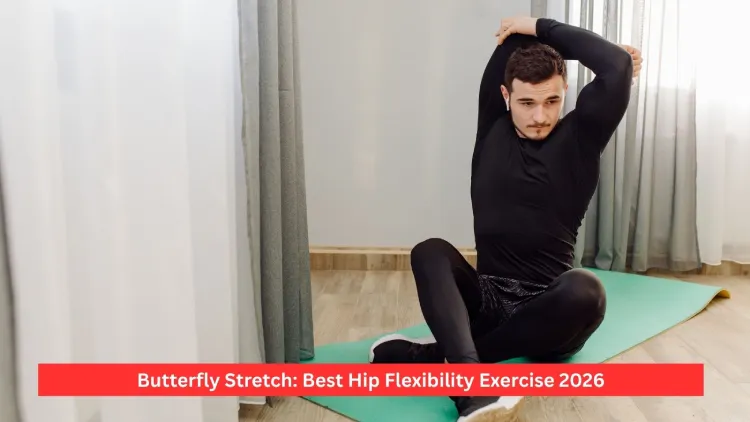

This is a very basic flexibility exercise to release hip tightness, ease the inner thighs, and relieve lower-body stiffness. The movement is seated and promotes improved posture and movement whilst engaging the groin, hip flexors, and adductors. Regularly performing the butterfly stretch can help you become more flexible, make it easier to recover from exercise, and reduce tightness in your muscles. It doesn’t require any equipment and is beginner-friendly, making it easy to fit in for warm-ups, cool-downs, yoga, or even day-to-day mobility; there’s no time-saving in existence to let that happen.
- What Is the Butterfly Stretch?
- Benefits of the Butterfly Stretch
- How to Do the Butterfly Stretch Properly
- Correct Butterfly Stretch Form
- Muscles Worked During the Butterfly Stretch
- Butterfly Stretch Variations
- Common Butterfly Stretch Mistakes
- Best Time to Do the Butterfly Stretch
- Butterfly Stretch: Who should do it?
- Safety Tips for the Butterfly Stretch
- I hope you enjoy these and find them helpful
- Butterfly Stretch & Blood Flow
- Butterfly Stretch and Daily Flexibility
- The Butterfly Stretch has the following risks
- Effective Portion sizes.The use of effective portion sizes
- Yoga and Mobility Training
- Conclusion
- Frequently Asked Questions
What Is the Butterfly Stretch?
The butterfly stretch is a seated flexibility exercise for the lower body in which the soles of the feet are pressed together, and the knees move towards the floor. The shape of the position is like that of butterfly wings, which is why the exercise is named the butterfly stretch.
This exercise is a common one used in the following:
- Flexibility routines
- Yoga sessions
- Athletic warm-ups
- Mobility training
- Rehabilitation programs
- Recovery workouts
The butterfly stretch primarily stretches the hips, groin muscles, inner thighs, and lower back. Often, the tightness in these areas is caused by not moving for long periods, intense exercise, incorrect posture, or being sedentary. This stretch is widely recommended for improving movement and decreasing stiffness.
The butterfly stretch is done by many people for hip flexibility prior to exercise or as a restorative stretch after physical activity. It is easy to learn and low-impact, so it can be used by novices and old pros.
Sitting for extended periods of time can cause the hip flexors to tighten over time and significantly diminish mobility; the stretch is particularly useful for people who do so. The gentle stretching restores movement, which can make functioning easier.

Benefits of the Butterfly Stretch
The butterfly stretch has several mobility and physical benefits if performed regularly.
Improves Hip Flexibility
One of the main benefits of the butterfly stretch is improved hip flexibility. When hips are tight, walking, squatting, running, and even posture can be impacted. Frequent stretch exercises give a person greater hip joint and surrounding muscle range of motion.
A mobile hip joint makes it easier to move when exercising and may help to prevent damage to other muscles, too.
Works the muscle in the front of the thighs
The butterfly stretch is a great workout for the adductor muscles on the inside of the thighs. If adductors get tight, it can become difficult to move around the lower part of the body and can limit flexibility in the workout.
Regular stretches over time could help enhance the elasticity of muscles and protect their efficiency in movement.
Supports Better Posture
Tight hips and stiffness in the lower body are not an uncommon association with poor posture. Buttock stretch encourages sitting upright to develop spinal alignment and a sense of the body.
This particular stretch, if used in conjunction with other mobility stretches, can help alleviate slouching that may occur from sitting for prolonged periods.
Encourages Relaxation
Stretching helps to relax the whole body by using deep breathing. Many do find it easier to relax after stretching, as slow breathing can help relax muscles.
Soothing stretches can also help you manage your stress and regain your composure.
Helps Increase Blood Flow
Stretching improves flow in the muscles and joints. Changing blood flow can encourage muscle healing and lessen the tightness and soreness that may accompany physical activity.
The butterfly stretch could assist in improving the mobility of the muscles surrounding the thighs and hips, and improve circulation of oxygen and nutrients to the muscles.
Supports Athletic Performance
Athletes may perform the stretch as a warm-up for the lower body. Hip flexibility is important for certain sports that involve running, kicking, jumping, squatting, dancing, or quick changes of direction.
Hips allow flexibility, which causes better quality of movement and minimises restriction when the body is moving.
Relieves muscle tension.Helps reduce muscle tension
Usually, pain and tightness start from a lack of activity, strenuous exercises, or repetitive exercise techniques. The butterfly stretch gently releases the hip and groin muscles and improves flexibility over a long time.
Educates and helps coordinate providers to implement keys for healthy mobility with age.
As people get older, it increases due to decreased mobility of muscles and joints. Older adults can benefit from flexibility and ease of movement with regular stretching.
How to Do the Butterfly Stretch Properly
Having proper technique when performing the butterfly stretch is crucial in helping you to reap the best rewards from its practice while minimizing unnecessary stress.
Take your time to follow these instructions:
- Sit on the floor or an exercise mat.
- Straighten legs and reach forward.
- Point your knees towards each other.
- Draw your feet together so your feet come to the center of your body.
- Grab your legs or feet. Grab your ankles or legs.
- Sit up straight and keep your chest up.
- Lift your knees towards the ground gently.
- Relax your shoulders.
- Deep and slow breathing.
- Hold the stretch for 20–30 seconds.
- Perform movement 2 times more if necessary, 2-4 times.
If your hip area is really tight, place a cushion or yoga blocks under your knees to support the hip area.
A gentle forward lean (butterfly stretch) is done to further stretch the hips and groin for some. But this motion should never be painfully done, always be easy to move.

Correct Butterfly Stretch Form
The butterfly stretch works more efficiently and prevents injuries by having the correct form.
Keep back low and flat.
A rounded lower back will decrease the quality of the stretch. Sit down properly with a good natural curve in the spine.
Relax the Knees
Avoid pushing knees to the ground. Flexibility is a gradual process that takes time and practice.
Use Slow Breathing
To relax the muscles naturally, deep breathing is needed to relax them. There is also a possibility of enhanced stretch tolerance and controlled breathing.
Avoid Aggressive Stretching
Excessive force or strain may result in hip or groin muscle strain. Stretching should provide a slight stretch, not a painful one.
Maintain Shoulder Relaxation
The shoulder or neck tension should not be used while performing the butterfly stretch. Maintain relaxation in the upper body; concentrate on hip mobility.
Muscles Worked During the Butterfly Stretch
The butterfly stretch works several key muscles in your lower body.
Adductors
The stretch of the main muscles of the exercise will be the ones on the inside of the thigh muscles.
Hip Flexors
Hip flexors help lift the knees and stabilize the body. Many who sit often have tight hip flexors.
Groin Muscles
The butterfly stretch helps to stretch out the groin and increases flexibility in the hips.
Glutes
Glute muscles maintain this stabilisation of the hips during the stretch.
Lower Back Stabilizers
Holding the spine tall engages the muscles that stabilize the spine and pelvis.
Due to the use of more than one muscle group, the butterfly stretch can be regarded as an overall lower-body mobility workout.
Butterfly Stretch Variations
These different versions of the butterfly stretch allow individuals to set their movements according to their flexibility and comfort.
Seated Butterfly Stretch
This is the traditional one, sitting straight on the ground.
Reclined Butterfly Stretch
Here, the person lies flat on his/her back with the soles of the feet together. This gentle stretch of the hip opening.
This one can be relaxing for some people, before going to sleep, as it puts less pressure on the spine.
Dynamic Butterfly Stretch
Knees gently rise and fall to prepare the body’s hip muscles for exercise. This variation boosts blood circulation and readies the lower body for motion.
Forward-Leaning Butterfly Stretch
Bend forward with your spine long to intensify the stretching in your hip and groin muscles.
Elevated Butterfly Stretch
Using a folded towel or yoga block can provide more stability and make the exercise more comfortable for novice practitioners.

Common Butterfly Stretch Mistakes
There are a few points to avoid with the butterfly stretch that will make it less effective.
Rounding the Back
The discomfort of bad posture causes undue pressure on the lower back.
Forcing Flexibility
If the knees are pushed really hard downwards, it can put strain on muscles and/or aggravate the hip.
Holding the Breath
Breathing helps the muscles relax, which increases comfort.
Stretching Cold Muscles
Cold muscles are not as flexible and are prone to discomfort. Stretching after warm-up will aid mobility.
Moving Too Fast
Rapid stretches can cause loss of muscle control and tension.
Ignoring Pain Signals
The suturing should have some light stress, but not cause sharp pain in the cast. Discontinue if discomfort is great.
Best Time to Do the Butterfly Stretch
The butterfly stretch is good to perform in a couple of situations in a fitness session.
Before Exercise
Dynamic butterfly movement can perhaps prepare the hips for activity.
After Workouts
Refrain from holding the butterfly stretch position when working out to avoid stiffness and relaxation.
During Mobility Sessions
The butterfly stretch is often incorporated into exercises done while moving to increase flexibility and enhance the quality of movement.
Before Bed
The gentle stretches can be beneficial before bed to loosen tight muscles and alleviate physical stress throughout the day.
Butterfly Stretch: Who should do it?
The butterfly stretch is ideal for all kinds of people.
Beginners
Easy to learn and simple to change.
Athletes
Enhanced mobility and flexibility in athletes.
Office Workers
Sitting for extended periods of time can cause tight hips and groin muscles.
Older Adults
The ability of gentle flexibility training to provide comfort for movement and joints in the aging process is supported.
Yoga Practitioners
Butterfly stretch is a popular part of yoga-related mobility programs.
Runners and Cyclists
This type of activity may cause a tighter feel in the hips and inner thighs, and allowing for stretching is particularly useful.

Safety Tips for the Butterfly Stretch
The most important thing to do, then, is to make sure they’re not going to injure themselves while stretching.
Warm Up First
Muscle preparation can be done with light walking or aerobic exercises.
Avoid Painful Stretching
Stretching should be very gentle and controlled.
Use Proper Posture
SPIs help maintain alignment of the spine, which helps to optimize exercise quality.
Increase Flexibility Gradually
The key to progress is consistency, not pushing.
Modify if Necessary
Those who have suffered hip injuries and/or groin issues may require changes.
Making the Butterfly Stretch a habit.
The butterfly stretch is easily included in various fitness routines.
It can be incorporated into:
- Warm-ups
- Cool-downs
- Yoga sessions
- Recovery workouts
- Daily mobility routines
- Stretching programs
The butterfly stretch is a recommended exercise for increasing mobility that many people use for many weeks to experience benefits.
30 days of daily 30-minute stretching may bring increased flexibility, improve posture, muscle awareness, and quality of movement. But it is important to be consistent and use the correct technique rather than trying to stretch aggressively.
I hope you enjoy these and find them helpful
This is a very frequent problem that affects the hips and is caused by a lack of exercise, being old, muscle tightness, and repetitive motion. Butterfly stretch could help loosen the joints and increase their mobility and flexibility, which may decrease mild hip tightness. Stretching loosens tight muscles, so that for many people, stretching provides temporary relief.
If a hip hurts badly or is hurting continuously, however, medical attention may be necessary, especially if the hip is also swollen, numb, or if it is hard to walk. Discomfort in the hip can also be caused by some conditions, such as arthritis, bursitis, or muscle strain. The butterfly stretch is a great way to be mobile and flexible, but it should not be used for major hip ailments; instead of professional help.
Butterfly Stretch & Blood Flow
This, in turn, promotes blood flow across the muscles and connective tissues.
The butterfly stretch helps promote proper circulation by promoting light movement and alleviating tension from the muscles. Better circulation could aid muscles in recovering from workouts and have a relaxing influence.
It is sometimes believed that physical activity and stretching lead to improved circulation and mobility, which translates to improved cardiovascular function. Others also discover that stretching exercises aid in decreasing stress, which can indirectly aid the health and wellness of the heart.
The importance of hydration, proper nutrition, quality sleep, regular physical activity, and coping with stress to keep blood pressure in check and be healthy.
Butterfly Stretch and Daily Flexibility
Daily butterfly stretch could eventually increase flexibility, particularly in the hip and inside of the thighs.
Regular stretching can bring about the following benefits:
- Better movement quality
- Reduced stiffness
- Improved posture
- Greater hip mobility
- Increased body awareness
- Improved relaxation
- Enhanced workout preparation
However, if the stretching is too much, without adequate recovery, it can irritate muscles and joints. Consistency and balance are key.
The Butterfly Stretch has the following risks
The butterfly stretch, when done properly, isn’t dangerous, but there are some potential pitfalls.
Groin Strain
An over-stretch could irritate the inner thigh muscles.
Hip Irritation
The hip pressure created by forcing the knees down with the knees to the ground may over-distribute the force.
Lower Back Discomfort
Slouching can put stress on the spine and its muscles at the base of your neck.
Knee Stress
Those who have injuries to their knees should exercise caution when modifying.
The risks can be reduced substantially with controlled movement and proper alignment.
Effective Portion sizes.The use of effective portion sizes
Rest is a crucial component of any fitness training.
It is often used to stretch tight muscles that need relaxation following exercise, hence its name, the butterfly stretch. During stretching, by controlling breathing, you can activate the relaxation response from inside the nervous system.
Many athletes perform a combination of movement and stretching, get adequate hydration, sleep, and balanced nutrition, in order to enhance recovery quality.
Yoga and Mobility Training
The butterfly stretch is popular for yoga practice as it promotes openness in the hips and pelvis, and relaxation.
While there are several advanced yoga poses that have people being completely flexible and staying perfectly still on a particular pose, the butterfly stretch can be very easy for beginners.
It is easy to use, enabling safe mobility improvement for all citizens at various fitness levels.
Though some poses of advanced yoga require great flexibility, stability, and strength, the butterfly pose can be a stepping stone to learning healthier movement patterns before moving on to something more complex.
Conclusion
The butterfly stretch is an easy and great stretch to help improve hip flexibility, release tightness in the inner thighs, and ensure greater movement. It’s easy to fit into warm-ups, cool-downs, and daily stretching, and it’s so easy to use, making it ideal for beginners. The butterfly stretch can be beneficial for easing tension, taking care of posture, and facilitating fluidity with the help of time and proper form. Safe and long-term flexibility improvements rely on the control of breathing and progressive stretching.
Frequently Asked Questions
1. What is the butterfly stretch for?
The butterfly stretch benefits hip mobility and can help to loosen the tight inside of the thighs while improving lower body mobility.
2. How to hold it – butterfly stretch?
Most people BUTTERFLY STRETCH for between 20 and 30 seconds per stretch, and do 2-4 times.
3. What muscles does the butterfly stretch act on?
The primary area this stretch affects is the inner thighs, hip flexors, groin muscles, and lower back.
4. Can beginners do the butterfly stretch?
Indeed, the butterfly stretch is beginner-level and can be modified depending on flexibility and comfort.