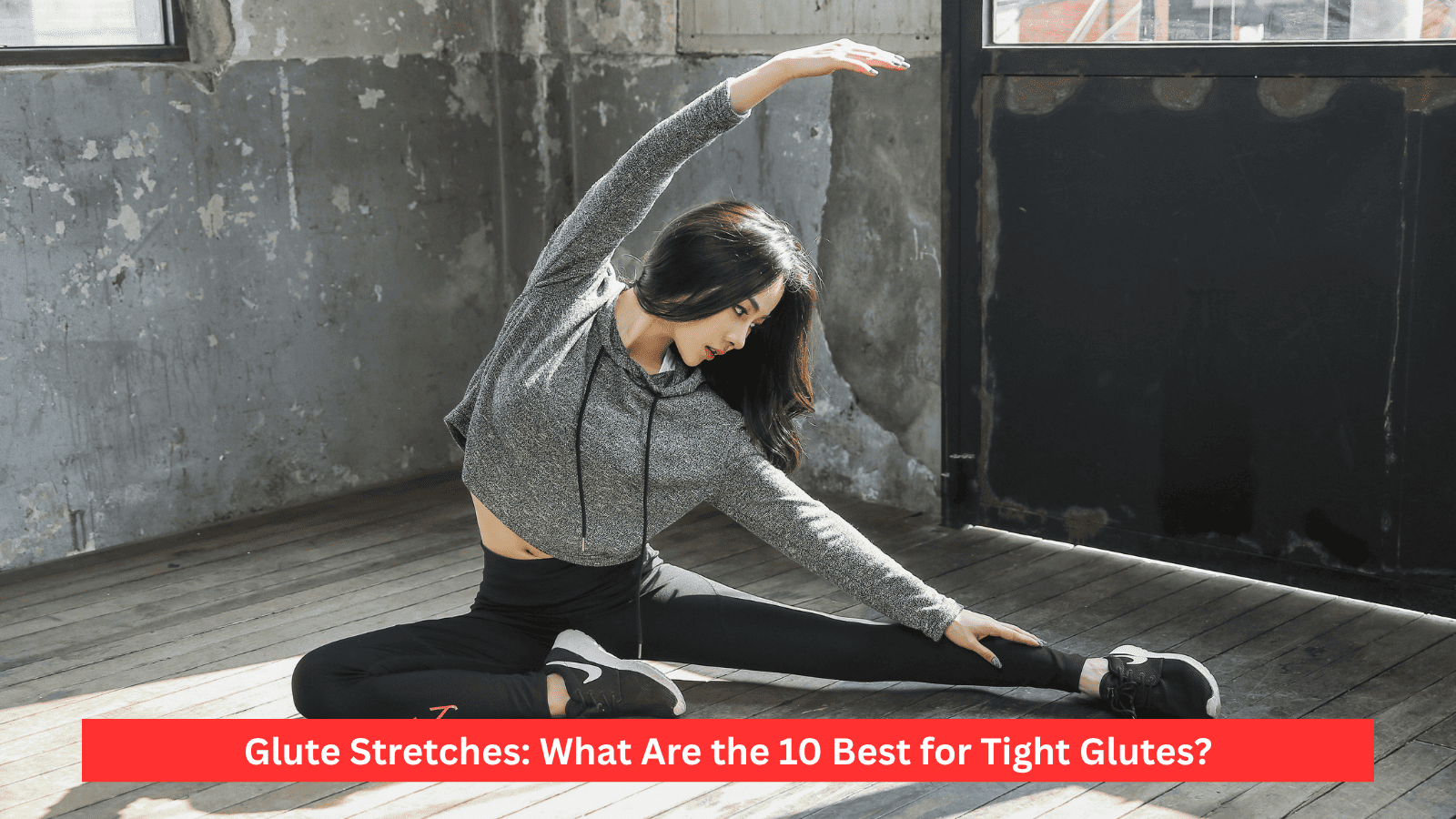

Glute stretches enhance hip movement, flexibility, and ease of motion. Do figure-four stretches, pigeon, 90/90, knee to chest, cross-body, and standing stretches. Do dynamic stretching before the workout and static stretches after the workout for 15-30 seconds per side. Avoid sharp pain; maintain gentle stretches.
- What are Glute stretches?
- Which Glute Stretches are the Best?
- What's the Best Duration for Glute Stretches?
- When is the best time to stretch your glutes?
- Stretching the buttocks muscles for runners
- Tight Glutes After Sitting: Glute Stretches
- Common mistakes when stretching your glutes
- Do Glute Stretches Make Bigger Glutes?
- Can Glute Stretches Help With Tight Hips?
- Glute Stretches vs Glute Exercises
- A Simple 10-Minute Glute Stretch Routine
- Conclusion
- Frequently Asked Questions
What are Glute stretches?
Glute stretches are exercises that will gently stretch and mobilize the muscles around your buttocks and hips. They are the gluteus maximus, gluteus medius, and gluteus minimus. They work together to support movement and help to maintain stability of the pelvis during walking, running, climbing, squatting, standing, and jumping.
Tightness may occur due to long sitting periods, repeated training, running, cycling, or a sudden surge in activity. The regular mobility program can contribute to comfortable movement.
Figure-four stretches, 90/90 mobility, pigeon, knee-to-chest, and controlled standing stretches are all helpful stretches for the hips and glutes. They can also be used along with hamstring, hip flexor, and lower body work.
However, walking alone doesn’t necessarily address all pain. If your hip or buttock area is still painful, it could be something else; get it checked out properly.
Which Glute Stretches are the Best?
The top 10 glute stretches are:
- Lying figure-four
- Seated figure-four
- Pigeon stretch
- 90/90 hip stretch
- Knee-to-chest
- Reclined glute stretch
- Seated glute stretch
- Child’s pose
- Cross-body stretch
- Standing figure-four
Flexibility and experience will allow for modifications of these good glute stretches. Do not force the deep range, and for beginners, stick to supported positions.
1. Lying Figure-Four Glute Stretch
The lying figure-four, as one of the more basic glute stretches, is an excellent option for beginners.
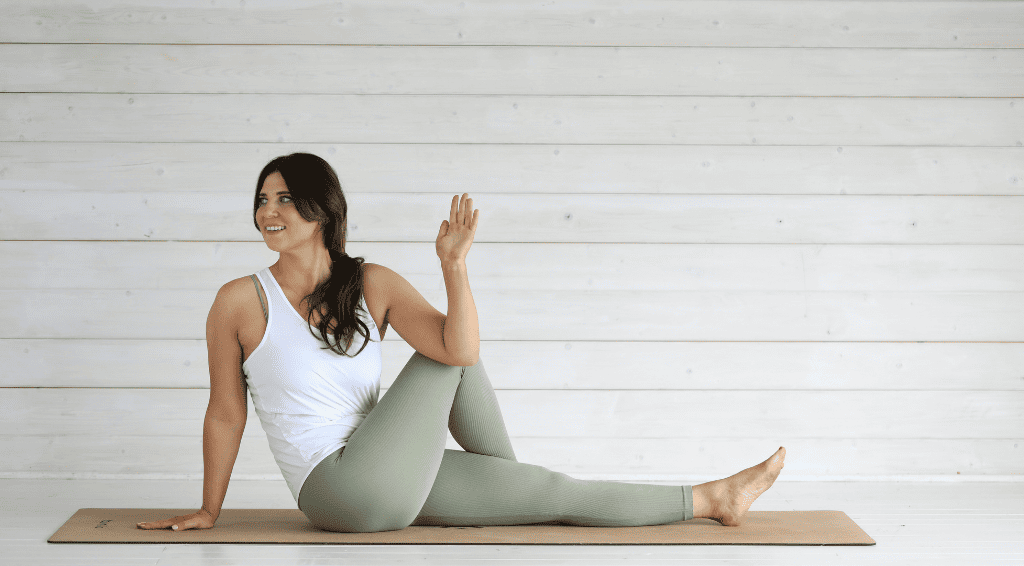
How to do it
- Lie on your back with both knees bent.
- Bring right ankle to the left thigh.
- Pull the left leg in toward the chest.
- Grab around the thigh.
- Slowly pull the leg towards you.
- Relax shoulders.
- Maintain and breathe normally.
- Switch sides.
Glute stretch figure 4 is a stretch that works the back and outside of the hip. It’s also easy to handle, being that the floor helps you support yourself.
Hold on each side for 15-30 seconds.
2. Seated Figure-Four Stretch
Seated figure-four is handy at home, work, or after training.
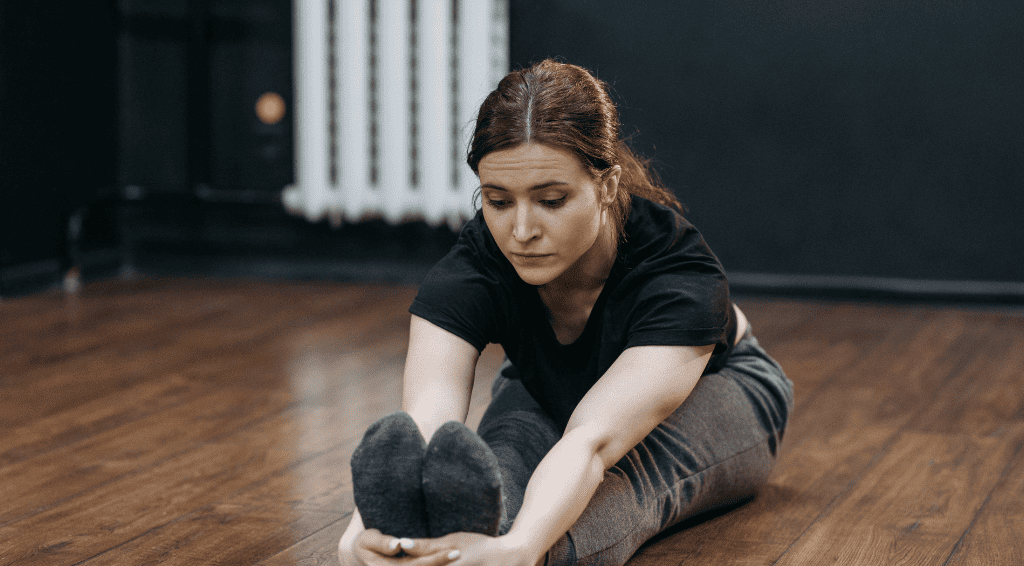
How to do it
- Sit up on a chair.
- Cross one ankle over the other leg’s knee.
- Keep chest up.
- Slowly bend forward from the hips.
- Stop if there is a comfortable sense of “tension” in the buttock muscle.
- Hold without bouncing.
- Change sides.
A useful alternative to hip/glute stretches on the floor for those who find them uncomfortable.
3. Pigeon Stretch
Pigeon is a deeper glute/hip stretch.
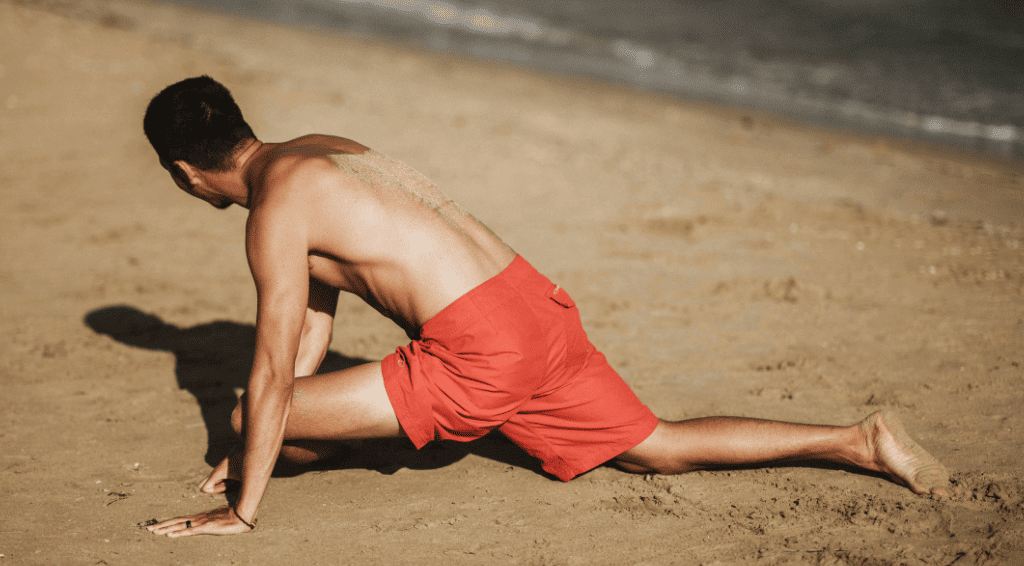
How to do it
- Begin on all fours.
- Bring one knee forward.
- Reach out the opposite leg behind.
- Use your hands to support yourself.
- Maintain a comfortable hip position.
- Keep your back straight or gently bend forward.
- Breathe steadily.
- Change sides.
This can offer great glute stretch, but don’t always do more is deeper. Place a pillow under the hip, if necessary.
Avoid putting the front knee in an extreme position.
4. 90/90 Glute Stretch
90/90 position targets hip rotation and can be incorporated into glute/hip stretches.
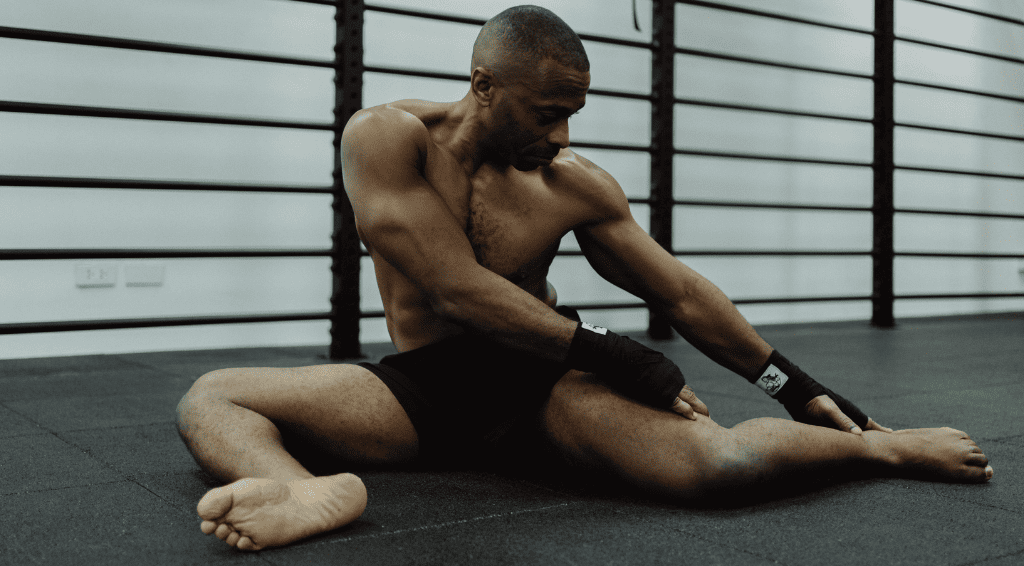
How to do it
- Sit on the floor.
- Bend one leg in front.
- Make sure that the other leg is bent behind you.
- Sit as tall as possible.
- Lean forward towards the front leg.
- Hold the breath for a few breaths.
- Come back to the centre.
- Switch sides.
Dynamic glute stretches can also be performed by taking a slow side-to-side step. Avoid bouncing movements.
5. Knee-to-Chest Glute Stretch
Knee-to-chest is easy to perform and is great for beginners!
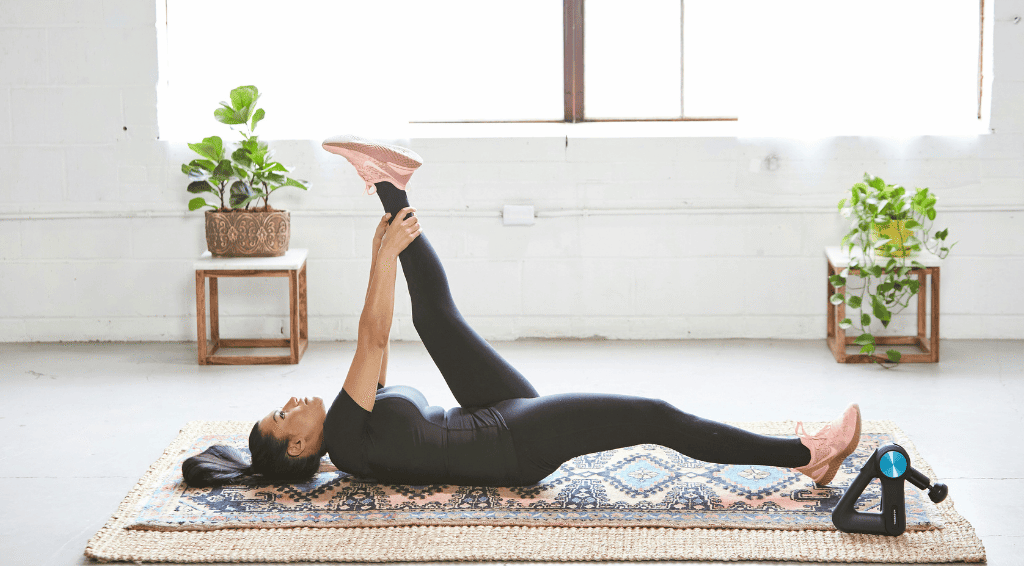
How to do it
- Lie on your back.
- Relax one leg.
- Pull the opposite knee to your chest.
- Hold it gently.
- Come in slowly and naturally; don’t rush it.
- Hold for 15–30 seconds.
- Change sides.
This movement is a great addition to lower back and glute stretch routines due to the minimal equipment needed and the ability to control the Range easily.
6. Reclined Glute Stretch
The reclined version is also a comfortable option if you’re looking for glute workouts after a run.
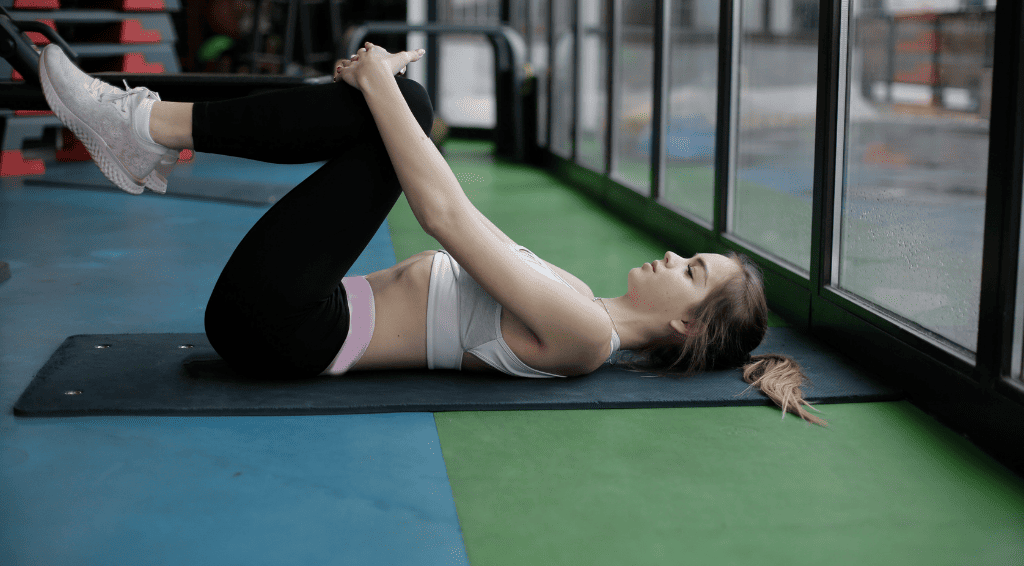
Steps
- Lie on your back.
- Bend both knees.
- Cross one ankle over the other leg at the knee.
- Pull the supporting leg back to you.
- Support on the back of the thigh.
- Pull gently.
- Relax your shoulders.
- Switch sides.
This is great for glute stretches post-workout at home, as you will only need to have a comfortable surface.
7. Seated Glute Stretch
This is an adaptation of the hip position with a slight turn.
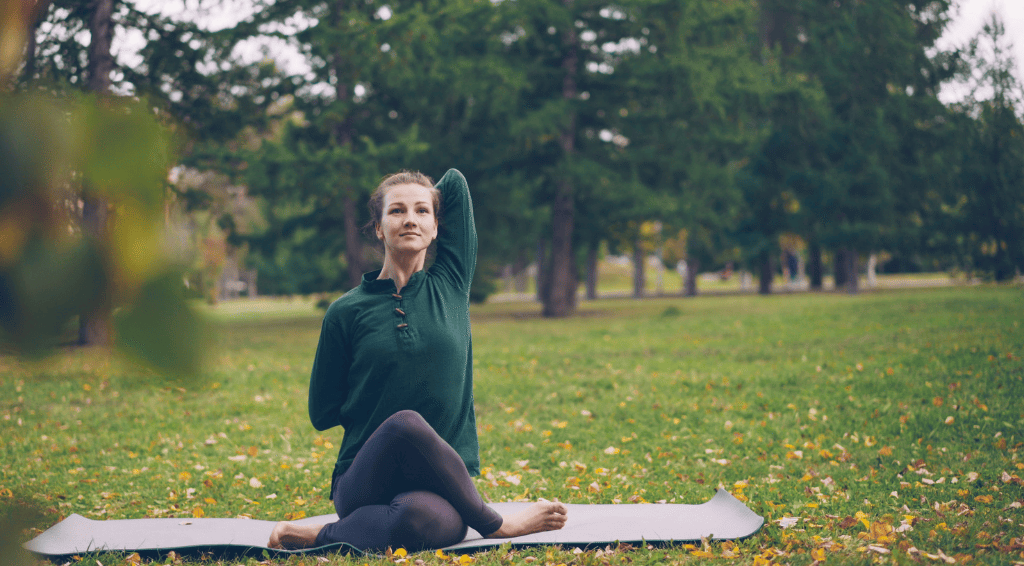
How to do it
- Sit comfortably.
- Bend one knee.
- Place the leg across the other leg.
- Maintain an upright back.
- Gently turn towards the bent knee.
- Come to a safe working range.
- Hold.
Repeat on the other side.
It can be added to glute and hamstring stretches to complete a lower-body stretch.
8. Child’s Pose With a Glute Emphasis
Those who love glute stretches in yoga may find that child’s pose is helpful.
Steps
- Start in all fours.
- Bring your hips in towards your heels.
- Extend arms out in front.
- Relax your shoulders.
- Breathe slowly.
- Move hips slightly towards each side.
- Return to center.
- Do on the other side.
Support with a cushion, if hips/knees are uncomfortable.
9. Cross-Body Glute Stretch
Easy for the outside of the hip and buttock.
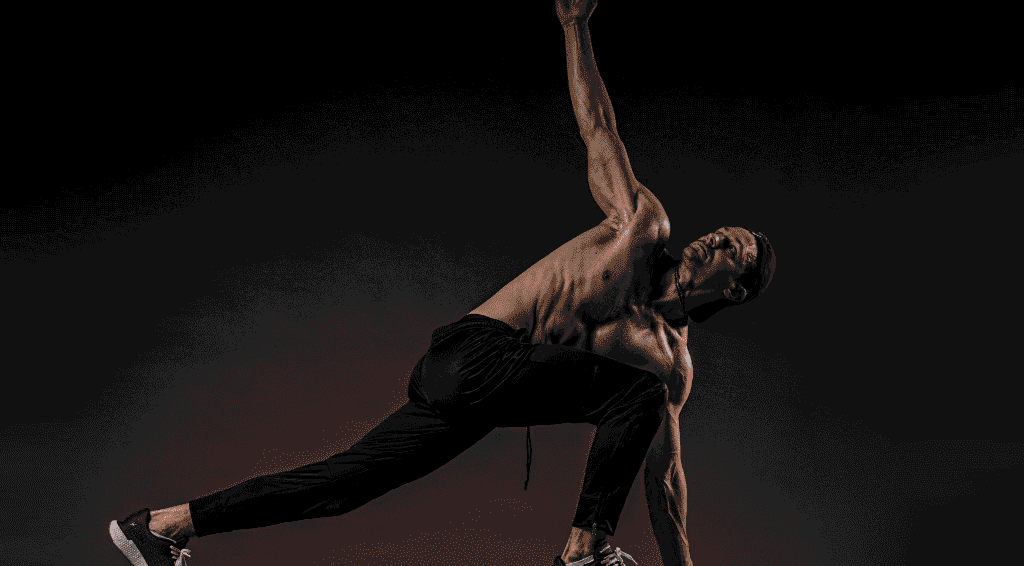
How to do it
- Lie on your back.
- Pull one knee up to your chest.
- Slowly move it over the body.
- Relax the opposite shoulder.
- Stop if you feel a slight tension.
- Hold for 15–30 seconds.
- Return slowly.
- Switch sides.
May be helpful when stretching the lower back and glutes; DO NOT over-rotate the spine.
10. Standing Figure-Four Stretch
The standing variation is helpful if you’re looking for glute stretches while standing.
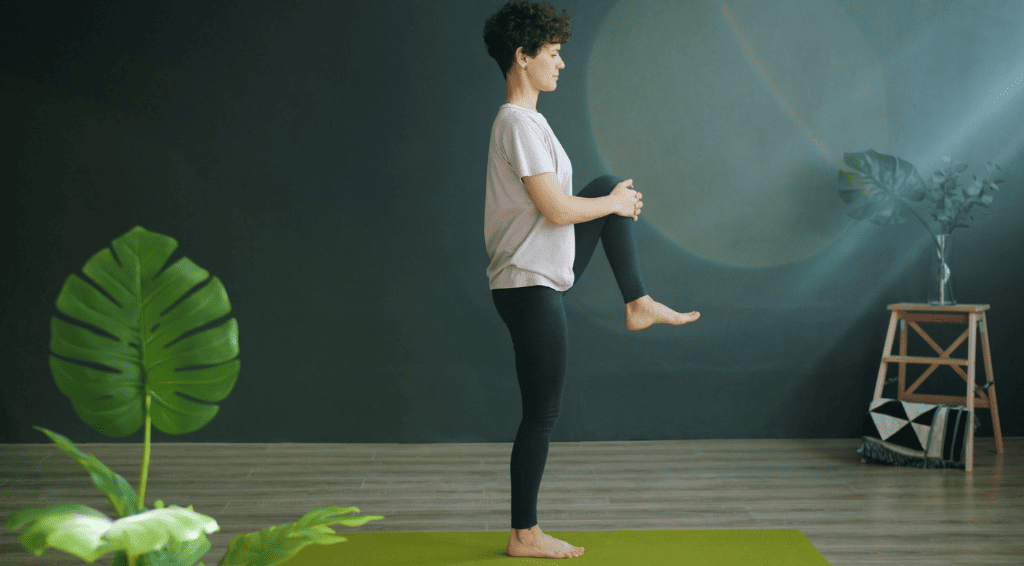
How to do it
- Hold onto a wall or a strong chair.
- Cross ankle over opposite thigh.
- Bend the standing knee.
- Bring buttocks backwards.
- Maintain a good rib cage position.
- Utilize support to balance.
- Hold the position.
- Switch sides.
This can also work on the outside hip and is helpful in the side glute stretches.
Older people can make use of a wall or chair to provide some stability if they are not balancing well, instead of attempting to balance without any support.
What’s the Best Duration for Glute Stretches?
If you choose static glute stretches, a reasonable amount of time is 15-30 seconds per side. A few individuals might start to implement longer holds as their flexibility increases.
It’s about consistency, not doing the max distance. The Cleveland Clinic suggests stretching in a controlled manner and that these changes in flexibility will become more apparent over the course of weeks or more with regular exercise.
When performing glute stretches prior to a workout, focus on slow movements more so than on holding the stretch for extended periods of time. Hip circles, walking lunges, and gentle leg swings can warm the body up for activity.
When is the best time to stretch your glutes?
After a workout
Glute stretches after a workout could be a part of a cool down. Static stretching is suitable here as muscles are already active.
Before exercise
Try using movement warm-up stretches of glutes like:
- Hip circles
- Walking lunges
- Bodyweight squats
- Controlled leg swings
- Glute bridges
- Dynamic hip rotations
After sitting
Minimal hip and glute stretches after a few minutes walking get the movement back in the joints.
During mobility sessions
Perform glute exercises in conjunction with hamstring, quadriceps, hip-flexor and ankle mobility.
Stretching the buttocks muscles for runners
Repeated running places repeated stress on the hips and lower body. Runners can include:
Figure-four stretches
- 90/90 mobility
- Knee-to-chest
- Standing figure-four
- Hip-flexor mobility
Stretch of glutes and hamstrings.
Stretching should be part of a larger training program including strength, progression, sleep, and recovery.
Don’t just try to add more runs to the stretching. Seek the root cause rather.
Tight Glutes After Sitting: Glute Stretches
Sitting for extended periods can cause stiff hips. Do some movement first, then attempt a deep stretch.
Try:
- Take two minutes to walk around. Walk around for two minutes.
- Students spend 30 seconds in each seated “figure-four”.
- Each side: straighten legs and bring knees to chest for 30 seconds.
- Each side: 30 seconds of 90/90 movement.
- 1 minute of bodyweight squats.
Gentle stretches before getting up, such as knee to chest and lying figure-four stretches, can be performed on the bed for glutes. Maintain a warm temperature in the range.
If the stiffness is occurring during sitting during the day, doing more movement during the day rather than a longer stretch may be more helpful.
Common mistakes when stretching your glutes
1. Going too deep: The better the sensation, the better the results are not always.
2. Bouncing: Static stretches need to be controlled and not forced.
3. Holding your breath: Deep breathing helps make the position more comfortable.
4. Ignoring alignment: You can sense the movement in different parts of the body—hip, knee, and spine.
5. Stretching through pain: It is normal to experience some tension, but if pain is sharp or increasing, STOP. Don’t force any stretches at Cleveland Clinic.
6. Only stretching: Progressive resistance exercise is a must for strong glutes.
7. Expecting instant results: Flexibility tends to improve over time, as one practices.
Do Glute Stretches Make Bigger Glutes?
No. Glute stretches primarily focus on flexibility and mobility.
To grow muscle, focus on the following types of exercise:
- Hip thrusts
- Squats
- Romanian deadlifts
- Bulgarian split squats
- Lunges
- Step-ups
The glutes are large muscles that are used in hip extension and stabilization.
Nutrition also matters. Eggs, dairy, fish, poultry, lean meat, beans, lentils, and soy provide energy and protein in addition to being protein-rich and can support muscle growth when enough energy and protein are provided in your overall diet.
There is no special food needed to develop your buttocks. The importance of training consistency, progressive overload, good nutrition, and recovery.
Can Glute Stretches Help With Tight Hips?
They can help to increase flexibility and lessen stiffness, yes!
But it is not just the glutes that can be tight.
A balanced programme might thus contain:
- Hip glute stretches
- Hip-flexor mobility
- Hamstring stretches
- Quadriceps stretches
- Adductor mobility
- Glute activation
- Strength training
When it comes to glute stretching for lower back pain, caution is advised for those looking to find such exercises. Stretching is not a cure-all for low-back pain, as it may not apply to everyone.
This is also true for glute stretches for sciatica. Any pain, numbness, tingling, or weakness that radiates down the leg should be professionally investigated.
If the pain persists in the glute or hip area, it could be related to other issues like gluteal tendinopathy, and focused rehabilitation instead of strenuous stretching may be necessary.
Glute Stretches vs Glute Exercises
Glute stretches are quite different from glute exercises. Stretching primarily helps with flexibility, mobility, and comfortable movement, while resistance exercises focus on strengthening muscles and building muscle. For instance, figure four, pigeon, and 90/90 movements can help loosen up the hip joint, while hip thrusts, squats, Romanian deadlifts, and split squats offer resistance to the glutes. To decrease stiffness, add in glute or hip stretches; to build stronger or bigger glutes, focus on progressive resistance training. Combined, these can make for a well-rounded lower-body workout.
A Simple 10-Minute Glute Stretch Routine
Try this sequence:
1. Lying figure-four — 2 minutes
Two times 30 seconds.
2. Knee-to-chest — 1 minute
Half Time: 30 seconds per side.
3. 90/90 stretch — 2 minutes
First 1:00 each side.
4. Seated figure-four — 2 minutes
The game is played twice, with each side getting 30 seconds.
5. Cross-body stretch — 2 minutes
Time: 1 minute on each side.
6. Easy walking — 1 minute
Complete with easy running.
This routine is great to do as glute stretches after a workout at home, and is suitable to be shortened if time is limited.
Conclusion
Glute stretches can help improve flexibility, hip mobility, and post-exercise or sitting comfort. The most helpful are the figure four, the pigeon, the 90/90, knee-to-chest, cross-body, and standing positions.
Move dynamically when warming up for exercise and statically when cooling down. Avoid stretching past the point of discomfort or holding a stretch.
To get bigger or firmer glutes, incorporate mobility with progressive resistance training, protein, calories, sleep, and repetition.
If the pain persists, or if it radiates down the leg, or if it is numbness or weakness in the glutes or lower back, it may not be stretching. Do not repeatedly stretch the painful area; obtain an assessment of the cause.
Ready to improve your flexibility and mobility? Explore more expert-backed stretches, mobility routines, and workout tips at StretchLee to keep your body moving comfortably and consistently.
Frequently Asked Questions
1. What are the best glute stretches for tight glutes?
These are all great stretches for glute flexibility and hip mobility: figure 4, pigeon, 90/90 stretch, and Knee-to-Chest.
2. How long should you hold glute stretches?
Perform static stretches for 15-30 seconds on each side. Stay within the range of motion and do not overstretch to a painful end-range position.
3. Do lower back stretches work?
They can help with hip mobility and can help to decrease stiffness, but do not help everyone with lower back pain. If the pain is persistent or radiating, it should be professionally evaluated.
4. Do I stretch my glutes before or after exercise?
Include dynamic glute workouts before activity and static glutes post workout.