

Lower back stretches can help relieve muscle tension, reduce muscle stiffness, and increase flexibility and mobility. They are particularly effective for those who find their back tightens when sitting, have poor posture, exercise, or do everyday tasks.
What Can Lower Back Stretches Do?
Lower back stretches are primarily performed to increase flexibility and mobility, and to decrease stiffness. These can be especially beneficial after extended periods of sitting, little activity, or exercise that tightens up the lower back and hips.
Gentle stretching might help, depending on the exercise:
- Increase the flexibility of the lower back and hips
- Lower tension and stiffness in the body.
- Effortless daily mobility.
- Keep active with a good range of movement.
- Pair with other exercises such as walking and strengthening exercises.
Not all back pain can be treated with stretching. Do not continue stretching if it worsens symptoms.

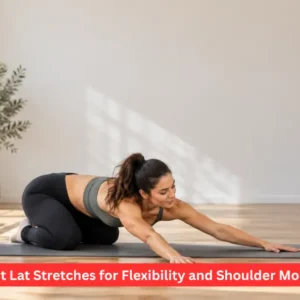
1. Child’s Pose
Target areas: Relaxation in the lower back, hips, and back in general.
Steps:
- Begin standing on all fours.
- Move hips towards heels slowly.
- Bring arms out in front and relax shoulders.
- Hold this position for 20-30 seconds while breathing easily.
How it helps:
Child’s Pose offers a peaceful stretch in the back and hips, and can relieve the tightness of everyday life.
Helpful adjustment:
If this feels comfortable, make your knees slightly wider. Do not push or pull the position; keep movement slow.
2. Cat-Cow Stretch
Target: Mobility and flexibility of the spine.
Steps:
- Come to your hands and knees, with your wrists under your shoulders.
- Slowly lift your chest and create a comfortable arch in your back.
- Round your spine and slowly move your chin towards your chest to reverse the movement.
- Repeat the two positions for 8-12 reps each.
How it helps:
This controlled exercise can help to move the spine into a comfortable range and can be helpful when your back feels stiff after sitting in the same position for long.
Keep in mind:
Breathe easily and walk gently. No need to overarch or mold the arch.
3. Knee-to-Chest Stretch
Targets: Lower back and hips.
Steps:
- Place both knees on the floor and lie back with both feet flat on the floor.
- Move one knee in toward your chest.
- Sustain for 20-30 seconds and then move to the other side.
- Bring both knees toward your chest (if comfortable) for gentle variation.
How it helps:
This gentle movement in the hips and lower back can relieve tightness that may result from sitting for extended periods or lack of movement.
Safety note:
Do not tense the neck and shoulders. Avoid pulling the knee heavily towards the body. Stop if you feel sharp or increasing pain.
4. Seated Spinal Twist
Focus: slow turn side to side in spine and hips.
Steps:
- Sit up straight with legs straight in front.
- Bend your right leg and foot is against the outside of your left thigh.
- Rest your right hand on your back.
- Slowly turn your upper body to the right.
- Hold for 20-30 seconds, then repeat on the other side.
How it helps:
A controlled seated rotation may help to increase mobility in the spine and hips and decrease stiffness.
Form reminder:
Maintain a long spine and only turn as far as you can. Don’t attempt to twist too far with the arms.
5. Pelvic Tilt
Focus: Pelvic Control and fairly soft core engagement.
Steps:
- With knees bent and feet on the floor, lie on your back.
- Gently tighten your abdominal muscles.
- Slowly roll your pelvis, letting your lower back move towards the floor.
- Keep in this position for 5-10 seconds and relax.
- Repeat 10–15 times.
How it helps:
Pelvic tilts help to promote the movement around the pelvis and lower back, and also gently activate the core muscles.
Technique tip:
Avoid applying any excessive force or pressure into the floor when doing the exercise. Breathing must not stop during the reps.
6. Cobra Stretch
Targets: Front of the body and spinal extension.
Steps:
- Press back on your belly with your hands by your shoulders.
- Using your hands, gently lift your chest.
- Ensure that the pelvis and hips are held well in place.
- Maintain for 10-20 seconds or do 5-10 slow repetitions.
How it helps:
This is an extension-based motion which can help increase ease of movement in the spine and might be beneficial if the lower back is tight.
Important:
Try and don’t push into a deep back bend. Relax your shoulders and only use a comfortable range of motion. Stop if the movement increases your symptoms.
7. Figure-Four Stretch
Targets: Glutes and hips.
Steps:
- When lying on your back with your knees bent and feet flat on the ground.
- Cross your right ankle over your left thigh.
- Slowly bring the left leg back towards the chest.
- Pause for 20–30 seconds, and then repeat on the other side.
How it helps:
It is a stretch for the glute and hip muscles that can be tight from prolonged sitting or lower body movement.
Make it comfortable:
Relax neck and shoulders. Take it slow and don’t stretch the leg beyond a comfortable level.
8. Hamstring Stretch
Focus: lower legs, thigh muscles, and hip flexibility.
Steps:
- Rest comfortably on your back.
- Place one leg up as high as you can without it hurting.
- Rest the back of the thigh or elbow on the back of your calf, or hold onto a stretching strap.
- Slowly extend the leg gently, keeping the knee from locking or being forced straight.
- Hold for 20-30 seconds and then repeat on the other side.
How it helps:
A simple stretch for the hamstring muscle can help make the posterior (back) part of the legs flexible and help facilitate hip movement.
For better control:
Move slowly and not so far as to cause pain. Breathe slowly and evenly during the exercise.
Lower Back Comfort: Other Ways to Support It
Stretching is just one method to aid lower back comfort. Moderate walking, gentle movement breaks, and progressive strengthening exercises can work to increase flexibility and mobility.
Stand up and move around as and when needed if sitting for long periods. Light foam rolling or self-massage is comfortable for some people as well.
Discontinue any activity that causes sharp, increasing, or spreading pain. Seek advice from a health care credentialed professional if symptoms do not resolve or become worse.

The Big 3 are core strength.
Gentle strengthening exercises can help with daily movement, along with lower back stretches.
- Partial Curl-Up: Promotes abdominal strength.
- Side Bridge: Develops stability of the trunk.
- Bird-Dog: Improves balance and coordination.
Do each exercise at a slow pace, but not at the expense of speed.
Comfortable Sleeping Positions
Try sleeping on your back with a pillow under your knees or on your side with a pillow between your knees. Select whichever position is comfortable for you.
5-Minute Lower Back Routine
- Cat-Cow: 8–10 reps
- Pelvic Tilts: 10 reps
- Knee-to-Chest: 20 seconds on each side
- Child’s Pose: 20–30 seconds
Cease if it hurts severely, gets worse, or extends to another area.
During Pregnancy
Changes in your back and hips may happen during pregnancy. Check with a health care provider before beginning new exercises, particularly if you experience pain or other symptoms.
When to Seek Medical Help
Seek professional advice if pain is severe, persistent, or worsening, particularly if there is any numbness, weakness, or pain that travels down the leg.

Conclusion
Improving flexibility, mobility, and comfort throughout daily activities can be as simple as lower back stretches. Child’s Pose, Cat-Cow, Knee to Chest, and Hamstring Stretch are gentle movements that can be integrated into a mobility routine.
Stretch in combination with regular movement and core strengthening to achieve overall health of the lower back. Do exercises that feel comfortable; do not overstretch and discontinue if sharp, worsening, or radiating pain occurs.
Want other ways to increase flexibility and mobility? Check out Stretchlee for easy-to-follow stretching and exercise routines.
Frequently Asked Questions
How often should I do lower back stretches?
Regular gentle stretching can be incorporated. Take it slow and make adjustments according to the way your body reacts.
What are the best lower back stretches?
Child’s Pose, Cat-Cow, knee-to-chest, pelvic tilts, and hamstring stretches may help with flexibility and mobility.
Can I stretch with lower back pain?
Light exercise can help relieve mild discomfort, butdon’t exercise if the pain is sharp, increasing, or spreading.
What stretches are good for a stiff lower back?
Cat-Cow, Child’s Pose, and knee-to-chest may be helpful to loosen up and increase mobility.