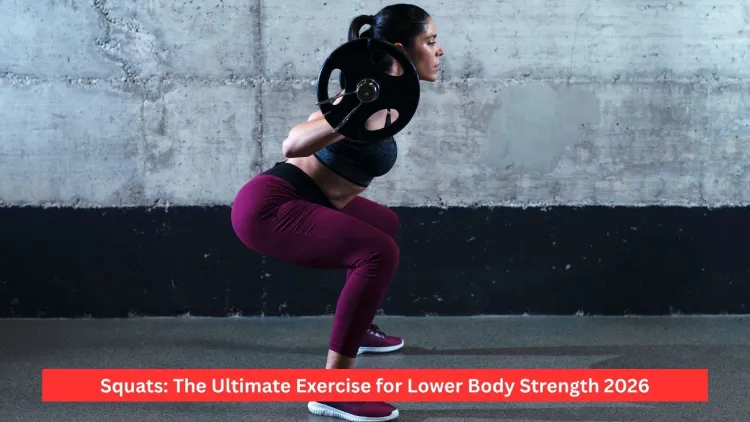

Squats are among the best lower-body, glute, and core strengthening exercises and exercises that develop balance, mobility, and fitness. Discover all about squat benefits, how to perform the squat with weight, common squat variations, squat form and execution, common squat mistakes, and some beginner-friendly tips that will help you safely and effectively squat.
- What Are Squats?
- Muscles Worked During Squats
- Benefits of Squats
- Bodyweight Squats vs. Weighted Squats
- How to Do Squats with Weights
- How to Do Squats with Weights for Beginners
- How to Do Squats with Dumbbells
- How to Do Squats with a Kettlebell
- How to Do Squats with Weights at Home
- Variations to the squat exercises and specific tips for women
- How to Do Squats with Weights Men's Training Tips
- Squats with Weights in Front
- Common squat errors to avoid
- Personal Experience with Squats
- Conslusion
- Frequently Asked Questions
What Are Squats?
Squats are a basic compound movement that includes bending at the hips and knees to squat down, returning to just a bend at the hips, to stand. These exercises target multiple muscle groups simultaneously, such as the quadriceps, hamstrings, glutes, and back muscles, making them another great lower body exercise for any fitness level.
Squats can help you:
- Improve leg and glute development
- Engage in exercises to build lower body muscles
- Increase balance and coordination skills
- Increase flexibility/mobility
- Ensure weight loss by increasing the number of calories burned
- Improve function and athletic performance
- Help to make daily tasks, such as sitting, standing, and climbing, easier
Squats are beneficial and can be used with body weight, dumbbells, kettlebells, barbells, or gym equipment and are great for beginners and experienced lifters.
Muscles Worked During Squats
Squats focus on several muscles simultaneously, making them an extremely effective exercise for strength training, balance, and fitness.
Primary Muscles
- Quadriceps: Straighten knees and drive upward.
- Gluteus Maximus: Strengthen and define gluteus muscles and assist in hip extension.
- Hamstrings: Keep knees stable and help hips move.
- Adductors: Help maintain stability in the hip and increase in work when you take a wider stance.
Secondary Muscles
- Core: Enhances posture, balance, and stability of the spine.
- Lower Back: Provides support for a tall back.
- Calves: Postpone the weight shift.
- Hip Flexors: Help the hip control hip movement.
Why Squats Are So Effective
The squat exercises several muscle groups simultaneously, yielding several fitness benefits:
- Develop complete lower body power
- Burn more calories than exercises that you do alone
- Help to develop better balance and coordination
- Develop functional fitness for ADLs (activities of daily living)
- Promote muscle development and athleticism
Benefits of Squats
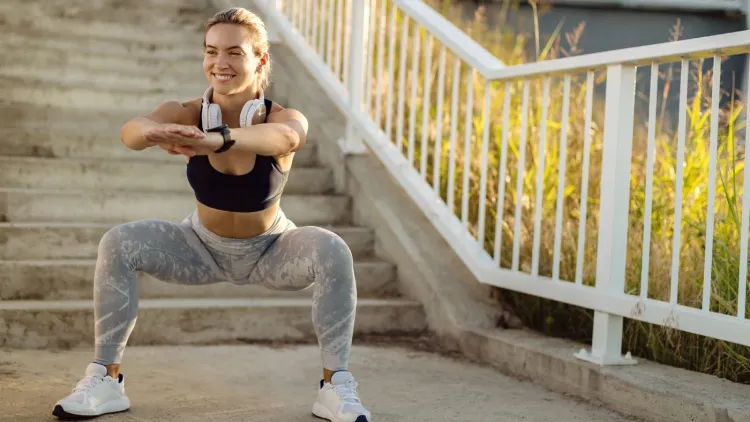
Frequent squats are beneficial for strength, mobility, endurance, and general fitness. From bodyweight squats to gym squats using weights, they provide benefits that can enhance both athletic performance and daily activities.
1. Builds Strong Legs
Squats build the quads, hamstrings, glutes, and calves, which helps in everyday functions of the body and helps to make sports activities enjoyable.
Benefits include:
- Stronger leg muscles
- Improved balance and stability
- Goal: Improve walking and stair climbing.
2. Develops Stronger Glutes
Squats will recruit the glutes, particularly with weight lifting, such as dumbbells, kettlebells, or barbells.
Benefits include:
- Increased glute strength
- Better muscle definition
- Improved hip stability
3. Strengthens the Core
Your core remains active in all the squats, providing balance to the body.
Benefits include:
- Better posture
- Improved balance
- Reduced lower-back strain
4. Supports Weight Loss
A major advantage of one of the key squats is that they burn multiple muscle groups at a time and thus help burn more calories.
Benefits include:
- Burns more calories
- Builds lean muscle
- Follows a healthy nutritional program for fat loss
5. Boosts Athletic Performance
Squat are great for countless active people and athletes since they include more power in the lower body.
Benefits include:
- Faster sprinting
- Higher jumps
- Improved agility and co-ordination
6. Strengthens Bones and Joints
Squat are a weight-bearing exercise that can build up the density of your bones and stabilize the joints.
Benefits include:
- Stronger bones
- Healthier knees and hips!
- Reduced injury risk
7. Improves Everyday Movement
Squat help enhance functional strength around a host of common activities of everyday life.
Benefits include:
- Seating and standing are made easier. Easy to sit and stand
- Better lifting ability
- Greater independence as you get older.Independent aging
Bodyweight Squats vs. Weighted Squats
Both bodyweight squats and weighted squats are excellent for building lower-body strength, but each has its own purpose. Bodyweight squats are the best choice for beginners because they help improve squat form, balance, mobility, and muscle control before adding resistance.
Once you have mastered proper technique, weighted squats using dumbbells, kettlebells, or barbells can help increase muscle activation, build stronger legs and glutes, and support faster strength and muscle gains. Progressing from bodyweight to weighted squat is a safe and effective way to improve overall fitness, athletic performance, and lower-body power.
How to Do Squats with Weights
After taking the bodyweight step up, now you’ll need to take on some resistance to build strength and grow muscles.
While many individuals look for exercises to do with squat, the important thing is not just to be able to hold heavy weight. The basic technique is always the most important no matter how many types of equipment are used.
When introducing weights:
- Start light
- Maintain perfect form
- Increase resistance gradually
- Don’t compromise technique for increased weight
With weights attached, the muscles are engaged, and stronger legs, glutes, and ‘core muscles‘ are developed as a result.
How to Do Squats with Weights for Beginners
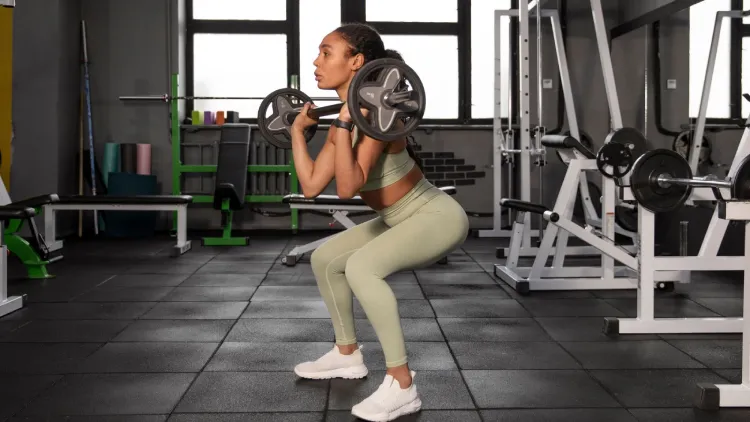
When learning the squat with dumbbells and squat for beginners, you should begin with less weight and make sure to master correct posture before considering increasing the load. This technique allows for progressive development of strength in a safe way, while limiting potential injuries.
Step 1: Choose the Right Weight
- Hold a light dumbbell or kettlebell.
- Choose a weight that will enable you to perform each movement properly.
- Don’t lift big objects until it becomes comfortable to do so.
Step 2: Get into the Starting Position
- Keep feet shoulder-width apart.
- Turn the toes slightly outwards.
- Hold at your sides or in front of your chest (goblet position).
Step 3: Engage your core
- Squeeze your abdomen before starting.
- Keep your chest up and shoulders relaxed.
- Keep your back straight throughout the exercise.
Step 4: Step foot down into the Squat
- Bend knees, then push hips back.
- Slowly lower your body to hips parallel to the floor or as low as possible due to mobility.
- Have your knees parallel to your toes.
Step 5: Pause Briefly
- Pause in the lower position for 1 second.
- While getting into a stand, avoid bouncing; be balanced with your feet slightly apart.
Step 6: Go back to Standing
- To stand up, push through your feet.
- Straighten hips and knees together.
- Contract glutes to the end of the movement, keeping good posture.
How to Do Squats with Dumbbells
Dumbbells are one of the simplest and safest ways to take body weight squats down a notch. These are great for exercise routines at home or in the gym and are great for toning the lower body, providing balance and coordination benefits.
1. Dumbbells at Your Sides
- Start holding one dumbbell in each hand, and keep your arms relaxed.
- Place feet shoulder-width apart.
- Squat down, keeping the weights on the side.
- Best for newbies who are learning weighted squat.
2. Dumbbells at Shoulder Height
- Place the dumbbells on your shoulders.
- Elbows should be slightly forward, and chest should be up.
- Bend the knees, keep the pelvis stable.
- Some benefits for upper body engagement and core stability.
3. Goblet Squat
- With one dumbbell resting on your chest, hold it in two hands vertically.
- Maintain the weight in front of the body load the weight close to the body.
- Squat, keeping your back straight.
- An excellent choice to build posture, squat depth, and technique before performing barbell squats.
How to Do Squats with a Kettlebell
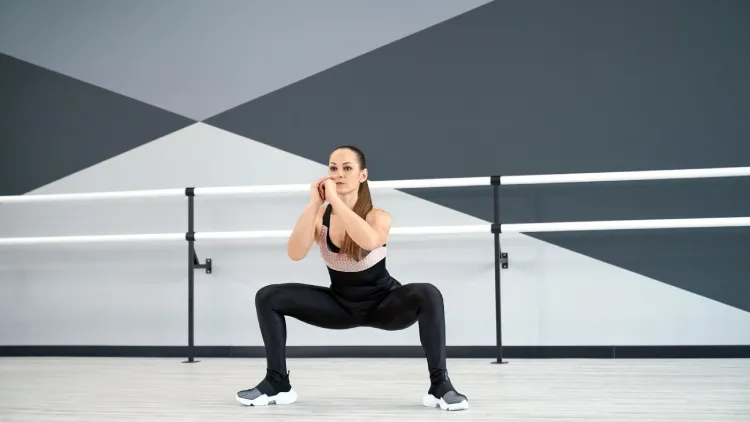
Squat Kettlebell Technique – If you have a question on how to perform squat with a kettlebell, it’s similar to doing a squat with a kettlebell goblet.
Grab kettlebell handles at your chest.
Elbows should not rise from the floor, and back should remain upright.
As you squat, allow your elbows to move naturally between your knees.
The kettlebell also offers lots of support and balance for many people who start squatting while also allowing them to get a deeper squat.
Kettlebell squats improve:
- Functional strength
- Core stability
- Grip strength
- Mobility
- Posture
How to Do Squats with Weights at Home
Expensive gym memberships aren’t required of you if you are looking to do some effective weighted squats.
It is easy to do squat exercises with weights at home, and there are numerous ideas.
You can use:
- Dumbbells
- Kettlebells
- Resistance bands
- Sandbags
- Weighted backpacks
- Water containers
- Adjustable weight vests
It’s all about the level of resistance challenge that your muscles can handle without sacrificing proper form.
Complementary exercises can be found anywhere when used properly (even at home).
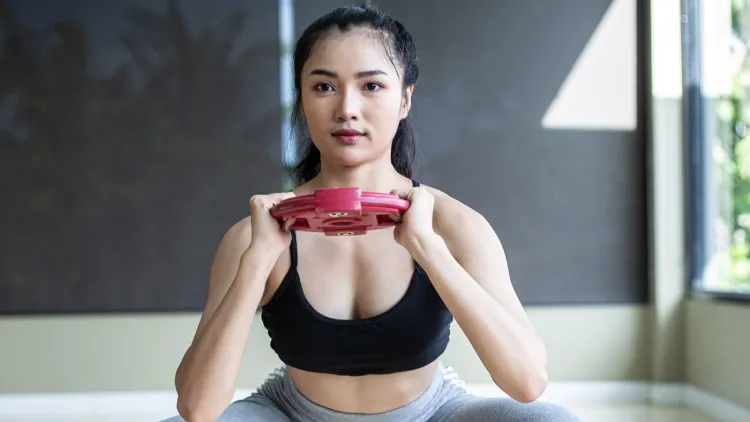
Variations to the squat exercises and specific tips for women
A lot of women are afraid that if they start weightlifting, they are going to get extremely muscular.
In fact, strength training can actually help to increase lean muscle mass, promote better body composition, and increase metabolic rate.
Learning how to do squat with weights for females involves the same technique used by men.
Typically, the only difference is in terms of training objectives instead of mechanics of movement.
Weighted squats are a great workout for women, whose benefits include:
- Build stronger glutes
- Improve leg definition
- Increase bone density
- Enhance athletic performance
- Support healthy aging
No matter who you are, it is important to maintain the principle of progressive overload.
How to Do Squats with Weights Men’s Training Tips
Progressive strength training is a holistic approach that emphasizes the progressive increase of resistance to weights, utilizing correct form while performing squat movements for men.
Many men incorporate:
- Barbell back squats
- Front squats
- Dumbbell squats
- Kettlebell squats
To be integrated into their weekly training programmes.
The challenge is progression and not lifting the heaviest weight it’s possible on day one.
Squats with Weights in Front
Front-loaded squats are against the front of your body and not across your back.
There are popular variations of the machine in which the sails sit ahead of the hull, such as:
- Goblet squats
- Front squats
- Double kettlebell squat
- Front squats with dumbbells.
Squat in front of the body with the weights will promote retraction of the thoracic spine, activate the quadriceps more effectively, and alleviate stress placed on the lumbar spine when compared with some squat done in the back.
They are also easier to learn to use for many novices, with the front-loaded weight automatically encouraging proper posture.
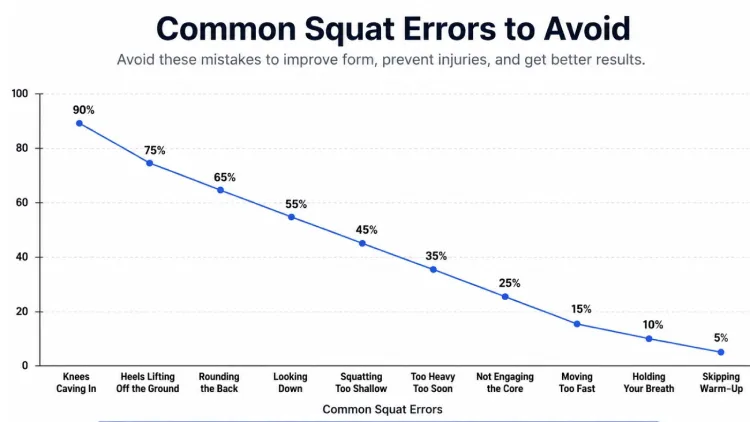
Common squat errors to avoid
To get maximum benefit from squats and prevent potential injuries, avoid the following things:
- Having your knees overloaded: Be sure that your knees stay in line with your toes throughout the motion.
- Elevating heels from the ground: Maintain flat feet and drive through your heels for greater balance and power.
- Rounding your back: Maintain a neutral spine with your chest up and core engaged.
- Looking down: Keep your head straight down and facing forwards.
- Squatting too shallow: Reach your thighs just parallel to the floor or to the maximum extent that you can move them.
- Too heavy, too quickly: Proceed with lighter weights and build up resistance over time.
- Failure to engage core: Brace core before each repetition for stability.
- Running too quickly: Take slow and controlled reps with the squat.
- Keeping your breath: Take in breath while you lower, breathe out as you stand up!
- Neglecting a warm-up: Heat hips, knees, and ankles before exercising.
Quick Form Tips
- Place feet a shoulder-width apart.
- Before bending your knees, push your hips back.
- Keep your chest up and look forward.
- Push hips forward.
- First concentrate on correct form, and then keep increasing the weight.
Personal Experience with Squats
From my experience, the biggest improvement came from focusing on proper squat form rather than lifting heavier weights too soon. Starting with bodyweight squats helped me build better balance, mobility, and confidence before progressing to weighted squat. Over time, I noticed stronger legs, improved stability, and better performance during other workouts and everyday activities. Staying consistent, warming up properly, and increasing resistance gradually made the greatest difference while helping reduce the risk of injury.
Conslusion
Squats are one of the most effective exercises to strengthen your legs, glutes, and core muscles, while enhancing balance, mobility, and fitness. Emphasize correct technique, take things slow, and be consistent for the greatest results. Squats can be done in the gym or at home, and can be an effective way to gain strength, boost performance, and promote overall health.
Frequently Asked Questions
1. Are squats good for weight loss?
Yes. Squats burn calories, build muscle, and support fat loss when combined with a healthy diet.
2. Can beginners do squats every day?
Yes, but 2–3 sessions per week are ideal for strength and recovery.
3. What muscles do squats work?
Squat primarily target the quadriceps, glutes, hamstrings, core, and calves.
4. Which squat is best for beginners?
The bodyweight squat is the best option for learning proper form before adding weights.