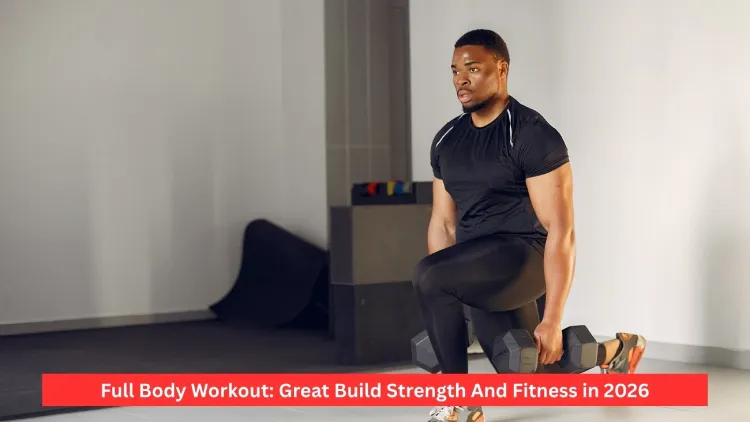

A full body workout targets all the main muscle groups in a single session. Instead of exercises for your chest, legs, or back, you work on a combination of upper body, lower body, and core exercises. This system works for all individuals, from beginner to intermediate levels of training, athletes,s and anyone who wants to get a ton of bang for their buck in a significantly reduced time, all while maintaining a great amount of fun and enjoyment.
The best way to develop a killer full body workout is to choose exercises that tap more than one muscle group at a time, and then finish with some muscle isolation work to strengthen less dominant muscle groups. These exercises can help you build muscle, gain strength, enhance athletic performance, and burn fat.
- What Is a Full Body Workout?
- Benefits of Full Body Workout Exercises
- Warm Up for Whole Body Workout
- Best Full Body Workout Exercises
- Sample Beginner Full Body Workout
- Intermediate Full Body Workout
- Advanced Full Body Workout
- Common Mistakes During Full Body Workout
- Safety Tips
- Conclusion
- Frequently Asked Questions
What Is a Full Body Workout?
A full body workout is an exercise regimen that focuses on major muscle groups; typically, the chest, back, shoulders, arms, legs, and core muscles are included in a single workout. Uses compound movements such as squats, rows, push-ups,s and deadlifts to help strengthen the body, boost fitness, and get rid of calories quickly. This training approach will work for everyone and may be done 2-4 times per week with adequate recovery.
Benefits of Full Body Workout Exercises
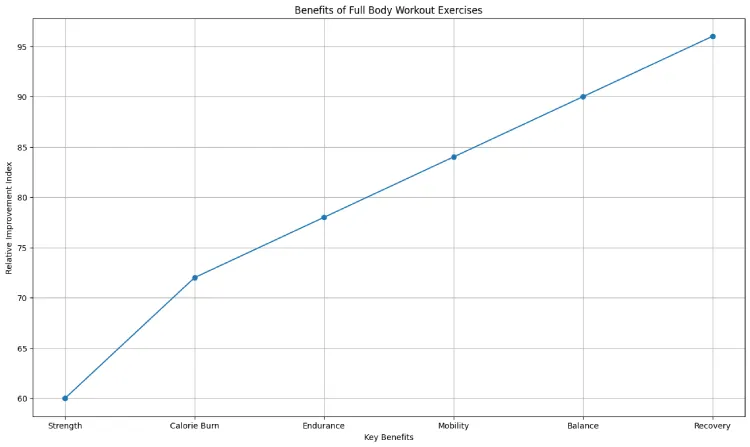
When going through the exercises, it is necessary to grasp the concept of why full body workout is effective.
Benefits include:
- Workouts all major muscle groups in one training session.
- This burns more calories compared to split training.
- Improves overall strength
- Enhances muscle coordination
- Saves time – fewer weekly sessions are required.
- Boosts athletic performance
- Improves muscular endurance
- Helps maintain healthy weight
- Supports beginners with learning movement patterns
Repurposes exercises to build overall fitness instead of overtraining individual muscles
Warm Up for Whole Body Workout
Warming up is essential to any good full body workout. Always preparing the setup of your muscles before weights or bodyweight exercises is an important step to prevent injury while also ensuring that your body functions properly during your workout. A warm-up is a way to get your heart rate high enough, body temperature up, improve blood flow, and provide lubrication for the joints. Additionally, it stimulates the nervous system, which helps the muscles function more efficiently with heavier work. Do dynamic, not static,s stretches, which should take around 5-10 minutes. Dynamic exercises get the body moving and increase mobility by moving through a complete range of motion.
A good warm-up could consist of:
Jumping Jacks
Start with jumping jacks to get your heart rate up and circulation checked; do 30-60 seconds of jumping jacks before starting the workout.
Arm Circles
Left and right arm circles to warm up the shoulders and mobilize upper-body movements.
Bodyweight Squats
Perform 15 – 20 slow reps to engage glutes, quads, hamstrings, and hips.
Leg Swings
To promote hip flexibility, swing that leg forward, back,k and to the sides before lower body exercises.
Walking Lunges
Do walking lunges around the room to build the hips, knees, and ankles for compound exercises.
Hip Circles
Slow hip rotations enhance flexibility and decrease stiffness in the joint(s) before squatting and deadlifting.
High Knees
Increase lower body activation and get cardiovascular ready by doing some high knees for 30 seconds.
Shoulder Rolls
To prevent tension before pressing exercises, roll shoulders forward and backward a few times.
Fully warm up to enable better exercise performance and decrease the risk of muscle strains. No matter how experienced, do not miss it from your weekly full body workout routine.

Best Full Body Workout Exercises
These exercises provide the basis for a good full body workout. Rather than working one muscle group at a time, each movement engages several muscle groups, thus building strength, improving endurance, and creating balanced body muscle development.
1. Squats
Squats are a great compound exercise for the lower body.
Muscles Worked
- Quadriceps
- Hamstrings
- Glutes
- Core
- Calves
How to Perform
- Stand shoulder-width apart.
- Keep your chest up.
- Move your pelvis into position.
- Bring your thighs down parallel.
- Sit up in the driver’s seat to stand up.
Benefits
- Builds leg strength
- Improves mobility
- Strengthens the core
- Enhances balance
2. Deadlift
Deadlifts are among the best exercises for total-body strength.
Muscles Worked
- Hamstrings
- Glutes
- Lower Back
- Upper Back
- Core
- Forearms
Steps
- Feet shoulder-width apart.
- Hold the bar towards the outside of your knees.
- Maintain a straight back.
- Lift using the hip and knee, as opposed to the back.
- Lower under control.
Benefits
- Builds up the back leg muscles of the body.
- Improves posture
- Builds grip strength
- Increases athletic performance
3. Push-Up
Push-ups are not equipment-dependent and work on multiple muscles.
Muscles Worked
Steps
- Begin in a plank.
- Lower your chest.
- Elbows should be at approximately a 45-degree angle.
- Push back up.
Benefits
- Builds upper-body strength
- Improves shoulder stability
- Strengthens the core
4. Pull-Up
Pull-ups are some of the most effective upper-body bodyweight exercises.
Muscles Worked
- Latissimus Dorsi
- Biceps
- Rhomboids
- Rear Delts
- Core
Benefits
- Builds upper-body strength
- Improves grip
- Enhances posture
5. Bench Press
Bench press = pushing strength.
Muscles Worked
- Chest
- Triceps
- Front Deltoids
Benefits
- Increases upper-body power
- Builds chest muscle
- Improves pressing strength
6. Overhead Press
This exercise improves the stability of the shoulder girdle and activates your abs.
Muscles Worked
Benefits
- Builds shoulder strength
- Improves overhead stability
- Enhances posture
7. Bent-Over Row
Row exercises provide a good balance of pressing moments and strengthen the back.
Muscles Worked
- Lats
- Rhomboids
- Traps
- Rear Delts
- Biceps
Benefits
- Improves posture
- Strengthens upper back
- Reduces muscle imbalance
8. Walking Lunges
Walking lunges strengthen the legs and promote balance.
Muscles Worked
- Glutes
- Quadriceps
- Hamstrings
- Core
Benefits
- Improves balance
- Builds leg strength
- Enhances coordination
9. Romanian Deadlift
An inherited variation that focuses on the back chain.
Muscles Worked
- Hamstrings
- Glutes
- Lower Back
Benefits
- Improves hamstring flexibility
- Strengthens hips
- Supports athletic movement
10. Dumbbell Thrusters
A combination of a squat and overhead press.
Muscles Worked
Benefits
- Full-body conditioning
- High calorie burn
- Builds endurance
11. Kettlebell Swings
Super intense exercise in Power and Conditioning.
Muscles Worked
- Glutes
- Hamstrings
- Core
- Shoulders
Benefits
- Improves explosive strength
- Increases cardiovascular fitness
- Strengthens hips
12. Mountain Climbers
An engaging, whole-body movement workout.
Muscles Worked
- Core
- Shoulders
- Hip Flexors
- Legs
Benefits
- Boosts heart rate
- Strengthens core
- Improves endurance
13. Burpees
Burpees are also a workout for strength and cardio.
Muscles Worked
Benefits
- Burns calories
- Improves endurance
- Enhances coordination
14. Plank
This exercise is a core basic workout to improve the body.
Muscles Worked
Benefits
- Improves posture
- Builds stability
- Protects the spine
15. Farmer’s Carry
An exercise that is functional with heavy dumbbells or kettlebells.
Muscles Worked
- Grip
- Core
- Traps
- Legs
Benefits
- Improves grip strength
- Enhances posture
- Builds total-body stability
Sample Beginner Full Body Workout
| Exercise | Sets | Reps |
| Squats | 3 | 10–12 |
| Push-Ups | 3 | 8–12 |
| Bent-Over Rows | 3 | 10 |
| Walking Lunges | 3 | 10 each leg |
| Plank | 3 | 30–45 sec |
| Mountain Climbers | 3 | 20 |
Take 60-90 seconds of rest between sets and focus more on slowing down each movement instead of concentrating on the weight that’s being lifted.
Intermediate Full Body Workout
| Exercise | Sets | Reps |
| Deadlift | 4 | 6–8 |
| Bench Press | 4 | 8 |
| Pull-Ups | 4 | 8–10 |
| Romanian Deadlift | 3 | 10 |
| Dumbbell Thrusters | 3 | 12 |
| Farmer’s Carry | 3 | 30 meters |
Intermittent training sessions of 3-4 per week with sufficient rest days in between.
Advanced Full Body Workout
| Exercise | Sets | Reps |
| Squat | 5 | 5 |
| Deadlift | 5 | 5 |
| Bench Press | 5 | 5 |
| Pull-Ups | 4 | 10 |
| Overhead Press | 4 | 8 |
| Burpees | 3 | 15 |
| Plank | 3 | 60 sec |
Common Mistakes During Full Body Workout
The very best exercise regimen can fail to yield desired effects if the standard errors are repeated. To prevent these mistakes from occurring, it is important to train with them in mind, but still be careful of being injured.
Common mistakes include:
- Skipping the warm-up
- Using undue resistance.
- Failure to follow the correct form in exercising.
- Performing partial repetitions
- Neglecting recovery days
- Rushing through exercises
- Forgetting to train the core
- Poor breathing form in the lifts.
- Inconsistent workout scheduling
- Not following progressive overload
- Sleeping too little
- Consuming insufficient protein
Keep in mind that muscles develop when you are not using weights. However, to achieve long-term success, a balanced approach to training, nutrition, hydration, and quality sleep is needed.
Safety Tips
If you follow the right safety precautions, you can move forward safely, and the risk of injury is reduced.
- Always start with an important warm-up phase.
- To develop the technique before starting to increase weight.
- Focus on controlled movements instead of speed.
- When using a heavy lift, use a spotter if possible.
- Wear supportive footwear.
- Don’t forget to drink enough fluids during the exercise.
- Fuel with the correct meal: 1 to 3 hours prior to practice.
- Don’t exercise directly following a large meal.
- Stretch lightly after workouts to cool down.
Give muscles proper recovery before another intensive whole-body workout.

Conclusion
Performing a well-structured full body workout is one of the best ways to get more lean muscle, build strength, and improve overall fitness. Compound exercises like squats, deadlifts, push-ups, pull-ups, rows, lunges, overhead presses, kettlebell swings, and planks allow you to work out all major muscle groups in one workout session and enhance balance, coordination, endurance, and functional strength.
For long-term success to be achieved, consistency is the key. Get the hang of good form, build up resistance little by little, get a well-balanced diet, and allow your body sufficient recovery time between workouts. Whether you work out at home or in the gym, there are ways to see results in strength, muscle tone, and overall health if you follow a well-structured full body workout routine. A patient attitude and perseverance are going to help you obtain a stronger and healthier body to help you accomplish your fitness objectives and your daily activities.
Frequently Asked Questions
1. So what is a full body workout?
A full body workout is a workout that works all of the major muscle groups—the legs, the core, the arms, the shoulders, the back, and the chest—in one workout.
2. How many times a week should I do a whole-body exercise?
Most workouts are completed 3 times a week, and three sessions a week is a good amount of exercise for most people, allowing them to recuperate in between sessions. More advanced people can train four times per week if the training intensity and recovery are adjusted appropriately.
3. Does it really build muscle to use a whole-body workout?
Yes. With progressive overload, good nutrition, adequate protein, and sufficient recovery, a full body workout can be equally effective for building muscle.
4. What is the duration of a workout for the whole body?
The length of most sessions ranges from 45 to 75 minutes and takes into account how many exercises, rest breaks, and personal fitness objectives are included. It’s far better to be consistent than spend too much time in the gym.