
The dumbbell hip thrust is a great exercise to strengthen and develop the glutes easily and effectively. It primarily works the gluteus maximus muscle, but also works the hamstrings, adductors, and core. You will do this by lying face up on a stable bench and placing a dumbbell across your hips, pushing your hips up, squeezing your glutes, and then lowering them slowly. Use a lighter weight at first and slowly progress as strength and dumbbell hip thrust technique increase.
- What is a Dumbbell Hip Thrust?
- How to Do Hip Thrusts With Dumbbells
- How Do Dumbbell Hip Thrusts Work?
- Are Dumbbell Hip Thrusts Effective?
- What is the benefit of dumbbell hip thrusts?
- What is the right weight for dumbbell hip thrusts?
- How Many Dumbbell Hip Thrusts Should a Beginner Do?
- How Do You Know You're Doing Hip Thrusts Correctly?
- Dumbbell Hip Thrust vs Other Glute Exercises
- Are hip thrusts enough workouts to build glutes?
- How many repetitions until the hip thrust results?
- Should You Do Hip Thrusts First Or Last?
- Should You Do Hip Thrusts Twice a Week?
- Conclusion
- Frequently Asked Questions
What is a Dumbbell Hip Thrust?
A dumbbell hip thrust is a glute workout that involves a dumbbell press for resistance. It is done with your upper back on a bench, with your feet on the ground and the weight across your hips. Then squeeze your hips up by squeezing your buttocks.
This exercise mainly focuses on the glutes with a secondary involvement of the hamstrings, adductors, and core. The dumbbell hip thrust is a great exercise for home training, as it uses less equipment than the barbell hip thrust.
The movement can be beneficial for lower body strength, hip extension, and glute development. A light dumbbell is good for beginners to start with and can be increased in resistance as technique and strength levels improve.
Dumbbell hip thrusts are a basic and efficient glute workout. Drive through your feet, squeeze your glutes at the top, using a stable bench, having a comfortable dumbbell across your hips, and lowering with a controlled movement.
How to Do Hip Thrusts With Dumbbells
The proper technique is more important than the weight of the dumbbell. Here are the steps to performing the dumbbell hip thrust in a safe and effective manner.
- Secure the bench: Put a sturdy bench behind you. Sitting on the floor, press your upper back against the edge of the bench.
- Place the dumbbell: Place the dumbbell across your hips. Secure the ends or hold them tight so that it does not move while performing the exercise. A pad or folded towel can help to alleviate pressure on your hips.
- Place feet: Bend knees and keep feet flat on the floor, shoulder-width apart.
- Tighten core: Contract belly muscles, control ribs. This will help to avoid over-movement in the lower back.
- Lift hips: Use the power through the feet, and push the hips up. Do not let your knees get unstable as your hips come up.
- Squeeze at the top: Continue to the end of hip extension. Shoulders, hips, and knees should create a relatively straight line.
- Hold for a second: Tighten your glutes at the top for a second or two.
- Slowly lower: Drop hips back into control and repeat.
The form of the dumbbell hip thrust is correct if your lower back is not doing the majority of the job, but your glutes are. Don’t tense up the top of the spine.
If this is your first time with this movement, start with hip thrusts using your own bodyweight. After learning to do them easily and confidently, introduce a light dumbbell and slowly build up the weight.
How Do Dumbbell Hip Thrusts Work?
The main target of the dumbbell hip thrust is the gluteus maximus. Is a large muscle that creates strong hip extension and is important in running, jumping, climbing, and other movements of the lower body.
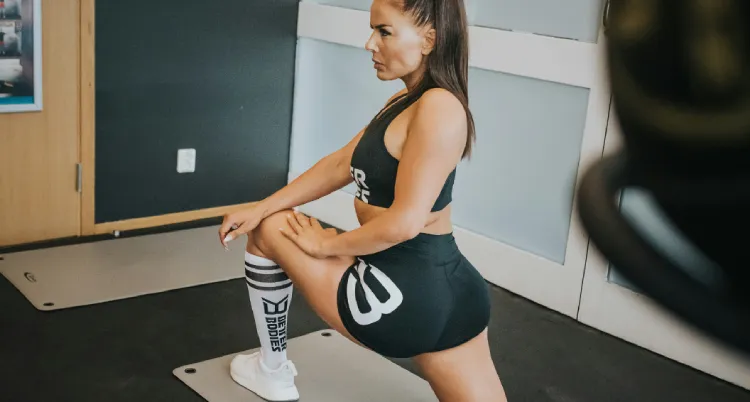
The exercise also involves:
- Hip extension: Hamstrings.
- Gluteus medius: Helps stabilize the hips and knees.
- Adductors: Help with the movement and stabilization of the hip.
- Pelvis and torso control: Core muscles will assist in maintaining control of the pelvis and torso.
Muscles may feel more involved in different feet positions. It is helpful to start out with a position that makes your shins nearly vertical at the top.
Are Dumbbell Hip Thrusts Effective?
Yes, dumbbell hip thrusts can be very effective in developing glute strength and muscle growth. They can be used to add external resistance to the hips during repeated hip extension movements.
There are a number of factors that determine their effectiveness. Results are influenced by proper technique, resistance, progressive overload, training frequency, nutrition, and recovery.
It’s not necessary to use a very heavy dumbbell to make the movement effective. Rather, select a weight that will allow you to complete the last few reps with proper form.
When you are stronger, you can gradually add weight to the dumbbell, add more reps, sets, or training difficulty. Hip thrusts paired with other exercises like squats, Romanian deadlifts, lunges, and split squats can form a full glute workout.
What is the benefit of dumbbell hip thrusts?
The dumbbell hip thrust exercise can provide a number of advantages for strength training and glute exercises.
Supports Glute Growth
Hip thrusts are a great exercise that targets the glutes. They can help build muscle when applied in a progressive manner and with proper recovery.
Builds Lower-Body Strength
The glute muscles are important for hip extension and can assist in activities like running, jumping, squatting, and lifting.
Convenient for Home Workouts
This exercise is easy to perform and requires less equipment than a dumbbell.
Beginner-Friendly
Body weight resistance or a light dumbbell can be used as a starting point, and the weight can be raised over time as the technique progresses.
Allows Progressive Overload
To make a hip thrust with a dumbbell more challenging, you can increase weight, reps, sets, pause between reps, or perform advanced variations.
Improves Hip Extension
Hip extension is essential in sports and for functional hip movements.
What is the right weight for dumbbell hip thrusts?
No single dumbbell weight will be suitable for all people. The level of resistance you need is based on your strength, experience, fitness goals, and technique.
As a beginner, begin with a weight that will allow you to perform 8 to 15 controlled reps with correct hip thrust dumbbell exercises.
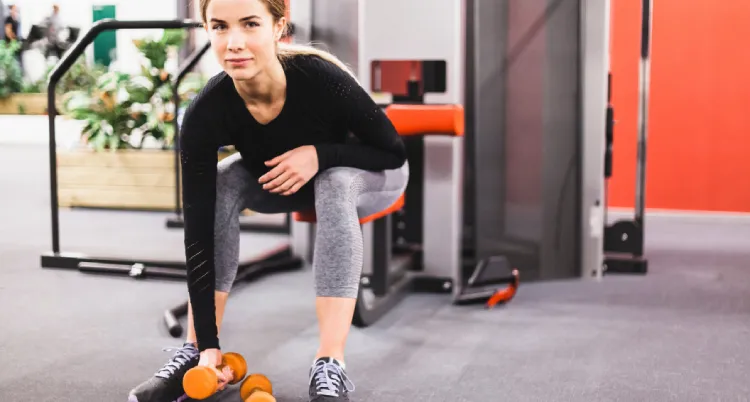
These last few reps should be difficult but without any muscle compensation on the back. If you can’t control the weight, then decrease the weight. If you have a lot of energy left after performing your desired number of reps, gradually add more weight.
One example is to use 2 – 3 sets of 10 – 12 reps. When those sets feel easy, add a little more to the dumbbells and keep going!
The intent is NOT to use the heaviest dumbbell possible. The challenge is to be able to provide just enough resistance without losing form.
How Many Dumbbell Hip Thrusts Should a Beginner Do?
A novice should begin by doing 2-3 sets of 8-15 reps, once or twice a week. The exact amount will be dependent on the total workout and recovery plan.
If you’re a complete beginner to resistance training, begin slowly. Learn the movement first, then add weight and/or volume.
One good beginning is:
- Sets: 2–3
- Reps: 8–15
- Rest: 60–120 seconds
- Frequency: 1–2 times weekly
In order to receive benefits, you don’t need to do an excessive number of reps. It’s better to train and slowly increase load than to do hundreds of reps.
How Do You Know You’re Doing Hip Thrusts Correctly?
The dumbbell hip thrust movement should be controlled and stable. Your glutes should be doing most of the work, and your lower back should not feel like it’s doing all the work.
Check for these technique checkpoints:
- Press upper back firmly against the bench.
- Do not allow your feet to lift off the ground.
- Keep knees aligned.
- Tighten abdominal and core muscles throughout the exercise.
- Lift the hips, NOT the chest.
- Squeeze buttocks at the top.
- Do not overarch the lower back.
- Slowly decrease the load with the weight.
If the exercise is consistently being felt in the lower back, look at how the feet are positioned, decrease the weight, and work on controlling the pelvis.
Once the standard version is easy, advanced can be attempted. Single-leg dumbbell hip thrust increases the stability and strengthening demand by engaging one leg to do most of the work.
One can also perform the B-stance dumbbell hip thrust. The advantage of this position is that one leg is the main working leg and the other leg is light support. Both variants should be performed after the simple movement is mastered.
Dumbbell Hip Thrust vs Other Glute Exercises
Various glute exercises will target the glutes differently, so you don’t have to stick to just one.
Dumbbell Hip Thrust vs. Barbell Hip Thrust.
A barbell can hold heavier weights and might be suitable for more advanced lifters. A dumbbell is generally easier to use, particularly for home exercises and beginners.
Dumbbell Hip Thrust vs. RDL
Romanian deadlifts not only produce a great glute and hamstring workout, but they also focus on the extended position. The hip thrust dumbbell exercise emphasizes the glute contraction and hip extension during the ending range of motion.
Dumbbell Hip Thrust vs. Squat
Squats engage the glutes, quadriceps, and other lower body muscles, with plenty of knee and hip movement. Hip thrusts offer a more targeted hip extension workout.
Many find it more beneficial to do these movements together rather than just one.
Are hip thrusts enough workouts to build glutes?
Regularly completing hip thrusts, particularly increasing the resistance, will develop bigger and stronger glutes. But doing a single exercise can restrict your progress.
Hip thrusts can work well in conjunction with other exercises that target the glutes, such as Romanian deadlifts, squats, split squats, lunges, step-ups, and more.
Nutrition and recovery are also important factors. Your body adapts to resistance training with adequate protein, sufficient calories, sleep, and rest.
Rather than thinking of the dumbbell hip thrust as the only exercise for the hips, consider it one very effective movement in a comprehensive lower-body workout.
How many repetitions until the hip thrust results?
The results will depend on your training experience, genetics, nutrition, recovery, and consistency. The changes in strength may happen relatively fast, whereas the changes in the size of the muscles are generally more time-consuming.
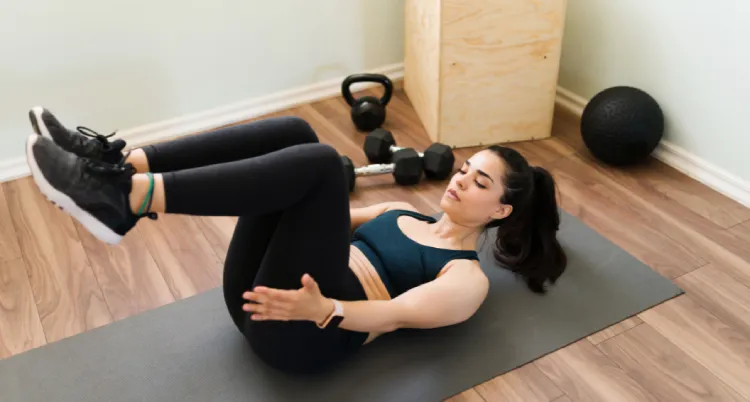
Don’t just think about how you look in the gym; monitor progress. These improvements include using a heavier dumbbell, more controlled reps, and proper technique.
Smooth hip thrust movements using dumbbells along with progressive overload and proper recovery can help to gradually build up the glutes.
If you take a photo of your progress or record your reps and weight, it can also help you see the progress as time goes by.
Should You Do Hip Thrusts First Or Last?
The best position will depend on your fitness objectives.
If you want to strengthen your glutes or hip thrusts, do them first in your workout when your stamina is at its peak.
If you want to focus on another big lift, like squats or deadlifts, hip thrusts can be done at the end as a specific glute exercise.
There is no set pattern you have to do hip thrusts first or last. Put them in the most appropriate spot to support your training goals.
Should You Do Hip Thrusts Twice a Week?
Yes, you can train your glutes twice a week, and it can work well for many people. If you have enough recovery time in your overall training volume, you can add a dumbbell hip thrust into both sessions.
A workout, for instance, may involve moderate to heavy dumbbells and fewer reps, while another may be lighter and involve more reps.
Recovery is essential. If you’re continuing to get worse or your muscles are still really sore after a workout, cut back on the amount of work or let the muscles rest more.
Conclusion
The dumbbell hip thrust is one of the best exercises to build and strengthen the glutes. Always perform with good form, select an appropriate weight, and build up the resistance as you get stronger. To optimize the results, mix it with other glute workouts and give it sufficient rest.
Frequently Asked Questions
1. Are dumbbell hip thrusts good for building glutes?
Yes. Dumbbell hip thrusts are great for targeting the gluteus maximus and can aid in muscle development provided they are performed with correct technique, increasing progression, adequate nutrition, and rest.
2. How much should a dumbbell hip thrust weight be?
Begin with a weight that will enable you to complete 8-15 reps in a controlled manner without compromising form. Gradually increase the weight as you get stronger.
3. Is it possible to do dumbbell hip thrusts at home?
Yes. Dumbbell hip thrusts are great for home workouts, as all you need is a dumbbell and a stable bench or other surface to support yourself.
4. Is it better to do hip thrusts twice a week?
Hip thrusts performed twice a week may be effective for many individuals. Give sufficient rest between sessions and alter the volume according to your workout program.