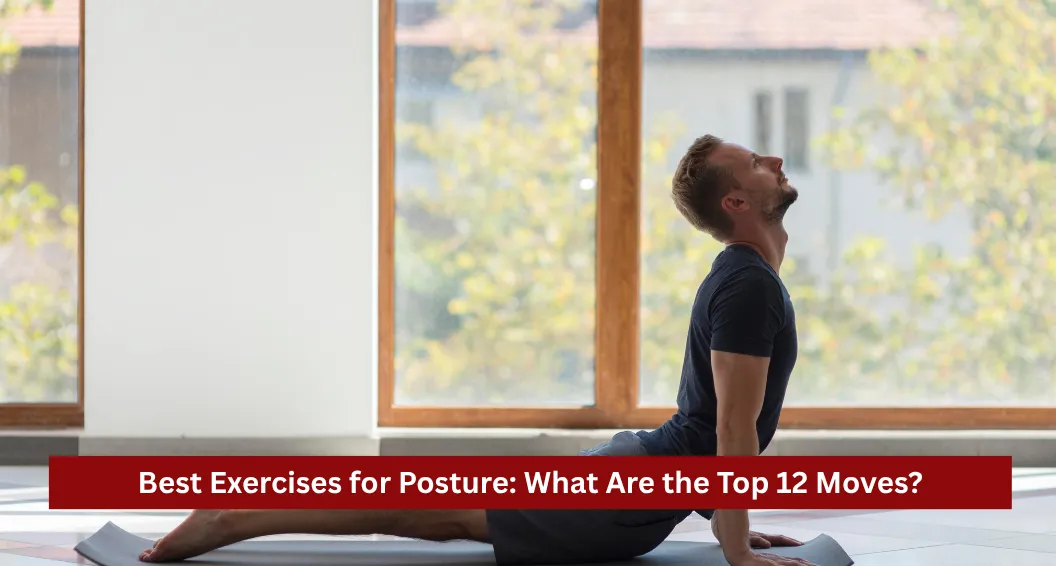

The following exercises are great for posture: Chin Tucks, Wall Angels, Bird Dog, Planks, Glute Bridges, and Cat-Cow Stretch. The following exercises are simple and beneficial for strengthening your core, back, shoulders, and neck. They can assist in improving your posture and stance and help to eliminate pain. You can use the exercises in this guide to improve your posture, whether sitting at a desk for long periods or suffering from poor posture for years.
- What is Good Posture?
- Why is good posture important?
- Common Causes of Poor Posture
- Good Posture vs. Poor Posture
- Best Exercises for Posture
- Beginner Posture Routine
- Best Posture Exercises for Office Workers
- My Experience with Posture Exercises
- Common Mistakes
- Tips to Improve Posture Faster
- Conslusion
- Frequently Asked Questions
What is Good Posture?
Good posture involves making your body straight to allow your muscles, joints, and spine to function properly. Ears should be in line with shoulders, should be relaxed, and spine should have natural curves.
Good posture isn’t defined as being stiff. Rather, it enables you to relocate with ease and limit stress on your neck, shoulders, and lower back. The best exercises for posture strengthen the muscles that help keep your spine aligned, so you can enjoy better posture throughout the day.
The following are indications of good posture:
- Head held high over shoulders
- Relaxed shoulders
- Neutral spine
- Engaged core muscles
- Balanced body weight
- Knees slightly bent when standing
Poor posture typically results from a combination of daily habits and occurs over time, but many poor postures can be corrected with regular exercise and improved movement patterns.
Why is good posture important?
Good posture is integral and helps to avoid undue stress on the body.
- Reduces Pain: Correct alignment can alleviate pressure on your neck, shoulders, and lower back and help to prevent chronic discomfort.
- Improves Breathing: Your lungs expand completely when you are upright, making breathing easier during exercise and everyday activities.
- Builds Strength: Posture provides stability for movement and efficient functioning of muscles.
- Improves Balance: Good body posture minimizes extra stress on the joints and helps to enhance coordination.
- Boosts Confidence: Being tall helps people to be more confident and have better body language, which in turn helps them to be more assertive in social and professional settings.
Common Causes of Poor Posture
It is often caused by bad posture habits from repeated activities throughout the day, and not an injury.
- Prolonged Sitting: Sitting at a desk, studying for long periods of time, or playing games can cause slouching, or even driving
- Weak Core Muscles: A weak core will not support a spine as well as other muscles will, thus other muscles must take over that support.
- Tight Chest Muscle: Time spent on the computer or phone compresses the chest and stretches the upper back.
- Poor Ergonomics: Bad desk arrangement, low computers, and unsupported chairs promote bad posture.
- Inadequate physical activity: Muscles that aren’t being used weaken over time, making it more difficult to have proper alignment.
- Stress and Fatigue: Stress can cause shoulder tension, and fatigue makes it more difficult to sit or stand properly.
While some think that posture cannot be corrected after years of bad posture, exercise, strengthening, and stretching on a regular basis can make a difference in the body. Intensity is a relatively unimportant thing, as long as it is consistent.
Good Posture vs. Poor Posture
Maintaining good posture helps to ensure that your head, shoulders, and spine are kept in proper alignment, which can help you move with ease and minimize stress on your muscles and joints. On the other hand, bad posture can lead to rounded shoulders, back and neck pain, muscle fatigue, and reduced mobility. By engaging in the proper exercises for posture and adopting a positive lifestyle, you can begin to correct your posture and minimize these issues over time.
Best Exercises for Posture
These exercises help to strengthen muscles supporting your spine, shoulders, neck, and core. Do them 3 to 5 times a week for optimum benefits.
1. Chin Tucks
Chin Tucks tighten deep neck muscles and help correct the forward head posture.

How to Perform
- Sit or stand up straight.
- Look forward.
- Draw your chin forward, but DO NOT tilt your head.
- Maintain for 5 seconds.
- Repeat 10–15 times.
Benefits
- Improves neck alignment
- Reduces neck tension
- Helps correct forward head posture
- Maintains good sitting position
2. Wall Angels
Wall Angels will help to increase shoulder range of motion and strengthen the upper back.
How to Perform
- Place yourself in front of a wall. Face a wall.
- Do not let your arms set off the wall anywhere except to your head, shoulder, and hip.
- Hold arms up in goalpost position.
- Gently push up.
- Come back to the starting position.
- Repetitions: 10–12
Benefits
- Opens the chest
- Builds muscle in the upper back area.
- Improves shoulder mobility
- Improves posture of shoulders by helping to prevent them from rounding.
3. Cat-Cow Stretch
This is a gentle stretch that loosens up the spine and improves mobility.
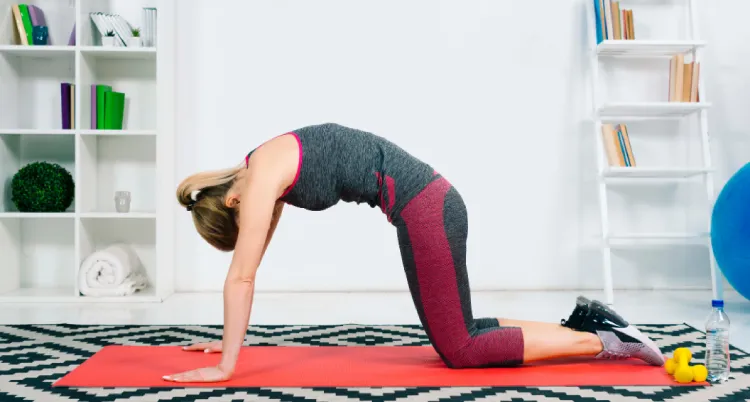
How to Perform
- Begin on hands and knees.
- Breathe in as you lift your back.
- Round your spine as you breathe out.
- Slowly repeat X 10-15 times.
Benefits
- Improves spinal flexibility
- Relieves back tension
- Increases mobility
- Warms up the spine
4. Thoracic Extension
The stiff upper back is a common cause of many posture issues. Thoracic extensions bring back mobility and allow you to stand up easily.
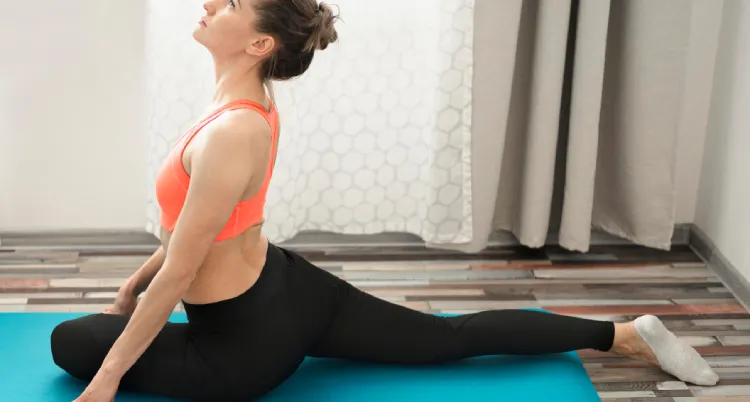
How to Perform
- Sit on a chair or foam roller.
- Rest hands behind head.
- Gently stretch upper back.
- Take a short break before coming back.
- Repetitions: 10–12
Benefits
- Increases upper back mobility
- Reduces rounded shoulders
- Promotes good posture of the spine
- Relieves stiffness
5. Bird Dog
The Bird Dog simultaneously engages the core, lower back, and glutes and is one of the best exercises for enhancing your posture and spinal stability.
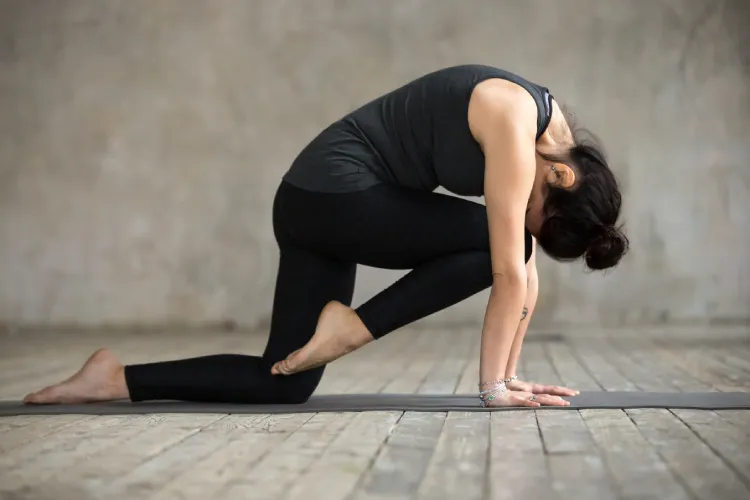
How to Perform
- Begin on all fours.
- Tighten your core.
- Stretch your right arm and left leg out.
- Hold for 2–3 seconds.
- Return to the starting position and cross over to the other side.
- Repetitions: 10–12 per side
Benefits
- Improves core stability
- Tightens the lower back muscles.
- Enhances balance
- Maintains good posture in the spine
6. Plank
Having a good core is key to having good posture all day long. Planks build abdominal strength, endurance, and shoulder and back strength.
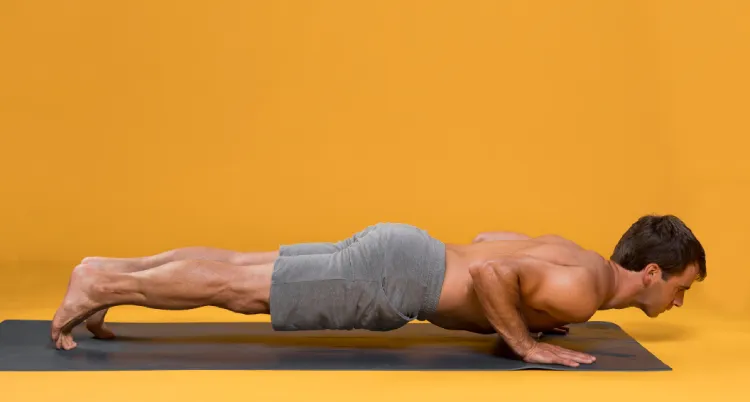
How to Perform
- Place forearms and toes on the floor.
- Keep your body in a straight line.
- Tighten your core.
- Hold for normal breathing.
Duration: 20–60 seconds
Benefits
- Builds core strength
- Supports spinal alignment
- Improves stability
- Takes care of back pain.
7. Glute Bridge
A weak glute can cause a forward tilt in the pelvis and thus poor posture. Strengthening glute bridges can help strengthen the hips and lower back and increase stability in the pelvis.
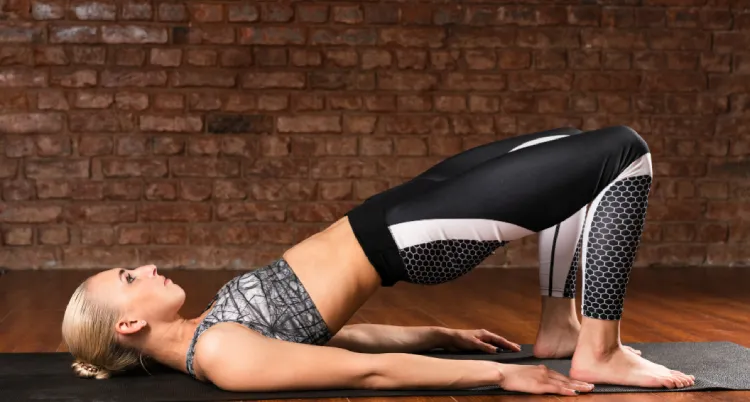
How to Perform: Lie flat on your back, with bent knees.
- Squeeze your buttocks together.
- Raise your hips to the ceiling.
- Squeeze your glutes.
- Lower slowly.
- Repetitions: 12–15
Benefits
- Strengthens glutes
- Supports the spine of the back.
- Improves hip stability
- Moderates the impact of sitting for long periods of time
8. Face Pull
Face Pulls build upper back and back shoulders, which can be beneficial in correcting rounded shoulders from desk work or poor sitting positions.

How to Perform
- Loop a resistance band to face level.
- Draw the band towards the face.
- Elbow stays up.
- Pull shoulder blades in.
- Return slowly.
- Repetitions: 12–15
Benefits
- Improves the upper back.
- Improves shoulder stability
- Corrects rounded shoulders
- Encourages upright posture
9. Band Pull-Aparts
This basic resistance band workout will engage the muscles that pull your shoulders back and help to make you look better.
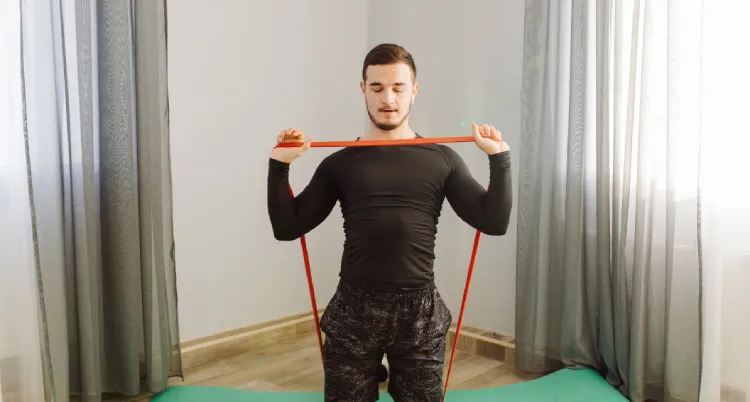
How to Perform
- Grab a resistance band in front of you.
- Maintain straight arms.
- Stretch the band out.
- Slowly return.
- Repetitions: 15–20
Benefits
- Strengthens upper-back muscles
- Improves shoulder mobility
- Reduces slouching
- Didactic and accessible, regardless of location.
10. Child’s Pose
Child’s Pose offers a gentle stretch for the back, hips, and shoulders and alleviates muscle tension from sitting for extended periods.
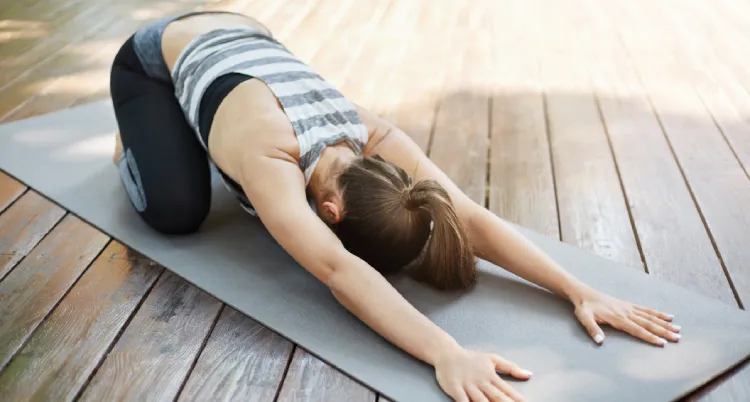
How to Perform
- Kneel on the floor.
- Sit back on your sitting bones.
- Extend arms out in front of your body.
- Lower your chest.
- Hold for 30–60 seconds.
Benefits
- Relieves back tension
- Improves flexibility
- Stretches the spine
- Promotes relaxation
11. Cobra Stretch
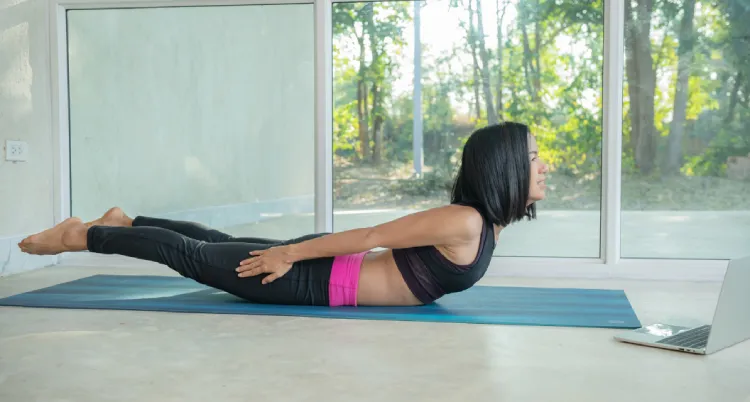
Cobra Stretch is a great stretch for tight chest muscles and strengthens the muscles down the length of the spine.
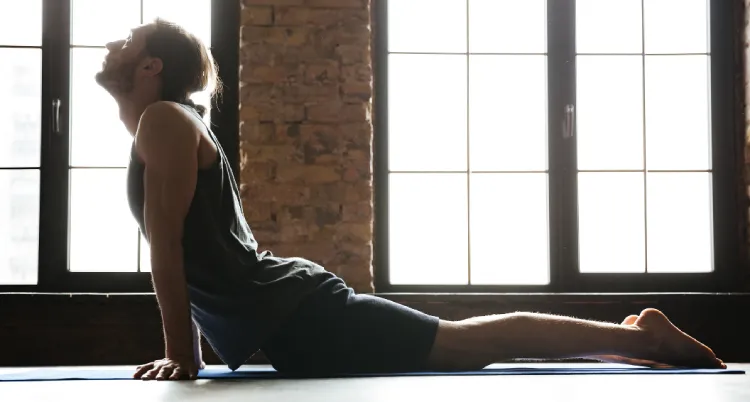
How to Perform
- Lie face down.
- Place your hands under your shoulders.
- Slowly lift your chest.
- Relax your shoulders.
- Lower back down.
- Repetitions: 8–10
Benefits
- Opens the chest
- Improves spinal flexibility
- Strengthens the back
- Helps reduce slouching
12. Dead Bug
The Dead Bug helps your body to stabilize the spine as you move your arms and legs.
How to Perform
- Lie on your back.
- Lift legs and arms.
- Stretch the other arm and leg outward at the end of each stretch.
- Go back and do it on the other side.
- Repetitions: 10–12 per side
Benefits
- Improves core stability
- Supports the spine of the body.Defends the back of the body.
- Enhances coordination
- Supports proper posture
Beginner Posture Routine
If you are new to posture training, try the following exercises 3-4 times a week:
Chin Tucks – 2 sets of 10
The Wall Angels will be 2 sets of 10.
- Bird Dog – 2 sets of 10 on each side.
- Glute Bridge – 2 sets of 15.
- Plank – 30 seconds
- Child’s Pose – 1 minute
There is a 15-20 minute routine, and this will easily fit into an already busy schedule. It may be noticed that there is some stiffness in the area within a week, but it would take several weeks of consistent effort to correct a poor posture that may have been years experiencing. This varies from person to person and depends on your lifestyle, physical fitness, and the severity of your posture.
Best Posture Exercises for Office Workers
Lack of movement is one of the primary factors that can lead to poor posture. Take a short Movement Break every hour to decrease stiffening and improve alignment.
The simple daily practice consists of:
- Chin Tucks
- Wall Angels
- Band Pull-Aparts
- Thoracic Extensions
- Glute Bridges
- Cat-Cow Stretch
Any amount of activity can help loosen the tight muscles and increase circulation, even five minutes! Do these exercises with an ergonomic chair, monitor height, and frequent standing breaks for quicker results.
My Experience with Posture Exercises
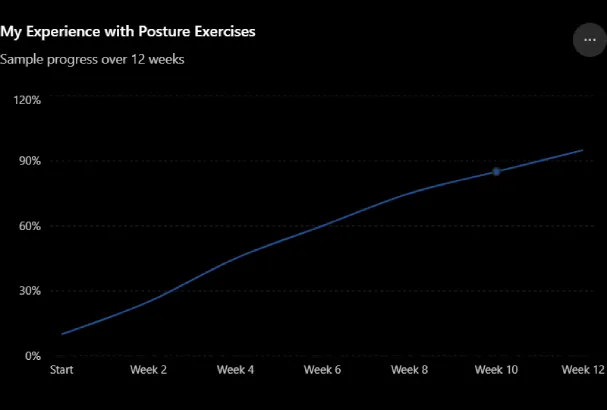
However, from my experience, there’s no need to do some hardcore workouts to improve your posture; it’s about consistency with the simple stuff. After incorporating Chin Tucks, Wall Angels, and Planks into my workout regimen, I observed a reduction in stiffness in the neck and shoulders. It became easy to stand up and sit up if I did it in proper posture in just a few weeks. The biggest thing I learnt is that small changes can make a huge difference in the long term.
Common Mistakes
These are some of the common mistakes people make while trying to correct their posture:
- Exercising inconsistently
- Ignoring core strength
- Sitting for extended periods of time without rest
- Moving through the steps of each of the exercises too quickly.
- Expecting immediate results
- Too short chest and hip muscles when forgetting
Keep in mind that exercise is best complemented by good daily routines.
Tips to Improve Posture Faster
If exercise is not the only thing you have to do, these other habits can also help you get quicker results:
- Get up and stretch regularly (every 30-60 minutes).
- Use your monitor at eye level.
- Exercise the core on a regular basis.
- Stretch chest and hip flexor muscles every day.
- Sleep on a supportive mattress.
- Carry backpacks evenly.
- Keep active all day.
Take a balanced diet rich in protein, calcium, vitamin D and magnesium to help build muscles and bones.
One common question that arises is whether posture correctors or chiropractic therapy can correct posture. A posture corrector may be useful to remind you to maintain an upright posture while sitting or standing, but it is not meant to take the place of exercise. While some people may benefit from having their joints more mobile after receiving chiropractic treatment, permanent changes in posture require strengthening of weak muscles and shifting of movement patterns.
Illnesses related to attention deficit may also lead to posture issues, as a result of sitting for extended durations or a lack of body awareness. Over time, regular breaks and strengthening moves can help to enhance alignment.
Conslusion
It will take time to make a difference, but it will be worth it to improve posture. These exercises can improve core, back, shoulder, and hip strength and will help to alleviate stiffness and discomfort in the body in a weekly routine. Along with a healthy lifestyle and daily habits, the best exercises for posture can make you stand taller, feel better, and help to keep your spine safe for years to come.
Do a few exercises daily, stick to them, and concentrate on posture at all times. Frequent and small adjustments can make a big difference in posture, confidence, and general health.
Frequently Asked Questions
1. Which exercises are the most effective for good posture?
Some of the best types of exercise to help with posture include Chin Tucks, Wall Angels, Bird Dog, Planks, and Glute Bridges.
2. Is Back Pain treatable?
Yes. Poor posture can be corrected over time with regular exercise, stretching, and good daily posture habits.
3. How long does it take to improve posture?
With practice, most will begin to notice results within a few weeks.
4. What can I do at home to improve my posture?
Yes. Most exercises for posture do not require any equipment and can be performed in the comfort of your home in 15-20 minutes.