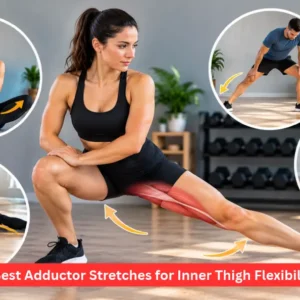
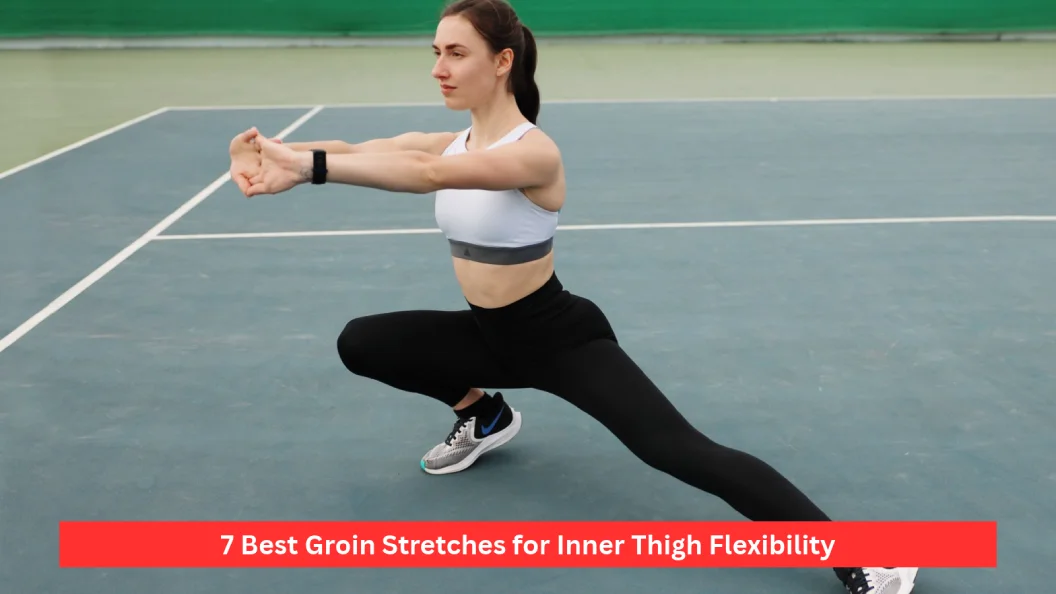

Groin stretches are designed to increase flexibility in the inner thigh, allow hip movement, and prevent “tightness” in the muscle. These are easy routines to incorporate into your fitness program.
What are Groin Muscles?
The groin is the bottom of your abdomen near where the top of your inner thigh meets. It houses multiple muscles, tendons, and other structures that play a role in hip and leg motion.
The hip adductors are an important muscle group in this area. These muscles will assist in pulling your legs towards your body.
There are five major adductor muscles, which are:
- Adductor longus: Assists in adducting the thigh and facilitates hip movements.
- Adductor brevis: Helps to adduct the leg toward the midline.
- Adductor Magnus: A large muscle of the inner thigh which is responsible for hip adduction and other hip movements.
- Gracilis: Runs along the inner thigh and also affects knee movement.
- Pectineus: Helps with hip adduction and flexion.
They all coordinate during walking, running, changing direction, and a lot of lower body exercises.
With some involvement of the muscles around the hips, they are the main muscles stretched by groin stretches.
Benefits of Groin Stretches
The right groin stretches can help promote flexibility and ease of movement.
Here are some potential benefits.
1. Supports Inner-Thigh Flexibility
Regular stretching can help improve the available range of motion in your inner thighs. This can be useful when performing movements that require your legs to move apart.
2. Encourages Comfortable Hip Movement
Your hip joints are involved in walking, squatting, lunging, and many everyday activities. Groin stretches provide opportunities to practice different hip positions.
3. Complements Sports Preparation
Activities such as soccer, basketball, running, and martial arts involve movements that require hip mobility. Controlled dynamic movements can help prepare your body for activity.
4. Provides Variety in Your Mobility Routine
Groin stretches introduce different positions, including standing, sitting, kneeling, and lying down. This makes it easier to choose movements that suit your available space and comfort.
Remember that stretching is only one part of physical fitness. Strength, coordination, and appropriate training loads also matter.
7 Best Groin Stretches for Inner Thigh Flexibility
These exercises can be done at home without the need for a gym membership. Most can be performed using an exercise mat or a comfortable floor.
Begin with slow movements and do not push your legs into positions that they do not like.
1. Seated Butterfly Stretch
Butterfly stretch is one of the most popular exercises to strengthen the inner thighs. It’s a good place to begin for those wanting to practise gentle hip opening.
How to perform it:
- Sit on the floor with your back in a comfortable (not hunched) position.
- Bend your knees and press the soles of your feet together.
- Grasp ankles or feet with your hands.
- Let your knees turn outwards naturally.
- If comfortable, move upper body forward.
- Hold the position in normal breathing.
Suggested time: 15-30 seconds per hold, 2-3 times.
Useful tip: Don’t use hands to force your knees to press against the floor. Let gravity and your comfortable range help to guide the movement.
2. Standing Side Lunge Stretch
The standing side lunge is a practical groin stretch that also allows you to work on hip movement while standing.
It can be useful for people who prefer not to exercise on the floor.
How to perform it:
- Stand with your feet wider than shoulder-width apart.
- Keep your toes pointing generally forward.
- Slowly bend your right knee.
- Shift your hips toward the right side.
- Keep your left leg extended comfortably.
- Return to the center and repeat on the opposite side.
Recommended duration: Hold each side for 15–20 seconds or perform 6–8 controlled repetitions.
Helpful tip: Keep your bent knee aligned with your foot. Avoid allowing it to collapse inward.
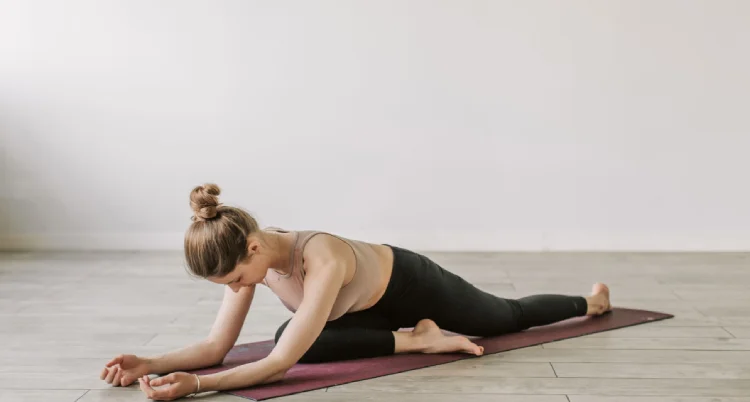
3. Frog Stretch
The frog stretch uses a wide kneeling position to target the inner thighs.
It offers a different stretching angle compared with the seated butterfly position.
How to perform it:
- Begin on your hands and knees on a comfortable mat.
- Slowly move your knees outward.
- Keep your lower legs positioned comfortably behind your knees.
- Support your upper body with your hands or forearms.
- Gradually move your hips backward.
- Stop when you feel a mild stretch through your inner thighs.
Recommended duration: Hold for 15–25 seconds and repeat twice.
Helpful tip: Place a folded towel beneath your knees if the floor feels uncomfortable.
Beginner modification: Keep your knees closer together and reduce how far your hips move backward.
Never force your knees into a wider position just to achieve a deeper stretch.
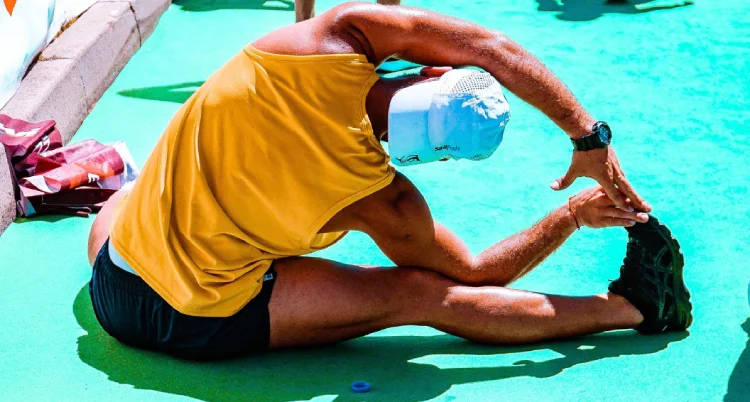
4. Seated Straddle Stretch
Seated straddle stretch will help you develop flexibility in the inner thighs while seated on the floor.
It is especially helpful for those who wish to practice spreading their legs slowly.
How to perform it:
- Sit on the floor with both legs straight.
- Gradually pull legs apart in a comfortable V shape.
- Maintain straight legs; do not lock them.
- Rest your hands on the floor in front of you.
- Slowly bend over slightly at the hips.
- When you sense a slight stretch, return to an upright position.
Suggested time: 15-20 seconds per repetition, 2 reps.
You can also slightly lean over towards one leg before you come back over to the other leg.
Great tip: If you have a tendency for your low back to round too much, sit on a folded towel.
Do not bounce or thrust chest down toward the floor.
5. Supine Groin Stretch
The supine groin stretch is performed while lying on your back. Because your body is supported by the floor, it offers a relaxed alternative to standing exercises.
How to perform it:
- Lie on your back on an exercise mat.
- Bend both knees and place your feet on the floor.
- Slowly allow your knees to move outward.
- Keep the soles of your feet comfortably on the floor.
- Relax your hips without forcing your knees downward.
- Maintain the position while breathing normally.
Recommended duration: Hold for 20–30 seconds and repeat 2 times.
Helpful tip: Place pillows beneath your knees if they feel uncomfortable while lowering outward.
This exercise is especially useful for beginners who prefer supported stretching positions.
6. Half-Kneeling Adductor Rockback
This movement combines gentle hip motion with an inner-thigh stretch. Unlike a traditional static stretch, you move gradually through a comfortable range.
How to perform it:
- Start on your hands and knees.
- Extend your right leg out to the side.
- Keep your right foot flat or comfortably supported.
- Place both hands beneath your shoulders.
- Slowly move your hips backward.
- Return to the starting position with control.
Recommended repetitions: Perform 8–10 repetitions on each side.
Helpful tip: Keep your extended leg comfortable and avoid rounding your back excessively.
Beginner modification: Reduce the distance you move your hips backward or place a cushion beneath your supporting knee.
This exercise can be useful in mobility sessions before lower-body training, provided the movement is comfortable.
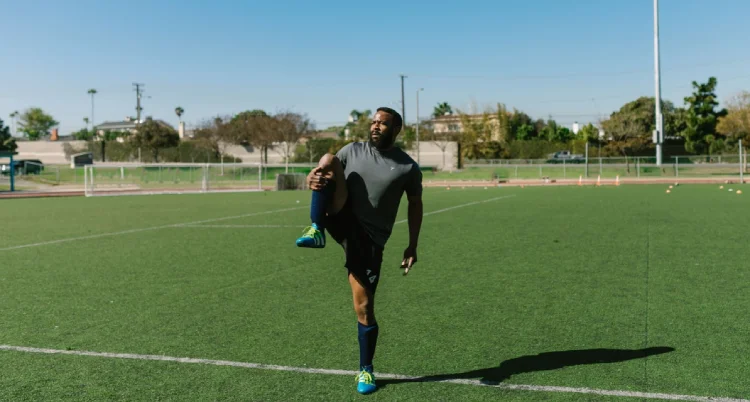
7. Pass the Backside Swings
Dynamic swinging of the legs in the Exercises: Swim is an exercise whereby the leg moves in Movement but not at the Stretch position.
They may be used as a warm-up prior to activities such as running, jumping, or changing direction.
How to perform them:
- Hold on to a solid wall or chair.
- Use one hand to hold the support.
- Maintain good posture.
- Slowly swing one leg across your body and outward.
- Contain the ball during the turn.
- Repeat using the other leg.
The recommended number of reps per set: 8–12 controlled swings for each leg.
Tips: Start with small movements, and slowly start to increase with that as you get more comfortable.
Don’t swing as you try to widen the movement or swing aggressively.
Dynamic vs. Static Groin Stretches
Both stretching methods can be useful, but they serve different purposes.
| Feature | Dynamic stretching | Static stretching |
| Movement | Continuous controlled movement | Holding one position |
| Best suited for | Warm-up preparation | Flexibility sessions and cool-downs |
| Examples | Standing leg swings | Butterfly stretch |
| Duration | Repeated movements | Usually 15–30 seconds per hold |
| Intensity | Comfortable and controlled | Gentle, without forcing |
Dynamic groin stretches are generally a practical choice before sports and workouts because they prepare you to move.
Static stretches can be included after exercise or during a separate flexibility session.
You don’t need to perform every type of stretch in one workout. Choose movements based on your activity and comfort.
Simple Groin Stretching Routine
If you want a straightforward routine, try combining these movements.
| Exercise | Suggested time |
| Gentle standing leg swings | 1 minute |
| Standing side lunge | 30 seconds per side |
| Butterfly stretch | 20 seconds |
| Seated straddle stretch | 20 seconds |
| Supine groin stretch | 30 seconds |
Start with a few minutes of easy walking or other gentle movement before beginning.
This routine is intended for general flexibility, not for treating a groin injury. Adjust the positions and duration according to your comfort.
Common Groin Stretching Errors
Simple stretches also need the correct execution. These are the three most common stretching errors to avoid:
- Pushing knees down during butterfly stretch: Pushing your knees toward the ground when doing a butterfly stretch may cause unnecessary pressure. Let them proceed naturally.
- Excessive bouncing or repeated handling when statically stretching: Excessive bouncing may make it more challenging to maintain control of the position, or repeated handling may make it more challenging to maintain control of the position. Hold in an comfortable position rather.
- Using stretching without warming up: Start stretching activities with light movements, particularly when transitioning from mild to intensive activities.
- Breathe normally with each exercise: Take a natural breath throughout the exercises.
- Ignoring discomfort: There are 2 types of pain; it is important that a mild stretch is not sharp or increasing. If it hurts, stop the movement.
Individual mobility, training history, and hip structure differ – comparing flexibility with others: Keep in mind your own comfortable range of motion.
Safety Tips Before Practicing Groin Stretches
Groin stretches are designed for general flexibility, not for every type of groin pain.
If you recently experienced a groin strain, avoid forcing the inner-thigh muscles into a stretched position. Early management of an injury may require modifying activities and following an individualized rehabilitation plan.
Stop exercising and seek medical advice if you experience significant pain, swelling, bruising, weakness, or difficulty walking. Severe pain, numbness, or a concerning groin lump also requires prompt assessment.
People recovering from surgery or managing an existing hip or pelvic condition should consult an appropriate healthcare professional before starting a new routine.
Conclusion
Adding groin stretches to your fitness routine can be a practical way to work on inner-thigh flexibility and comfortable hip movement. Start with simple positions, use controlled movements, and gradually find the exercises that suit your body. Remember that flexibility develops differently for everyone. For more stretching and mobility guidance, explore the exercise resources available at Stretchlee.
Frequently Asked Questions
1. What Are the Best Stretches for Tight Groin Muscles?
Butterfly, frog, seated straddle, and standing side lunges are effective options.
2. How Long Should You Hold a Groin Stretch?
Start with 15–30 seconds, keeping the stretch comfortable and controlled.
3. Are Groin Stretches Good Before Running?
Yes. Dynamic movements, such as leg swings, can help prepare your hips before running.
4. Can You Do Groin Stretches Every Day?
Yes, gentle groin stretches can be part of your daily routine if they feel comfortable.