
Looking for a full-body strength-building workout using one powerful exercise? With Zercher Carry, you can do just that. Gripping a barbell in the elbows and walking works your core, upper back, arms, and legs; it also improves stability, posture, and functional strength.
- What Is the Zercher Carry?
- How Does the Zercher Carry Work?
- Muscles Worked in the Zercher Carry
- Benefits of the Zercher Carry
- How to Do the Zercher Carry
- Common Mistakes to Avoid
- Variations of the Zercher Carry
- What is the correct weight for you?
- Which style of carrier is right for you?
- Zercher Carry vs. Farmer Carry
- Is the Zercher Carry suitable for novices?
- Is Zercher Carry safe?
- How to Program Zercher Carries
- Comparisons and Context
- Arm Growth and Biceps Connection
- Who Should Do the Zercher Carry?
- Final Thoughts
- Frequently Asked Questions
What Is the Zercher Carry?
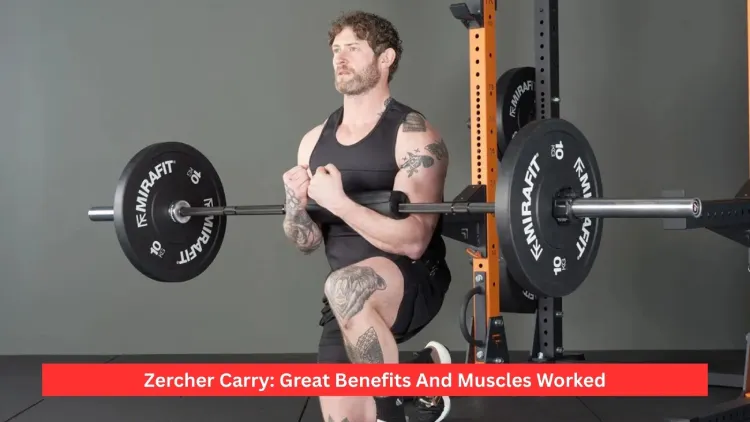
The Zercher Carry is a loaded carry exercise performed with a barbell, sandbag, or other weight in the bend of your elbows and walked for a specific time or distance. Simple enough, but it is a great challenge to core, upper back, arms, legs, and posture.
The exercise is named after the strongman of the 1930s, Ed Zercher, who lifted weights without a squat rack using the Zercher position. This is still employed in carries, squats, deadlifts, and other strength training exercises today.
How Does the Zercher Carry Work?
For the Zercher Carry, the weight will be held near the body with elbows bent, and the weight will be held in the cradles of the arms. Tighten abdominal muscles, maintain a high chest, and walk slowly and with controlled steps.
The Zercher Carry places the weight directly in front of the body, unlike a farmer carry, which carries the weights at the sides. This requires your core to engage more and to try to keep you balanced, stable, and in good posture throughout your movement.

Muscles Worked in the Zercher Carry
The Zercher Carry is a full-body strength exercise performed with an external weight such as a barbell, sandbag, or other load. When you are carrying the weight in front, a number of different muscle groups are required to hold it up in a balanced way and with the right posture while walking.
- Core and Abdominals: Your core is very busy keeping your torso stable and does not allow excessive bend or twist in your torso as you walk.
- Quadriceps and Glutes: These muscles help to push each step and maintain the strength and stability of your lower body during the transport of the load.
- Upper back, Traps and Lats: These muscles help to support weight, maintain an upright posture, and control shoulders and torso.
- Biceps and Forearms: These will be constantly used to maintain the weight in place. The forearms contribute to the grip, and the biceps help to keep the bent arm position.
- Spinal Erectors: These muscles are located on the sides of your spine and function as the stabiliser to maintain the back extended and stable, particularly when faced with a challenging load.
In general, Zercher Carry is a great functional exercise for athletes, strength trainers, and everybody who wants to develop a strong and functional full body.
Benefits of the Zercher Carry
The Zercher Carry isn’t just any loaded carry. Strengthens the muscles that are used in real life while simultaneously testing your core stability, posture, and strength.
- Builds Mental Toughness: This is a challenge not only in terms of strength, but also concentration, as it’s very uncomfortable from a position and requires the tension to be maintained.
- Builds Core Strength: Carrying the weight in front requires your core and back muscles to engage to maintain stability and good posture in your body.
- Builds arm/hand strength: While you’re holding and carrying the load, your biceps, forearms, and grip muscles are constantly stressed.
- Improves Functional Strength: Walking with a front-loaded weight exercises your body to maintain strength and control throughout the walk.
- Promotes weight control and stabilisation: Every time you step foot in the Zercher Carry, you are challenged in your coordination, posture, and hip stability.

How to Do the Zercher Carry
To do the Zercher Carry with good form and control, follow these steps:
Set Up the Barbell
- Load the barbell in a squat rack: with it at approximately waist-to-chest level. Place your arms under the bar and stand near the bar.
- Secure the Weight: With your arms straight, bend your elbows to put the bar in the crooks of your arms. Close your hands together or lightly grip the bar to aid in grasping the bar.
- Brace Your Core: Stand tall and lift your chest. Tighten your abdomen, keep your shoulder blades stable, and do not over-round your upper back.
- Start Walking: Move slowly and move with your bar close to your body. Keep your back flat and your core tight throughout the carry.
- Finish Safely: Take a walk for the desired distance or time and slowly get the bar back to the rack. Keep braces in place until the weight is completely in place.
Form Tips
- Begin with a weight that will keep you in proper posture.
- Maintain the bar in proximity to the body during the exercise.
- Make sure you don’t lean forward excessively or hunch your shoulders.
- For comfort, use elbow sleeves or a light pad if pressure from the bar is too great.
- Concentrate on controlled steps, even breathing, and a good core brace.

Common Mistakes to Avoid
- Premature overloading –This results in failure of posture and a greater risk of back strain.
- Rounding the spine – Although the Zercher deadlift form is safe with good technique, over-rounding may put undue stress on the lower back.
- Shallow breathing- To avoid collapsing, you should hold the diaphragm and inhale regularly.
Variations of the Zercher Carry
- Sandbag Zercher Carry – Easier, develops real-life strength.
- Stone Carry – It is applied in strongman events, and it works well on grip and biceps.
- Zercher March- Enhances hip stability and endurance of the core.
- Zercher Good Morning – Works with the posterior chain to strengthen bracing strength.

What is the correct weight for you?
Begin with a weight that is “light to moderate” to keep good posture and control. The weight will be decided by the strength and experience of the handler. Add weight in increments only if you can perform the carry in good form.
Which style of carrier is right for you?
The “standard” beginning range for most folks is 20–40 meters per set. If you’re training by time, you can carry for 20–30 seconds. Emphasize steps done with control, not distance, and good posture.
Zercher Carry vs. Farmer Carry
With the Zercher Carry, the weight is held in front of your body, which makes it more difficult for your core, upper body, and posture. A Farmer Carry carries weights at your sides and focuses more on grip, shoulders, and overall loaded carry strength. Either is good, od but they prepare for different requirements.
Is the Zercher Carry suitable for novices?
It is possible, yes, to do the Zercher carry as a beginner with a lightweight and controlled weight, and with proper form. To build strength, posture, and controlled walking, use short distances first, and then add weight.
Is Zercher Carry safe?
The Zercher Carry is safe when done with a proper lift and correct weight. Do not overload, maintain control of your spine, and discontinue if pain is sharp or unusual. For beginners, technique is most important, rather than weight.
How to Program Zercher Carries
Once or twice a week after your strength sessions, Zercher Carries can be performed. Start with “2–3 sets of 20–40 meters” or 20–30 seconds per set. Take adequate rest periods between sets while keeping your posture good, and add weight and/or distance as your strength increases.
Comparisons and Context
The Zercher family of lifts is usually likened to other squats and carries.
- Zercher Squat vs. Front Squat: Zercher squat has more core and arm strength with less comfort. Heavier loading is possible with front squats. They both enhance posture, and fighters tend to use the Zercher.
- Safest Squat: According to most trainers, the goblet squat is the safest squat to do when starting out, though the Zercher squat is also easy on the joints when performed in a controlled fashion.
- World Records: The Zercher squat weight is heaviest at more than 600 lbs (272 kg). In a powerlifting competition, the best squat was more than 1,100lbs.
- History: The invention of the lift was necessitated by necessity, and the lift has continued to be used in strongman and combat sports ever since.
Arm Growth and Biceps Connection
The question that comes to the minds of lifters is whether Zerchers are biceps builders. Although the carry itself will not substitute for curls, the isometric squeeze will provide good tension.
To maximise arm growth:
- All varieties of curls can be used to isolate the various heads of the biceps.
- The frequency of training is important: 23 times a week, biceps are sufficient to have the right balance between recovery and growth.
- Unilateral activities such as single-arm curls and carries are exercises that provide equal strength in both arms.
- With broader arms, train the triceps, shoulders, and the brachialis.
- Gradual overloading, whether through heavier weights or an increase in the number of reps, is a sure way of consistent arm improvement.
Who Should Do the Zercher Carry?
- Power athletes who prefer additional core stability and loaded strength.
- MMA men who require grappling strength and training.
- Any general lifters who desire a challenging, practical workout with machines and curls.
- Strength training can help endurance athletes, such as Mo Farah, but heavy squats are not the priority.

Final Thoughts
The Zercher carry belongs to the number of exercises that are the most effective and difficult to perform in your training program. It tightens your core, propels your posture, uses arms and lats and develops athletic strength. It is awkward initially, but as far as the advantages that it has outweigh the disadvantages. The Zercher carry will challenge and pay off whether you want to pack on muscle, improve performance in a sport or just get stronger in life.
Since the estate of Ed Zercher, with the invention of the garage gym to strongman arenas, and MMA fight camps, the Zercher carry has been able to endure time. Complemented with other exercises such as sissy squats, good mornings, and regular curls, it can be the key to the new stages of strength and steadiness.
Frequently Asked Questions
1. What does the Zercher carry most improve?
Core stability, posture, and general functional strength are the main benefits of the Zercher carry. Since the weight is held in front of the body, it makes your abs, upper back and legs work harder than with traditional carries.
2. Do Zercher carry biceps grow larger?
Yes, to some extent. Although the Zercher carry is not a direct biceps exercise such as curls, the isometric position of the elbow crease initiates the biceps, forearms, and brachialis. This may help in building up arm strength and thickness with time.
3. Is the Zercher carry safe on the back?
The Zercher carry can be done safely when it is done with good technique: sitting straight, a tightened core and controlled movements. Rounding of the spine or overloading prematurely may however aggravate the lower back.
4. Who is to incorporate the Zercher carry in the training?
The Zercher carry is beneficial to athletes, MMA fighters, strongmen and general lifters who wish to train bracing strength, functional conditioning and raw power. It particularly comes in handy when one requires grappling power or improved posture.