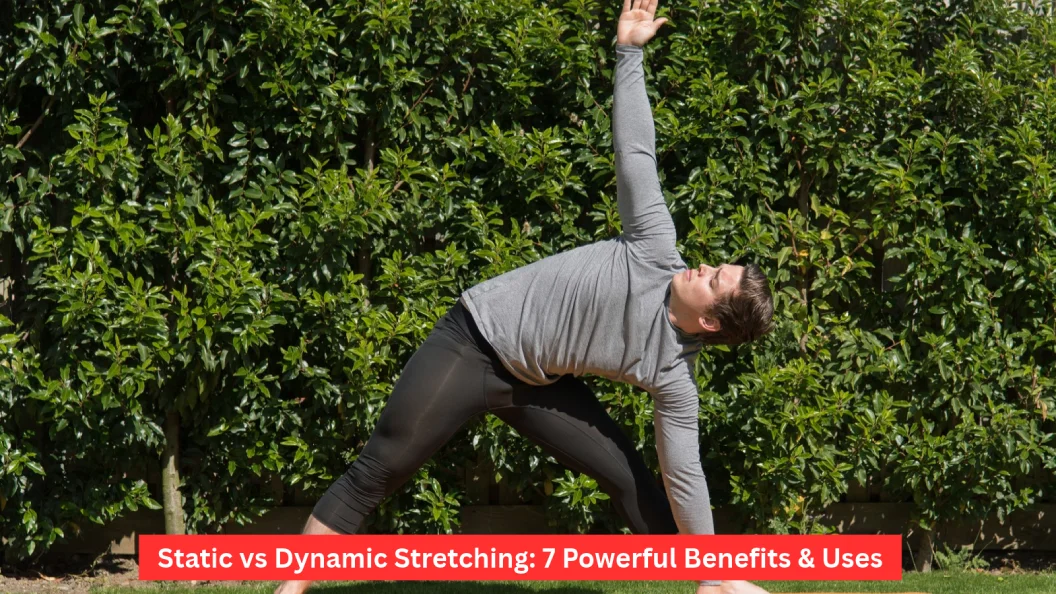

Static vs Dynamic Stretching involves maintaining a stretch for a relatively long time, typically 30 seconds. Dynamic stretching is a stretch performed in a smooth and controlled manner across the range of motion of a joint. For warm-up, use dynamic stretches before a workout, and for after a workout or a separate flexibility session, use static stretches.
- What Is the Difference Between Static and Dynamic Stretching?
- What is static stretching?
- What is dynamic stretching?
- Static vs Dynamic Stretching at a Glance
- What Are the Benefits of Static and Dynamic Stretching?
- Downsides to know
- What Does the Research Say About Static vs Dynamic Stretching?
- When Should You Use Dynamic Stretching?
- When Should You Use Static Stretching?
- Can You Do Static and Dynamic Stretching in the Same Workout?
- Which Is Better for Your Goal?
- Who needs to be careful about stretching?
- Common Stretching Mistakes to Avoid
- Start Using Both the Smart Way
- Conclusion
- Frequently Asked Questions
What Is the Difference Between Static and Dynamic Stretching?
The difference between static and dynamic stretching is movement. In a static stretch, you ease a muscle into a lengthened position and stay there. In a dynamic stretch, you keep moving, taking the muscle toward its end range and back again for a set number of reps. One calms the body down. The other gets it ready to work.
Both types lengthen muscles and can improve how far your joints move. The real difference is what happens to your body right afterward, which is why timing matters more than choosing a winner.
What is static stretching?
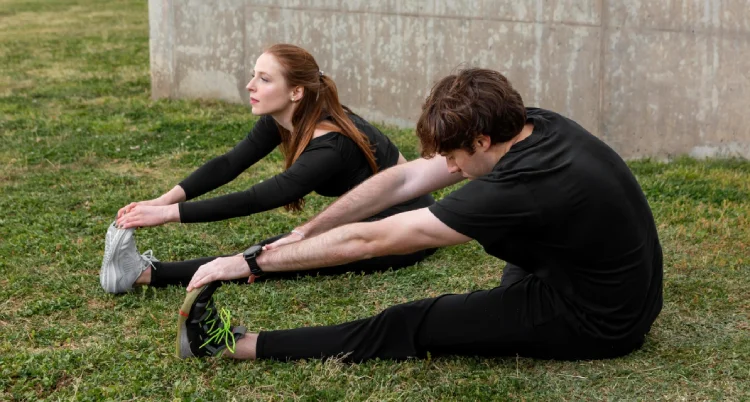
Static stretching is holding a muscle in a lengthened position for a set amount of time without moving. A standing hamstring stretch is a great one.
R&D note: there is some variation in guidance on hold time. Mayo Clinic recommends that each stretch be held for 30 seconds; problem areas can be stretched for up to 60 seconds. The average is 20 to 45 seconds, according to the Hospital for Special Surgery (HSS). Either way, you should experience a pleasant tension, never pain.
What is dynamic stretching?
Dynamic stretching uses controlled, repeated movements to take your joints through their range of motion. Consider leg swings, lunges, and arm circles. The further you go, the more you warm up, so the next rep should go a little farther.
A dynamic warm-up, Mayo Clinic says, is doing movements similar to the sport or activity at a low level and then increasing in speed and intensity as you proceed. The key concept is dynamic stretches: practise what you are going to do.
Is dynamic stretching the same as ballistic stretching?
No. Ballistic stretching uses fast bouncing to force a muscle past its normal range, like bobbing up and down to touch your toes. Dynamic stretching stays smooth and controlled. Most people should skip ballistic stretching unless a coach has prescribed it for a specific sport.

Static vs Dynamic Stretching at a Glance
| Static stretching | Dynamic stretching | |
| How it works | Hold one position | Move through a range for reps |
| Typical dose | About 30 seconds per stretch, 2–4 times | 8–12 reps per move |
| Best time | After a workout or as its own session | Before a workout or sport |
| Main goal | Long-term flexibility and cool-down | Warming up and preparing to move |
| Effect right after | Muscles feel relaxed | Body feels warm and ready |
What Are the Benefits of Static and Dynamic Stretching?
Both types can improve how far your joints move, but they help in different ways. Static stretching is best for building flexibility over time and relaxing after exercise. Dynamic stretching is best for warming up, rehearsing movement patterns, and getting your muscles ready for speed and power.
Benefits of static stretching
- Builds long-term flexibility: Regular holds can increase range of motion in tight areas like the hamstrings, hips, and chest. Mayo Clinic notes that better flexibility may improve performance in physical activities.
- Helps you wind down: Slow holds and steady breathing make a natural cool-down after training.
- Easy to learn: It needs no coordination or extra space, so it suits beginners and desk breaks.
- Shows left-right differences: Mayo Clinic notes that flexibility that isn’t equal on both sides may be a risk factor for injury. Holding the same stretch on each side makes those differences easy to spot.
Benefits of dynamic stretching
- Warms you up: Repeated movement raises your heart rate and muscle temperature, which holding still doesn’t do.
- Supports performance: The 2016 review linked dynamic stretching to a small performance improvement when it’s done within minutes of activity.
- Rehearses your workout: Lunges, leg swings, and arm circles mirror the running, squatting, and reaching you’re about to do.
- Trains control: You actively move into each position, so your muscles learn to control the range you have.
Downsides to know
Static stretching is not a warm-up exercise since it does not raise the body temperature. The pros Cleveland Clinic says are a loss of muscle performance, muscle power, and less effective warming up. The primary issue with long holds is when they occur after a power session, and they should be avoided; long holds of over 60 seconds per muscle.
Dynamic stretching requires more coordination and space. Don’t hurry it; smooth swings become ballistic bouncing. It’s also not a great option for use in isolation when it comes to long-term goals such as splits.
What Does the Research Say About Static vs Dynamic Stretching?
Research suggests the old rule “never static stretch before exercise” is too simple. Long static holds right before activity can slightly reduce strength and power, but short holds inside a full warm-up have only a tiny effect. Dynamic stretching, done within minutes of activity, tends to give a small performance boost.
A widely cited 2016 systematic review in Applied Physiology, Nutrition, and Metabolism compared stretching types. When people were tested right after stretching, static stretching was linked to an average performance change of −3.7%, while dynamic stretching was linked to +1.3% (Source: PubMed). The same review found bigger drops when static stretches lasted 60 seconds or more per muscle.
A 2019 review in Frontiers in Physiology added more detail. Short static stretching of 60 seconds or less per muscle group, done alone or within a full warm-up, only trivially reduced strength and power, by about 1–2%. Longer holds of more than 60 seconds caused larger, more meaningful declines (Source: Frontiers in Physiology via PMC).
What about injuries? The 2016 review found no clear effect of static stretching on all-cause or overuse injuries, and there wasn’t enough data yet on dynamic stretching. So stretching shouldn’t be treated as an injury shield on its own.
What this means for you: if you’re lifting, sprinting, or jumping soon, keep any static hold short, under 60 seconds per muscle, and put it inside a proper warm-up. If you’re stretching purely for flexibility, longer static holds are fine when no hard effort follows.
When Should You Use Dynamic Stretching?
Use dynamic stretching before exercise, sports, or any activity that needs speed, power, or a big range of motion. Do it after 5 to 10 minutes of light cardio, such as brisk walking or easy cycling. A dynamic routine of 5 to 8 minutes prepares your muscles and joints for the work ahead.
HSS recommends that a complete athletic warm-up include about 5 to 10 minutes of low- to moderate-intensity swimming, jogging, or cycling, followed by dynamic stretching. Here are five simple dynamic stretches you can do almost anywhere:
- Leg swings: Hold a wall and swing one leg forward and back for 10 reps, then side to side for 10. Keep your torso tall.
- Walking lunge with a reach: Step into a lunge and reach both arms overhead. Do 8 steps per leg to open the hips and front of the thighs.
- Arm circles: Start small and grow to big circles, 10 forward and 10 backward. Great before any upper-body day.
- Hip circles: Stand on one leg, lift the other knee, and draw slow circles with it, 8 each way per side.
- Inchworm: Hinge forward, walk your hands out to a plank, then walk your feet up to your hands. Do 6 reps for the hamstrings and shoulders.
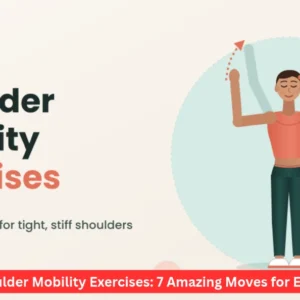
Before upper-body training, add a few shoulder-specific moves from our guide to the best shoulder mobility exercises, such as wall slides and controlled shoulder circles.
When Should You Use Static Stretching?
Use static stretching after a workout, when your muscles are warm, or as a stand-alone flexibility session. It’s a better tool for building long-term flexibility and winding down. Mayo Clinic suggests warming up first, holding each stretch for about 30 seconds, and stretching 2 to 3 days a week.
Static stretching is also a good fit for desk workers who feel stiff at the end of the day. A 10-minute session in the evening can help you feel looser without the pressure of a workout afterward.
Try these five static stretches after your next session:
- Standing hamstring stretch: Put one heel on a low step, keep your back flat, and hinge forward. Hold 30 seconds per leg.
- Half-kneeling hip flexor stretch: Kneel on one knee, tuck your tailbone, and shift forward. Hold 30 seconds per side.
- Standing quad stretch: Hold a wall, pull one heel toward your glutes, and keep your knees together. Hold 30 seconds per leg.
- Doorway chest stretch: Rest your forearms on a door frame and lean in gently. Hold 30 seconds.
- Cross-body shoulder stretch: Pull one arm across your chest, holding above the elbow. Hold 30 seconds per arm.
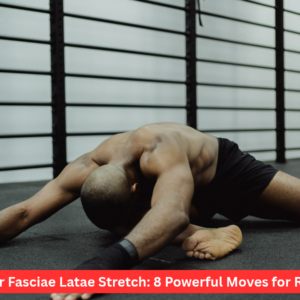
If the outside of your hip feels tight after running, our tensor fasciae latae stretch guide walks you through targeted static stretches for that spot.
Can You Do Static and Dynamic Stretching in the Same Workout?
Yes. Most people get the best results by using both: dynamic stretching before the workout and static stretching after it. If one area feels tight during your warm-up, a short static hold of 30 seconds or less is fine, as long as you follow it with more dynamic movement before lifting or sprinting.
Here’s a simple order that works for most workouts:
- Raise your temperature: 5 to 10 minutes of easy cardio.
- Move dynamically: 5 to 8 minutes of dynamic stretches that match your workout.
- Spot-stretch if needed: one short static hold on a stubborn area, 30 seconds or less.
- Rehearse: a few lighter sets of your first exercise.
- Train.
- Cool down: 5 to 10 minutes of static stretching for the muscles you worked.
This sequence keeps the benefits of both methods while avoiding long holds right before hard effort.
Which Is Better for Your Goal?
Neither type of stretching is better overall. The right choice depends on what you’re doing next. Dynamic stretching is better for warming up before sports, lifting, or running. Static stretching is better for long-term flexibility, cooling down, and easing general stiffness.
Here’s how that plays out for common goals:
- Lifting or sprinting: Warm up with dynamic stretches. Keep any static holds short and early, then finish with static stretches after training.
- Running: Do leg swings, lunges, and hip circles before your run. Save calf, hamstring, and hip stretches for afterward.
- Flexibility or splits: Use longer static holds in a dedicated session, ideally after a light warm-up, with no hard training right after.
- Desk stiffness: Short dynamic breaks during the day, plus an evening static routine, tend to fit real life best.
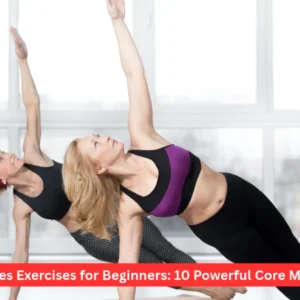
- Shoulder stability work: Pair dynamic warm-ups with strength moves like the ones in our serratus anterior exercises guide.
Who needs to be careful about stretching?
Static and dynamic stretching can be done safely by most healthy adults. Be extra careful, and always consult a doctor or physical therapist before you use these, if any apply to you:
If he’s just been injured or had surgery, healing muscles, tendons, and joints will require a specific plan and limits on range.
- Hypermobile joints: If your joints are already moving beyond the normal range, a deeper stretch may not be beneficial. Strength and control exercises can be more important.
- Chronic joint or bone conditions: If you have arthritis, osteoporosis, or a joint replacement, just ask what movements are safe for you.
- Pregnancy: Joints may be looser during pregnancy; try to avoid end-range stretches and follow the advice of your provider.
- Nerve-like pain: If a stretch of pain is sharp, stop right away.
- For everyone, the rule is the same: you should feel tension, not pain.
Mayo Clinic recommends stepping back from the stretch until you no longer feel pain in it before holding the stretch.
Common Stretching Mistakes to Avoid
- Stretching cold muscles: Mayo Clinic advises warming up with light walking, jogging, or biking for 5 to 10 minutes before you stretch.
- Bouncing during static stretches: Hold steady instead. Bouncing turns a static stretch into a ballistic one.
- Holding long static stretches right before power work: Keep pre-workout holds under 60 seconds per muscle.
- Rushing dynamic moves: Fast, sloppy reps don’t prepare you better. Smooth control does.
- Pushing into pain: You should feel tension, not sharp pain. Ease off if it hurts.
Stretchlee Tip: Test, warm up, retest
Before your dynamic warm-up, pick one quick test that matches your workout, like how deep you can squat comfortably or how close you get to touching your toes. Do the test again after warming up. If it feels easier, your warm-up worked. If not, add 2 or 3 more minutes of the dynamic move that targets that area. It turns your warm-up from a guess into a quick check.
Start Using Both the Smart Way
Static vs dynamic stretching isn’t a contest. Dynamic stretching prepares your body to move, and static stretching helps you build flexibility and cool down. This week, try 5 minutes of dynamic stretches before each workout and 5 minutes of static stretches after. Then explore more stretching guides on Stretchlee to build a routine for your tightest areas.
Conclusion
Static and dynamic stretching both play an important role in a balanced fitness routine. Use dynamic stretches before workouts to warm up and prepare your muscles, and static stretches afterward to improve flexibility and relax. The key is choosing the right type at the right time. Combine both consistently to support better mobility and movement.
Frequently Asked Questions
Is it bad to do static stretching before a workout?
It isn’t harmful in small doses, but long holds can slightly reduce strength and power. Research suggests keeping pre-workout static stretches to 60 seconds or less per muscle and placing them inside a full warm-up. For sprinting or heavy lifting, dynamic stretching is the better main choice.
How long should you hold a static stretch?
Hold most static stretches for about 30 seconds and repeat 2 to 4 times. Mayo Clinic notes that problem areas may need around 60 seconds. Stretch to a point of gentle tension, breathe normally, and don’t bounce.
Does dynamic stretching improve flexibility?
Yes, dynamic stretching can improve your range of motion, especially in the short term during a warm-up. For building long-term flexibility, regular static stretching after exercise or in a separate session is the more common approach. Many people use both.
How long should a dynamic warm-up be?
A good dynamic warm-up takes about 5 to 8 minutes after 5 to 10 minutes of light cardio. Choose 4 to 6 moves that match your workout and do 8 to 12 controlled reps of each. Harder or faster sessions may need a slightly longer warm-up.