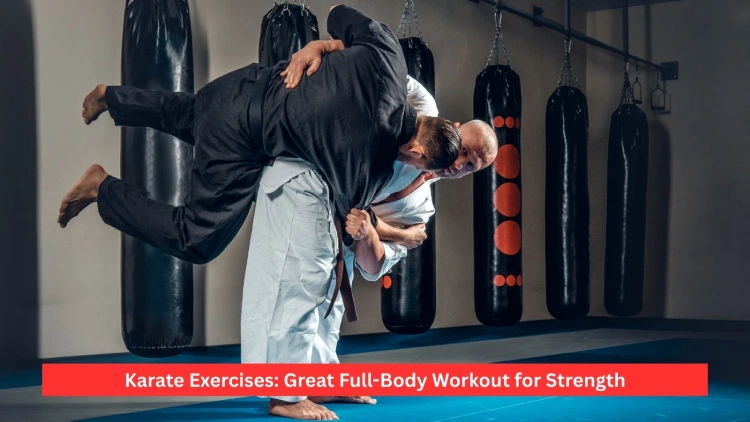

The exercises of karate involve stance, punches, blocks, kicks, footwork, and kata to develop strength, balance, coordination, flexibility, and cardiovascular fitness. For beginners, use simple movements and slowly increase the intensity. Here you will be introduced to the most effective karate exercises and their major fitness benefits.
- Exercises for Karate Beginners
- Karate Stance Exercises for Strength and Balance
- Karate Punching Exercises for Upper Body Strength.
- Kicking Exercises for Leg Strength and Stability
- Exercises for Full Body Conditioning using Katas
- Karate Core Exercises for Strength and Stability
- Karate Flexibility and Stretching Exercises
- Cardio Benefits of Karate Exercises
- Useful Karate bodyweight exercises
- After Training Karate Cooldown Exercises
- How To Do A Basic Karate Training Session.
- Karate vs Taekwondo for Fitness
- Does Karate provide a good exercise?
- How Long Does It Take to Improve With Karate?
- Karate vs Boxing for Fitness
- Advantages of Karate Exercises
- Karate Styles and Training Intensity
- How Difficult Are Karate Exercises?
- Do Karate Exercises Work for All Ages?
- What Muscles Does Karate Work?
- Conclusion
- Frequently Asked Questions
Exercises for Karate Beginners
The proper warm-up can prepare your muscles and joints for karate movements and make you more comfortable during training. Incorporate light cardio, joint rotations, and dynamic movements,s and only practice kicks, punches, es or stances after these.
5-Minute Karate Warm-Up
- Arm circles – 30 seconds: Make controlled circles with arms.
- Shoulder rolls – 30 seconds: Roll shoulders forwards and backwards.
- Hip circles – 30 seconds: Gently rotate your hips in both directions.
- Light marching or footwork – 1 minute: March in place or do easy karate steps.
- Leg swings — 1 minute: Gently swing each leg forward and backwards.
- Rotate upper body from side to side – 1 minute.
- Simple stance changes — 30 seconds: Work on simple stances and control changes.
A warm-up should get you ready to move but not too far.
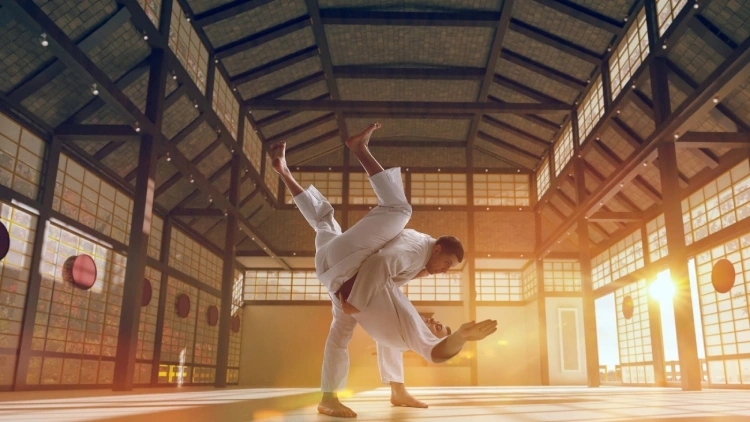
Karate Stance Exercises for Strength and Balance
Body weight and controlled positioning of the body are used to build endurance, stability, balance, and coordination in the lower body through karate stances. Students can start off doing each stance slowly, and then practice punches, kicks, or movement.
Horse Stance
- To perform: Step your feet apart more than shoulder-width, set the toes slightly outward, and drop the hips while maintaining an upright chest and knees aligned directly over the feet.
- Muscles activated: Mainly the quadriceps, glutes, and inner thighs; plus core challenge.
To get started, hold the position for 15-30 seconds and slowly build up the time depending on leg strength.
Front Stance
- How to perform: Step forward one foot and bend front knee with back leg straight. Maintain back upright and control weight in body.
- Primary fitness benefit: Training in the front stance can improve leg endurance, stability, and control when going forward.
Back Stance
- How to perform: Most body weight on back leg, front leg lighter and in motion. Maintain an upright posture and controlled stance.
- Balance benefit: The back stance increases the difficulty of maintaining the balance, stability, and coordination of the lower body, particularly when moving from one karate position to another.
Karate Punching Exercises for Upper Body Strength.
Karate punches involve carefully controlled arm movements, core and body rotation, and a stance. Practices can improve muscular endurance, coordination, and control of the upper body.
Straight Punch
- Starting position: Standing with one hand close to the body and a stable base. Slowly extend the opposite arm straight with the elbow not locked, then slowly bring the arm back to the start.
- Muscle groups worked: Shoulders, Triceps, Chest, Forearms, and Core.
Reverse Punch
- How to perform: Begin with one foot forward, and the opposite hand close to the body. Turn hips and torso slightly while reaching out with the back hand. Return under control to the start position.
- Primary benefit: Upper body strength, core rotation, coordination, and lower body stability.
Beginner Punching Combination
Do a basic straight punch, back punch from a stance. Progress gradually, master your technique, and build up your pace when you are confident that you can control the tempo.
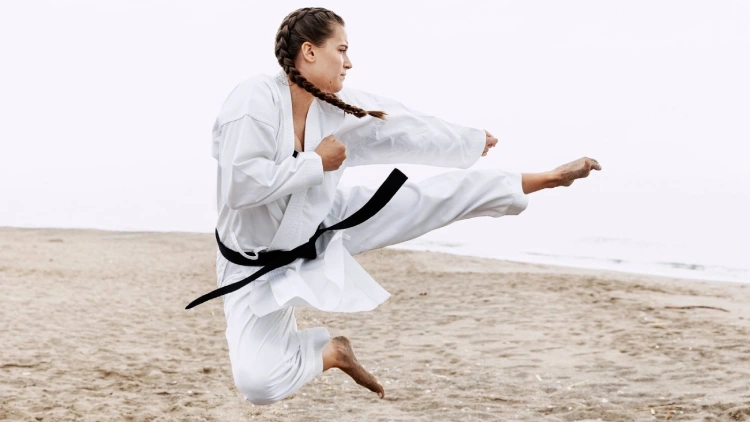
Kicking Exercises for Leg Strength and Stability
Kicking exercises in Karate develop the legs, hips, body, and supporting leg and demand balance and controlled movement. First, work on technique and range of motion, then work on speed and power for beginners.
Front Kick
- The how: Raise one knee to chest, straighten the lower leg in a controlled manner, then push the lower leg back before returning to the position.
- Muscles used: Quadriceps, hip flexors and core, and other leg muscles to keep the balance.
- Modification for the beginner: Do the knee lift and slow extension without using a full-speed kick.
Side Kick
- Do it: Bring knee up to chest, turn foot of supporting leg and straighten kicking leg to side. Take the leg back under control.
- The muscles involved are glutes, hip muscles, quadriceps, and core.
- For beginners: Keep a firm support for balance when moving, if it is hard.
Roundhouse Kick
- The movement: Raise the knee, turn the other foot and hips, and straighten the lower leg through the target. Slowly move back in place.
- Muscles engaged: Glutes, hip muscles, core, and lower body rotation/stabilization muscles.
- Safety tip: To limit movement and prevent over-extending your range of motion. Build flexibility gradually.
Exercises for Full Body Conditioning using Katas
Kata is a series of coordinated stances, punches, blocks, kicks, turns and footwork. The practice of these movements can enhance the endurance of the muscles, balance, coordination, rhythm, and control of the body.
This continuous playing of a kata could also offer a cardiovascular challenge, depending on the kata, speed, length of time, and individual fitness level.
For beginners: It’s important to learn each movement and each transition on its own before attempting to do the kata at speed. Emphasize posture, breathing, balance, and controlled technique.
Karate Core Exercises for Strength and Stability
The core is important for maintaining posture and movement during karate. Punches test the trunk, kicks test balance and stabilization, and stance transitions and footwork test controlled posture.
Kata for Core Challenge in Karate.Karate Core Challenge Kata.
- Reverse punches: Rotate and control core.
- Roundhouse kicks: Must maintain core stability and balance.
- Front kicks: Challenge core and upright body position.
- Stance transitions: Controlled movement and stability.
- Kata: A set of two or more movements that requires balance, posture, and coordination.
- Rotational Drills: Practice control in the twisting and turning.
Practice the movements at a controlled speed, not speed, particularly when learning them.
Karate Flexibility and Stretching Exercises
Flexibility may be useful in achieving a comfortable range of movements in karate, particularly where a controlled kick or lower-body movement is involved. It is important for beginners to gradually increase their flexibility so they don’t overstretch.
Useful Karate Stretches
- Hamstring stretch: Stretches the muscles behind the thighs.
- Hip flexor stretch: Helps maintain comfortable hip movement.
- Adductor/groin stretch: Focuses on the inner thighs and aids hip mobility.
- Calf stretch: Keeps ankles and lower legs moving.
- Shoulder stretch: Allows the shoulders and upper body to move easily.
Gently hold each stretch without bouncing or forcing in the range of motion. Regular karate training can be enhanced with consistent mobility work.
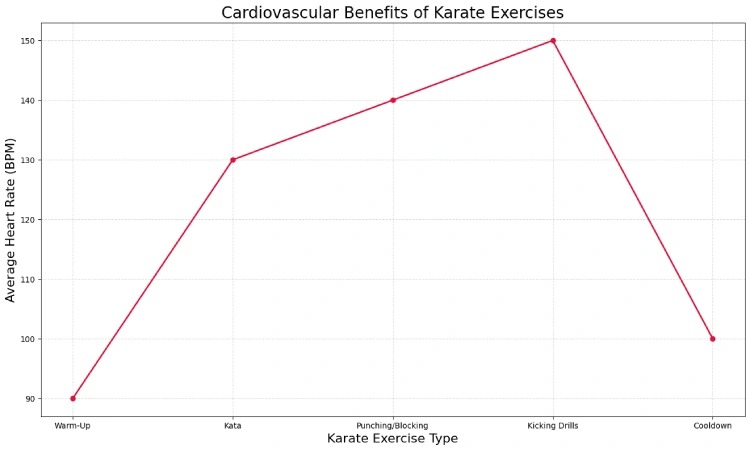
Cardio Benefits of Karate Exercises
When training incorporates kata, combinations, repeated strikes, and continuous footwork, karate can help to condition the cardiovascular system. The intensity may differ depending on the style, length of exercise, the length of the rest breaks, and the fitness of the individual.
Shorter combinations and constant movement can increase your heart rate, and rest can give you a chance to recover. Gradual increase of training duration and intensity can be made as the beginner gains fitness and skill.
Karate Bodyweight Conditioning Exercises
There is no need to use a lot of equipment when practicing karate, and it is good to use bodyweight exercises. These exercises build strength, muscular endurance, balance, and movement control.
Useful Karate bodyweight exercises
Horse stance hold: Legs and lower body endurance challenge.
- Push-ups: Tone the chest, shoulders, triceps, and core muscles.
- Squats: Strength and control of the lower body.
- Lunges: Strengthen, balance, and stabilize the legs.
- Plank: Challenges core stability and posture.
- Climbers: Add dynamic movement to core work.
- Karate footwork: Enhances coordination, balance and control of movement.
Do a few repetitions and concentrate on the correct form before adding intensity.
After Training Karate Cooldown Exercises
A cooldown can help you move from a high energy level to a resting level and may allow time to practice gentle movement, breathing and stretching.
5-Minute Karate Cooldown
- Slow walk or footwork – 1 minute: Slow down your stepping or walking.
- Slow breathing — 1 minute: Slow and comfortable breathing.
- Hamstring stretches, 30 seconds on each side: Gently stretch each side.
- Hip flexor stretch — 30 seconds: Maintain a comfortable stretch for each side.
- Shoulder stretch (30 seconds): Gently stretch the shoulders while relaxing them.
- Calf stretch — 30 seconds: Stretch each calf without bouncing.
Slow, comfortable range of motion on the torso — 30 seconds.
Take it easy on the stretches and don’t push your ROM after exercise.
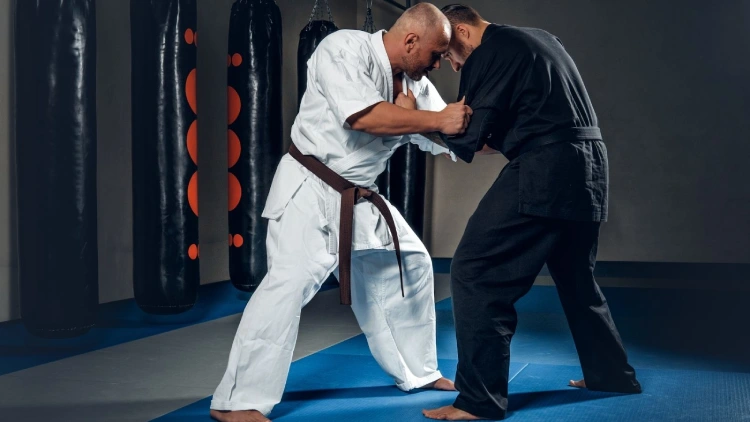
How To Do A Basic Karate Training Session.
An introductory karate training program may include some technique training, some body weight conditioning workouts, and some mild cardio exercises. Begin with basic movements and gradually build up in intensity and/or duration as fitness and technique improve.
Warm-Up — 5 Minutes
Rotate your joints, march lightly, and move easily and dynamically to warm your body up before training.
Technique Drills — 5 Minutes
Practice simple stances, straight punches, front kicks, and footwork. Try to concentrate on a controlled approach, rather than the degree of speed.
Main Workout — 10 Minutes
Perform karate skills with body weight:
Simple punching combinations
Cooldown — 5 Minutes
Conclude with slow-moving movements, deep breathing and gentle stretches of the legs, hips, shoulders and calves.
Beginner tip: Work up to a comfortable level of intensity and build up repetitions and/or length of workout before speeding up.
Karate vs Taekwondo for Fitness
Karate and taekwondo can both provide cardiovascular conditioning, muscular endurance, balance, coordination, and mobility. Their training emphasis can differ depending on the style and school.
| Feature | Karate | Taekwondo |
| Punching | Strong emphasis | Used, but generally less central |
| Kicking | Important | Major emphasis |
| Flexibility | Important | Often strongly emphasized |
| Footwork | Important | Important |
| Full-body conditioning | Yes | Yes |
Neither is universally better for fitness. The better choice depends on your goals, preferred training style, access to instruction, and which activity you enjoy practicing consistently.
Does Karate provide a good exercise?
Yes. Since training can incorporate cardiovascular exercise, muscular endurance, balance, coordination, mobility, and repeated full-body movements, it can provide a good exercise activity. Overall fitness demand varies according to exercises, training intensity, the length of the exercise session, and individual fitness level.
Kata could be paired with simple stances, punches, kicks, footwork, bodyweight exercises, and simple workouts for beginners can be created without the need for extensive equipment.
ercises
Build up Karate skills gradually, one training factor at a time.
- Reps: Slowly add more punches, kicks, or bodyweight movements.
- Duration: Maintain stances for longer, or increase duration of exercise.
- Technique: Enhance posture, balance, control, and accuracy of movement.
- Combinations: As skills develop, use individual punches, kicks and footwork together.
- Intensity: Raise the velocity or lower the rest interval, while maintaining control of the technique.
- Combination: Progress from simple movements to more complicated kata and combinations.
Emphasise quality technique initially, then progressively add training load.
How Long Does It Take to Improve With Karate?
Frequency, fitness level, instruction, recovery, and consistency of training all play a role in progression. In the beginning, beginners will see improvements in coordination and control of movement before significant improvements in endurance, strength, and flexibility are observed.
It’s better to take your time than rush and do it correctly.
Karate vs Boxing for Fitness
Training in Karate and boxing can offer cardiovascular conditioning, muscular endurance, coordination, and movement practice, but they might focus on different skills.
Karate commonly includes:
- Stances and footwork
- Punches and kicks
- Balance and mobility
- Kata and technique drills
Boxing commonly emphasizes:
- Punching combinations
- Speed of hand and reaction
- Footwork
- Cardiovascular conditioning
The choice depends on your fitness objectives, training type, and which activity you can do regularly.
Advantages of Karate Exercises
1. Cardiovascular Fitness
The continuous footwork, combinations, and kata can elevate your heart rate, giving you cardio conditioning.
2. Muscular Endurance
Over the course of a training session, muscles can be challenged through repeated stances, punches, kicks and body weight movements.
3. Balance
Weight shifting and stability are important in stances, kicks and transitions.
4. Coordination
Karate involves arm, leg, trunk and eye movements that may test the coordination of the entire body.
5. Mobility
The joints are taken through a variety of ranges of motion – kicks, stances and controlled movements.
6. Agility
Footwork and movement drills can be used to develop the ability to change position/direction with control.
7. Mental Discipline
Practice involves technique, repetition, timing, and sticking to a well-designed training program.
Karate Styles and Training Intensity
The intensity of training can be different with various styles of karate according to the class, the techniques practiced, conditioning, sparring, and the fitness of the student.
These sessions could be a lot of technique and controlled movements or more sparring, conditioning drills, or combinations that are faster. It is possible for beginners to be neither overwhelmed nor intimidated by training demands but gradually increase them.
How Difficult Are Karate Exercises?
Karate may be low- to moderate-level skill training, conditioning sessions, or sparring sessions. Starting with simple movements and building up in length, speed, and difficulty can be gradually increased as the beginner gets more confident.
The challenge varies based on the exercise, how fast the training goes, the duration of the training session, skill level, and fitness.
Do Karate Exercises Work for All Ages?
The intensity and movements in Karate training may differ depending on age and fitness, but the training can be modified for different ages and fitness levels. Newcomers, the elderly, and those returning to fitness should begin slowly and seek the guidance of a fitness professional when learning technical movements.
Range of motion, pace and/or the difficulty of the exercise can be reduced.
The focus and discipline of the mind in Karate Training
The training of Karate may include repetition, technique, timing and structured practice. A regular training programme can promote regular activity, focus and discipline.
What Muscles Does Karate Work?
Karate utilizes many muscle groups with stances, punches, kicks, footwork, and kata. Primary muscles include legs, hips, core, shoulders, and arms.
| Muscle Group | Karate Movements |
| Quadriceps | Stances, kicks |
| Glutes | Stances, kicks |
| Hamstrings | Kicks, stance transitions |
| Calves | Footwork |
| Core | Punches, kicks, kata |
| Shoulders | Punches, blocks |
| Arms | Punches, blocks |
| Hips | Kicks, stance movement |
The main strength that is developed in Karate is movement-based, muscular endurance, balance, and coordination. It’s suitable to improve and shape a lot of muscles, but it can’t be used to replace progressive resistance training when the aim is to build the maximum amount of muscle or strength.
Conclusion
When used as a workout system, it is a well-balanced and efficient workout of the whole body. Karate strengthens, enhances flexibility, endurance, and maintenance of balance and coordination without any equipment and through systematic movement and moderation of intensity. Its training practices are based on the use of natural body movement, which makes it acceptable to various fitness groups and even age brackets.
Since it enables the intensity and complexity to be toned and increased with time, it promotes gradual advancement and enduring fitness. This flexibility, along with discipline and control of movement orientation, makes karate one of the most viable and easiest forms of exercise to condition the entire body.
Want to improve your strength, flexibility, and mobility? Explore more expert-guided workouts and stretching exercises on Stretchlee and build a healthier, more active routine.
Frequently Asked Questions
Is karate a good full-body workout?
Yes. Karate combines stances, punches, kicks, footwork, and kata to develop cardiovascular fitness, muscular endurance, balance, and coordination. Results depend on training intensity and consistency.
Can karate help with weight loss?
Yes, it can contribute to weight management. Continuous movement and repeated techniques increase physical activity and energy expenditure, but results also depend on diet and overall activity.
How long does it take to see karate fitness results?
It varies by person. Beginners may first notice better coordination and movement control, while improvements in strength and endurance generally require consistent training over time.
Can beginners and older adults do karate?
Yes, with appropriate modifications. Beginners and older adults can start with basic, controlled movements and gradually increase intensity based on their fitness level.