
The snatch of the kettlebell is an upper-body heavy kettlebell workout that incorporates explosive power along with strength, endurance, and cardiovascular training in one movement. Designed to work the glutes, hamstrings, shoulders, back, core, and grip, with a greater focus on improving coordination and sport performance. This guide will explain the kettlebell snatch benefits, the muscles that the kettlebell snatch strengthens, how to correctly perform the kettlebell snatch, common kettlebell snatch mistakes, kettlebell snatch variations, ideas to work the kettlebell snatch into an exercise routine, and safety tips to ensure proper execution.
What is the Kettlebell Snatch?
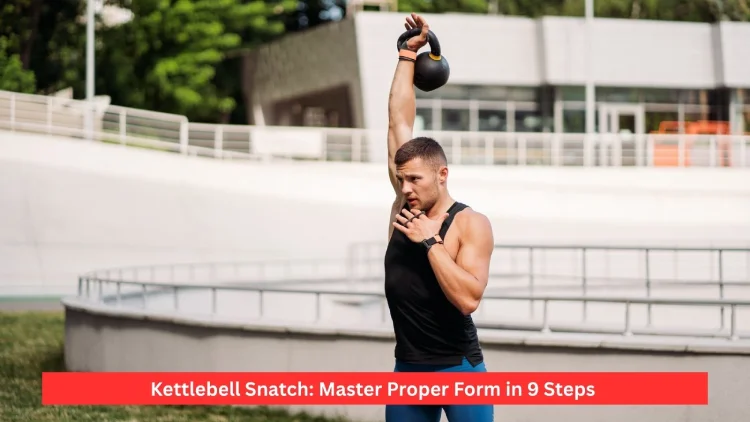
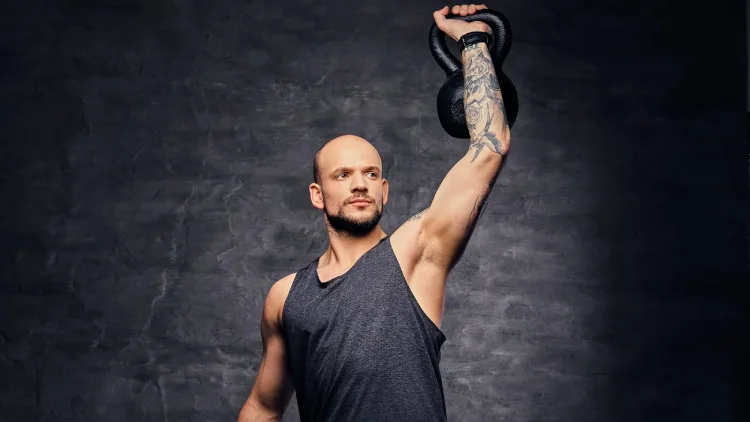
An advanced ballistic movement to the overhead position, the kettlebell snatch involves passing the kettlebell from between your legs to a completely locked-out overhead kettlebell position in one continuous motion. As opposed to an overhead press, the kettlebell moves with the explosive power generated from the hips, not the arms, and is a great exercise for developing power, endurance, and overall coordination in the entire body.
This is a functional dynamic movement that engages several muscle groups and will also enhance cardiovascular fitness and is frequently used in strength training, functional training, and athletic conditioning programmes. During a rotation, the kettlebell will move freely around your hand and will come down in a good position on top of your head.
The movement is based on:
- Kettlebell swing
- High pull
- Overhead lockout
- Hip hinge
Main Advantages of the Kettlebell Snatch:
- Develops the strength of the whole body and power
- Enhances or increases cardio endurance & conditioning
- Improves the strength of the grip and stabilizes the shoulders
- Improves balance, coordination, and core stability
- She delivers a workout that burns calories as muscles work together
The snatch is also a very dynamic exercise, and it is regarded as one of the best kettlebell movements, which also enhances the quality of both strength and cardio work.
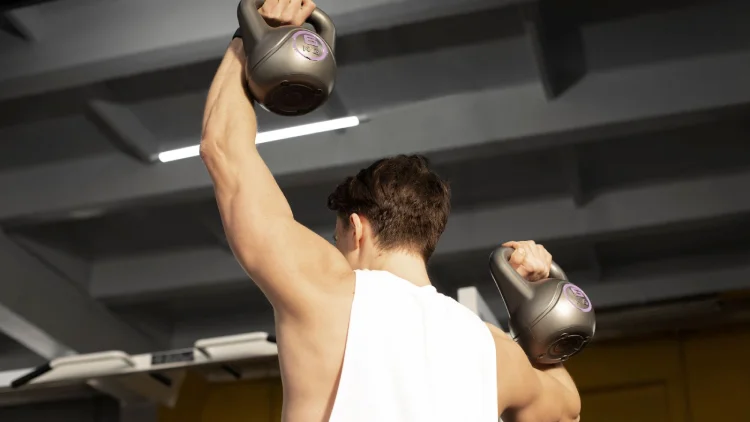
How to perform the kettlebell snatch correctly
The first step in learning the kettlebell snatch is the technique. It is a top motion appearance, however actually a lower body exercise using explosive hip drive and limbs guiding the kettlebell. Develop strength and control by learning the kettlebell swing and kettlebell clean prior to attempting the kettlebell snatch.
Step 1: Choose the Right Kettlebell
The first rule of good technique is to choose the right weight.
General recommendations include:
- Beginners (Women): 8–12 kg
- Beginners (Men): 12–16 kg
- Intermediate: 16–24 kg
- Practice or Advanced: 24 kg or higher based on experience
Too heavy at the beginning will lead to poor form and may lead to a shoulder or lower back injury. Understand the technique fully before attempting to progress it.
Step 2: Set Your Starting Position
Keep the distance between your feet less than shoulder-width.
The kettlebell is placed about 1 foot in front of you.
You should have:
- Chest lifted
- Shoulders relaxed
- Core engaged
- Spine neutral
- Eyes looking forward
DON’T round your back before you move.
Step 3: Hike the Bell
Extend and place one’s hand on the kettlebell.
If you do the same as you do when you snap a football, but do it between the thighs.
During the backswing:
- Your arm should not drop farther than your elbow from your body
- Load your booty and legs
- Keep your back straight
- Maintain your wrist in a straight position
The backswing generates momentum to drive the entire kettlebell throw.
Step 4: Drive Through the Hips
Though the kettlebell’s side is at the lowest point of its backswing, violently push your hips forward.
Imagine jumping without being taken off the ground when jumping from the ground.
Most of the effort should be from the hips, NOT the arm.
At this stage:
It is an explosive hip extension that is the basis of some of the most advanced exercises with the kettlebell and is used in the kettlebell swing.
Step 5: Keep the Bell Close
Keep the kettlebell right next to your body as it’s raised.
Many beginners release the kettlebell too far back in the glide, putting the shoulders at more risk.
Instead:
- Lift the kettlebell towards the ceiling
- Do not lock the elbow out
- Keep a handle on the pull
This movement looks a lot like a high pull and then moving to an overhead position.
Step 6: Punched through the handle
This is one of the crucial elements for the kettlebell snatch.
Punch hand upward through kettlebell, rather than letting it flip over wrist.
This enables the kettlebell to move easily over the hand.
Benefits include:
- Reduced wrist impact
- Better shoulder positioning
- More efficient movement
- Less forearm bruising
If the kettlebell continues to smash your forearm, you may need to work on your timing.
Step 7: Remove the switch from the “LIFE” position
Make sure the kettlebell is directly overhead at the end of the movement.
To the top mark:
- Arm fully extended
- Wrist neutral
- Shoulder packed
- Core tight
- Glutes engaged
- Knees straight
The kettlebell should not hang in front of the forearm, but rather behind.
Take a little break before lowering the weight.
Step 8: Lower Under Control
Don’t lift the kettlebell up and down – lead it back into a controlled arc
Twist wrists with each drop of the kettlebell
Keep it assuming to the body before it gets back to the backswing
Always keep tension on the movement
Do not let your shoulders sag downward and/or forward between reps
Step 9: Repeat Rhythmically
When repeating the movement is mastered, start linking them together
With a perfect kettlebell snatch, it should seem like a very natural movement
The rhyme pattern should be:
Back swing → Hip drive (pelvis) → Pull the club → Punch through → Lock out the club position → Controlled descent (release the brakes on the hands and torso)
Shorthand is better than time.
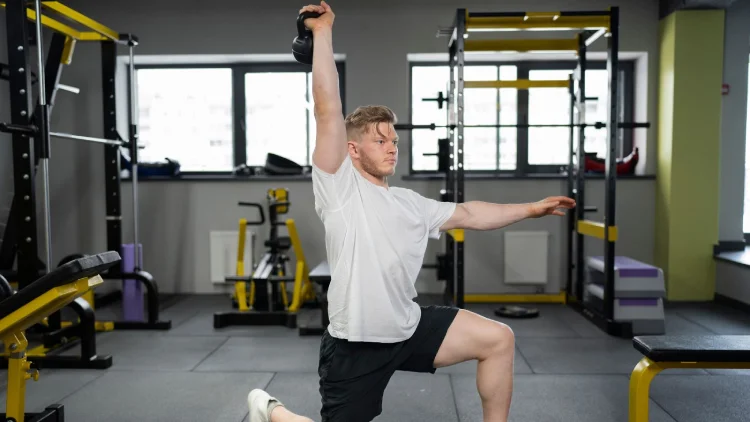
Proper Breathing
Proper snatch technique also helps to enhance power output, stability, and endurance during the kettlebell snatch Many lifters do this without realizing they are breathing, causing them to become fatigued or to not do as well during the exercise.
The aim should be to coordinate the breathing movement with each part of the lift.
Breathing Pattern
Follow the sequence below:
- Take in breath on back swing
- Push your hips forward while expelling air strongly
- Spend a couple of seconds at lockout to stabilize the core and body
- When the kettlebell makes its way back to the backswing, inhale once again
This will help keep your intra-abdominal pressure sufficient during a breath while also allowing your muscle cells to get oxygen.
Why is proper breathing important?
Proper breathing has a number of important effects.
It helps:
- Enhance duration in high-repetition sets
- Increase power production
- Keep low back safe
- Enhance core stability
- Reduce fatigue
- Improve movement efficiency
That’s when these benefits are more apparent in longer kettlebell snatch sessions or conditioning circuits.
Breathing during high-rep sets
During endurance training, do not breathe heavily between reps.
Instead:
- Continue steady or rhythmic breathing
- Pair each inhale with your hip pusher
- Keep relaxed in the shoulders
- Avoid excessive tension
Efficient breathing will enable you to perform more repetitions with improved technique.
Common Kettlebell Snatch Mistakes
Even the seasoned lifter can develop bad form from time to time. Being aware of these common errors can help you work your way out of the problem and prevent injury.
Pulling With the Arms
The greatest error is to lift the kettlebell with only one arm.
Kettlebell Snatch is a hip-to-toe movement.
Rather than curling the kettlebell up:
- Squeeze your buttocks with your hands
- Extend hip bones out explosively
- Allow momentum to move the kettlebell
Keep in mind that your arm is just a guide.
Striking the Forearm with the Bell
One of the most prevalent complaints among beginners is a painful forearm.
This is typical when the kettlebell tips over your hand and not around your hand.
To fix this:
- Remove the top of the handle
- Maintain a close stance with the kettlebell.
- Let your grip on the top be slightly loosened
Since time is critical, there is no need for any unnecessary impact
Rounding out the Low Hipp
Bad posture creates an undue strain on the lumbar spine.
Always maintain:
- Neutral spine
- Tight core
- Strong hip hinge
Do not bend from the waist!
Rather, make a hinge from the hips, maintaining a lifted chest.
Squatting Instead of Hinging
The kettlebell snatch is NOT a squat!
Your knee should crease slightly, but the movement is expected to be in your hips.
If you have trouble “hip stopping,” practise kettlebell swings.
Overgripping the Handle
Many lifters squeeze the kettlebell as hard as possible.
This causes:
- Forearm fatigue
- Reduced endurance
- Poor wrist mobility
Clasp hands with a firm yet relaxed grasp.
Only tighten your grip when necessary.
Bending the Kettlebell Overhead
The kettlebell should get into the position with momentum/flow.
Try to keep the movement from becoming an overhead press.
If you can’t press every rep, it’s possibly too heavy, or maybe you’re not moving your hip drive up.
Looking Down
You should keep your head level (not raised or lowered) for the entire lift.
The viewpoint that carves out your classroom takes the shape of:
- Rounded shoulders
- Poor posture
- Loss of balance
Instead:
- Make sure to focus forward
- Use the correct position of the neck
Using Too Much Weight
A poor technique is frequently experienced with heavy kettlebells.
It is obvious when the weight is too heavy because:
- Excessive arm pulling
- Poor overhead lockout
- Lower back discomfort
- Inconsistent timing
Teach first the lighter weight and then move on to the heavier weight.
Rushing the Movement
The kettlebell snatch is a skill-based exercise.
The skill of speed is not acquired before technique.
Slow and controlled repetitions and practice until movement becomes natural.
Ignoring Mobility
You might have trouble with overhead position if mobility is limited in your shoulder or hip.
Add in some mobility drills to include:
- Shoulder circles
- Hip openers
- Thoracic spine rotations
- Arm bars
- Windmills
The smaller kettlebell snatch technique is associated with better mobility.
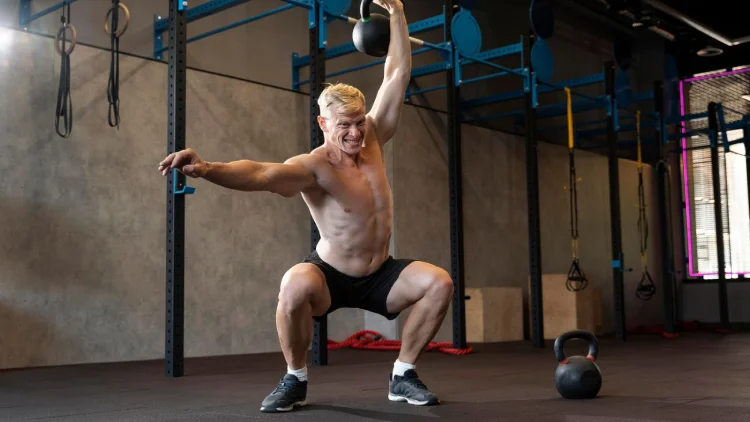
Safety Tips
The kettlebell snatch is an advanced kettlebell exercise that requires a safety-first approach at all times. Well-prepared means you’re less likely to get hurt, and you can make better strides.
Warm Up Thoroughly
Take care to warm up and “top up” your system for 5–10 min. period before training. Use light cardio, hip hinge, arm circles, shoulder mobility exercises, and body weight squats to enhance the flow of blood and joint mobility.
Master the Basics First
Practise the basic kettlebell exercises first, including kettlebell swing, kettlebell clean, and kettlebell clean and press. These exercises help develop coordination and strength associated with a safe snatch.
Tighten your core muscles
Remember to tighten the abs during all repetitions. Your core creates the foundation for your spine, balance, and a powerful transfer of your power from your hips to the kettlebell.
Maintain a Neutral Spine
Try not to have your back rounded or arched too much. Literally protect your lower back by holding your chest up, your shoulders down, and hinging your hips throughout the entire lift.
Train Both the Right and the Left
Always exercise each arm the same number of reps. Balanced training helps to avoid muscular imbalance and enhance coordination.
Use Proper Footwear
Put on flat, stable, or (if suitable) go shoeless. An explosive movement is less efficient with a cushioned shoe.
Listen to Your Body
If you feel sharp pain in your shoulders, back, or wrists, dizziness, or discomfort, stop the exercise. While it’s normal to be a bit tired after a workout, it’s not normal to be in pain. If you are, reassess your technique or ask for instruction.
Progress Gradually
Only add weight, reps, or volume once you can do the exercise in a consistent and controlled manner. While there are no set rules for progression, it is often a rushed process that results in poor mechanics and extra injuries.
Following these guidelines, you can achieve the kettlebell snatch safely, over the long term, and gain strength, endurance, and athleticism at the same time.
Final Thoughts
The kettlebell snatch is a great workout that strengthens, develops power, endurance, and coordination from head to toe. By working slowly and concentrating on technique, you will be able to do it safely and get the most out of it. The kettlebell snatch is a great exercise to incorporate into nearly any fitness program, whether it’s for muscle-building, fat-burning, or enhancing athleticism.
Frequently Asked Questions
1. Is the kettlebell snatch a good beginner exercise?
Yes, however, before doing a kettlebell snatch, a beginner should try to learn the kettlebell swing and kettlebell clean first.
2. The kettlebell snatch works with which muscles?
Kettlebell snatch primarily works the gluteus, hamstrings, shoulders, back, core, and forearms and enhances the strengthening of the grip.
3. What are the benefits of the kettlebell snatch?
The benefits of kettlebell snatch are like strengthened strength, explosive power, endurance, coordination, and cardiovascular fitness.
4. How much number of kettlebells should I use, and how many snatches of them should I perform?
For the newbies, 3 sets of 5 to 8 reps per arm will be more than enough to begin with, and the more you get, the better your technique is, the more reps you’ll need to do.