

Dumbbell rows are one of the most practical exercises for building a stronger back. They require little equipment, allow each side of the body to work independently, and can be adapted for beginners, home workouts, or heavier gym training. The movement looks simple, but small details—how you hinge, where you pull the weight, and whether your torso rotates—determine whether the back does the work or momentum takes over.
This guide explains how to do dumbbell rows correctly, what muscles they work, which mistakes to avoid, how to choose a variation, and how many sets and repetitions to perform for your goal.
- What Are Dumbbell Rows?
- How to Do a Single-Arm Dumbbell Row
- What Muscles Do Dumbbell Rows Work?
- Benefits of Dumbbell Rows
- Common Dumbbell Row Mistakes—and How to Fix Them
- How Heavy Should You Go?
- Sets and Reps for Dumbbell Rows
- Dumbbell Row Variations
- Which Variation Should You Choose?
- Where Dumbbell Rows Fit in a Workout
- Safety and Comfort
- Conclusion
- Frequently Asked Questions
What Are Dumbbell Rows?
Dumbbell rows are a horizontal pulling exercise performed by drawing one or two dumbbells toward the torso. The most common version is the supported single-arm dumbbell row, in which one hand rests on a bench or another stable surface while the opposite arm rows the weight.
Because the exercise uses the shoulder, shoulder blade, and elbow together, it is a compound movement. It can help develop the upper and middle back, improve pulling strength, and add balance to routines that contain pressing exercises such as push-ups or bench presses.
How to Do a Single-Arm Dumbbell Row
Use a weight you can control through the full movement. A stable torso and smooth repetition matter more than the number printed on the dumbbell.
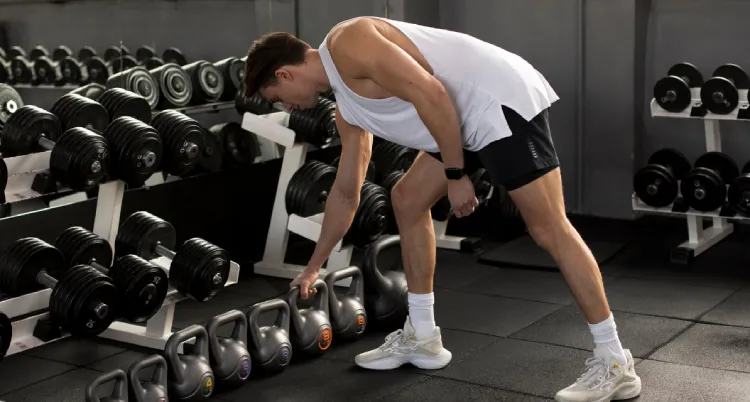
- Place a dumbbell beside a flat bench. Stand with your feet in a stable, staggered position and place the hand nearest the bench on it for support.
- Push your hips back and hinge forward. Keep your spine long and neutral, your neck aligned with your torso, and your knees slightly bent.
- Pick up the dumbbell with your free hand. Let the arm hang toward the floor while keeping the shoulder controlled rather than completely collapsing.
- Brace your abdomen and keep your hips and shoulders facing the floor.
- Drive your elbow back and pull the dumbbell toward the side of your waist or hip. Keep the wrist neutral and avoid curling the weight toward the shoulder.
- Pause briefly when the upper arm reaches approximately the torso. Do not force the elbow far behind the body.
- Lower the dumbbell slowly until the elbow is straight, and you feel a controlled stretch through the working side of the back.
Complete all repetitions on one side, then switch sides.
Form Checklist
| Setup and position | Movement and control |
| Stable feet and firm contact with the support surface | Elbow travels back toward the hip |
| Hips pushed back rather than a rounded forward fold | Shoulders and hips remain mostly square to the floor |
| Neutral spine and neck throughout the set | No bouncing, jerking, or shrugging |
| Ribs controlled and core braced | Controlled lowering and a comfortable range of motion |
What Muscles Do Dumbbell Rows Work?
Dumbbell rows primarily work the muscles that pull the upper arm toward the body and control the shoulder blade. Several supporting muscles stabilize the elbow, grip, trunk, and hips.
| Muscle group | Role during the row |
| Latissimus dorsi (lats) | Pulls the upper arm back and toward the torso; a major contributor to back width and pulling strength. |
| Rhomboids | Help draw the shoulder blade toward the spine. |
| Middle and lower trapezius | Assist shoulder-blade retraction and control. |
| Posterior deltoid | Assists the backward movement of the upper arm. |
| Biceps, brachialis, and brachioradialis | Bend the elbow and assist the pull. |
| Forearm and grip muscles | Hold and control the dumbbell. |
| Core and spinal stabilizers | Resist unwanted twisting and help maintain the hinged position. |
The exact emphasis changes with elbow path, torso angle, grip, and variation. Pulling the elbow closer to the body generally keeps the movement lat-focused, while allowing it to travel somewhat outward can increase upper-back and rear-shoulder involvement. Neither approach requires an extreme elbow position.
Benefits of Dumbbell Rows
1. Builds back strength and muscle
The row trains several large and small back muscles in one movement. When it is performed consistently with progressive resistance, it can support gains in strength and muscular development.
2. Trains each side independently
Single-arm rows make the left and right sides work separately. This does not automatically correct an imbalance, but it makes differences in control or strength easier to notice and allows the weaker side to receive the same amount of work.
3. Offers a useful range of motion
A dumbbell is not connected to a bar, so the working arm can move naturally beside the torso. This freedom can make the exercise comfortable and allows a controlled stretch at the bottom without the implement hitting the body.
4. Challenge trunk stability
During a one-arm row, the load tries to rotate the torso. Bracing the abdomen and keeping the hips square trains the trunk to resist that rotation. The core is a stabilizer here, not the main target.
5. Works in home and gym programs
A dumbbell and a stable support are enough for the standard variation. Lifters can also use two dumbbells, an incline bench, or a plank position to change the stability demand.
Common Dumbbell Row Mistakes—and How to Fix Them
| Mistake | Why it reduces quality | Correction |
| Twisting the torso | Momentum replaces tension and makes repetitions inconsistent. | Lower the weight, brace first, and keep the chest and hips facing the floor. |
| Rounding or over-arching the back | Moves the spine away from a controlled neutral position. | Hinge from the hips, soften the knees, and keep the ribs stacked over the pelvis. |
| Pulling toward the shoulder | Turns the motion into more of an arm-dominant curl. | Think “elbow toward hip” and keep the forearm roughly vertical. |
| Shrugging | Lets the upper trapezius dominate and reduces controlled shoulder-blade motion. | Keep the shoulder away from the ear as the elbow travels back. |
| Using too much weight | Shortens the range and encourages bouncing or rotation. | Choose a load that permits smooth repetitions with one or two good reps still possible. |
| Forcing the elbow too far back | Adds range after useful shoulder motion has ended. | Stop near the torso instead of chasing the highest possible dumbbell position. |
| Dropping the weight quickly | Removes control from the lowering phase. | Lower for about two seconds and reset before the next pull. |
How Heavy Should You Go?
Start with a dumbbell that allows every repetition to look similar. The final repetitions should feel challenging, but you should still be able to keep your torso stable and lower the weight under control. If the range of motion shortens, the shoulder shrugs, or the body begins to twist, the load is probably too heavy for the intended set.
Increase the weight only after you can complete the top of your chosen repetition range with consistent form. A small increase is usually enough; then build the repetitions back up over time.
Sets and Reps for Dumbbell Rows
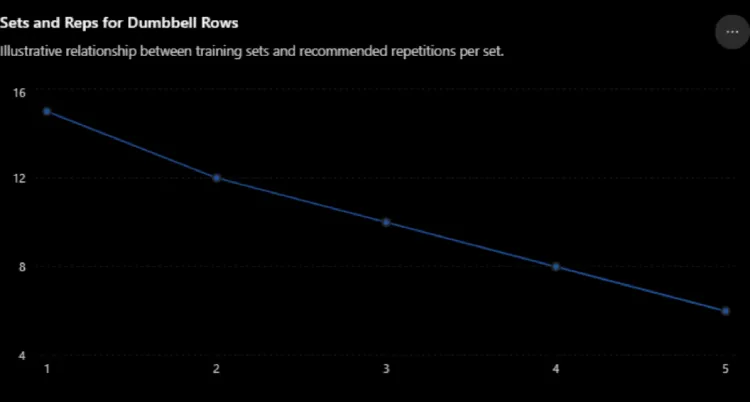
| Goal | Sets × reps | Rest | Practical guidance |
| Learn the movement | 2–3 × 10–15 | 60–90 sec | Use a light load and stop well before form changes. |
| Build muscle | 3–4 × 8–15 | 60–120 sec | Finish most sets with roughly 1–3 controlled reps still possible. |
| Build strength | 3–5 × 5–8 | 2–3 min | Use a heavier load only if the torso remains stable and the range stays consistent. |
| Muscular endurance | 2–4 × 12–20 | 45–90 sec | Keep the movement smooth; do not turn higher reps into swinging. |
These are useful starting ranges, not universal prescriptions. Training experience, weekly volume, exercise selection, recovery, and health status all affect the appropriate dose. Current ACSM guidance emphasizes regular resistance training for all major muscle groups at least twice per week and notes that consistency matters more than unnecessary program complexity.
Dumbbell Row Variations
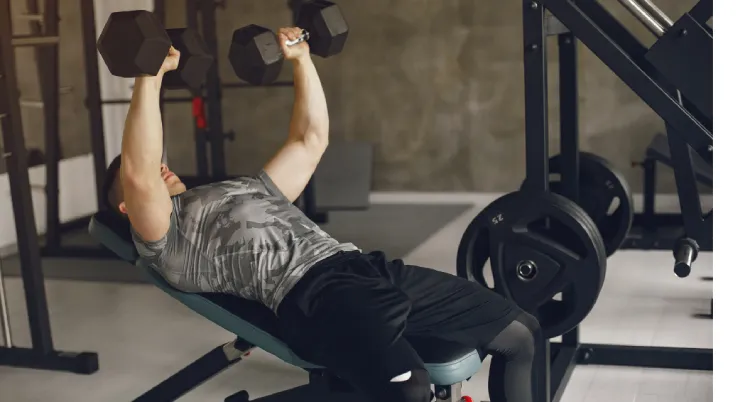
Bent-Over Dumbbell Row
Hold a dumbbell in each hand and row both simultaneously from a hip-hinged position. This variation is efficient but asks the lower back and trunk to support the torso without a bench.
Chest-Supported Dumbbell Row
Lie face down on an incline bench and row both dumbbells. The bench reduces the stability demand and makes it easier to focus on the upper back. It is a useful option when fatigue in the lower back limits the bent-over version.
Three-Point Dumbbell Row
Keep both feet on the floor and place one hand on a bench or rack. This creates three points of support and can make it easier to keep the hips level than placing a knee on the bench.
Renegade Row
Row one dumbbell at a time from a high-plank position. This variation strongly challenges anti-rotation control but usually requires lighter weights. It is not the best choice when maximum back loading is the priority.
Elbow-Out Dumbbell Row
Allow the elbow to travel farther away from the torso and pull toward the lower chest. This shifts more emphasis toward the upper back and posterior deltoid. Keep the shoulder position comfortable and avoid forcing a 90-degree flare.
Which Variation Should You Choose?
| If your priority is… | Try… |
| Learning the movement | Supported single-arm dumbbell row |
| Reducing torso and lower-back fatigue | Chest-supported dumbbell row |
| Training efficiently with two dumbbells | Bent-over dumbbell row |
| Adding an anti-rotation challenge | Renegade row |
| Emphasizing more upper back and rear shoulder | Elbow-out or chest-supported row |
Where Dumbbell Rows Fit in a Workout
Place dumbbell rows on a back, pull, upper-body, or full-body training day. They can be performed early in the workout as a main pull or later as an accessory after pull-ups, pulldowns, or heavier rows.
A balanced upper-body session might pair a row with a pressing movement, but equal exercise counts are not mandatory. Choose weekly volume according to your goals and recovery. If grip fatigue limits the back before the target muscles are challenged, reduce the load, rest longer, or discuss the appropriate use of lifting straps with a qualified coach.
Safety and Comfort
Muscle effort and mild fatigue are expected; sharp pain, numbness, tingling, or pain that radiates through the shoulder, arm, neck, or back is not. Stop the exercise if those symptoms occur. People with an existing shoulder, elbow, wrist, or back condition—or anyone returning after injury—should ask a qualified health professional or certified exercise professional whether the movement and range are appropriate.
A supported or chest-supported variation may feel easier to control, but no single version is right for everyone. Use a stable bench, keep the floor clear, and avoid resting the dumbbell where it can roll.
Conclusion
Dumbbell rows build the back most effectively when the torso stays stable, the elbow travels toward the hip, and the weight is lowered under control. Begin with the supported single-arm version, choose a load that preserves your range of motion, and progress gradually. The best variation is the one that lets you train the target muscles hard without pain or avoidable momentum.
Frequently Asked Questions
Are dumbbell rows good for the back?
Yes. They will strengthen the lats, rhomboids, traps, and other back muscles effectively.
Which part of the upper body does dumbbell row train?
Both. The lat pull towards the hip focuses on the lats, and a wider elbow path focuses on more of the upper back.
If the dumbbell touches the ribs, what should be done?
No. Pull until the elbow is in line with your body, but do not allow your back to become unstable or uncontrolled.
Can I place one knee on the bench?
Yes, if it looks steady. May also maintain both feet on the floor with one hand on the bench.