
Compound exercises: They are multi-joint exercises that work more than one muscle group at a time. These exercises, such as squats, deadlifts, bench presses, pull-ups, overhead presses, and push-ups, can help increase strength, enhance coordination, and boost workout efficiency.
- Understanding Compound Movements
- Compound vs. Isolation Training
- Why Include Multi-Joint Exercises in Your Routine?
- Do Compound Movements Burn More Calories?
- 6 Powerful Compound Exercises to Try
- Building Compound Movements Into Your Workout
- How Much Recovery Do You Need?
- Making Progress Over Time
- Safety Guidelines for Compound Exercises
- Do These Moves Build Muscle?
- Do they increase strength?
- Are Compound Movements Enough for a Complete Workout?
- Here is the Simple weekly training sample.
- Who might require additional guidance?
- Conclusion
- Frequently Asked Questions
Understanding Compound Movements
Compound movements are exercises that engage two or more joints in a single movement. A squat, for instance, engages the hips, knees, and ankles, but primarily works the quadriceps and glutes. The hamstrings, calves, and core also play a role.
The bench press involves the shoulders and elbows and is performed by the chest, triceps, and shoulders.
This is not an isolation workout where one joint and a smaller muscle group are usually targeted. One such simple example is biceps curls.
Here are six great compound exercises to try:
- Squats: Quads, glutes, calves, and core
- Deadlifts: Hamstrings, glutes, back, and core.
- Bench Press: Chest, Shoulders, Triceps
- Pull-ups or Chin-ups: Lats, upper back, and Biceps
- Overhead press: shoulders, triceps, upper back, and core
- Push-ups: Chest, shoulders, triceps, and core
It doesn’t require you to do all six in a single workout. Your choice should align with your objectives, experience, equipment,t and recovery.
Compound vs. Isolation Training
Both exercise categories can have a place in a balanced resistance program.
| Compound Exercises | Isolation Exercises |
| Use multiple joints | Usually focus on one joint |
| Train several muscles | Emphasize a specific muscle |
| Efficient for broader training | Useful for targeted work |
| Examples: squats and deadlifts | Examples: curls and leg extensions |
| Require greater coordination | Often use simpler patterns |
Multi-joint movements are useful for covering large areas efficiently, while isolation work can provide extra attention to a particular muscle.
You do not have to choose one category exclusively.
Why Include Multi-Joint Exercises in Your Routine?
There are a number of benefits, one being training efficiency. Multiple muscles are involved in each movement, which means that you can work more muscles in fewer exercises.
Potential advantages include:
- Building overall strength
- Supporting muscle growth
- Improving coordination
- Developing muscular endurance
- Finding ways to make exercises more time-efficient.
- Supporting functional movement
- The establishment of a base of resistance training.
Resistance training is linked to increased muscular fitness and physical performance. The American College of Sports Medicine’s 2026 recommendations also lay greater focus on consistency and proper programming, instead of needless complex routines.
Do Compound Movements Burn More Calories?
Large movements may be demanding as multiple muscles will be involved. But how many calories are burnt depends on individual body size, intensity, exercise duration, rest duration, and workload.
Thus, compound exercises should not be considered a fat-loss cure-all. They are most useful in terms of building strength and fitness.
6 Powerful Compound Exercises to Try
The six movements are for the major patterns of squatting, hinging, pushing, and pulling and can be adapted to varying levels of fitness.
1. Squats for Lower-Body Strength
Squats are one of the basic movements of the lower body. Their primary focus is to train the quadriceps and glutes, and the hamstrings, calves, and core provide some movement and stability.
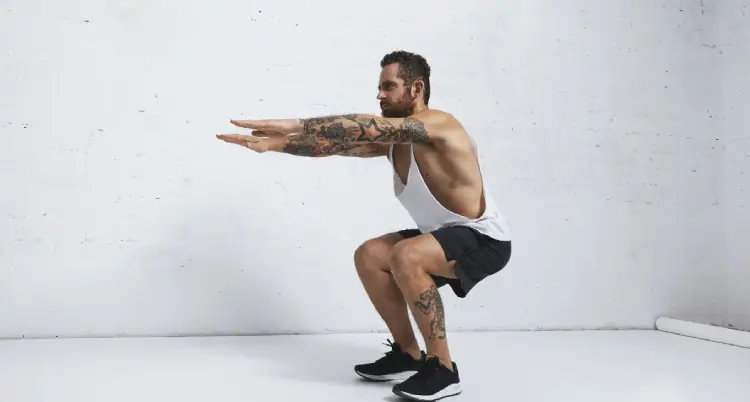
- Primary muscle groups: Quadriceps, glutes, hamstrings, calves, and core.
- Equipment: Body weight is ok for beginners. Later, resistance can be increased by using dumbbells, kettlebells, or a barbell.
Basic technique:
- Feet at the width of your hips.
- Tighten abdominal muscles and maintain a controlled chest area.
- Squat, hips back, and bend knees.
- Place the bar at a comfortable level, with feet on the ground.
- Walk through the base to go back to the standing position.
If learning the movement, start without additional weight. With better technique, increase resistance slowly.
2. Posterior-Chain Development: Deadlifts
A hip-hinge motion is employed in the deadlift to develop the posterior chain. The glutes and hamstrings do most of the work while the back, core, forearms, and grip help to maintain control.
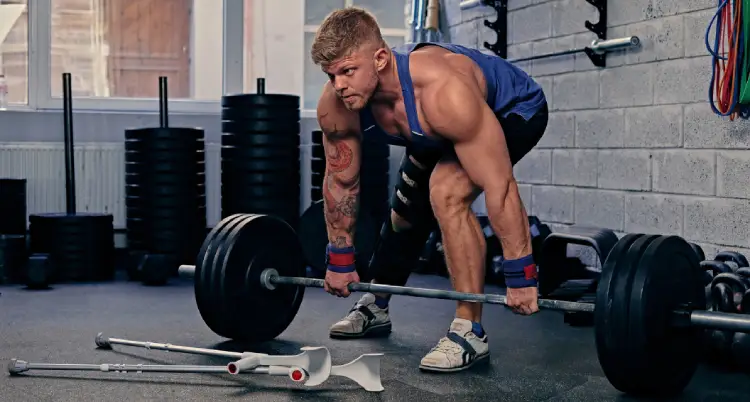
- Primary muscle groups: Hamstrings, glutes, back, core, and grip muscles.
- Equipment: A barbell is used, but dumbbells can be used for a lighter start.
Basic technique:
- Maintain the resistance at your feet.
- Tighten abdominal muscles and keep your back flat.
- Move your hips back and down as you move to your hips.
- Hold the weight properly.
- Push your hips out and through the floor.
- Stand up straight; don’t lean back.
- Decrease the resistance to control.
Deadlifts are a great exercise that involves a lot of coordination, so it can be helpful to have expert guidance to help you get started.
3. Bench Press for Upper-Body Power
The bench press is a horizontal pushing exercise that also works the shoulders and triceps, but primarily the chest.
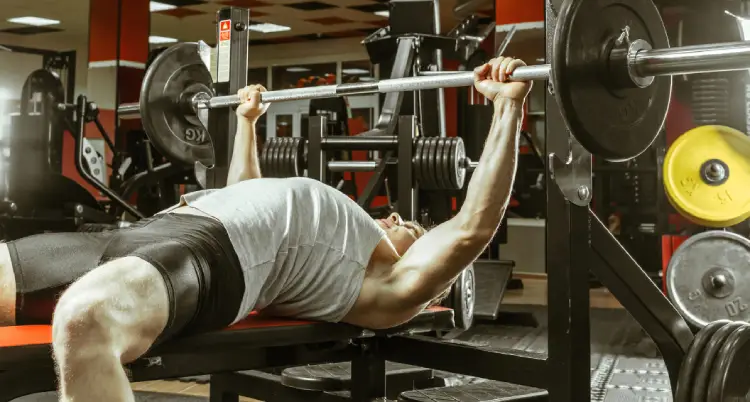
- Major muscle groups: chest, shoulders, and triceps.
- Equipment: Barbell or Dumbbells and a stable Bench.
Lie on the bench so that your feet are supported, and your body is lying flat. Grip the weight easily, bring it slowly towards your chest, then push it gently back up.
Don’t bounce the resistance or lift more weight than you can control. The novice barbell user may need a spotter.
4. Pull-Ups and Chin-Ups for Back Strength
Pull-ups and chin-ups are bodyweight exercises that will target the upper back and arms.
The main muscles involved include the latissimus dorsi, upper back, biceps, forearms, and core.

The primary difference is the grip: Pull-up: Typically uses an overhand grip.
- Chin-up: Typically uses an underhand grip.
Chin-ups will require more of the biceps, whereas a pull-up will require strong engagement of the lats and upper back.
If it is not easy to perform a full rep, use assisted pull-ups, resistance bands, negative reps, lat pulldowns, or scapular drills.
Emphasize deliberate movement, not forced reps.
5. Overhead Press for Shoulder Development
In the overhead press, the primary focus is on the shoulders, with the triceps, upper back, and core muscles also engaged.
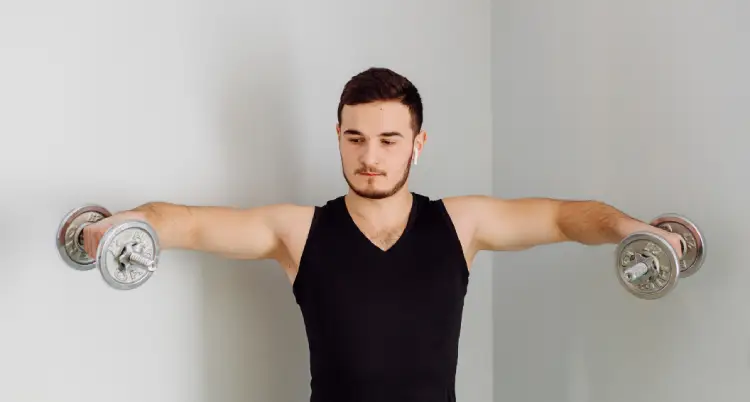
Main muscle groups: upper back, core, triceps, and shoulders.
Use dumbbells, a barbell, or resistance bands. Maintain a controlled weight and don’t over-arch the lower back.
When standing presses are not comfortable, the seated dumbbell press could be an option.
6. Push-Ups for Accessible Upper-Body Training
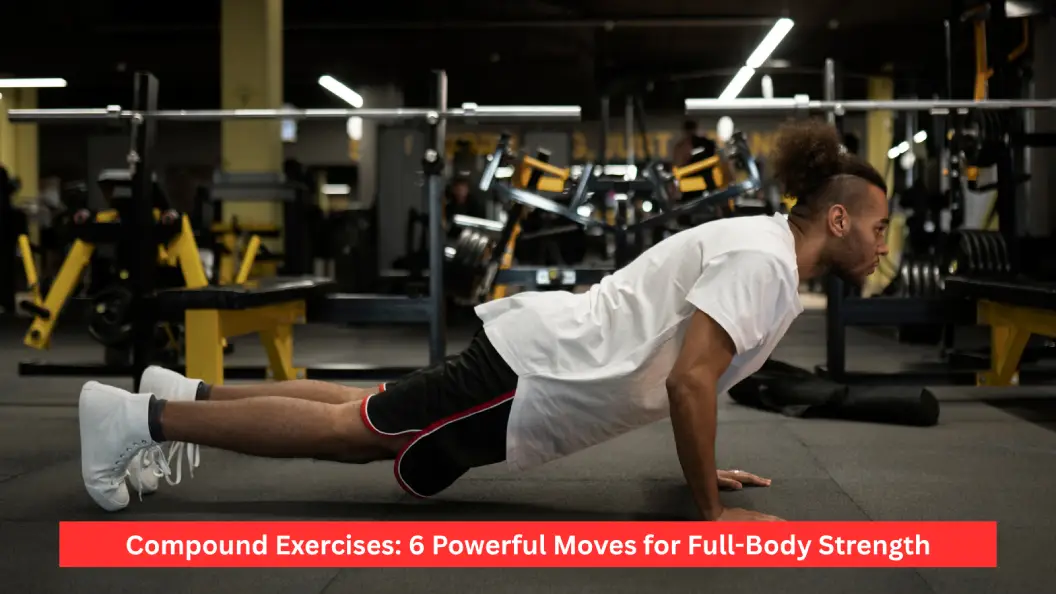
Push-ups are a great bodyweight exercise that is easy to do and requires minimal equipment. They primarily target the chest, shoulders, and triceps, with a main emphasis on the chest, while the core stabilises the body.
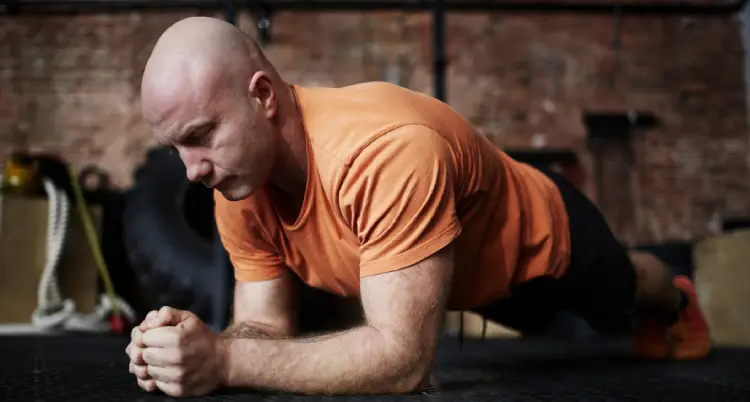
Main muscles: Chest, shoulders, triceps, and core.
Wall, elevated, and bench-supported versions are good for beginners. As strength increases, move towards standard floor reps.
Building Compound Movements Into Your Workout
One way to do this is to work on the primary movement patterns rather than covering all of the exercises you can.
A full-body workout can include:
- A squat movement
- A hip hinge
- An upper-body push
- An upper-body pull
- Optional core or accessory work
Example Full-Body Session
- Squats — 2–3 sets
- Bench press/push-ups — 2-3 sets
- Deadlifts — 2–3 sets
- Pull-ups or assisted pull ups – 2-3 sets
- Overhead press — 2 sets
Don’t do all these exercises on one day. These exercises can be done over several training days.
Determining the number of sets and repetitions to complete.
The magic number of reps is different for all.
Two to three sets of 8-12 controlled repetitions may be a good place to start for general resistance training. The resistance and volume need to be representative of your experience and goal.
According to the U.S. Physical Activity Guidelines, one set of 8-12 repetitions should be used to gain muscle strength, and 2-3 sets may be used to gain additional muscular strength.
Different techniques may be necessary for strength, muscle building, stamina, and overall fitness. Practice and progression, not a set number.
Determine the correct weekly frequency.
On at least two days a week, adults should engage in muscle-strengthening exercises of the major muscle groups for general health.
Option 1: Full-Body Training
- Monday: Full body
- Wednesday: Full body
- Friday: Full body
Option 2: Upper- and Lower-Body Split
- Monday: Lower body
- Tuesday: Upper body
- Thursday: Lower body
- Friday: Upper body
Aerobic exercises can be done alone or in addition to resistance exercises.
The schedule you need will vary based on experience, workload, recovery, and goals.
How Much Recovery Do You Need?
It’s not a requirement to wait 48 hours between each workout.
Training intensity, total volume, sleep, nutrition, stress, and response to training are factors that impact recovery.
Fatigue can build up if the same muscles are worked out intensely from one day to the next. This can be managed by using different parts of the body, or changing the workload.
The aim is to improve the technique and train regularly, but allow the body to recover.
Making Progress Over Time
Progressive overload is literally a progressive increase of the challenge to your body.
You can make progress as follows:
- The addition of a little weight
- Performing more repetitions
- Adding a set
- To build up your range of motion.
- If you like, you can select a more difficult version.
- Improving movement control
- Varying the amount of time between repetitions when suitable
Not all progress is achieved in terms of increased load. Challenge them to do a wall push-up before progressing to an elevated push-up and then to a regular push-up is also significant.
The 2026 ACSM guidelines stress that for most healthy adults, complicated training systems are unnecessary. Consistency and appropriate programming are still important.
Safety Guidelines for Compound Exercises
Good technique and using appropriate exercises should continue to be important.
- Start with low resistance: Pick a load that you can control through the full movement. Don’t use the heaviest resistance that you can lift first.
- Prioritize Good Technique
- Take time to learn the movement before adding weight. If the exercise is not known to the dog or it is a difficult exercise, a qualified trainer can assist.
- Pay Attention to Pain: It’s normal to get tired after using the muscle, but sharp or unusual pain is not. Discontinue exercise if pain, dizziness, unusual lightheadedness, or discomfort occurs.
- Practice for Heavy Sets: Work easier before demanding. This is also a good opportunity to practise the movement.
- Increase Difficulty Gradually: Gaining weight, volume, or training frequency too quickly can make recovery more difficult. Making small changes is easier to handle.
- Maintain Proper Hydration: Drink sufficient amounts of fluids to maintain normal activity, particularly during longer sessions or in hot weather.
Do These Moves Build Muscle?
Yes. With proper training volume, intensity, nutrition, and recovery, compound exercises can aid in muscle growth.
Squats target leg muscles and glutes, bench presses target chest and triceps, pull-ups target back and arms and deadlifts target the posterior chain.
The other factors that affect muscle building are:
- Training consistency
- Weekly workload
- Resistance
- Protein intake
- Overall nutrition
- Sleep
- Recovery
- Individual factors
It is essential to use the proper exercise, but it is not all that matters.
Do they increase strength?
Yes. Compound exercises may be a powerful strength-building block.
Several muscles must be involved in a squat, deadlift, press, and a pull-up to produce force. Slowly increasing resistance and/or difficulty can enhance over time.
The amount of weight, sets, reps, and rest can be varied depending on your objective.
Are Compound Movements Enough for a Complete Workout?
They can be the basis of a resistance training session, but they do not have to be the only exercises you do.
Here are some examples of a balanced routine:
- Compound movements
- Isolation exercises
- Core training
- Cardiovascular activity
- Mobility work
- Recovery days
For instance, if needed, a movement specific to the hamstring and/or calf can be incorporated; squats and deadlifts can be used to get a significant amount of work done in the lower body.
Here is the Simple weekly training sample.
Day 1 — Full Body
- Squats
- Bench press
- Pull-ups and/or assisted pull ups
- Optional core exercise
Day 2 is a rest or a cardio day.
Select an activity like walking, cycling, light jogging, or something you enjoy doing for an aerobic workout.
Day 3 — Full Body
- Deadlifts
- Overhead press
- Push-ups
- Pull-ups or rows
Day 4 — Recovery
Rest or do light activity as needed to recover.
Day 5 — Full Body
- Squats
- Push-ups (bench or push press)
- Pull-ups
- Overhead press
- Optional accessory exercise
Fewer movements and volume for beginners to learn the basic patterns.
Who might require additional guidance?
Resistance training is appropriate for most healthy adults, but varies among people.
Individuals with an injury, chronic pain, chronic disease, or extended period of inactivity from exercise might want to talk with an appropriately trained healthcare or fitness professional about training.
For more complex exercises like loaded squats or deadlifts, professional guidance may be beneficial.
Conclusion
Compound exercises are multi-joint exercises that engage multiple muscle groups. Strength, coordination, and exercise efficiency can be achieved with squats, deadlifts, bench presses, pull-ups, overhead presses, and push-ups.
Frequently Asked Questions
What are compound exercises?
These are compound exercises that involve multiple muscle groups per movement.
What are the benefits of compound exercises?
They can enhance strength, coordination, muscle building, and exercise effectiveness.
What amount of compound exercises should I perform?
Begin with a couple of movements based on goals, experience, and recovery.
Can compound exercises build muscle?
While proper training, nutrition, and recovery are needed, the answer is yes; they can help with muscle growth.