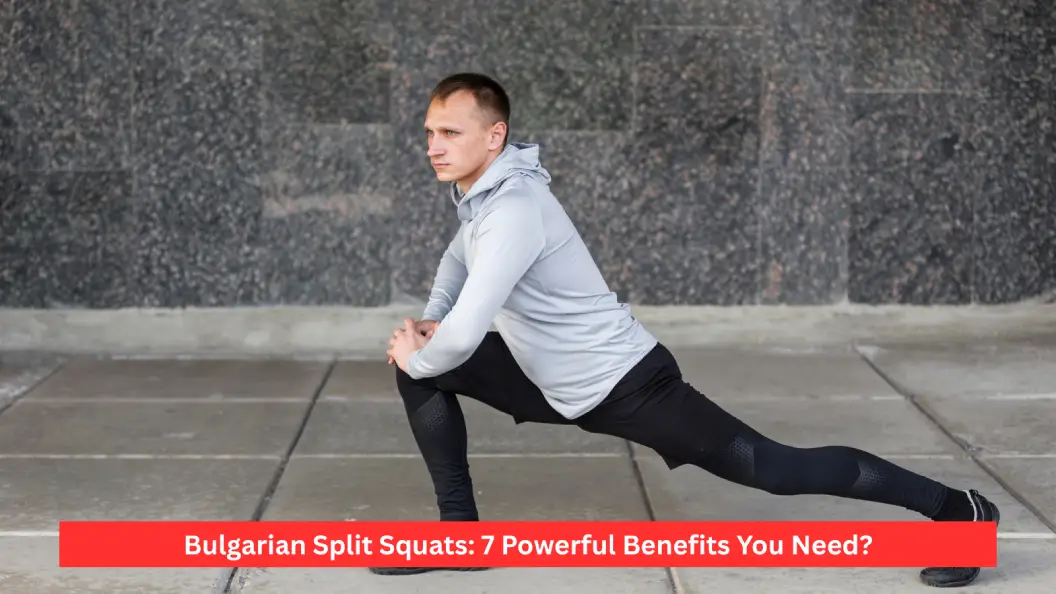

Bulgarian split squats are primarily a quadriceps and glute workout that also engages the hamstrings, adductor muscles, calves, and core. With one foot up and the back foot behind you, they add strength, balance, and stability to your single foot. Begin with bodyweight and then move to dumbbells, weighted and/or Smith machine with controlled form.
- What Are Bulgarian Split Squats?
- What Muscles Do Bulgarian Split Squats Work?
- How to Do Bulgarian Split Squats Correctly
- How to Set Up for Bulgarian Split Squats
- Bulgarian Split Squat Form Tips
- What Are the Benefits of Bulgarian Split Squats?
- What is the difficulty of Bulgarian Split Squats?
- Bulgarian Split Squats at Home
- Bulgarian Split Squat Variations
- How Many Bulgarian Split Squats Should I Do?
- Bulgarian Split Squats vs Lunges: Which Is Better?
- Are Bulgarian Split Squats a Compound Exercise?
- Common Bulgarian Split Squat Blunders
- Beginner Bulgarian Split Squats
- What to Do Instead of Bulgarian Split Squats
- Are Bulgarian Split Squats A Good Exercise?
- Conclusion
- Frequently Asked Questions
What Are Bulgarian Split Squats?
Bulgarian Split Squats are a single-leg exercise in which one foot is placed on a bench or chair, and the other foot is used to do the majority of the workout. Most of the primary focus is on the quadriceps and glutes, along with hamstrings, adductors, calves, and core. They can be done with body weight, or resistance can be added with dumbbells, kettlebells, barbells, or a Smith machine.
What Muscles Do Bulgarian Split Squats Work?
Bulgarian split squats primarily target the quadriceps and glutes, but several other muscles contribute to the movement.
| Muscle | Role |
| Quadriceps | Extend the knee |
| Glutes | Extend the hip and drive the body upward |
| Hamstrings | Assist hip movement and stability |
| Adductors | Support hip and leg control |
| Calves | Stabilize the ankle |
| Core | Maintain balance and posture |
Quadriceps
Quadriceps are very active when lowering yourself and straightening the front knee. This exercise may be challenging for the quads with a more erect posture.
Glutes
The glutes help extend the hip as you return to the standing position. The intensity of your feeling may depend upon the position of your stance and the depth of the feeling.
Hamstrings
Hamstring involvement can be included, but is usually not the main focus. They are used to help control the hip and stabilize the working leg.
Adductors
The inner-thigh adductors stabilize and regulate your leg movement as well as your hip.
Core and Calves
Your core provides balance and control of your torso; your calves provide stability of your ankle and lower leg.
How to Do Bulgarian Split Squats Correctly
The setup will make the movement safer and more comfortable.
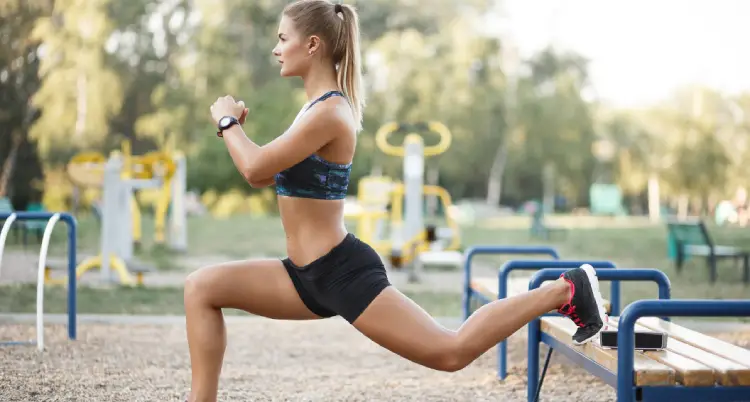
Step 1: Put down a stable surface.
Have a heavy bench, box, or chair behind you. Ensure it is not likely to slide or tip.
Step 2: Place rear foot.
Rest the front part of your back foot on the raised surface. Not allowing the back leg to be the leading leg.
Step 3: Position Your Front Foot
With your front foot, step further forward until a comfortable bend is achieved, with your heel on the floor.
No one is right or wrong. The best distance may be affected by your height, the length of your legs, mobility, and comfort.
Step 4: Identify Your Balance
Maintain control of your torso and tighten your core. The majority of the weight should be on the front leg.
Step 5: Lower your body.
Hinge at the front knee and hip to go under slowly. Do not move the front foot; let the knee move with the foot.
Step 6: Drive Up
Extend the hip and knee to get back to the starting position.
Step 7: Switch Legs
Complete your repetitions on one side and then repeat on the other.
How to Set Up for Bulgarian Split Squats
The way that you set up the exercise can have a big impact on how it feels.
Step back with your back foot on a stable base and place your front foot well forward for a controlled descent. Do a few bodyweight reps before incorporating resistance.
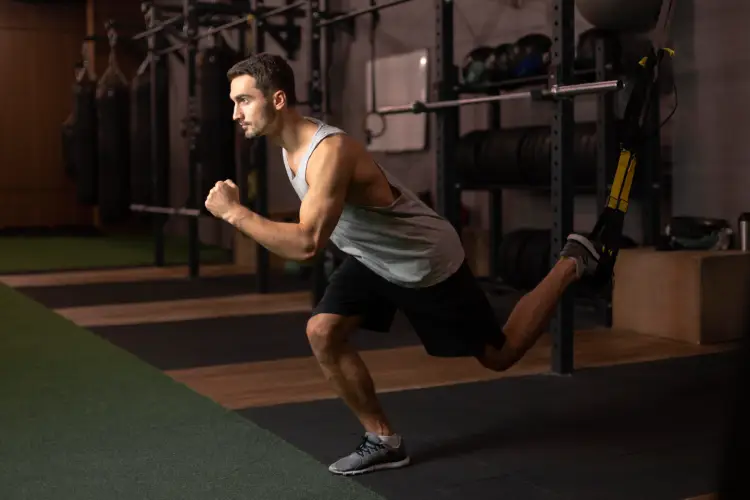
If the front foot is too close, it may feel limiting. It may be harder to control if it is a considerable distance away.
Do the exercise close to a wall or solid support if you are not balanced. Light assistance can be useful to help you concentrate on movement quality and not constantly struggle to maintain balance.
Bulgarian Split Squat Form Tips
For better technique:
- Maintain the front foot on the floor.
- Maintain a natural position for your knee over your foot.
- Don’t use too much strength to raise with the back leg.
- Monitor the lowering.
- Maintain stability in the torso.
- Work in a comfortable range of motion.
If you are learning the exercise, start from the bodyweight position.
Increase resistance gradually.
You don’t need to assume the same position as other people. Positioning may be impacted by individual anatomy and mobility.
What Are the Benefits of Bulgarian Split Squats?
1. Build Single-Leg Strength
The exercise is great for unilateral lower body strengthening, as it is individualistic.
2. Strengthen the Glutes and Quads
A very good stimulation of the quads and glutes is given with the movement, particularly if it is executed with a controlled range of motion.
3. Enhance balance and stability.
The split stance is a challenge to body control and to creating force through one leg.
4. Train Each Leg Independently
Single-leg exercises make differences between your two sides more obvious.
5. Require Little Equipment
The Bulgarian split squat can be done using body weight with a stable elevated platform at home.
6. Offer Easy Progression
You can begin with bodyweight and gradually progress to dumbbells or other resistance.
7. Add Variety to Leg Training
These are a good supplement to bilateral exercises like conventional squats.
What is the difficulty of Bulgarian Split Squats?
Bulgarian split squats are difficult because they involve strength, balance, mobility, coordination, and unilateral loading.
It is important that the body is stable while one leg is working most of the time. The working leg also has a moderate amplitude of motion.
Increased reps may lead to serious muscular fatigue, even with bodyweight exercises.
Change the number of reps, decrease ROM, use body weight, or adopt a stable base for balance if the exercise is challenging.
The intent should be to move in a controlled manner, not to make all sets as hard as possible.
Bulgarian Split Squats at Home
Bulgarian split squats can be done at home without a gym.
A sturdy chair, bench, or stable elevated surface will work. Be sure before beginning, to make sure the surface will not move.
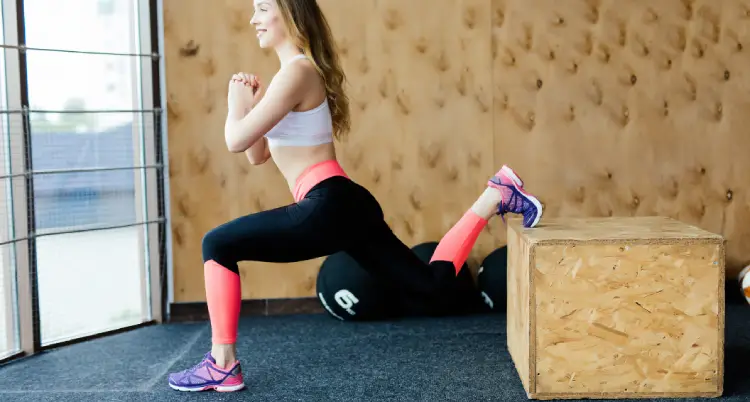
For beginners, use body weight and concentrate on a comfortable stance. After the move is easier, you can add dumbbells to increase resistance.
If you do not have an elevated surface to split squat on, then regular split squats are a safer alternative than using an unstable object to split squat on.
Bulgarian Split Squat Variations
Bulgarian Split Squats with body weight.
This is an easy one for novices. It provides opportunities to practice balance, positioning, and control of movement prior to introducing external resistance.
Dumbbell Bulgarian Split Squats
To add more resistance to the dumbbell Bulgarian split squat, the movement can be performed in a more challenging way.
You can hold one dumbbell in each hand or use a single dumbbell. Select a weight that enables good balance and technique.
Bulgarian Split Squats (with weights)
Weighted Bulgarian split squats may be done using dumbbells, kettlebells, barbells, or other forms of resistance.
Don’t add weight only to make the exercise more difficult. Be sure you’re able to repeat the movement consistently and under control.
Smith Machine Bulgarian Split Squats
The Smith machine has a stationary bar path that may prove to be more stable for more experienced lifters.
Begin with a light load and move the position of the foot first, then try heavier sets.
How Many Bulgarian Split Squats Should I Do?
Your ideal volume depends on your experience and goal.
| Goal | Sets | Reps Per Leg |
| Beginner | 2–3 | 6–10 |
| Strength | 3–5 | 4–8 |
| Muscle Growth | 3–4 | 8–12 |
| Endurance | 2–3 | 12–15 |
For general lower-body training, 2–4 working sets per leg can be a practical starting point.
Beginners should prioritize technique over high repetition counts. If your form breaks down, reduce the resistance or stop the set.
Bulgarian Split Squats vs Lunges: Which Is Better?
Both exercises are effective unilateral movements, but their mechanics and balance demands differ.
| Feature | Bulgarian Split Squats | Lunges |
| Unilateral training | Yes | Yes |
| Balance demand | High | Moderate to high |
| Equipment | Optional | Optional |
| Quad involvement | High | High |
| Glute involvement | High | High |
| Movement | Mostly stationary | Can be dynamic |
| Beginner difficulty | Usually higher | Often easier |
Bulgarian split squats exercise the working leg in a more controlled manner, so that you can concentrate on repeating the repetition.
Lunges can be done forwards, backwards, or walking, which provides a more dynamic movement pattern.
There is not a clear-cut “better” option. Select based on training objectives, comfort, and preference. You can also include both in the same training program.
Are Bulgarian Split Squats a Compound Exercise?
Yes. Bulgarian split squats are a compound lower body movement since they engage several joints and multiple muscle groups.
The hip and knee are important movers while the ankle and core are stabilizers.
They can be used as a supplement to other compound movements like squats, deadlifts, and lunges.
Common Bulgarian Split Squat Blunders
Shelter from the Storm
The shorter the stance, the less you can move, and the bottom position will be uncomfortable.
Standing Too Far Away
If your stance is too long, it may be more difficult to maintain your body control.
Using Too Much Weight
If there is considerable resistance, the exercise becomes a balance challenge. Learn basic body movements before learning other skills.
Having the back leg pushed too far.
Most of the effort is to be made by the front leg. Don’t lean too heavily on the back leg.
Losing Front-Foot Stability
Do not move the front foot during the repetition.
Rushing the Repetitions
Rapid repetitions may decrease control. Do not use a fast and uncontrolled movement.
Ignoring Individual Differences
Your perfect posture will vary depending on your physiology, flexibility, stability, and training objectives. Position the setup, rather than trying to make it look uncomfortable.
Beginner Bulgarian Split Squats
If you are new to the exercise, start with bodyweight.
One method for beginners is:
- 2–3 sets
- 6–10 repetitions per leg
- Controlled movement
- Bodyweight resistance
Allowing sufficient recovery periods between sets.
If balance is difficult, lightly hold a stable support. When you are doing it consistently, increase the number of reps or use light dumbbells.
Avoid going into strong opposition. Once you have learned the movement, it will be easier to progress in the future.
What to Do Instead of Bulgarian Split Squats
Bulgarian split squats can be beneficial, but don’t be afraid; they’re not the only leg exercises you can do.
- Reverse Lunges: Reverse lunges can be a good unilateral option and might be less challenging for some.
- Step-Ups: Step-ups build leg strength, balance, and coordination.
- Regular Split Squats: Splits can be performed in a regular pattern with both feet flat and may be a good progression before URE’s.
- Walking Lunges: Walking lunges provide greater variety in quad, glute, and chest muscle training.
- Goblet Squats: Goblet squats train both legs simultaneously and are helpful when you’re limited for workouts due to poor unilateral balance.
Are Bulgarian Split Squats A Good Exercise?
Yes, Bulgarian split squats are great for building up the strength of one leg, muscle mass in the glutes and quads, balance, coordination, and stability.
They are especially valuable as they do not require much equipment and can be progressed in a number of ways.
But it isn’t a requirement that they are the sole leg workout you perform. When done in conjunction with squats, hip-hinge exercises, hamstring training, lunges, and calf exercises, they can help to create a balanced program.
The ideal exercise is the one that is appropriate for your goals, ability, equipment, and training plan.
Conclusion
Bulgarian split squats are a great lower-body tool that can be used to increase quad and glute strength, single-leg control, balance, and stability. They can be done using body weight and/or dumbbells, weights, or a Smith machine.
Begin with a stable setup and comfortable stance. Before adding resistance, just practice the range of motion. As you become consistent with your technique, progressively add training volume or load.
Bulgarian split squats can be a great addition to a well-rounded strength and fitness regimen when performed in conjunction with other lower body exercises.
Frequently Asked Questions
1. What muscles do Bulgarian split squats work?
Their primary focus is on the quads and glutes, but they also engage the hamstrings, adductors, calves, and core.
2. How many Bulgarian split squats should I do?
The number of sets and reps per leg for beginner levels is between 2 and 3, with 6 to 10 reps per set, and the emphasis is on control and correct form.
3. Do Bulgarian split squats build muscle?
Yes. They are able to tone up their muscles in the quadriceps and glutes by using each leg and increasing the resistance slowly.
4. What makes Bulgarian split squats so difficult?
These activities require strength, balance, stability, coordination, and mobility, and are predominantly single-leg activities.