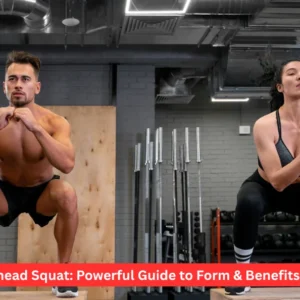
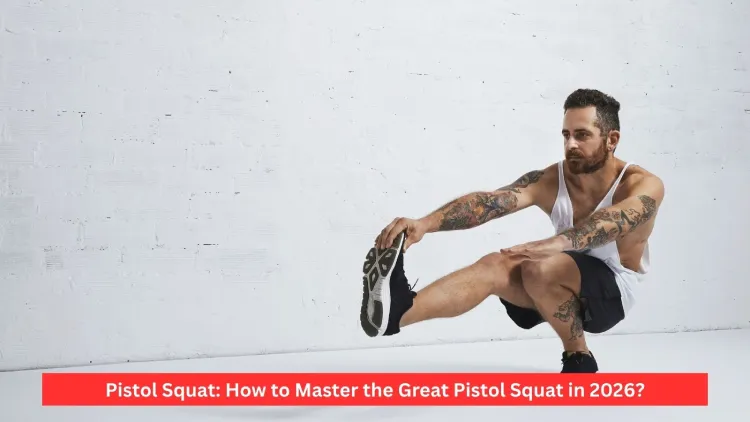

If you think the pistol squat is just another squat, think again! This challenging single-leg bodyweight exercise is one of the most difficult movements to master. It targets the quads, glutes, core, and stabilizing muscles while improving strength, balance, mobility, and coordination. In this guide, you’ll learn the correct form, key benefits, progression techniques, common mistakes, and the best variations to help you perform pistol squats safely—whether you’re a beginner or an advanced athlete.
- What Is a Pistol Squat?
- Muscles Worked During a Pistol Squat
- Proper Breathing Technique
- Proper Pistol Squat Form Tips
- Mobility Requirements for a Pistol Squat
- Beginner Pistol Squat Progressions
- Best Exercises to Build Up to a Pistol Squat
- Advanced Pistol Squat Variations
- Common Pistol Squat Mistakes
- Sample Pistol Squat Workout
- Safety Tips for Pistol Squats
- Recovering from Pistol Squat Training
- Who should practice doing Pistol Squats?
- Key Takeaways
- Conclusion
- Frequently Asked Questions
What Is a Pistol Squat?
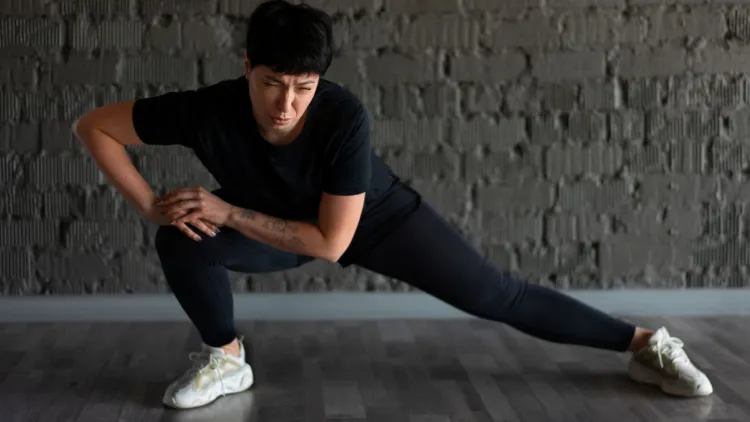
Performing a unilateral squat with one leg extended to the side is called a pistol squat. Then you drive back into the starting position with just the left leg.
To perform this exercise, one must have a blend of:
- Lower-body strength
- Balance
- Hip mobility
- Ankle flexibility
- Core stability
- Coordination
The Single-leg squat is one of the most difficult leg exercises since it is a combination of strength and mobility.
Muscles Worked During a Pistol Squat
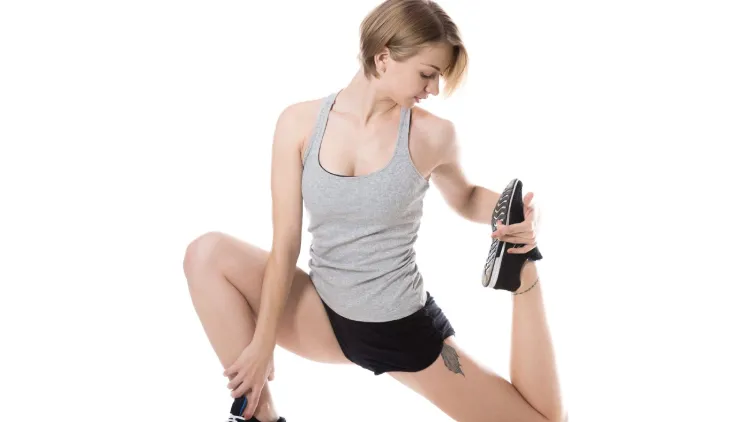
The pistol squat engages several body muscle groups at once.
Primary Muscles
Secondary Muscles
- Calves
- Hip flexors
- Adductors
- Core muscles
- Lower back
- Foot stabilizers
The exercise also has neuromuscular benefits by engaging one’s body to maintain balance on one leg during the exercise.
Proper Breathing Technique
It makes you more stable when breathing appropriately and produces more force.
Before Lowering
Breathe deeply in and out through your nose.
Tighten your core muscles as if you are bracing yourself up to take a punch.
During the Descent
Hold your breath and core tension as you lower controlled.
During the Ascent
Slowly air out through your mouth while returning to standing.
The breathing plays an important role in maintaining the stability of the spine throughout the movement under controlled breathing.
Proper Pistol Squat Form Tips
- It is important to have good technique rather than doing a lot of reps.
- Remember what these tells are when practicing.
- Practice and maintain a core that is tight.
- A strong core holds your back in place and stops undesirable movement.
- Since you can barely see your ribs moving during the exercise, pretend to really pull them into your hips.
Keep the back in a neutral position
- Keep your lower back straight; don’t round or arch it out too far.
- Your spine should be naturally aligned throughout.
Push Through Your Heel
- Move upward using mostly the heel of your supporting foot.
- This will enhance activation of the glutes and balance.
Maintain a flat foot throughout the activity
- Your heel should be kept on the ground.
- Lack of ankle mobility or weight distribution will frequently be manifested by lifting of the heel.
Move Slowly
- Rapid repetitions take muscle activation down and make balance a risk zone.
- Design quality movement with slow, controlled reps.
Look Forward
- Identify a spot right in front of you and focus on that spot.
- Neck flexes downward tends to bring upper body down
Don’t Rush Progress
Work up to partial pistols before doing the entire movement.
You need to work up to these movements rather than pushing too hard, because muscle strength comes at the cost of time.
Mobility Requirements for a Pistol Squat
- Lots of people think that the capacity to do pistol squats is just about your legs.
- However, lack of mobility frequently makes it difficult to achieve the proper technique.
- Learning single-leg squats can be easier thanks to increased flexibility and the mobility of the joints.
Ankle Mobility
Allows the knee to move forward, while maintaining the heel on the ground with healthy dorsiflexion at the ankle.
The following may be the result of reduced ankle mobility:
- Heel lifting
- Loss of balance
- Forward collapse
- Reduced squat depth
Some exercises to help improve ankle mobility include:
- Wall ankle stretches
- Calf stretches
- Knee-over-toe mobility drills
- Foam rolling calves
Hip Mobility
Hips will need to be sufficiently mobile to achieve deep squat positions comfortably.
The muscle tension in the hips can result in:
- Rounded lower back
- Reduced squat depth
- Poor balance
- Hip discomfort
Some exercise tips for the mobility in the hip include the following:
- Deep squat holds
- 90/90 hip stretches
- Hip flexor stretches
- World’s Greatest Stretch
- Butterfly stretch
Hamstring Flexibility
The leg on the floor and the extended leg stay straight the entire time of the pistol squat.
This position is difficult to hold because of tight hamstrings.
Improve flexibility with:
- Standing hamstring stretches
- Seated forward folds
- Dynamic leg swings
- Single-leg toe reaches
Core Stability
If you don’t have the core strength, you have a very hard time balancing.
The following core movements are suggested as options to help include core:
- Planks
- Side planks
- Dead bugs
- Hollow body holds
- Bird dogs
Beginner Pistol Squat Progressions
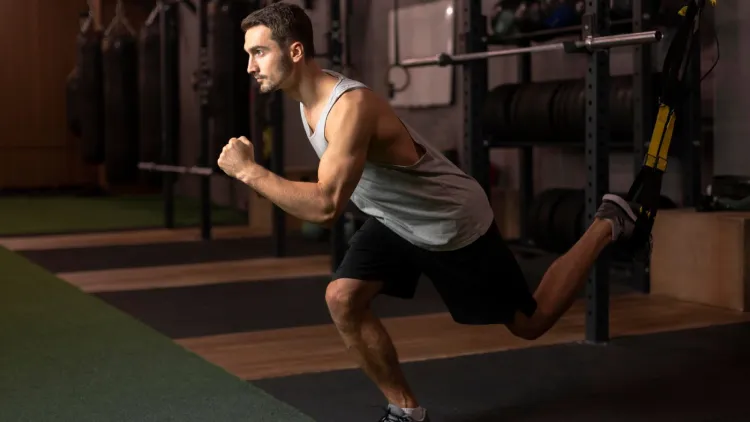
It isn’t a matter of being able to do the Single-leg squat overnight. Even the strong men find difficulty with the movement since it requires their movement to have specific strength, mobility, balance, and coordination. The trick is to develop each of these gradually by progression.
Instead of trying to do an actual Single-leg squat right away, focus on simpler movements that build the strength and body movement that will allow you to be successful with a pistol squat.
1. Bodyweight Squat
Pistol squats will require that a person can complete their bodyweight squat with good form before attempting this exercise.
When done correctly, a bodyweight squat provides instruction on:
- Hip movement
- Knee control
- Core stability
- Squat depth
- Lower-body coordination
Complete 3 sets of controlled 20 repetitions; gradually increase.
2. Split Squat
Split squat exercise lessens the need for balance and works the legs one at a time.
This exercise develops:
- Quadriceps strength
- Glute activation
- Hip stability
- Balance
Split squats are a great transition exercise between traditional squats and the pistol squat, since they operate each leg separately.
Suggested: 3x 10-12 reps on each leg.
3. Bulgarian Split Squat
The Bulgarian split squat places greater emphasis on the front leg while increasing the range of motion.
Benefits include:
- Improved unilateral strength
- Better hip mobility
- Greater glute activation
- Enhanced balance
Once you can perform Bulgarian split squats confidently, transitioning to pistol squat progressions becomes much easier.
4. Box Pistol Squat
A box or bench helps reduce the movement range while teaching proper mechanics.
Simply lower yourself until you lightly touch the box before standing back up.
Benefits include:
- Builds confidence
- Improves balance
- Develops control
- Reduces fear of falling
Gradually lower the height of the box as your strength improves.
5. Assisted Pistol Squat
Holding onto a sturdy object provides extra balance while allowing you to practice the full movement pattern.
You can use:
- A door frame
- Suspension trainer
- Resistance band
- Stable pole
Only use enough assistance to maintain balance. Avoid pulling yourself upward with your arms.
6. Negative Pistol Squat
Negative repetitions focus only on the lowering phase.
Slowly lower yourself using one leg over 4–6 seconds.
At the bottom:
- Place the opposite foot on the floor.
- Stand up using both legs.
- Repeat.
This builds eccentric strength, which is one of the fastest ways to improve pistol squat performance.
7. Counterbalance Pistol Squat
Holding a light weight (such as a small dumbbell or weight plate) in front of your chest shifts your center of gravity forward.
Surprisingly, this often makes balancing easier while learning the movement.
Use only a light load so the focus remains on technique rather than resistance.
8. Full Pistol Squat
Once you have:
- Good ankle mobility
- Strong quadriceps
- Excellent balance
- Proper hip flexibility
- Core stability
You can begin practicing the full movement without assistance.
Start with:
- 2–3 sets
- 3–5 quality repetitions per leg
Increase repetitions gradually as your control improves.
Best Exercises to Build Up to a Pistol Squat
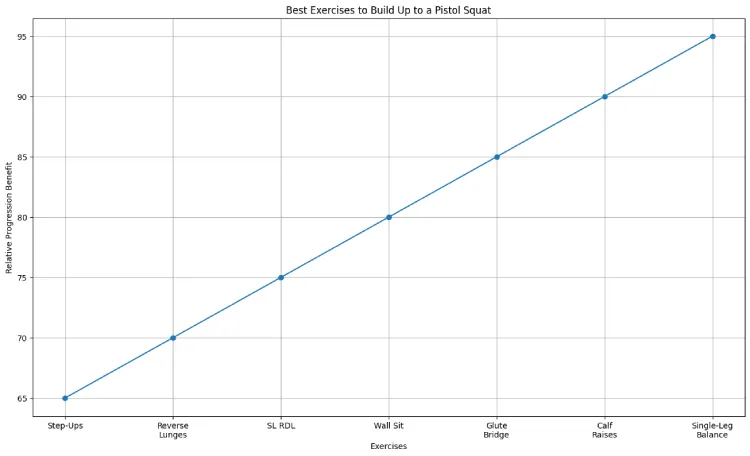
Strengthening the muscles involved in pistol squats accelerates progress.
Include these exercises in your lower-body routine.
Step-Ups
Step-ups develop single-leg strength while improving balance.
Focus on driving through the heel of the working leg instead of pushing off with the trailing foot.
Reverse Lunges
Reverse lunges improve knee control and hip stability.
Compared to forward lunges, they place less stress on the knees while strengthening the quadriceps and glutes.
Single-Leg Romanian Deadlift
This exercise strengthens:
- Hamstrings
- Glutes
- Lower back
- Core
It also improves balance and hip control, both of which are essential for pistol squats.
Wall Sit
Wall sits build muscular endurance in the quadriceps.
Aim to hold the position for:
- 30 seconds (beginner)
- 60 seconds (intermediate)
- 90 seconds (advanced)
Glute Bridge
Strong glutes help drive you back to standing during a pistol squat.
Progress from:
Calf Raises
Strong calves improve ankle stability.
Perform:
- Slow repetitions
- Full range of motion
- Controlled lowering
Single-Leg Balance
Stand on one leg for:
- 30–60 seconds
Once this becomes easy, try:
- Closing your eyes
- Turning your head
- Standing on a cushion
Improved balance transfers directly to pistol squat performance.
Advanced Pistol Squat Variations
After mastering the standard pistol squat, you can increase the challenge with advanced variations.
Weighted Pistol Squat
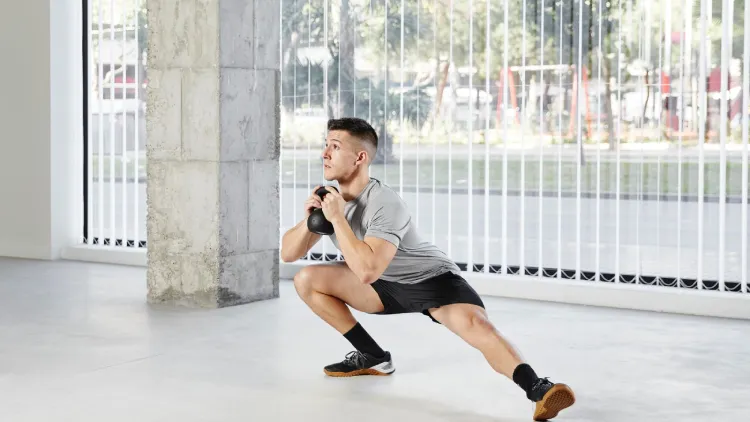
Hold a dumbbell or kettlebell close to your chest while performing the movement.
Benefits include:
- Increased leg strength
- Greater muscle growth
- Improved power
Only add weight after mastering bodyweight pistol squats.
Tempo Pistol Squat
Slow down every phase of the movement.
Example:
- 5-second descent
- 2-second pause
- 3-second ascent
Tempo training increases time under tension, improving muscular control and endurance.
Pause Pistol Squat
Pause for 2–5 seconds at the bottom before standing.
This removes momentum and forces your muscles to generate force from a dead stop.
Deficit Pistol Squat
Stand on a sturdy platform to increase the range of motion.
This variation demands even greater mobility and control.
Only attempt it after consistently performing full pistol squats.
Elevated Heel Pistol Squat
Placing your heel on a small wedge or weight plate can make the movement easier if ankle mobility is limited.
This variation is useful while working on flexibility.
Explosive Pistol Squat
Push upward as quickly as possible while maintaining control.
This develops:
- Speed
- Power
- Athletic performance
Land softly and immediately regain balance before the next repetition.
Common Pistol Squat Mistakes
Avoid these errors to reduce injury risk.
Letting the Knee Collapse Inward
Keep your knee aligned with your toes.
Rounding the Back
Maintain a neutral spine throughout the exercise.
Leaning Too Far Forward
Excessive forward lean reduces efficiency and balance.
Dropping Too Quickly
Always lower under control.
Lifting the Heel
Keep your heel firmly planted on the floor.
Looking Down
Focus on a point in front of you to improve balance.
Sample Pistol Squat Workout
This workout is suitable for intermediate exercisers who are working toward mastering the pistol squat.
| Exercise | Sets | Reps |
| Bodyweight Squats | 2 | 15 |
| Assisted Pistol Squats | 3 | 8 each leg |
| Negative Pistol Squats | 3 | 5 each leg |
| Full Pistol Squats | 3 | 3–6 each leg |
| Bulgarian Split Squats | 3 | 10 each leg |
| Single-Leg Romanian Deadlifts | 3 | 10 each leg |
| Standing Calf Raises | 3 | 15–20 |
| Front Plank | 3 | 30–60 seconds |
Rest: 60–90 seconds between sets. Train this routine 2–3 times per week, allowing at least one day of recovery between sessions.
Safety Tips for Pistol Squats
The pistol squat is one of the most demanding bodyweight exercises, so proper safety should always come first. Building strength gradually and using correct technique will help you avoid unnecessary strain while making steady progress.
Follow these safety tips every time you practice pistol squats.
Warm Up Before Every Session
Never attempt pistol squats with cold muscles or stiff joints.
A proper warm-up increases blood flow, activates your muscles, and prepares your hips, knees, and ankles for deep squatting.
Spend at least 8–10 minutes performing:
- Light cardio
- Dynamic leg swings
- Bodyweight squats
- Walking lunges
- Hip circles
- Ankle mobility drills
- Glute bridges
A good warm-up helps improve performance and reduces the likelihood of poor movement patterns.
Learn the fundamentals first. Start with the basics
It is recommended that the following exercises (except the pistol squat itself) be performed before a pistol squat. The following exercises (except for the pistol squat itself) are recommended before doing a pistol squat:
These initial exercises are designed to help develop strength and stability, which is essential for progress and learning to be safe.
Accentuate Form, not Depth
Many people attempt to squat as sh low as they can straightaway.
Instead, step down as low as possible, keeping:
- A neutral spine
- Plantar pressure on the heel.
- Proper knee alignment
- Good balance
Improved mobility will, of course, help depth improve.
Progress Gradually
Do not strain to perform full pistol squats.
Begin simplistic progressions and work up to the higher level only after you have completed the previous level.
Progression may be as follows:
- Bodyweight Squat
- Split Squat
- Bulgarian Split Squat
- Assisted Pistol Squat
- Negative Pistol Squat
- Full Pistol Squat
- Weighted Pistol Squat
It’s better to make little steps a week at a time than push those more advanced moves too early.
Apply training on both Legs equally
- There are lots of people who have a preference for one side.
- In order to avoid muscular imbalance, work the same number of times per leg.
- If a leg seems weaker, start each set with that leg!
Listen to Your Body
Fatigue of muscles is a normal phenomenon.
Sharp pain is not.
If you have difficulties, STOP immediately if you:
- Sudden knee pain
- Hip pain
- Sharp ankle discomfort
- Lower-back pain
- Falls that are often due to loss of balance
Rest if discomfort persists and then work up to; redo the exercise.
Use Stable Footwear
Hard running shoes are less stable than flat and stable shoes.
Finally, some advanced kickers will practice their pis-tatoos on bare foot for extra foot stability, but this is not recommended for beginners unless they have non-slip floors to start on.
Recovering from Pistol Squat Training
The workout isn’t the important part – recovery is. Good recovery lets your muscles heal and grow stronger, and decreases pain and stiffness.
Stretch After Training
Relax by stretching and reaching various areas:
- Quadriceps
- Hamstrings
- Glutes
- Hip flexors
- Calves
- Ankles
Each stretch should last for a minimum of 20–30 seconds and should not be bounced.
Stay Hydrated
Take in plenty of water before and after exercise to help your muscles work and recover.
Hydration is also essential to maintaining joint health and overall exercise performance.
Eat a Balanced Meal
Post-training, include foods that contain:
- Aim for lean protein to build, restore, and recover muscle.
- Restore energy with complex carbohydrates. Restore energy by eating complex carbohydrates.
- Healthy fats for overall health
- Vitamins and minerals from fruits and vegetables.
A well-balanced diet can help to maintain steady increases in strength.
Prioritize Sleep
One of the best recovery tools is sleep.
Try to get between 7-9 hours of quality sleep per night to aid recovery of muscles, coordination, and the plan for the next workout.
Include Rest Days
- Don’t intentionally do pistol squats each day.
- Rest 24–48 hours after strenuous lower leg workouts.
- RKT will help with long-term advancement and will prevent overuse with the recovery time.
Who should practice doing Pistol Squats?
The pistol squat is a good low mobility base exercise for those with a sound foundation of lower body strength and mobility.
It’s particularly useful for:
- People who enjoy exercising and have a bit more experience.
- Calisthenics athletes
- Functional fitness enthusiasts
- Recreational athletes
- Runners
- Hikers
- Dancers
- Martial artists
Someone who wants to enhance one leg strength and balance.
It is extremely easy to do and a great home exercise too.
Key Takeaways
- Pistol squat is an upper-level single-leg body-weight workout.
- It mainly works on the quadriceps, glutes, hamstrings, calves, and core.
- Good form requires good balance, mobilisation of the ankle, and good flexibility of the hips.
- For beginners, it’s important to get comfortable with squat variations before performing a full pistol squat.
- The rate of repetition is slower and under controlled conditions than the rush.
- Strength, coordination, stability,y and functional fitness are improved with maintenance and regular training.
- Pistol squat with lower body exercise provides a well-rounded workout.
- This can be learned to be consistent, recovered, and performed properly.
Conclusion
The pistol squat is more than a fitness technique – it is a full-body workout for your legs all in one that strengthens, balances, moves, and controls your whole body in one powerful move. You can safely build up to being able to do this exercise step by step, properly, and give yourself sufficient time to rest in between. If you’re looking to enhance your athletic abilities, functional fitness, or simply to push yourself to the limit with a bodyweight exercise, the pistol squat can help you achieve your objectives.
Frequently Asked Questions
1. Is the pistol squat a suitable exercise for beginners?
The full pistol squat is an advanced exercise. Before taking the full pistol squat, it is important for beginners to first strengthen themselves using bodyweight squat, split squat, and assisted pistol squat variations.
2. What is the time duration of learning a pistol squat?
Learning time will depend on your physical ability, mobility,y and consistency. Many find steady gains after a few weeks or months of regular practice and progressions.
3. Do pistol squats make the best leg workout?
Pistol squats work great for building up single-leg strength, balance, and mobility. These can be used alongside other lower body exercises to make for a more balanced training session, however.
4. Can pistol squats help increase muscle mass?
Yes. They help to work well on the quadriceps, glutes, hamstrings, calves, and core. When your strength gets better, you can use weighted alternatives to boost your muscle-building ability.