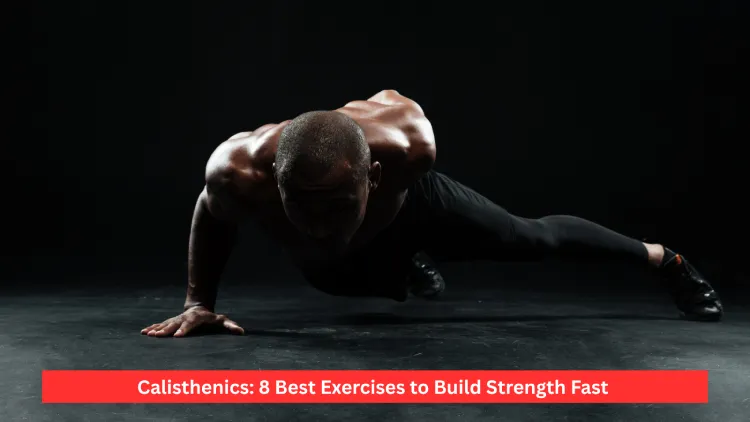

Calisthenics is among the most powerful exercises that you can perform using just your body weight to build strength, improve endurance, and stay in shape. Calisthenics is a great way for beginners to start exercising, or for those who have no gym membership or need to exercise for free. Here you’ll learn about the benefits of calisthenics and how you can perform eight basic exercises with proper form to develop a stronger, healthier, and more athletic body.
- What Is Calisthenics?
- Why more people are choosing Calisthenics
- Calisthenics vs Weight Training
- 1. Pull-Ups: The Ultimate Back Builder
- 2. Chin-Ups: Build Stronger Arms and Back
- 3. Dips: Build a Powerful Chest and Triceps
- 4. Jump Squats: Develop Explosive Lower-Body Power
- 5. Push-Ups: The Foundation of Upper-Body Strength
- 6. Crunches: Build a Strong and Stable Core
- 7. Burpees: The Ultimate Full-Body Exercise
- Why Add Jump Rope to Your Routine?
- 8. Jump Rope: A Simple Way to Improve Fitness
- Complete Beginner Calisthenics Workout
- Conclusion
- Frequently Asked Questions
What Is Calisthenics?
Calisthenics are exercises performed using body weight to develop strength, endurance, flexibility, and balance. You work with the body’s own weight and aren’t using any gym equipment or heavy weights, as you’re doing pull-ups, push ups, dips, squats, and burpees. It’s popular due to its affordability, low technical difficulty, and versatility of being performed in most locations.
Calisthenics can provide a full-body exercise program without the need for fancy equipment, which is great for anyone looking to build muscle, lose fat, or enhance their athletic abilities. As your strength improves, you can challenge the exercises even more by either increasing repetitions or using variations of the exercise.
Why more people are choosing Calisthenics
Calisthenics isn’t simply exercise; it’s a beneficial method of getting fit in general. Each exercise involves multiple muscle groups, which promote the development of your functional ability.
The advantages of some of the advantages are:
- Develops the ability to move and be active in everyday activities
- Enhances balance, flexibility, and coordination
- Increases muscular endurance
- Helps burn calories and aids in fat burning.
- Increases your core strength without stressing your body.
- Few or no tools or tools are needed.
- Ideal For Both Novices and Experts
Warm up for 5–10 minutes prior to exercise using light exercise and dynamic stretching. Warming up increases muscle flexibility, enhances blood flow, and reduces the likelihood of injuries occurring.
Calisthenics vs Weight Training
Calisthenics uses your body weight to build strength, balance, and endurance without equipment, making it ideal for beginners and home workouts. Weight training is better for increasing muscle size and maximum strength. If you want functional fitness and convenience, choose calisthenics. For faster muscle growth, weight training is the better option.
1. Pull-Ups: The Ultimate Back Builder
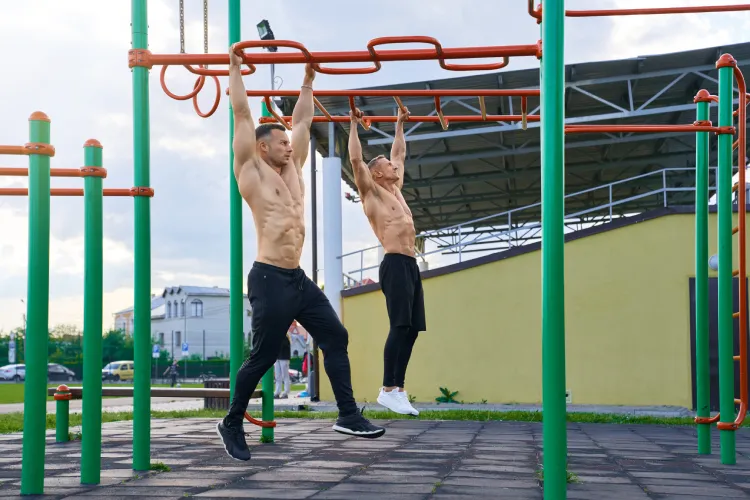
Pull-ups are a wonderful calisthenics upper-body routine. They work on strengthening the back, shoulders, arms, and grip, as well as improving overall control of the body. Pull-ups might be challenging for beginners, but repeated practice will bring about substantial strength improvement.
Why Pull-Ups Matter
Pull-ups are multi-joint movements, while isolation exercises are single-joint movements. Your back is doing the majority of the work, and your biceps, forearms, shoulders, and core are supporting you throughout the movement.
- Regular pull-ups can aid you:
- Develop a broader and more developed posterior surface of the back.
- Improve grip strength
- Enhance posture
- Improve pulling power of upper body
- Develop the skills to perform advanced calisthenics.
The proper way to do a pull-up
Take on an overhand grip with a slightly wider than shoulder-width width.
- Keep arms stretched straight.
- Hold the muscles in your abdomen and back and don’t swing.
- Pull your body up until your chin is above the bar.
- Take a short break, then slowly return to the starting position.
The lowering phase is equally as important as the pull-up phase, as it creates strength and control.
Avoid These Common Mistakes
Many beginners have problems as they are depending on momentum rather than muscles.
Avoid:
- Swinging your legs
- Using all your arm strength
- Half repetitions
- Dropping too quickly
- Shrugging your shoulders
Beginner Advice
If you cannot do one pull-up, then try resistance band-assisted or negative pull-ups. You can build the same muscles and make greater improvements through these exercises.
Recommended Training:
3 x 5 – 8 (or assisted) reps.
2. Chin-Ups: Build Stronger Arms and Back
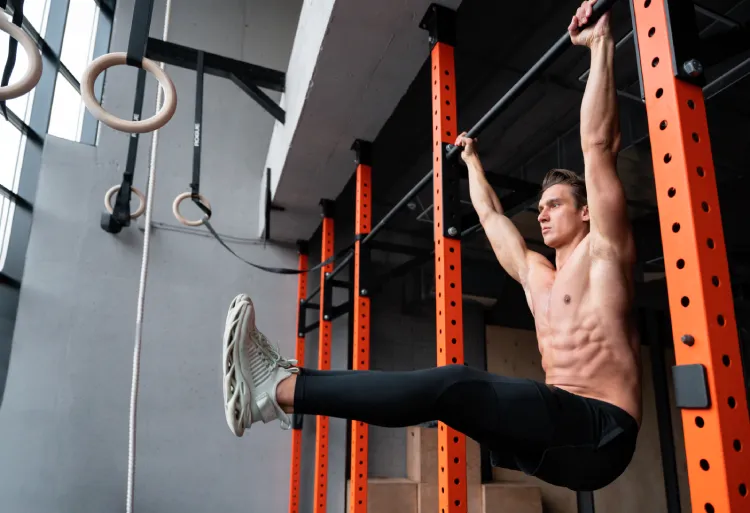
Chin-ups are very similar to pull-ups, but with the underhand grip, the emphasis is on the biceps. Many beginners prefer chin-ups as they can provide greater pulling power as a result of the grip.
They add a chin-up to the pull-up to provide a balanced upper body.
Why Chin-Ups are a Great Addition to Your Workouts
Chin-ups build strength in the back and arms, and build grip endurance. They also provide novices with lots of strength for more advanced pulling exercises.
Benefits include:
- More muscular and powerful biceps.
- Larger and stronger biceps.
- Improved upper-body strength
- Better grip endurance
- Increased back development
- Enhanced functional fitness
- Correct Chin-Up Technique
Start holding the bar with hands facing each other.
With straight arms, hold them before you pull yourself upwards. Bring elbows back to body and pull until chin is above bar. Slowly lower yourself and ensure that you are in control for every rep.
Mistakes to Watch For
Here are some common mistakes to steer clear of when working with tree canopy analysis to gain maximum benefit:
- Using momentum
- Using the arms only. Using only arm strength to pull.
- Not extending your arms fully
- Holding your breath
- With head lifted too high
Slow and smooth repetitions will generate greater muscle activation compared to fast and jerky ones.
Self-paced Learning
When chin-ups are too hard, use assisted Chin’ ups or negative Chin’ ups to get stronger.
Recommended Training:
3 sets of 6–8 repetitions
3. Dips: Build a Powerful Chest and Triceps
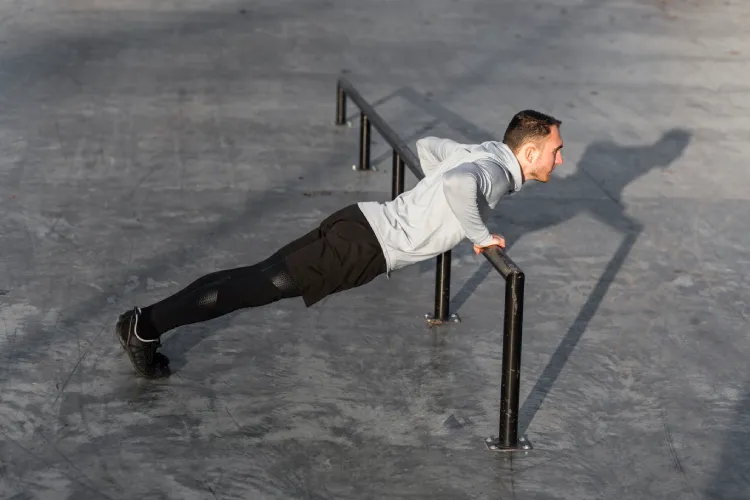
Dips are a great calisthenics pushing exercise. They work the chest, triceps, shoulders, and core at the same time and are one of the best upper body bodyweight exercises available.
After you learn how to do dips, you’ll see improvements in your pushing strength with a lot of other exercises.
Why Dips Deserve a Place in Your Routine
Carrying your entire weight as you drop your body and pick it up again demands good muscle coordination. Dips develop functional strength, which will transfer into sporting and daily activities.
They are particularly useful for:
- Developing stronger triceps
- Building up 100 percent chest development
- Improving shoulder stability
- Increasing pushing strength
- Enhancing upper-body endurance
Proper Dip Technique
Hold the parallel bars securely and pull up until the arms are straight.
Slowly lower yourself,f making an effort to bend your elbows while leaning a little bit forward. When your elbows are close to forming a 90-degree angle, push through the palms to get back to the starting position.
Avoid overspeed repetitions and maintain controlled movements.
Common Errors of Novices
Most shoulder issues are due to bad technique.
Avoid:
- Going too deep
- Fists lock elbows; it’s a bear hug.
- Swinging your legs
- Shrugging your shoulders
- Lowering too quickly
Easier Alternatives
If bench dips or resistance band dips are too challenging, start with regular dips. These variations are ideal for developing confidence and strength prior to trying regular body weight dips.
Recommended Training:
3 sets of 8–10 repetitions
4. Jump Squats: Develop Explosive Lower-Body Power
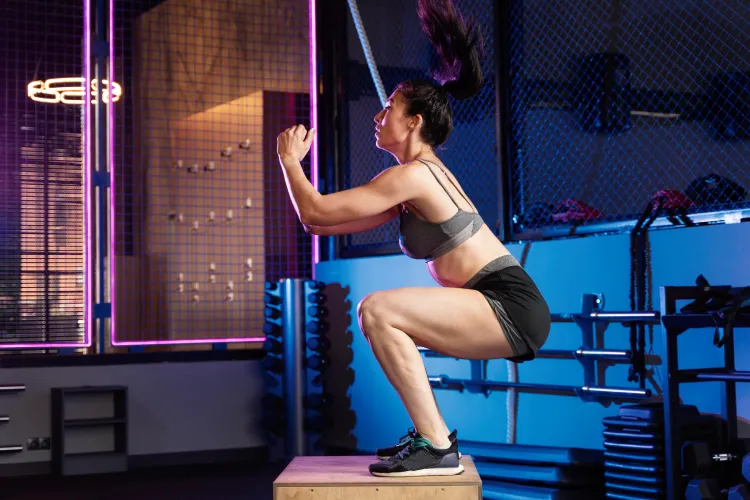
Just like a strong upper body, strong legs are just as crucial. Jump Squats are a combination of strength training and cardio that helps to build power, speed, balance, and endurance in a single exercise.
Jump squats are a common exercise among athletes for enhancing explosive power required for running, jumping, and rapid changes of direction.
How to make jump squats work for you!
Jump squats require the muscles to create peak power in a brief span of time, unlike regular squats.
Practice will help:
- Increase leg strength
- Improve vertical jump
- Burn more calories
- Build stronger glutes
- Improve athletic performance
Performing Jump Squats
- Keep your feet shoulder-width apart.
- Bend into a regular squat position with the chest up.
- Squeeze through your heels and jump up as high as possible.
- Gently land with slightly bent knees, then immediately proceed to the next repetition.
- The landing is as crucial as the jumping itself!
Misspellings and incorrect word usage are common errors.
To minimize the risk of injury, don’t:
Allow the knees to cave in towards the midline of the body
Common Errors to Avoid
- Overlooking one’s work or footing.
- Jumping too early and not learning squat form.
- Forgetting to engage your core
Beginner Modification
If jump squats are too difficult, begin with squats. After you develop the proper technique, gradually build up small jumps before moving onto full jump squats.
Recommended Training:
3 sets of 10–12 repetitions
5. Push-Ups: The Foundation of Upper-Body Strength
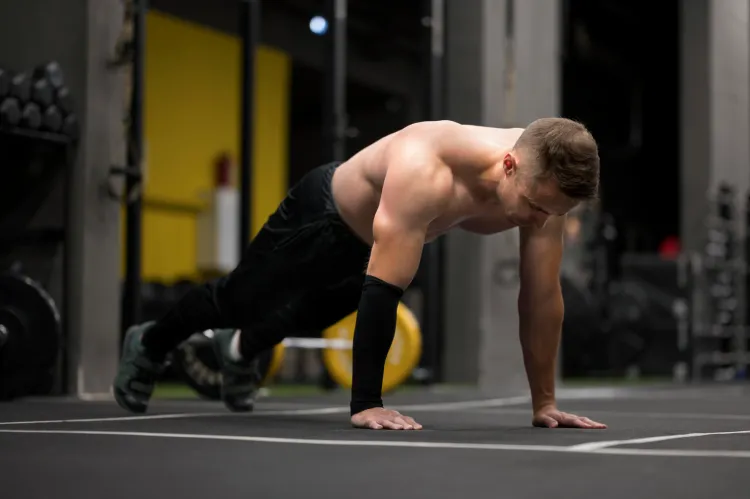
Push-ups are another popular calisthenics workout, as they require no equipment. They primarily work the chest and shoulder muscles along with the triceps and core and lower body muscles. Push-ups are a great exercise for enhancing overall upper body fitness – whether in the gym or in the park!
Why Push-Ups Should Be in Every Workout
Push-ups can be performed at any level of fitness. Easier versions can be used for beginners, and more difficult variations for more advanced athletes. Push-ups have a wide range of other benefits besides building muscle, including benefits that relate to body control, posture, and muscular endurance.
The following is an overview of some of the benefits:
- Builds chest, shoulder, and triceps muscles.
- Activates the core, increasing stability.
- Improves muscular endurance
- Supports better posture
- Requires no equipment
How to Perform Push-Ups Correctly
- Get into a high plank with fists wider than shoulders.
- Your body should be straight from head to heels.
- Pull your belly button in and down and gradually bend forward toward the ground.
- Stop when your chest is just above the ground.
- Return to the starting position.
- Keep a consistent tempo, and do not hurry through the motion.
Common Mistakes
To get better results, steer clear of these errors:
- Allowing hips to fall.
- Elevating the hips too far up,
- Leaning your torso too far away from the desk or workstation.
- Only doing half repetitions.
- Moving too quickly
Beginner Tip
If pushups are too difficult, start with wall pushups or inclined pushups, then move on to knee pushups and then to regular pushups.
Recommended Training:
3 sets × 10–15 repetitions
6. Crunches: Build a Strong and Stable Core
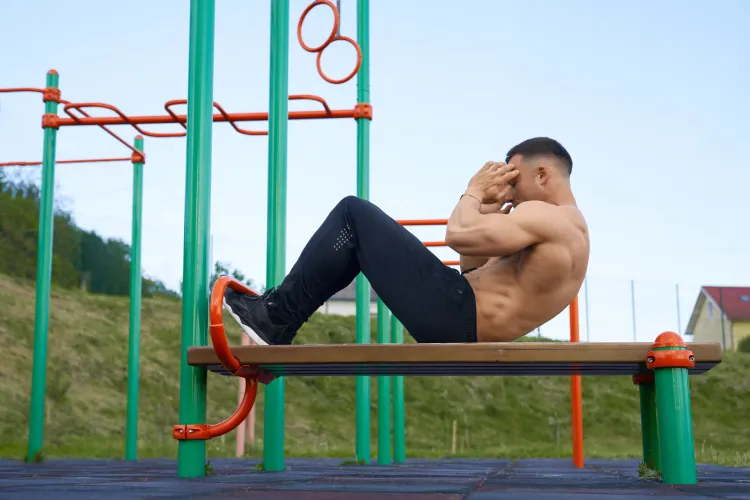
All of the calisthenics exercises rely on the strength of the abdominal muscles. Crunches build core strength, increase body balance during exercises such as pull-ups and burpees, and help improve posture.
Crunching is similar to sit-ups except that it emphasizes the abdominal muscles and does not place as much pressure on the lower back.
Why Core Strength Matters
Your core is the foundation of the body when working out. A stronger core helps increase stability, balance, and lift, and decreases the chance of lower back pain.
Crunches help you:
- Strengthen abdominal muscles
- Improve posture
- Increase balance
- Support spinal stability
- Enhance sports performance
Correct Crunch Technique
- Lying on your back, knees bent and feet on the floor.
- Rest your hands on your head or across your chest.
- Raise shoulders slowly, as you squeeze your tummy.
- Take a moment to take it easy when you lower yourself.
- Breathe in the movement and out the movement.
- Errors That Lead to Fewer Results
To avoid the common mistakes:
- Bending the neck backwards with the hands
- Using momentum
- Lifting your lower back
- Holding your breath
- Moving too fast
Better Core Exercises
- Once you have learnt crunches, then you can move on to:
- Reverse Crunches
- Bicycle Crunches
- Hanging Knee Raises
- Plank Variations
Recommended Training:
3 sets × 15–20 repetitions
7. Burpees: The Ultimate Full-Body Exercise
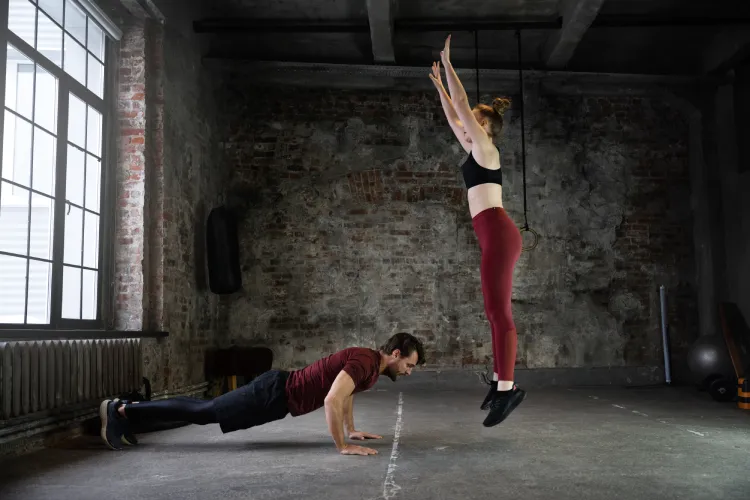
Burpees are a type of movement that is a combination of strength training and cardio. They engage almost all of the muscles and raise your heart rate, making them one of the best bodyweight workouts for fitness and calorie burn.
While burpees may be difficult at first, they can quickly help to build endurance and overall conditioning.
Why Add Jump Rope to Your Routine?
Burpees train the whole body, unlike many exercises that target one body part.
Benefits include:
- Burns a high number of calories
- Improves cardiovascular fitness
- Builds full-body strength
- Increases endurance
- Practices coordination and balance
Step-by-Step Guide
- Spread your legs shoulder-width apart.
- To crouch and put your hands on the ground.
- Place your feet behind you in plank.
- Jump feet back towards hands.
- Jump up into a jump with arms overhead.
- Drop down gently and try it again.
- Once you get stronger, you can include a push-up in the plank.
Common Errors
Many beginners lose form as they run too fast.
Avoid:
- Landing heavily
- Allowing your hips to drop.
- Skipping the squat position
- Similar to not tightening your glutes, forgetting to tighten your core is the same thing.
- Holding your breath
Beginner Alternative
If burpees are challenging, delete the jump or step backwards rather than jumping.
Recommended Training:
3 sets × 8–12 repetitions
8. Jump Rope: A Simple Way to Improve Fitness
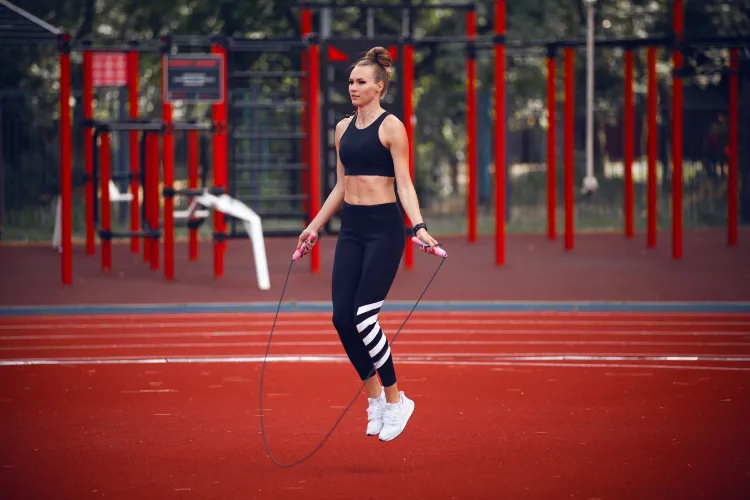
One of the simplest and best calisthenics exercises to perform for cardio is jump rope. It enhances endurance, coordination, balance, and foot speed and builds lower body muscles.
Jump rope is a part of many professional athletes’ training routines due to its benefits for cardiovascular fitness and athletic performance.
Why Add Jump Rope to Your Routine?
Jump rope is an inexpensive, portable, and accessible exercise for nearly any fitness level.
Regular practice helps:
- Improve heart health
- Burn calories
- Increase stamina
- Tighten calf and ankle muscles.
- Enhance balance and co-ordination skills
This is a good jump rope technique that you will need.
- Comfortably grip the handles with elbows tight to body.
- Use the wrists to rotate the rope; do not use the shoulders.
- Step up and off, landing softly on the balls of the feet – just a few inches up and off the ground.
- Maintain a smooth rhythm throughout the exercise.
Mistakes Beginners Should Avoid
Avoid these habits:
- Jumping too high
- Shoulder swinging the rope
- Landing heavily
- Looking down constantly
- Holding your breath
Beginner Practice
Begin with brief sessions of between 20 and 30 seconds and gradually build up as endurance improves.
Recommended Training:
3 rounds × 30–60 seconds
Complete Beginner Calisthenics Workout
If you’re just getting started, combine these eight exercises into one balanced workout.
| Exercise | Sets | Reps |
| Pull-Ups | 3 | 5–8 |
| Chin-Ups | 3 | 6–8 |
| Dips | 3 | 8–10 |
| Jump Squats | 3 | 10–12 |
| Push-Ups | 3 | 10–15 |
| Crunches | 3 | 15–20 |
| Burpees | 3 | 8–12 |
| Jump Rope | 3 | 30–60 sec |
Take 45–60 seconds of rest between exercises and 2–3 minutes after completing one full round. Train 3–4 times per week and increase your repetitions gradually as you become stronger.
Conclusion
Calisthenics is a cost-effective and convenient physical training method that can be used to strengthen muscles, improve endurance and fitness without the need for expensive gym equipment. The eight fundamental exercises- pull-ups, chin-ups, dips, jump squats, push ups, crunches, burpees, and jump rope can help you build a more balanced body and increase mobility and fitness. Practice proper form, be consistent, and continue to push yourself as you go. By engaging in Calisthenics with patience and dedication, it can be a lasting fitness routine that provides long-term results.
Frequently Asked Questions
Is calisthenics good for beginners?
Yes. This is because a calisthenics workout can be done by a beginner and can be gradually increased in difficulty as you get stronger.
Is it beneficial for me to do calisthenics?
Yes. Regular exercise, diet, and rest can help to develop lean muscle and strength.
How many days a week should I do calisthenics?
Train 3-4 times weekly with recovery days in between for improved recovery and progress.
Do I need equipment for calisthenics?
No. The exercises are performed with your own body weight, except for a few exercises that would benefit from having a pull-up bar.