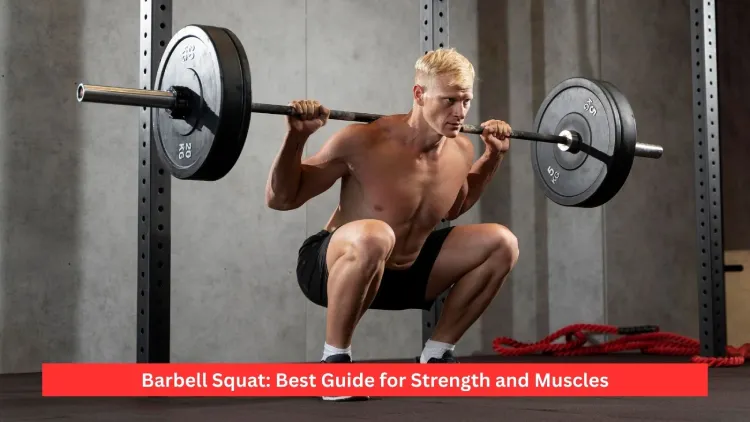

The barbell squat is a compound type of strength training exercise that targets the quadriceps, glutes, and other lower leg muscles, while also engaging the core for stability purposes. It consists of placing a barbell over the top of the back, bending the hips and knees, and then standing up slowly and carefully. If you are new to squats and want to learn the proper form, or if you are a seasoned lifter building lower-body strength and want to learn how to perform this exercise more effectively, it is important to understand the right form, where the muscles are activated, and how you should train squats.
What Muscles Do Barbell Squats Work?
Barbell squats mainly work the quadriceps and glutes, whilst also activating the hamstrings, core and calves. These muscles are activated to help with the movement, stability, and balance during every repetition.
Quadriceps
Your front thighs (quadriceps) will assist in straightening your knees as you push back up from the squat position.
Glutes
The gluteus maximus extends your hip and has a major role in pushing your body up.
Hamstrings
The hamstrings are important for maintaining stability of the hip and knee, and for controlling movement during the squat.
Core Muscles
The abdominal muscles and obliques will stabilize your torso and help you maintain proper posture under the barbell.
Calves
The calves are used to maintain stability and balance at the ankles when moving down into the squat position and back to standing.
Hip Stabilizers
Squatting also involves smaller muscles around the hips becoming active. These muscles maintain the proper position between the hips, knees, and ankles, and they ensure the right shape and the possibility of injury is minimised.
Since there are myriad muscles engaged simultaneously, the barbell squat is a very efficient method to train the lower body, besides enhancing the supportive muscle groups across the entire body.

How to Do a Barbell Squat With Proper Form
Proper barbell squat form helps you control the weight and perform each repetition safely. Start with a manageable load and follow these steps to master your setup, bar position, and squat movement.
Step 1: Prepare the Barbell
Set the squat rack around upper-chest to shoulder height so you can unrack the bar easily. Place safety bars just below the squat depth and use a weight that is manageable for you.
Step 2: Grip the Bar
Position the bar over your upper back (trapezius muscles). Hold it snugly, allow unclenched wrists and draw shoulder blades together for support.
Step 3: Take the Bar off the Rack
Under the bar, tighten your core, lift out of the rack with straight legs and hips. Step backward 1 or 2 times, controlled.
Step 4: Set Your Stance
Feet are about shoulder-width apart with toes slightly turned out. Extend legs, maintain feet on the ground, and position knees in a line with toes.
Step 5: Start to descend.
Tighten abdominal muscles, flex hips and knees, and slowly lower body down. Do not move your feet and maintain a stable spine. Reduce to a comfortable depth, typically parallel if able to get there.
Step 6: Drive Upward
Step feet into the floor and straighten hips and knees to stand up. Brace your core, lift your hips and shoulders together. Complete uprightly; do not lean back.
Step 7: Repeat the Movement
Maintain controlled repetitions and form. Take a breath in and tighten the core before pushing down, and breathe out as you push up. If you can’t perform the exercise with good form, stop.
Step 8: Securely rerack the bar.
After the last repetition, slowly walk to the rack. Lock the bar in place with both supports, bend your knees slightly, ly and let go of the bar.

Advantages of Barbell Squat
Barbell Squat has numerous physical advantages that go beyond mere muscle building.
Builds Lower-Body Strength
Barbell squats build resistance in the lower body by targeting the quadriceps, glutes, and other muscles.
Improves Bone Density
Hips and lower-body bones have been shown to be stimulated by squats to help maintain bone health as part of routine resistance exercises.
Enhances Blood Circulation
Barbell squats work big muscles of the lower body and boost blood circulation while working out.
Boosts Hormonal Response
Barbell squats are multi-joint exercises that engage several large muscle groups and can temporarily impact hormone levels when using resistance training.
Supports Fat Loss
When used in conjunction with good nutrition and regular exercise, barbell squats can help to burn more energy.
Enhances Functional Strength
Squats build strength for everyday tasks like sitting, standing, and walking up and down the stairs.
Develops Athletic Performance
Tighter quads and glutes are better suited for athletics like jumping, sprinting, and rapid direction changes.
Supports Heart Health
As part of a well-rounded workout, barbell squats can help improve overall cardiovascular fitness.
Overall: Barbell squats are great for improving lower body strength, growth, and functional movement. Emphasize good form, controlled resistance, and slow movement.

Common Mistakes to Avoid
The correct technique with the barbell allows for control, balance, and stability. To avoid these common errors, work on your form and practice avoiding unnecessary strain.
Rounding the Back
Keep your spine stable and engage your core before lowering. If you’re unable to control your form properly, lessen the load.
Knees Collapsing Inward
Maintain a normal position of the knees with respect to the toes throughout the movement. Avoid overloading the weight and repetitions.
Using Too Much Weight
Select a weight that is controllable with consistent depth and balance. Slowly build up resistance as strength increases.
Limited Squat Depth
Go to the lowest comfortable position that is controllable without loss of balance or technique.
Losing Core Bracing
Tighten abdominal muscles before each rep and hold tension throughout the squat.
Rushing Through Repetitions
Do each rep in a controlled manner. Never bounce on the bottom, and don’t sacrifice technique for speed.
Incorrect Bar Position
Place the bar on your upper trapezius muscles in either a high bar squat or across your rear shoulders in a low bar squat. Don’t position it on your neck.
Different Types of Barbell Squats
There are a few variations of barbell squats, which vary the placement of the bar and the muscle groups that receive the most attention. Select a variant depending on your objectives, experience, and mobility.
Front Squat
With the front squat, hold the barbell in front of you over your shoulders. Focus on the quads with an upright body and good core stability.
Box Squat
Box squat is a movement in which you squat down into a box or bench, and then stand up. It aids in maintaining consistency of squat depth and control of the movement.
Pause Squat
Pause squat: A brief pause at the bottom of the squat before standing up. This helps to decrease momentum and tests your position and force-building skills. Learn this variation using less weight.

Barbell Squat Tips
To achieve better results in the workout of the Barbell Squat, you have to practice it regularly and pay attention to the technique.
Warm Up Properly
Prior to exercising the barbell squat, one needs to warm up the muscles with cardio and light mobility activities. These conditions help the joints and prevent injury.
Focus on Technique
Having the right posture is more significant than doing heavy lifting. Learning how to do it correctly guarantees the development in the long term and protection.
Increase Weight Gradually
The current overload development is essential to strength development. Gradually adding the weight over time makes the muscles start adapting safely.
Maintain Core Engagement
By keeping the core tight during the barbell squat, it is possible to stabilise the spine and balance.
Use Recovery Strategies
It is during recovery that the muscles become stronger. Sleep, water, and food help to repair muscles when barbell squats are performed.
Proper nutrition post-training may assist in the replacement of energy levels after physical activities. Protein and carbohydrate foods, such as wheat, eggs, rice, yoghurt, fruits, or smoothies, are essential in muscle recovery and the restoration of glycogen.
Barbell Squat for Beginners
Beginners can include barbell squats in their strength-training programs by first learning proper technique and starting with light or no weight. Gradually increase resistance as strength and confidence improve.
Can Beginners Do Barbell Squats?
Yes, beginners can start with bodyweight squats or an unloaded barbell. Practice balance, controlled movement, and proper form before adding light resistance. Use a squat rack with safety bars for support.
Who Should Be Careful With Barbell Squats?
People with knee, hip, back, or balance problems should modify the exercise or seek professional guidance. If you have an injury or experience pain during squats, stop and consult a qualified healthcare professional.
Individuals with Bone Health Considerations.
Since resistance training is a good way to encourage the development of the bone, certain exercises such as barbell squat can sustain good bone development and limit bone erosion with age.
Nonetheless, some people ought to take the barbell squat with lots of care. Individuals who have severe knee injuries, hip conditions, spinal conditions and balance difficulties need to ensure that they seek medical advice or a trained professional prior to doing this form of exercise.
Light variations of the squats can also be safe for some beginners learning proper form. Such options help one develop strength gradually, then progress to heavier barbell squats.

Conclusion
Barbell Squat is one of the most appropriate exercises that are known to make the lower body stronger, increase muscle growth, and maximise fitness. The barbell squat is effective as it utilises several muscle groups simultaneously, making it stronger than the others across the legs, core, and hips, besides enhancing balance and stability.
The barbell squat may help a person become stronger in the bones, improve arterial flow, and enhance athletic capability when performed in good form with consistent practice. The barbell squat may be included in a standard exercise routine to build strength and overall health and improve physical performance over the long term.
Frequently Asked Questions
1. Does muscle building require a barbell squat?
The Barbell Squat is one of the best and most efficient exercises for developing lower-body muscles, as it engages several of the largest muscle groups at once.
2. What is the recommended number of barbell squats?
Starting with three rounds of eight to twelve repetitions is the most common when beginning. Weight and intensity can be increased slowly as the strength increases.
3. Is it possible to do barbell squats as a beginner?
Yes, newcomers may do Barbell Squats, using whatever light weights they can, but before going further, learn the proper execution of Squats.
4. What is the frequency of barbell squats?
A barbell squat is a common exercise that many training programs incorporate into their routines two to three times a week. This frequency enables the muscles to rest while also promoting strength and muscle development.