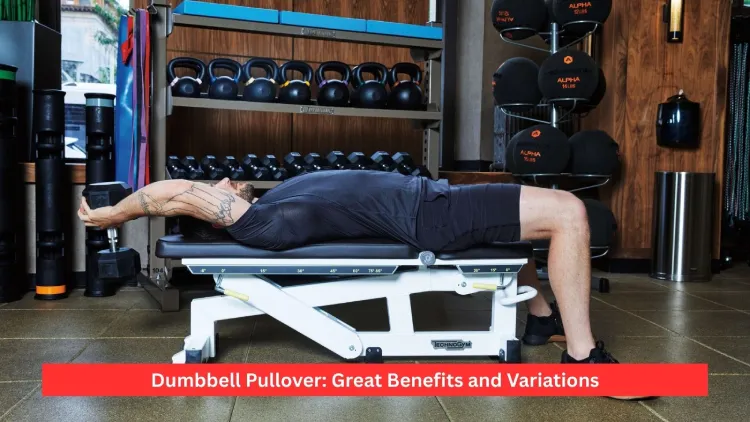

Dumbbell pullover is an upper body exercise that involves lowering dumbbells behind the head and back overhead the chest. Primarily works the chest and lats, with added work for the triceps, shoulders, and core. This guide includes correct form, muscles used, benefits, common errors, and effective variations.
- What is Dumbbell Pullover?
- The Dumbbell Pullover Targets Which Muscles?
- What is the advantage of Dumbbell Pullovers?
- How to Do a Dumbbell Pullover Correctly
- How to Breathe During a Dumbbell Pullover
- Dumbbell Pullover Form Tips
- Common Dumbbell Pullover Mistakes
- Is Dumbbell Pullover a chest or back exercise?
- How to Add Dumbbell Pullovers to Your Workout
- How Many Sets and Reps Should You Do?
- Who Can Do Dumbbell Pullovers?
- Dumbbell pullovers and shoulder safety.
- Does Dumbbell Pullover Make the Chest?
- Is Dumbbell Pullover a Safe Exercise?
- Dumbbell Pullover Alternatives
- Conclusion
- Frequently Asked Questions
What is Dumbbell Pullover?
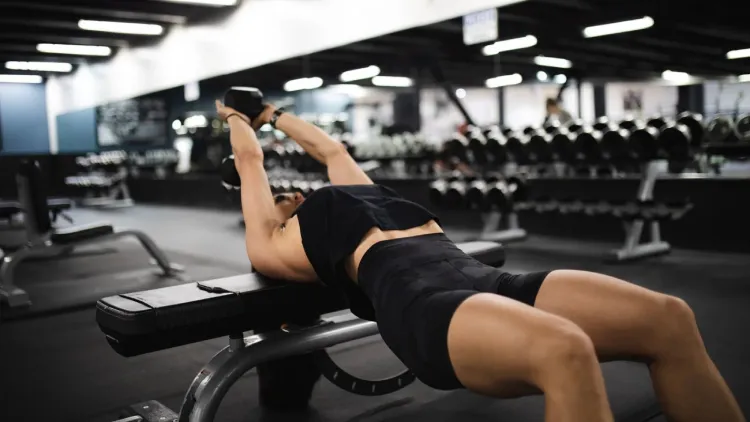
The dumbbell pullover is an upper body resistance training movement done with a dumbbell while lying on a bench or floor. Clutch the dumbbell above the chest, slowly lower the dumbbell behind the head, and return to the start position.
This exercise primarily targets the chest and lats but also activates the shoulders, triceps, and core. It is also useful for overhead movements in chest, back, or upper-body workouts since it is controlled.
The Dumbbell Pullover Targets Which Muscles?
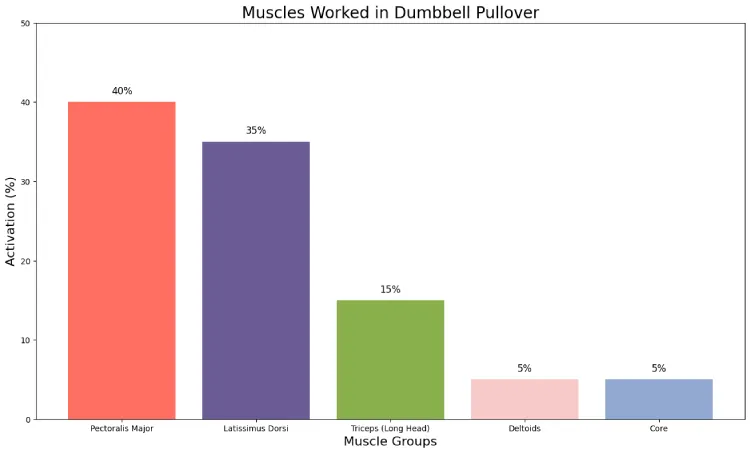
The dumbbell pullover primarily works the chest and latissimus dorsi and engages the triceps, shoulders, and core. The muscles act together to move the dumbbell behind the head and back over the chest.
Chest
The chest muscles, especially the pectoralis major, control the dumbbell. The slow, controlled motion can add to the challenge on the chest.
Latissimus Dorsi
Lats (latissimus dorsi) control the arm when it moves overhead and brings it back to the starting position. They are particularly engaged when you concentrate on bringing the arms back over the chest.
Triceps
The triceps are used to stabilize and to control the arms during the pullover. Another long head of the triceps also crosses the shoulder joint, helping with the movement as arms move overhead.
Shoulders
Shoulder muscles assist in guiding and stabilising the arms during the exercise. Controlled movement is crucial as the dumbbell crosses behind the head with the shoulders staying involved.
Core
The core muscles help keep your torso stable while you perform the exercise. Keeping the core engaged also helps to minimize excessive downward or upward motion or arching of the lower back.
What is the advantage of Dumbbell Pullovers?
Pullovers with dumbbells may be a valuable upper-body exercise. They have the following primary advantages:
1. Trains the Chest and Lats
The exercise targets the muscles of the chest and latissimus dorsi and includes a controlled range of motion, which is helpful for upper-body strength training.
2. Has a Controlled Loaded Stretch
The lower the dumbbell is behind the head, the more controlled the stretch will be for the working muscles. Move shoulders in a comfortable range of motion.
3. Performs upper body exercises with variety
Dumbbell pullovers are performed in a different movement pattern than pressing and rowing exercises and can help keep your workout interesting.
4. Develops Overhead Movement Control
By swinging the dumbbell with the arms extending overhead, you will activate the dumbbell control, which may help increase movement awareness and stability.
5. Supports Pressing and Pulling Exercises
Pullovers can be used to complete upper body exercises like chest presses, rows, and pull-ups in a balanced upper body workout.
The dumbbell pullover works on the entire upper back. The dumbbell pullover works the whole upper back.
How to Do a Dumbbell Pullover Correctly
Place yourself on a level bench. Lie on your back with your head and upper back resting.
- Keep feet flat on the floor: Do not let your feet slip during the exercise.
- Grab one dumbbell with both hands.
- Place the dumbbell above your chest: Extend arms towards the ceiling.
- Elbows should be slightly flexed: Maintain the same slight bend throughout the movement.
- Brace your core: Maintain a stiff spine and prevent too much arching of the lower back.
- Slowly lower the dumbbell behind your head: Move with control; do not drop the weight.
- Stop at an “easy” range: Don’t push your shoulders beyond the range of motion.
- Smoothly bring the dumbbell back in control above the chest. Drive with chest and lat muscles.
- Repeat. Repeat the desired number of times with good form.
How to Breathe During a Dumbbell Pullover
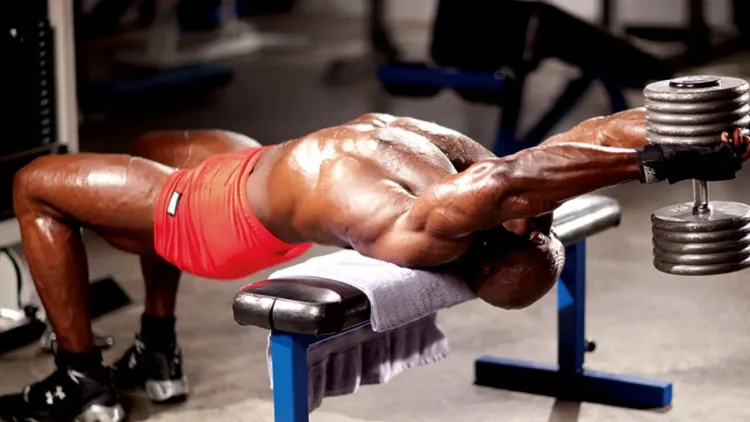
- On inhale: Slowly drop the dumbbell behind your head.
- Exhale: When bringing the dumbbell back over your chest.
Dumbbell Pullover Form Tips
To help comfortably control the movement, follow these tips:
- Maintain a mild bend in elbows throughout the exercise.
- Always keep the descent of the dumbbell under control.
- Tighten core to make torso stable.
- Do not over-flare ribs or arch lower back.
- Avoid putting the dumbbell into an awkward range of motion.
- Choose a weight that will not compromise good form.
- Maintain a fluid and controlled motion throughout the movement.
Common Dumbbell Pullover Mistakes
Using Too Much Weight
A large dumbbell may be challenging to handle and keep proper form with. Use a weight that will allow you to do each of the reps smoothly.
Reduce the Dumbbell too far.
You don’t need to lower the dumbbell as far as possible. Stop once you find a comfortable range that you can control without feeling any discomfort.
Excessive Elbow Movement
Bending and straightening elbows repeatedly will alter the exercise to become more of a triceps exercise. Have a slight, steady bend in the elbows.
Arching the Lower Back
When the lower back arches too much, it may not be as stable as it needs to be. Keep ribs and core controlled and braced throughout the movement.
Moving Too Quickly
The use of momentum increases the difficulty of control. Carefully lower and raise the dumbbell to maintain tension and proper form.
Dumbbell Pullover Variations
The dumbbell pullover can be performed in a variety of different sets and movements.
Flat-Bench Dumbbell Pullover
The standard version is done on a flat bench, lying face down. It is easy to set up and can be used by the majority of individuals who are comfortable with the movement.
Floor Dumbbell Pullover
The floor version restricts arm travel behind the head due to the natural stopping point created by the floor. This can be beneficial if you want a more limited range of motion.
Single-Arm Dumbbell Pullover
Performing the pullover with one arm at a time will enable you to work each side separately. Keep your weight light and easy to handle, and concentrate on keeping your torso stable.
Decline Dumbbell Pullover
The decline setup is a change in body position and angle of the movement. Can help to vary your upper-body training, but needs to be carefully controlled throughout the ROM.
Is Dumbbell Pullover a chest or back exercise?
The dumbbell pullover can work the chest and back depending on the variation of the dumbbell pullover, individual anatomical differences, and the way it’s programmed in a workout.
Both the chest and the latissimus dorsi muscles are involved in the lift and bringing the dumbbell back over the chest. The muscles that feel more involved will depend on your setup, arm position, range of motion, and movement technique.
Thus, dumbbell pullovers can be incorporated into a back workout or a chest workout. Don’t think of it just as a chest or back exercise; it is actually an upper-body exercise that can engage both muscles.
How to Add Dumbbell Pullovers to Your Workout
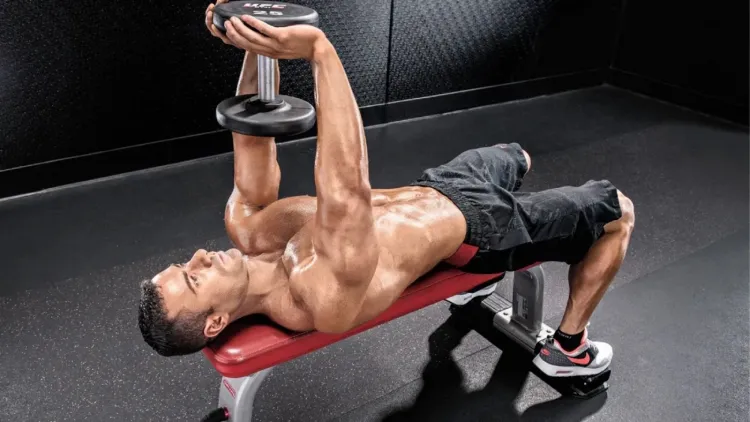
With a chest workout, dumbbell pullovers are an accessory exercise to be performed after your pressing movements, like bench presses or dumbbell presses. This will mean you will be able to concentrate on controlled movement, without prioritizing it as the main strength exercise.
With a back workout session, do pullovers with pulling exercises like rows, pull-ups, or lat pulldowns. Place the workout according to the total volume of your workout and make sure you have energy left for your key exercises.
How Many Sets and Reps Should You Do?
A good starting point is to start with 2–4 sets of 8–15 controlled repetitions. Pick a weight that will allow you to use proper form for each repetition.
The proper weight and volume will vary depending upon the experience level, the objective, and the ability to perform the exercise with consistent control. If you are new to the exercise, you can begin with fewer sets and resistance until you get comfortable with the movement.
Who Can Do Dumbbell Pullovers?
When the dumbbell pullovers are modified to suit the beginner, intermediate, and advanced lifters, they can all be incorporated.
- Beginners: Begin with a light dumbbell and a smaller range of motion that is comfortable for you to learn proper form.
- Intermediate: If you’re in the middle of the range, opt for a manageable weight and controlled reps to incorporate pullovers into a back or chest session.
- Advanced lifters: Vary volume or weight based on current training program and training objectives.
Dumbbell pullovers and shoulder safety.
Individuals who already experience pain and/or have a diagnosed shoulder injury should not attempt to do the exercise and should seek advice from a suitable healthcare or fitness professional. When doing dumbbell pullovers, it’s crucial to have a comfortable range of motion and manageable resistance.
Avoid doing the exercise if it causes pain or discomfort, and work out alternative exercises, techniques, and range of motion, or modify the exercise.
Does Dumbbell Pullover Make the Chest?
Yes, dumbbell pullover can target the chest, specifically the pectoralis major, and it also works the lats. It should be used as a part of a total chest-training regimen, but not a substitute for pressing exercises.
Proper training, resistance training, training volume, progressive overload, nutrition, and recovery are all necessary for chest development. Don’t expect to be sore after pullovers to make the exercise work.
Is Dumbbell Pullover a Safe Exercise?
The dumbbell pullover can be done safely with a weight that’s manageable, proper technique, and an appropriate range of motion. Don’t push the shoulders into a deeper position than they can handle.
If you have shoulder pain, discomfort, or a previous injury to your shoulder, cease the exercise and seek advice from a health care or fitness professional.
Dumbbell Pullover Alternatives
If dumbbell pullovers do not feel comfortable, or you are looking for some variation in your workout, try out these alternatives:
Cable Pullover
The cable pullover gives steady resistance and can be adjusted to accommodate the load easily. For lat training, it could be beneficial to do so with a controlled range of motion.
Straight-Arm Pulldown
The straight-arm pulldown works with the arm pulled down in a straight motion, using a cable, and emphasizes pulling the arm down while keeping the elbows relatively straight. It can be a great complement to a lat workout.
Lat Pulldown
The lat pulldown is a traditional back workout that targets the lats, but also works the biceps and upper back.
Chest-Focused Alternatives
For people who are focused on chest development, however, exercises like dumbbell bench press, barbell bench press, or chest press offer more direct pressing patterns for the chest.
Conclusion
The dumbbell pullover works the chest and lats and also engages the triceps, shoulders and core. It can be used in combination with a comprehensive upper-body training session when using proper technique and light to moderate resistance.
Do not go beyond the comfortable range of motion and do not push the dumbbell back behind the head. Pullovers are a great exercise to add some variety to your training but should be done in addition to, and not instead of, standard back and chest exercises.
Want to improve your upper-body workout? Explore more expert-guided exercises and workout tips on Stretchlee to train smarter and move better.
Frequently Asked Questions
Is dumbbell pullover a chest or upper back workout?
The dumbbell pullover will train the chest and lats. The focus can differ based on your technique, the individual anatomy, and the way you incorporate it into your training.
Which muscles does dumbbell pullover target?
It is mainly used for the chest and latissimus dorsi. The triceps, shoulders, and core also assist in controlling and stabilizing the movement.
Is dumbbell pullover suitable for beginners?
Yes. Light weight and comfortable range of motion for beginners and controlled technique.
What is the optimal number of sets and reps?
A good beginning point is 2-setses of controlled reps of 8-15. Select a weight that will maintain proper form for each set.