
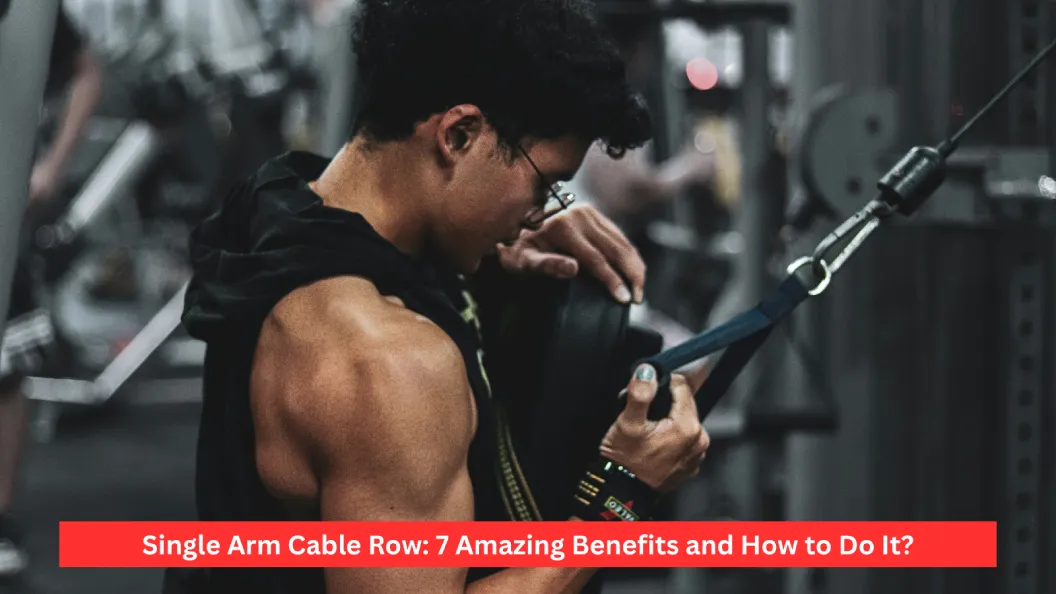

Single Arm Cable Row is a unilateral back workout that works the lats, rhomboids, traps, rear delts, and biceps, and also activates the core. Pull the elbow towards the hip with a D-handle while maintaining stability of the torso. If you are trying to build muscle, try 3-4 sets of 8-15 repetitions on each side.
- What is a single arm cable row?
- What Does the Single Arm Cable Row Work?
- What Does Single Arm Cable Row Target?
- How to Do Single Arm Cable Row
- How to Single Arm Cable Row Correctly
- How to Do a Single Arm Cable Row for Lat Growth
- Single Arm Cable Row Benefits
- Why Do One-Arm Cable Rows Feel So Much Better Than Two-Hand?
- Single vs Double Arm Seated Cable Row: Which One Should I Do?
- Single Arm Row vs Seated Cable Row
- Seated Cable Row vs One Arm Dumbbell Row
- Single Arm Cable Row vs One Arm Dumbbell Row: Which Is Better?
- Single Arm Cable Row Sets and Reps
- What weight should a single arm cable row be?
- Common Single Arm Cable Row Mistakes
- Single Arm Cable Row – Form Checklist
- Single Arm Cable Row Exercises
- How to Progress the Single Arm Cable Row
- Is the Single Arm Cable Row Good for Beginners?
- Can Single Arm Cable Rows Fix Muscle Imbalances?
- How's My Form on the Single Arm Row?
- Single Arm Cable Row Check: What Good Form Looks Like
- Conclusion
- Frequently Asked Questions
What is a single arm cable row?
A single-arm cable row is a pulling motion with one arm at a time at the same time using a cable machine. You don’t move both hands at the same time, but each side of your back moves separately.
This is a great exercise to develop the back, unilateral strength, and awareness of each side’s performance.
The cable also offers resistance in the stretched position as you return the handle, along with the rest of the movement.
What Does the Single Arm Cable Row Work?
Primary muscles involved in a single-arm row are the latissimus dorsi, rhomboids, and trapezius. You’re also working your rear deltoids, biceps, forearms, and core.
The lats are especially important for people who do not move their elbow far away from their body and drive their elbow back toward their hip. Create a slightly wider elbow path to move more weight to the upper and middle back. When raising one side while training the other, the trunk also needs to keep from turning. This will not only be a back exercise, but also a good control exercise for the body.
What Does Single Arm Cable Row Target?
The main focus is your middle/lat back.
The exact focus will be based on your setup and pulling path:
- Elbow towards hip: more lat emphasis.
- Elbow away from body: greater upper back involvement.
- Controlled stretch: enhances the length of the cable and the range of motion.
- Stable torso: prevents momentum from taking over.
- Neutral wrist: helps maintain a comfortable pulling position.
Cable lat exercises are popular for beginners and advanced users because of this versatility.
How to Do Single Arm Cable Row
For a controlled and good repetition, do the following:
- Set up one D-handle on the cable pulley at a low to mid level.
- Sit, stand, or be in a supported position that is stable.
- Hold the handle in one hand and extend the working arm.
- Tighten your abdominal and chest muscles.
- Allow the shoulder to move naturally into this stretch.
- Pull elbow backwards towards side or hip.
- Pull until your hand is in a comfortable position to your chest.
- Take a break as you squeeze the working side of your back.
- Extend the arm slowly and bring it back to the starting position.
- Finish the reps on one side, then repeat on the other side.
Don’t use your body to swing the weight. A stable body and controlled return mean more efficient reps.
How to Single Arm Cable Row Correctly
Using a heavier weight is less important than good technique.
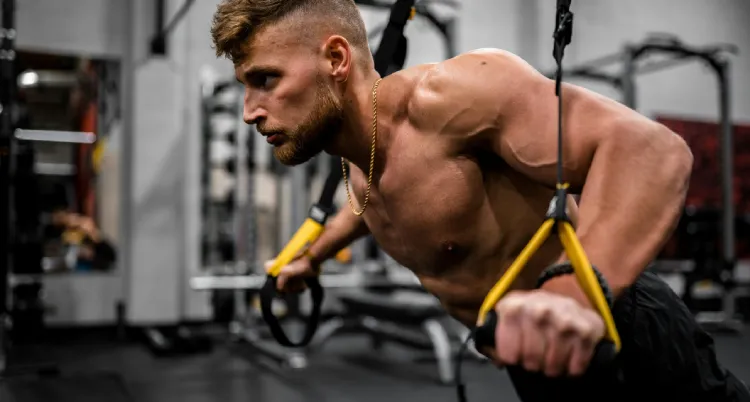
Move from the shoulder and hip joints. Press ribs together, tighten abs before pulling. Don’t imagine moving the hand; think about moving the elbow backwards.
Don’t make an aggressive shrug at the top. Apply pressure to the back, but not too far.
On the return, let the working arm straighten out, and the shoulder blade glide. Don’t let the weight take you too far.
This technique makes the single-arm row movement with a cable more fluid and less complicated to perform from side to side.
How to Do a Single Arm Cable Row for Lat Growth
If the main lift you want to build is larger lats, then pay attention to the elbow path.
The elbow should be relatively close to the body, and consider bringing the elbow towards the hip or back pocket. If you are aiming for the lats, then pull directly towards your upper chest.
Perform the eccentric phase with a controlled movement and take the arm to a comfortable range of movement before performing the next repetition.
Generally, a medium weight is more useful, rather than a weight that forces the rotation/swing. The aim is to get the target muscle to do the movement and not just move the stack.
Single Arm Cable Row Benefits
This movement is a good choice to incorporate in the back workout for a number of reasons.
- Builds the lats: If the elbow is close to the body, the exercise can give a great amount of lat work.
- Trains each side independently: It is not as easy to overcome a weak side with a strong arm as it is during bilateral movements.
- Helps identify imbalances: If the same number of controlled repetitions are performed on each side, there may be differences in strength or endurance.
- Supplies constant cable resistance: The resistance stays consistent throughout the pulling and returning part of the movement.
- Improves trunk control: Your core needs to be able to hold its position when one side is pulling.
- Offers flexible positioning: A seated single-arm row, standing, half-kneeling, or supported single-arm row can be done.
Why Do One-Arm Cable Rows Feel So Much Better Than Two-Hand?
One arm rows are done by some heavy lifters due to the fact that the working arm is not governed by the same path as the arm on the opposite side.

Both shoulders and hands should have to move in a coordinated, fixed pattern with two hands. When training one arm at a time, each arm has a comfortable space to move according to the individual’s mobility and proportions.
The exercise may also help to focus on a single lat at a time.
This doesn’t imply that unilateral rows are necessarily superior to bilateral rows. Both have value. It might just be about comfort, control, range of motion, and how well the muscles you’re targeting can feel the stretch.
Single vs Double Arm Seated Cable Row: Which One Should I Do?
Select thesingle-armm seated cable row when you wish to:
- Unilateral back training
- Better side-to-side comparison
- Greater individual-arm focus
- Other requirements for additional stability of the trunk.
Increased arm freedom of movement.
When you wish to choose a traditional double-arm seated cable row:
- Efficient bilateral training
- A stable setup
- Heavier overall rowing work
- Faster workouts
- Both can be used in the same program.
Single Arm Row vs Seated Cable Row
These two exercises are different in that a single arm row is used to train one arm at a time, whereas a typical seated cable row will train both arms simultaneously.
The one-arm seated row can be helpful because it works to correct any side-to-side imbalances, and the seated row is great for increasing overall back strength and training volume.
Both movements are not to be replaced by each other.
Seated Cable Row vs One Arm Dumbbell Row
The resistance profiles and setups are different for both exercises, but the back is trained in both.
A cable will resist the movement over a greater range of motion, while a dumbbell is dependent on the weight and body alignment.
The one-arm dumbbell row also involves stabilizing the dumbbell with no cable pulling in a specific direction.
The cable version is convenient for those who want to always have the cable tight and don’t want to have to adjust the load. For free-weight training, the dumbbell option is still a great choice.
Single Arm Cable Row vs One Arm Dumbbell Row: Which Is Better?
There is no one winner.
If you wish to choose, select the cable version:
- Consistent resistance
- Easy weight adjustments
- Different cable angles
- A controlled stretch and contraction of the muscle tissue.
- If you wish to use dumbbells, select the dumbbell version:
- Free-weight training
- A new challenge to stabilization
- A convenient stand-alone cable alternative
Both can be used to build a better, more muscled back.
Single Arm Cable Row Sets and Reps
Your sets and repetitions should match your goal.
| Goal | Sets | Reps |
| Strength | 3–4 | 6–10 |
| Muscle growth | 3–4 | 8–15 |
| Endurance | 2–3 | 15–20 |
| Beginner | 2–3 | 10–15 |
For most people focused on hypertrophy, 3–4 sets of 8–15 reps per side is a practical range.
What weight should a single arm cable row be?
Pick a weight that will enable you to perform each rep with minimal body movement.

Your last few reps should be difficult, but still possible to:
- Keep torso under control
- Get in a good stretch
- Straighten the elbow correctly
- Avoid shrugging
- Use the same range of motion throughout the exercise.
- Come off even on both sides
If you need to lean back to finish the movement, decrease the weight.
Common Single Arm Cable Row Mistakes
- Repetitive use of excess weight: This tends to promote swinging.
- Excessive torso rotation: This can create a momentum pull.
- Pulling only with the hand: Consider swinging the elbow, rather than the handle.
- Shrugging: Do not continually raise the working shoulder toward your ear.
- Cutting the stretch short: Allow the arm to extend comfortably at the bottom.
- The return phase must be kept controlled: Drop the weight off at a quick pace.
Train both sides equally by doing unequal reps.
Single Arm Cable Row – Form Checklist
Before each set:
- The stability of feet and body.
- Core is braced.
- Chest is controlled.
- Wrist is comfortable.
- Shoulder is not unnecessarily raised.
- Elbow drives backward.
- Torso does not swing.
- A full, comfortable range is used.
- Return phase is under control.
As long as these points are kept the same, your technique is probably a lot better than just adding weight.
Single Arm Cable Row Exercises
The setup can be varied according to the objectives and available equipment.
Seated Single Arm Cable Row
A seated row with the cable at the sitting position provides a more stable lower body position and will help you concentrate on the cable arm movement.
Perform Stand Single Arm Cable Row.
A standing version provides increased balance and trunk control requirements.
Single Arm Lat Row (Half Knee)
The half-kneel position may help to minimise movement in the lower portion of the body while promoting a controlled pulling movement through the lat.
Single Arm Row Machine
Single arm machine row is another effective unilateral exercise. The machine offers external support that may make it simpler to focus on the back.
Single Arm Low Row
A low pulley can provide a nice diagonal pulling motion towards the hip, which makes the single arm low row a great lat exercise.
Single Arm Cable Row Workout
The following is a simple exercise to do for the back:
- Lat Pulldown — 3 × 8–12
- Single Arm Cable Row — 3 × 10–12 per side
- Seated Cable Row — 3 × 10–15
- Face Pull — 3 × 12–15
- Dumbbell Curl — 2–3 × 10–15
Begin with manageable weights, and add more resistance as you gain proficiency.
How to Progress the Single Arm Cable Row
Progress doesn’t necessarily equate to gaining more weight.
One can go on to:
- Adding repetitions
- Increasing resistance
- Increasing flexibility.
- Reducing the eccentric phase.
- To add a quick squeeze
Increasing uniformity from one side to another. Making it more uniform from one side to the other.
Reducing momentum
If you can do 10 clean reps at this level of cable resistance, for instance, then build up to the point where you can do 12–15 such reps before changing the resistance of the cable.
Is the Single Arm Cable Row Good for Beginners?
Yes. This exercise is good for beginners because they can begin with a small amount of weight and master the movement pattern.
The seated single-arm row can be very beneficial, as the seated position offers greater stability.
Begin with 2-3 reps x 10-15 reps per side. After you are able to keep good form, increase resistance slowly.
Can Single Arm Cable Rows Fix Muscle Imbalances?
They can be useful to make the training more balanced, since they operate on each side independently.
For instance, if your right side is stronger, then your left side won’t be able to do the same movement without support from the right side.
Do the same number of reps on the weaker side, then more on the stronger side. Don’t perform additional repetitions just because the stronger side can do more.
How’s My Form on the Single Arm Row?
A good form check is on quality of movement, not how heavy the weight looks.
Side by side: observe if your body is in good control and if your elbow moves freely behind your body.
At the front, see how well your shoulder remains controlled and if you’re over-rotating.
Take a set from both angles, if possible. Video can assist in making movement faults easier to identify.
Single Arm Cable Row Check: What Good Form Looks Like
There are four phases of a good repetition:
- Start position: Arm extended and shoulder position controlled.
- Pull: Elbow goes behind the torso.
- Contraction: Back muscles work without excessive shrugging/rotation.
- Return: Arm slowly returns to a comfortable stretch.
There’s no point in making it a dramatic move. The aim is to ensure that all reps are under control and repeatable.
Conclusion
The single arm cable row is a great single arm back workout that can build lats, upper back, and pulling strength, and can be performed on each side individually. The path of the cable can easily be adjusted to suit the needs of different body types, goals, and training levels.
The essentials for most lifters are simple: choose a weight that is manageable, keep the torso under control, push the elbow back, stretch the bar back to a comfortable position, and control each rep.
One-arm seated cable row, standing one-arm cable row, single arm machine row, or any other variation, the best technique and progressive training will be more important than the type of setup you use.
Frequently Asked Questions
1. What muscles does the single arm cable row work?
Primarily trains the lats, rhomboids, and traps, plus the biceps, back delts, and core.
2. How do you do a single-arm cable row?
Grab a D-handle, engage your core, and pull your elbow into your hip. Squeeze your back, and then gradually back out.
3. Does a single-arm cable row build muscle?
Yes. Repeat 3–4 times, 8–15 reps each side, with good form.
4. Is a single arm cable row better than a seated cable row?
The single arm works each side separately; the seated cable row works both sides. Both are effective.