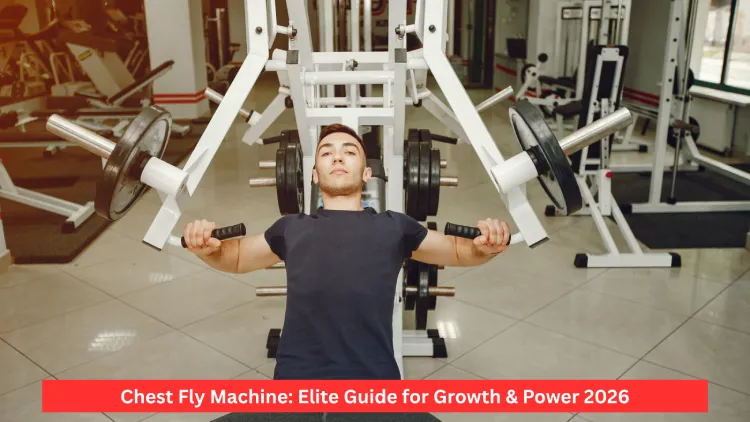

The chest fly machine is great for really targeting the chest and not relying on pressing work to be put on the shoulders or triceps. It provides a solid chest squeeze and is ideal for chest shaping, tightening, and finishing. It is not the best muscle-building workout, but when paired with good form and slow movements, it is very effective in building your chest definition.
- What is a Chest Fly Machine?
- Chest Fly Machine Muscles Worked
- Chest Fly Machine Form: Step-by-Step Guide
- Chest Fly Machine Benefits
- Chest Fly Machine Muscles Worked (Deep Insight)
- Chest Fly Machine Variations
- Chest Fly Machine vs Dumbbell Fly
- Common Mistakes in the Chest Fly Machine
- Chest Fly Machine Workout Tips
- Who is the Chest Fly Machine for?
- The Chest Fly Machine - Does it work?
- Final Thoughts
- Frequently Asked Questions
What is a Chest Fly Machine?
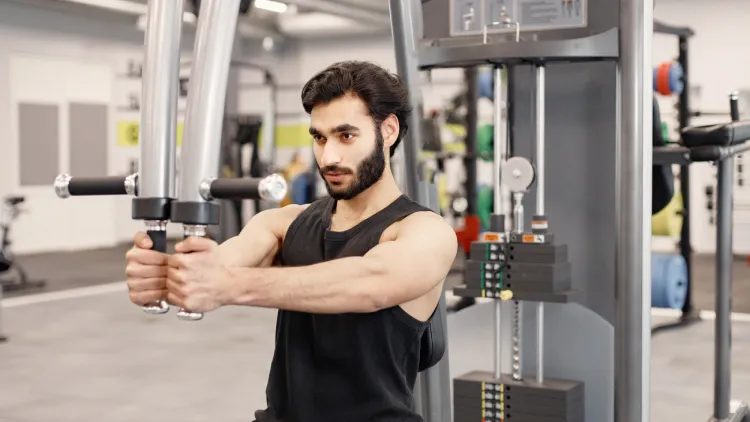
The chest fly machine is a gym machine that focuses on your chest with a measuring “hugging” sweep. It is also known as the pec deck machine chest fly and will help you perform the action of bringing your arms together while providing resistance for the specific area of muscle targeted, which is the chest.
The machine chest fly is safer, easier to control, and great for beginners – as opposed to free weights, it follows a fixed path.
Main purpose:
- Isolate chest muscles
- Promote good chest contour and appearance
- Minimize the use of the shoulder and triceps
- Ensure the training chest is safe and controlled
Chest Fly Machine Muscles Worked
The muscles used primarily activate in the direction of the pectoral region; other supporting muscles are engaged depending on the form and the type of machine used in the chest fly.
Primary Muscle:
Pectoralis Major
- Main driver of the movement
- Involved in the development of the thickness and size of the chest
- Activated 100% on the machine fly while in the squeeze position
Secondary Muscles:
- Pectoralis Minor: Stabilizes shoulder blades
- Anterior deltoids: Help move the arm.
- Biceps (Stabilizers): Assist with arms during the eccentric phase
Activation Breakdown:
- Stretch phase → outer chest fibers
- Mid-range → full chest activation
- Squeeze phase → inner chest peak contraction
One of the reasons why lifters experience a strong pump with moderate weights while performing the machine chest fly is due to the fact that it offers them strong resistance. One of the reasons why the machine chest fly provides strong resistance to the lift is that the muscle feels great when going at moderate weight. While presses engage many muscles, this specifically targets the chest.
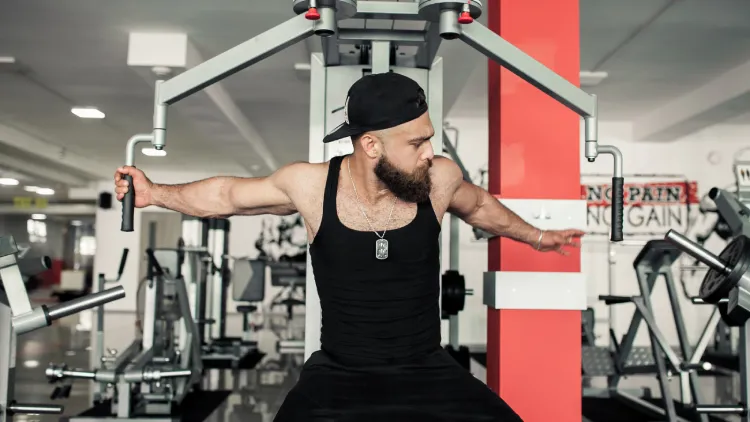
Chest Fly Machine Form: Step-by-Step Guide
The segregation between growing the chest and wasting effort lies in the proper and correct form of the chest fly machine. Unfortunately, even minor errors can alter the focus of tension towards the chest.
Step 1: Seat Height Adjustment
The proper chest fly machine seat height is very important. Handles should run through the mid-chest level. If it is too low, it creates a lack of chest movement and increases shoulder stress. If it is too high, it will lead to a lack of stiffness of the chest and increase shoulder stress.
Step 2: Body Positioning
- Sit with a straight back supported
- Avoid pointing toes and heels up to the sky
- Keep chest weakened (be careful not to exaggerate)
- Push core to serve as a foundation for stability
Step 3: Starting Position
- Open arms wide with controlled stretch
- Don’t go too deep to avoid injury to the shoulders
- Keep elbows somewhat bent
Step 4: Contraction Phase
- Bring arms together in a hugging motion
- Focus on squeezing the chest at the center
- Avoid using momentum
Step 5: Return Phase
- Slowly return to the starting position
- Maintain tension throughout the motion
Whether working with a cable chest fly machine, regular chest fly machine, or incline chest fly machine, this is deemed the correct machine fly machine form.
Chest Fly Machine Benefits
There are more advantages to the chest fly machine that go beyond just chest isolation. It is popularly made use of in body-building programs and fitness tasks to form and reinforce the upper limbs.
1. Superior Chest Isolation
The Chest Fly Machine takes quite a bit of the triceps out of the equation, leaving the chest to do the bulk of the work.
2. Safe for Beginners
The machine chest fly decreases the risk of injury and creates the stability of movement, compared with dumbbell chest flies.
3. Constant Muscle Tension
Resistance will not change while performing the exercise as it would during a free weight session.
4. Better Chest Definition
Promotes inner chest separation and symmetry in the chest.
5. Ideal Finisher Exercise
Most trainers are employing it at the end of training for the powerful chest pump.
Many people in the gym say that they feel their chest ‘pumping’ more on the chest fly machine than on the various pressing exercises. Many lifters state that the chest fly machine provides them with a deeper pump than chest presses.
Chest Fly Machine Muscles Worked (Deep Insight)
The muscles of the chest fly machine were dependent on pattern changes and angle variations to operate.
- Flat machine chest fly: overall chest development
- Incline chest fly machine: upper chest focus
- Lower chest fly machine: lower pec activation
Controlled stretching is a major component of the movement, as it is important for muscle fiber breakdown and hypertrophy.
This is why the weight of that chest fly machine gym setup can be very heavy, even if your weight is not heavy.
Chest Fly Machine Variations
Various forms of the chest fly exercise involve slightly different angles that target the chest, allowing you to develop a well-rounded chest. Using more than one type of chest fly with the machines will help build fibers of the upper, middle and lower pectorals. Different variations affect resistance angle and muscle emphasis; rotation is key to improving results.
1. Pec Deck Machine Side Deadlift
The most popular and fundamental pec deck machine chest fly is the most popular. The movement is carried out on padded levers, providing a stable and easy-to-control arm position.
Benefits:
- The UK performance of the Iron Plant is very good, and the plants are easy to grow
- Reduces shoulder strain
- Improves chest activation
- Information for learning from the form
- Strong finishing pump
Focus:
- Overall chest shaping
- High-rep hypertrophy (12–15 reps)
2. Plough Hand Gripper Working 1
Adjustable angles (high, mid, low), constant tension during the exercise, cable chest fly machine.
Benefits:
- Adjustable angles
- Constant muscle tension
- This provides a greater stretch than machines
- Natural movement path
- Improves chest symmetry
Focus:
- High fly → lower chest
- Mid fly → full chest
- Low fly → upper chest
3. Incline Chest Fly Machine
It’s a machine incline chest fly machine that focuses on the upper chest with resistance going up.
Benefits:
- Increases fullness at the top of the chest
- Improves chest shape
- Tightens flat chest look to balance
- Enhances aesthetics
Focus:
- Upper chest development
- Controlled strict reps
4. Lower Chest Fly Machine
The angle in the lower chest variation targets the lower half of the chest to open it up.
Benefits:
- Targets the lower chest
- Improves definition
- Adds chest thickness
- Enhances overall shape
Focus:
- Lower pec development
- Chest detailing
5. Lying Cable Crossarms Machine (Cable Variation)
This version is done on a bench and is a combination of free motion and constant tension.
Benefits:
- Strong chest stretch
- Continuous resistance
- Better muscle activation
- Improved control
Focus:
- Full-range chest training
- Deep contraction work
Chest Fly Machine vs Dumbbell Fly
The chest fly machine vs dumbbell comparison is relevant when making training choices.
Chest Fly Machine:
- Stable movement path
- Safer for joints
- Better isolation
- Easier for beginners
- Controlled resistance
Dumbbell Fly:
- Greater range of motion
- More stabilizer activation
- Higher injury risk
- Poorly sustained shape or posture
Most trainees in the real world perform both, but the machine kind of chest fly is better to get consistent hypertrophy work.
Common Mistakes in the Chest Fly Machine
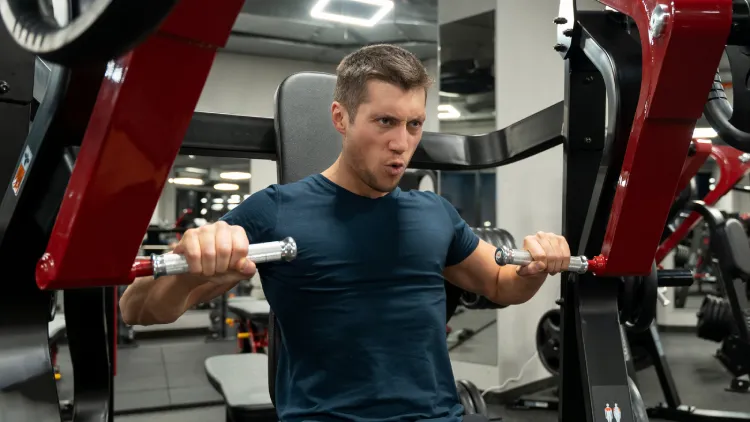
The Chest fly machine is not even used optimally by experienced fitness practitioners, which is slowing the activation of the chest muscles slower fitness advancement. The corrections help to improve the outcome of each set.
1. Using Excess Weight
- Reduces chest engagement
- Lifting and moving loads on shoulders and arms
- Breaks proper machine chest fly form
Fix: Moderate Weight, Control Each Rep
2. Fast Reps
- Eliminates pressure using the RYTM/WITCHA board.
- Weakens muscle activation
- Stimulates swinging in isolation or independently
Fix: Slow controlled/reps (2-3 seconds)
3. Overstretching
- Stresses the shoulder joints
- Can cause discomfort or injury
- Does not maintain proper range of motion
Fix: Only stretch until you feel a sense of tension but not pain in the chest.
4. Poor Seat Setup
- Misaligns chest with handles
- Reduces chest targeting
- Increases shoulder involvement
Fix: Always have handles at mid-chest level
5. Locked Elbows
- Transfer of load from the chest
- Increases joint stress
- Reduces isolation
Fix: Maintain elbows slightly bent all the time
6. Poor Control on Return Phase
- Reduces muscle tension
- Limits growth stimulus
Fix: Slowly return, but then keep resistance.
Chest Fly Machine Workout Tips
When training on the chest fly machine exercise, emphasize weight control, tension, and proper exercise technique rather than the weight. The aim is to fully engage the chest but not just the handles.
Use Moderate Weight with Strict Control
- Select about 50% of your body weight that you can move fluidly.
- Don’t use swing or momentum
- DO NOT allow the chest to drop during exercise
This will help activate the machine chest fly more and keep your shoulders from being involved.
Perform 10–15 Reps for Hypertrophy
- Great range to work with if you’re looking for muscle building
- Concentrate on slow, controlled movement
- Prevent form breakage by stopping at the red flag
With more repetition, the chest pump is better, and the shape and definition are improved with a better pump.
Slow eccentrics (2-3 seconds)
- Slowly lower handles/bares
- Take your time when doing the return phase
- Notice the stretch in the muscles of the chest
This provides a greater amount of time under tension and is a critical factor in the chest fly machine muscle-worked stimulation.
Rest at Peak Contraction
- Maintain a squeeze for 1-2 seconds
- At the exhale, concentrate on completely emptying the chest
- Don’t pull weights apart too far
This will enhance mind-muscle connection and chest activation.
Add to Compound Lifts
The chest fly machine is more effective when used towards the end of heavy pressing work. Strength and shape are both developed with this combination.
Maintain Proper Form Throughout
- Bend elbows at a right-angle
- Adjust the chest fly position on the machine to correct the machine seat height setting
- Avoid overextending your shoulders
When training, good form makes the training safe, and the chest is targeted safely.
Train with Consistency
- Do use the chest fly machine 2-3 times a week
- Keep track of progress in reps and control
- Slowly work on the speed and quality of contraction
If you want to have a well-developed and well-defined chest, consistency is the key.
Who is the Chest Fly Machine for?
Chest fly machine can be used for:
- A student teaching how to activate your chest at the beginning
- Enthusiasts who specialise in aesthetics
- Develop upper body balance with athletes
- Lifters with imbalanced chest development need to correct their situation.
This can be particularly useful with people having trouble “feeling the chest” while doing presses.
The Chest Fly Machine – Does it work?
Sure, the chest fly machine works when utilized appropriately. It is not to be used to replace compound movements, though.
The chest fly for the machine develops shape, definition and muscle isolation, while presses develop overall muscle mass. Rinse, pour and mix best together.
Many lifters don’t realize the great benefits that can be gained from the chest fly machine when used regularly; the obvious changes include gaining chest definition and tightening of the chest.
Final Thoughts
The chest fly machine is one of the best kept secrets to building up chest muscle but is barely used. While it does not seem to be the “king of all exercises,” it is one of the top-seeming isolation movements in a complete chest workout.
Correctly performed with chest fly machine form, proper seat height and slow tempo, works to improve chest symmetry, definition and connection.
The chest fly machine gym exercise program ought to be a steady routine of yours, along with pressing exercises, irrespective of whether you are seeking a fuller, tighter, and more elegant chest.
Frequently Asked Questions
1. Is the chest fly machine effective?
Yes, the chest fly machine is a fat burner for chest shaping and isolation. Though not as effective for building maximum mass as presses, it increases the definition, muscle control, and squeeze of the chest when performed with correct form.
2. Is chest fly machine a muscle building exercise?
Yes, this is a machine that builds muscle by developing tension in the chest. Primarily, it is a “hypertrophy” supplement, particularly when paired with compound movements such as the bench press.
3. What is the correct usage of a chest fly machine?
seat height to the level of your chest, elbows slightly bent, ease open arms, squeeze your chest gently in the centre and return under control without hastening.
4. Which chest area is it aimed at?
The chest fly machine muscles targeted primarily are the overall chest muscles, but through different angles, the upper or lower chest muscles are worked.