
Calf exercises help create stronger, more defined calf muscles, improve balance, and build lower leg strength to help enhance athletic performance. Calf stands, calf squats, single-leg extensions, weight step-up calf exercises, jumping rope, and bodyweight calf movements are all great options. Regardless of training style – whether exercise with dumbbells or in the gym – steady calf strengthening workouts, adequate recovery, and nutrition can aid in building larger, healthier, stronger calves, while also decreasing your chance of injury and enhancing general mobility.
- What Are the Calf Muscles?
- Some benefits of calf exercises
- Best Calf Exercises
- Calf Exercises at Home
- Calf Exercises for Muscle Growth
- Calf Exercises with Equipment
- Calf Exercises Gym Workouts
- Common Calf Training Mistakes
- How Many Times Can You Train Calves?
- Calf Health, Recovery, and Injury Prevention
- Conclusion
- Frequently Asked Questions
What Are the Calf Muscles?
The calf muscles in the back of the lower leg are important for walking, running, jumping, and moving up and down stairs, and are vital for maintaining balance. These muscles all coordinate to allow you to take every single step.
Gastrocnemius
- Larger calf muscle
- Visible lower-leg shape
- Used in sprinting/jumping
- Performs tasks with the knees and ankles.
Calves up to the ankle should be targeted and lifted by standing calf raises.
Soleus
- Deep calf muscle
- Supports walking/standing
- Improves endurance
- To be put into action when calf raises are performed seated
Helps ensure that calves are equally sturdy.Aids in calf strength and balance.
Why Strong Calves Matter
Strong calves improve:
- Walking efficiency
- Running speed
- Jumping performance
- Ankle stability
- Athletic performance
- Balance and coordination
- Injury prevention
- Overall leg aesthetics
Less vigorous calves can lead to less-than-sporty gaits, diminished sporting ability, and strains or ankle injuries.
Some benefits of calf exercises
Too many individuals do not realize how vital calf exercises are. Typically, larger muscle groups seem to steal the show, but calf muscle exercises can benefit you greatly in your everyday life and during exercise sessions.
Increased Strength
Routine calf strengthening exercises increase the forces that you can make with your lower legs. When you walk, run, and jump, strong calves will help you push off from the ground.
Better Athletic Performance
Calf training exercises are often a part of athletes’ routines, as their calves are important for running, jumping, acceleration, and sprinting.
Improved Balance
The calf muscles contribute to the stability of the ankle joint. Improved stability translates to greater stability, balance, and decreased falling risks.
Injury Prevention
Correctly strengthening the calf after injury can decrease the chances of future issues. Horses with very strong calves will have a better Achilles tendon and be able to take the impact force better.
Better Circulation
In humans, calf muscles transport blood toward the heart and are referred to as the body’s “second heart. This is especially helpful for those who are taught to stand for extended periods of time.
Enhanced Leg Appearance
Calf workout for Men and Calf workout for Women are done by many people, as a well-built calf is a balance and athletic pleasure.
Best Calf Exercises
When talking about the finest calf exercises, it’s important to make sure you pick exercises that activate the gastrocnemius and the soleus muscles.
1. Standing Calf Raises
Calf standalone raises are regarded as one of the very best calf workouts.
How to Perform:
- Keep your feet as wide apart as your hips, and stand up straight
- Lift heels as high as possible
- Take a short rest on top
- Slow up and go to the starting position
Benefits:
- Targets the gastrocnemius
- Improves ankle strength
- Can be performed anywhere
- Great to use for calf workouts without any equipment
Standing calf raises are regarded by many experts as one of the best calf exercises to stimulate muscle development.
2. Seated Calf Raises
Seated calf raises are one of the most beneficial seated calf exercises for working the soleus muscle.
How to Perform:
- Sit on a bench
- Do not allow feet to drop off the floor
- Hold hands to the knees, if needed
- Lift your heels
- Gradually return to the starting position
Benefits:
- Emphasizes the soleus
- Improves muscular endurance
- Complements standing calf raises
3. Single-Leg Calf Raises
Single-leg falls create challenges and help overcome unbalanced or swing-leg resistance.
Benefits:
- Improves balance
- Develops unilateral strength
- Enhances ankle stability
- Bodyweight calf movement is effective for both of these exercises.
4. Jump Rope
The jump rope is a combination of cardio and strengthening the calves.
Benefits:
- Improves endurance
- Increases calf activation
- Supports athletic development
- This is a great calf pump workout alternative
5. Farmer’s Walk on Toes
The toe-walking effect with holding weights causes constant tension on the calves.
Benefits:
- Builds endurance
- Enhances balance
- Strengthens ankles
6. Box Jumps
Box jumps are some great Plyometric Calf exercises.
Benefits:
- Improves explosiveness
- Enhances athletic performance
- Develops lower-body power
7. Stair Calf Raises
These are some of the best exercises for developing the calf muscles, as they are able to be performed with proper ranges of motion.
Benefits:
- Deep stretch
- Improved muscle activation
- Better flexibility
Calf Exercises at Home
Many of the best calf training moves at home will actually need no equipment, as one of the biggest benefits of calf training is that it can be done at home. Strength, endurance, and muscle tone can be developed through simple body weight and/or normal household movements, such as using stairs. All of these exercises work on the calves at home and can be done by beginners or advanced trainees.
Bodyweight Calf Raises
Getting the lower legs and legs strong is one of the easiest and most effective bodyweight exercises you can perform. They can help fire up the big calf muscles and provide general stability.
- May be performed in any location
- Develops foundations of physical stamina and power
- Great for beginners
Single-Leg Calf Raises
Single-leg variations energize and work to balance out muscle imbalances between both legs. They also help to enhance balance and ankle stability.
- No equipment needed
- Increases difficulty
- Develops balance and control
Toe Walks
The footwork of a toe walk allows one to place a constant strain on the calf muscles and increase the endurance of muscles under tension.
- Builds calf endurance
- Strengthens ankles
- Improves stability
Stair Calf Raises
Stair-step provides more motion and so will activate and stretch muscles more effectively.
- Deep muscle stretch
- Improved range of movement
- Stronger calf contraction
Jump Rope
One of the best rope calf pump exercises is basically a continuous calf pump combined with cardio, making it more effective than other exercises.
- Improves endurance
- Boosts coordination
- Fats a training calf during training
These at-home calf workouts are uncomplicated, but they are really effective to help you create more sturdy, defined calves without investing in any gym gear.
Calf Exercises for Muscle Growth
For size purposes, emphasis should be on calf exercises to build mass and volume, intensity, and progressive overload.
Progressive Overload
To stimulate growth:
- Increase resistance
- Increase repetitions
- Increase training frequency
- Enhance ROM and flexibility
Train both major muscles
For maximum development:
- Gastrocnemius: Standing calf raises work this muscle
- The soleus is the muscle that is worked on in seated calf raises
Use Different Rep Ranges
Calves are adapted to the following:
- 8–12 reps for strength
- 12–20 reps for hypertrophy
- 20–30 reps for endurance
This is just one of the most effective calf exercises for mass that many bodybuilders recognize.
Calf Exercises with Equipment
Calf Exercises with Dumbbells
Dumbbell calf workouts are great for progressive overload.
Examples include:
- Standing dumbbell calf raises
- Single-leg dumbbell calf raises
- Calf raise with dumbbells
These dumbbell calf exercises are versatile and can be done anywhere—in a gym or at home.
Kettlebell Calf Exercises
There are special loading opportunities provided with kettlebells.
Examples:
- Kettlebell calf raises
- A walk on the toes of the farmer’s feet
- Single-leg kettlebell raises
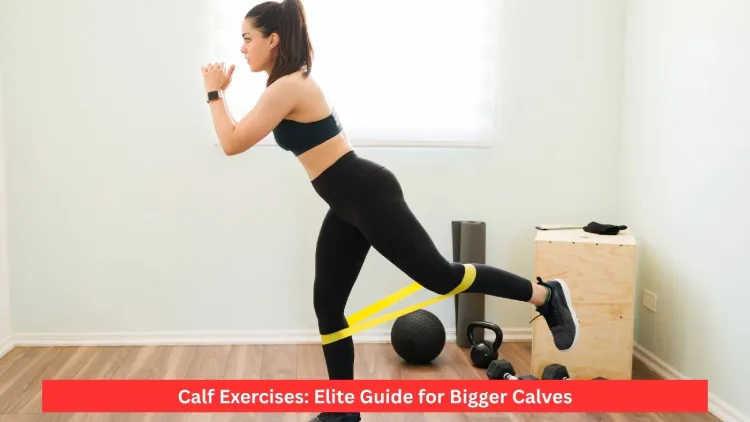
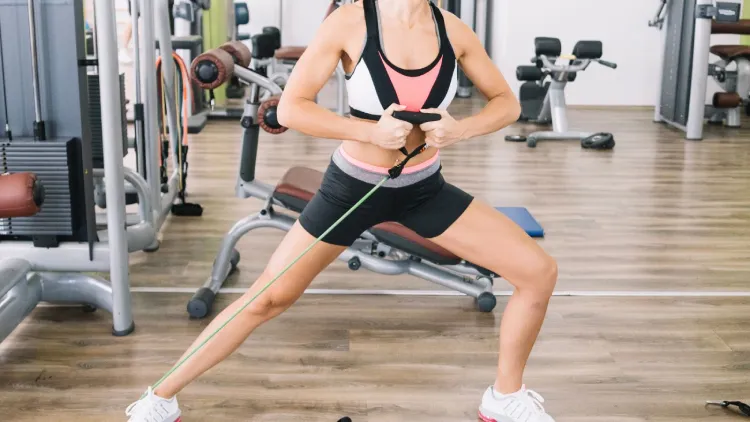
Calf Exercises with Resistance Bands
Calf resistance band exercises offer changing resistance during the exercise.
Benefits include:
- Portable equipment
- Joint-friendly resistance
- Suitable for rehabilitation
Calf Exercises on a Cable Machine
Cable machine calf exercises continually apply tension and are popular with bodybuilders who are looking for more advanced muscle development.
Calf Exercises Gym Workouts
A good calf exercise gym routine could incorporate:
- Calf Raises Machine
- A machine for calf raises that is seated.
- Gain some lower leg width by performing a leg press calf raise.
- Calf raises with a Smith machine.
- Cable calf raises
These exercises for the calf can be performed in the gym, and if you’re aiming for the pinnacle of muscle growth, this is the capacity you need to provide them with more weight.
Common Calf Training Mistakes
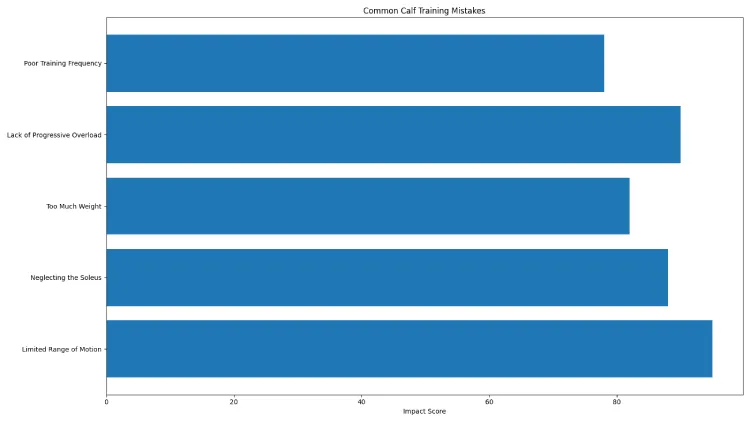
Limited calf development is a common problem among people failing to grow a good quality product due to failed actions on the part of the producer.
- Limited Range of Motion: Partial repetitions decrease muscle activation by a significant amount.
- Neglecting the Soleus: With just standing, there are no movements, so it does not develop the soleus.
- Too Much Weight: When there is too much weight, bad technique, and less muscle usage are common consequences.
- Poor Frequency: Too many people are either under- or over-training calves.
- Lack of Progressive Overload: Muscles strengthen when they are regularly stimulated.
How Many Times Can You Train Calves?
A common question is whether calves can be trained daily.
Calf muscles are active throughout the day and have good endurance and recovery capacity. But the optimum response is usually from two to four times a week of calf training.
For more advanced athletes, these protocols can be more complex and involve a more in-depth rotation applying different levels of intensity into the week, for example, with the multi-day popular 3-2-1 protocol, which pairs heavy, moderate, and high-repetition based training.
Calf Health, Recovery, and Injury Prevention
A healthy calf feels strong and stable and is able to apply force without discomfort. Weakness can manifest itself as difficulty balancing, shortness of jump, fatigue early, or a consistent history of ankle problems.
Calf Stretching Exercises
Calf stretches can help increase flexibility and decrease tightness.
Examples include:
- Wall calf stretch
- Runner’s stretch
- Downward dog stretch
- Stare calf stretch
Eccentric Calf Exercises
For strengthening tendons, eccentric calf exercises are beneficial, which are characterized by slow lowering movements.
While some of these exercises are suggested for Achilles tendon problems and knee rehabilitation, they can also be beneficial for this area.
Calf Exercises for Achilles Tendonitis
Effective options include:
- Eccentric heel drops
- Controlled calf raises
- Ankle resistance band exercise
Calf Strain Exercises
Those recovering from injuries may benefit from gentle calf strains, increasing the intensity of their movements slowly from mobilising to strengthening.
Pulled Calf Muscle Rehab Exercises
The goals of rehabilitation should be to:
- Pain-free movement
- Controlled loading
- Gradual progression
Relaxation and recovery.Easing, straightening.
Conclusion
Calf exercises are some of the most beneficial yet underestimated in a well-rounded fitness routine. But no matter whether your aim is increased performance or massive calves, improved mobility, recovery from injury, or simply stronger, more defined legs, consistent training can yield amazing results. Add in standing calf raises, seated calf raises, bodyweight calf exercises, dumbbell calf exercises, resistance band calf exercises, and calf strengthening exercises to build stronger, healthier, and more resilient calves. Emphasise correct exercise form, progressive overload, recovery training, and exercise balance to achieve long-term success.
Frequently Asked Questions
1. What are the best calf exercises?
Standing calf raises, seated calf raises, single-leg calf raises, jump rope, and stair calf raises are the best calf exercises. These movements focus on both the gastrocnemius and the soleus to obtain balance in strength and growth of these muscles.
2. Is the yearling training daily feasible?
You can train the calves a lot, but working out every day isn’t a good idea for most of us. Typically, 2 – 4 times a week is ideal, ensuring the calves have the time they need to recover between sessions whilst still creating the muscle stimulation they require.
3. What quick and easy method is there for developing larger calves?
Add progressive overload and extensive ROM, and incorporate bodyweight/weighted training to develop larger calves. The two different types of squats, coupled with dumbbells or gym machines, can help enhance calf development.
4. Why is it that calves do not develop as easily as other muscles?
A calf is difficult to raise, as the calf has a high usage rate for activities such as walking and standing in daily activities. They need more volume, intensity, and variation of training to cause any changes in the muscle.