
When working properly, the gluteus minimus aids in walking and running, and stabilizes your pelvis, helping to avoid lower-body pain. As it weakens, tightens, or becomes injured, it can lead to pain in the hip, knee, and lower back, and cause balance problems. Treatment is typically directed at strengthening exercises, mobility exercises, posture correction exercises, and sometimes rest and/or physiotherapy. With consistent and appropriate treatment, most people get better over a period of weeks to months.
- What is the Gluteus Minimus?
- Anatomy of the Gluteus Minimus
- Functions of the Gluteus Minimus
- Why the Gluteus Minimus is Important
- Symptoms & Problems: Weak or Injured Gluteus Minimus
- Best Exercises for Gluteus Minimus Activation
- Gluteus Minimus vs Gluteus Medius
- Role of Gluteus Minimus in Sports and Fitness
- How to Strengthen the Gluteus Minimus Effectively
- Common Mistakes During Training
- Gluteus Minimus Pain Treatment & Recovery
- Medical diagnosis and guidance
- How to Loosen Tight Gluteus Minimus
- What Happens When the Gluteus Minimus is Weak
- Can a Gluteus Minimus Tear Heal Without Surgery?
- What to Avoid with a Gluteus Minimus Injury
- Conclusion
- Frequently Asked Questions
What is the Gluteus Minimus?
Gluteus Minimus is the smallest buttock muscle and is the deepest of the gluteal muscles. Although it is under the cover of bigger muscles, it has a significant influence on hip control and lower body mechanics.
The gluteus minimus acts closely with other hip muscles to control movement in the thigh bone and pelvic stability during normal movement such as climbing, running, climbing stairs, walking, and standing on one leg. The body becomes unstable and unable to move efficiently and without pain without a functioning Gluteus Minimus.
This is a muscle that is frequently neglected during workouts, but is one of the most critical stabilizers as a whole for the lower body system.
Anatomy of the Gluteus Minimus
The gluteus minimus is the deep underlying part of the gluteus medius and is shaped like a fan. It has fibers that radiate in various directions to regulate a variety of hip directions.
Key anatomical features:
- Coming from the exterior surface of the ilium
- Clings onto the large knob at the hipbone of the femur
- Controlled by the superior gluteal nerve
- Is below the gluteus medius
- Works as part of the hip abductor system
Due to its deep location within the pelvis, problems arising in the gluteus minimus can be confused with general hip or back problems.
Functions of the Gluteus Minimus
The gluteus minimus plays several important functions that impact posture, motion, and joint health.
1. Hip stabilization
The main role of the gluteus minimus is to stabilize the pelvis as it moves through space. The muscle pulls up against the force of gravity when you put your leg on the ground.
2. Hip abduction
Helps to move the leg away from the mid-body line. This step is essential for walking, running, and side-stepping.
3. Internal rotation
The gluteus minimus helps to rotate the thigh inwards and aids in controlling the movement and alignment of the hip.
4. Posture control
The gluteus minimus helps stabilize the pelvis, maintain the correct pelvic posture, and encourages upright posture to reduce stress on the back of the pelvis and along the spine.
5. Movement efficiency
If it’s doing its job well, the gluteus minimus lowers energy loss during walking and aids athletic performance.

Why the Gluteus Minimus is Important
The gluteus minimus is an underutilized muscle of everyday activity. Although it is a tiny deep hip muscle, it plays an important role in maintaining the stability of the pelvis, supporting balance, and smooth and controlled movements when walking, running, and standing on one leg.
It constantly collaborates with other hip muscles for the proper alignment of the lower part of the body. Under optimal performance, it moves efficiently and stably. If it becomes weak or dormant, though, improper control is lost, and the body begins to adapt – other muscles have to pick up the slack – which can cause discomfort over time and even lead to injury.
When the gluteus minimus is weak or inactive, it can cause:
- The tendency to walk poorly and instead rock back and forth
- Instability in the hip, particularly when performing certain activities on one leg
- Stress placed on the knees and lower back is elevated in this case
- Poor or diminished athletic or physical activity ability or endurance
- Increased risk for recurrent lower leg pain or injury
These problems may impact posture, movement capabilities, and movement quality in daily activities over time.
Symptoms & Problems: Weak or Injured Gluteus Minimus
A weakness, tightness, or injury of the gluteus minimus can result in a plethora of symptoms that can be mistaken for various other conditions.
Common symptoms
- A pain deep in the side or back of the hip
- Pain lying on the painful side
- Difficulty walking or standing for extended periods of time due to pain
- They are often a cause of knee pain due to poor alignment
- Lower back tension
- When the stance is unbalanced, with one leg being shorter than the other
If the gluteus minimus is weak, it is likely that it is asking all of the other muscles to take on more of its work in order to balance, particularly the muscles in the lower back and thigh.
Causes of pain
- Prolonged sitting
- Poor posture
- Uses the same muscles repeatedly while running or playing sports
- Having an imbalance between the glutes and hip muscles
- An infusion of pressure into the training
- Weak core stability
What is the reason that pain is worse at night?
While sleeping, gluteus minimus pain tends to intensify due to the following reasons:
- When a person is lying on the affected side, they feel pressure
- The flow of blood diminishes at rest
- When muscles are tight, they are not dynamically active (engaged)
- Inflammation is more visible when at rest
Signs of a more serious issue
- On motion, it will be a sharp pain
- Chronic pain lasting for weeks
- Inability to lift the leg with strength
- Spread pain down the leg
These can be signs of stretching or partial tearing of the gluteus minimus muscle and should be further assessed by a professional.

Best Exercises for Gluteus Minimus Activation
Exercises are a required part to stretch and tighten the gluteus minimus.
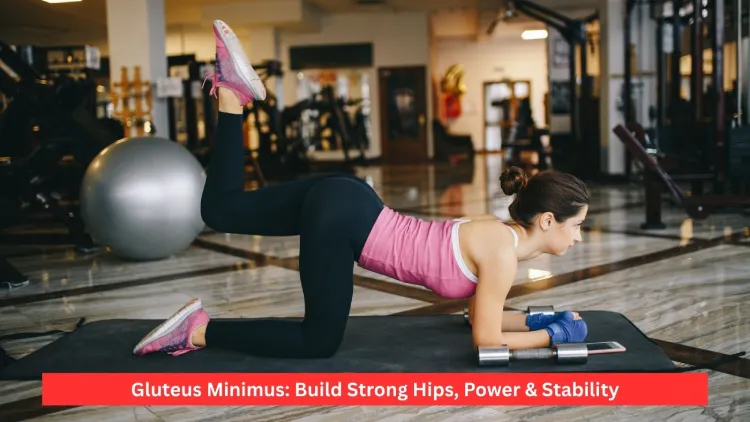
1. Side-lying leg raises
This is one of the best methods that can be used to stimulate the gluteus minimus. Slow and controlled movement is key.
2. Clamshells
This exercise helps to build strength in the gluteus minimus as well as in the stabilizing muscles around the glutes.
3. Resistance band sidewalks
These work on hip stabilisation and activate deep gluteal muscles.
4. Single-leg balance drills
These cause the gluteus minimus to keep the pelvis stable when loaded.
5. Hip abduction movements
Machine/band-based abduction for the hips adds to lateral hip support.
6. Standing hip hikes
This directly tests the stability of the pelvis with a lot of gluteus minimus involved.
Gluteus Minimus vs Gluteus Medius
The gluteus minimus and the Gluteus Medius work together closely, but they have different roles.
| Feature | Gluteus Minimus | Gluteus Medius |
| Depth | Deepest layer | Middle layer |
| Size | Smaller | Larger |
| Stability role | Fine control | Major support |
| Movement control | Rotation + stability | Abduction + balance |
Both muscles must work together for proper hip function. If one weakens, the other compensates.
Role of Gluteus Minimus in Sports and Fitness
The glutes’ minimum is crucial for athletes’ performance and the prevention of injuries.
Sports benefits
- Improves running efficiency
- Enhances jumping stability
- Helps to make rapid direction changes
- Helps to lower your chances of knee injuries
- Improvements in single-leg sports movements for balance.
It allows a smoother and more controlled overall effect when the gluteus minimus is developed.
How to Strengthen the Gluteus Minimus Effectively
It takes patience and proper form to strengthen the gluteus minimus.
Training principles
- Work on slow, controlled movements
- Train equally on both sides
- Apply light-resistant before heavy loads!
- Activate before workouts
- Work out 2-4 times a week
Trained glutes need to be strengthened gradually if the gluteus minimus is weak.

Common Mistakes During Training
The gluteus minimus is often under-activated by users because of improper exercise technique.
Common errors
- Forcing through instead of allowing the momentum to take over
- Allowing for hip rotation in exercises!
- Ignoring warm-up activation
- Putting too much weight on before lifting weights
- Not engaging the core
It is better to use the correct form than intensity when working on the deeper stabiliser muscles.
Gluteus Minimus Pain Treatment & Recovery
The treatment depends on whether the problem is tightness, strain, or some slight tearing.
Basic recovery methods
- Make sure to take time to rest from any strenuous activity
- Ice for inflammation
- Muscle tightness heat can help resolve the problem
- Gentle stretching
- Gradual strengthening exercises
Massage & soft tissue therapy
Massage will help relieve tension in the gluteus minimus so long as it is conducted carefully. Irritation can be aggravated by using the wrong technique or by applying deep pressure.
Where it’s possible, a trained physiotherapist is the safest choice to perform deep glute work. Self-massage with a ball can also be beneficial, but needs to be done with caution so as not to put too much pressure.
Sleep and positioning
A good sleeping position will minimise stress to the gluteus minimus. The best positions include:
- Lying on the back with a pillow under the knees
- Lying on the non-painful side with knees made level; use a pillow to support the knees. Position a pillow between your knees while lying on your side without the pain.
This can help to decrease hip compression and ease the muscles to soothe during sleep.
What to avoid
- Staying for extended periods without rest
- Squat during flare-ups of pain (deep)
- Runners go through sharp pain
- Overstretching inflamed tissue
- Ignoring early symptoms
Healing time
Recovery time varies:
- Mild strain: 2–4 weeks
- Moderate strain: 4–8 weeks
- Rupture (tear): 12–16+ weeks
If properly treated with physiotherapy, in many cases, a partial tear in the Gluteus Minimus will heal without surgery.
Medical diagnosis and guidance
A gluteus minimus problem is typically diagnosed by observing and testing the motions of the body.
How it is tested
- Standing up with one foot on the ground for 5 seconds
- Hip abductors resistance test
- Palpation for tenderness deep in the hip area
- Movement pattern analysis
If there is a possibility of a tear, imaging may be obtained, such as an MRI.
Which doctor to consult
- Orthopedic specialist list
- Sports medicine doctor
- Physiotherapist
They all know how to make an accurate diagnosis of deep hip muscle problems.
Signs of more serious hip problems
Sometimes, chronic gluteus minimus pain can be found along with early signs of hip degenerative disease.
Signs include:
- Persistent stiffness
- Increased hip range of motion
- A grinding or crunching noise in the joint
- Persistent pain, even while lying or resting
Do not self-diagnose these symptoms; they need to be professionally assessed.

How to Loosen Tight Gluteus Minimus
If the gluteus minimus is tight, it can benefit from a combination of mobility and activation exercises.
Effective methods:
- Gentle Stretching (Hip Cross-over stretch)
- Roll the side hip muscles with a foam roller
- Trigger point release using a massage ball
- A Walk to Improve Circulation
- Practice sessions before training
Do not cross-stretch if there is inflammation present.
What Happens When the Gluteus Minimus is Weak
When the luteus minimus is weak, it causes a domino effect in the body.
- Pelvic instability
- Knee misalignment
- More back pain in the lower part of the back
- Poor athletic performance
- An increased chance of being harmed
The body adapts by using other muscles more, and a long-term imbalance occurs.
Can a Gluteus Minimus Tear Heal Without Surgery?
Yes, early treatment of most gluteus minimus tears is likely to result in healing without surgery.
Conservative treatment includes:
- Rest
- Physiotherapy
- Progressive strengthening
- Anti-inflammatory management
Usually, no surgery is required, even if there is a large tear, unless there are other tissue injuries.
What to Avoid with a Gluteus Minimus Injury
When recovering, it is key to refrain from:
High-impact running
- Deep hip/knee deep movements, or lunge under pain,
- Sitting for long periods of time
- Sudden lateral movements
- Heavy resistance training at an early age
Know how to avoid them to minimize re-injury.

Conclusion
The gluteus minimus is a small—but important—muscle with a big role to play in hip stability, control, and prevention of injuries. When it is robust, motion is well-balanced and efficient. It can cause pain in the hips, knees, and lower back if he’s weak or injured.
Maintaining proper training, posture correction, and progressive strengthening is best suited to restore function. Treatment is usually conservative and is accomplished with regular rehab, but in most cases, surgery is not needed.
The gluteus minimus can be one of the most vital general stabilising muscles in the human body, contributing to walking, running, and athletic performances.
Frequently Asked Questions
1. What makes the gluteus minimus painful?
It is primarily caused by excessive use, prolonged seating, poor posture, and weak hip muscles, which have to pick up the slack.
2. What is the length of the recovery?
Symptoms resolve after 2–4 weeks in people with mild symptoms and 8–12 weeks in those with more serious symptoms.
3. Which exercises does it benefit?
Side leg raises, clamshells, band walks, hip abductions, and single-leg balance.
4. Is there an opportunity to repair it without operating on it?
Yes, the majority of cases get better with rest, physiotherapy, and strengthening. Surgery is not necessary very often.