
Lat stretches loosen the lat and increase back flexibility, making overhead movements easier. Do these seven easy stretches at home using a wall, chair, or exercise mat.
- What are Lat Stretches?
- How to feel tightness in your lats?
- 7 Best Lat Stretches You Can Try
- Which Lat Stretch Is Right for You?
- Benefits of Lat Stretching
- Common Lat Stretch Mistakes
- How long do you hold lat stretches?
- Should You Stretch Before or After a Workout?
- Who Should Avoid Lat Stretches?
- Conclusion
- Frequently Asked Questions
What are Lat Stretches?
Lat stretches are exercises that work to stretch your latissimus dorsi, also known as your “lats.”
The large, wing-like muscles that stretch from your lower and middle back to your upper arms. These assist in drawing arms downwards, backwards, ds and towards the body.
Your lats can be working with normal activities such as a pull-back. They also help with activities like pull-ups, rows, and swimming.
If your lats are really tight, lifting your arms overhead can be tight. But sometimes your lower back curves, compensating for that limited movement.
But if your shoulders are stiff, it’s not necessarily a sign of tight lats. Other muscles, your previous injuries, and joint mobility are also factors in how easy or difficult it is to reach overhead comfortably.
How to feel tightness in your lats?
A common symptom is a side pulling sensation in your back when you raise your arms overhead.
You may notice it when you’re grabbing a cupboard, doing an overhead press, or stretching your arms overhead.
Other possible signs include:
- Problems lifting arms to a comfortable height.
- Strained muscles on the outside of the back or under the armpit.
- Overarching of the lower back while overhead.
- Restriction or limitation of the range of motion with some pulling or reaching movements.
These feelings are not a guarantee that your lats are shortened. If you have pain or your movement is consistently limited, a skilled healthcare professional will be able to help you find out what’s going on.
7 Best Lat Stretches You Can Try
You don’t need to perform every exercise in one session. Start with one or two that feel comfortable and gradually explore the others.
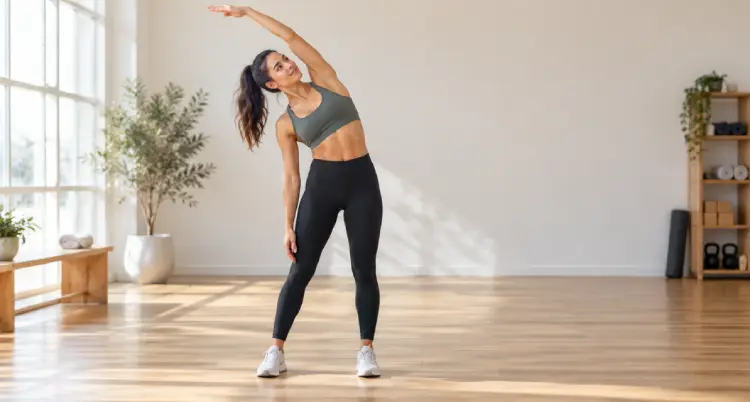
1. Standing Overhead Lat Stretch
The standing overhead lat stretch is one of the easiest ways to target your lats without equipment.
How to do it:
- Stand with your feet approximately shoulder-width apart.
- Raise your right arm overhead.
- Gently bend your upper body toward your left side.
- Keep your hips relatively stable and avoid twisting.
- Hold for 15–30 seconds, then switch sides.
You should feel a gentle stretch along the right side of your torso, potentially extending toward your armpit.
Helpful tip: Keep your movement small. Leaning farther doesn’t necessarily produce a better stretch.
Best for: Beginners, office workers, and quick stretching breaks.
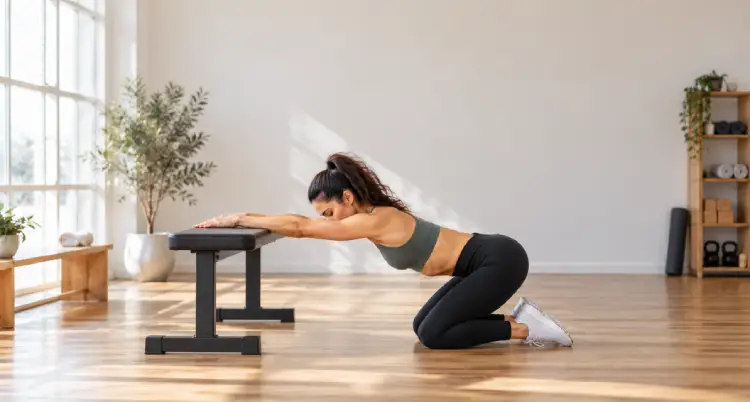
2. Kneeling Bench Lat Stretch
This variation uses a stable bench or sturdy surface to support your arms.
It’s particularly useful when you want to stretch both sides of your back together.
How to do it:
- Kneel on a comfortable mat in front of a secure bench.
- Place your elbows or forearms on the bench.
- Slowly move your hips backward.
- Allow your chest to lower gently between your arms.
- Stop when you feel comfortable tension along your sides.
- Hold for 15–30 seconds.
Keep your lower back controlled rather than allowing it to arch excessively.
Helpful tip: If kneeling bothers your knees, choose a standing wall stretch instead.
Best for: People looking for a supported upper-body stretch.
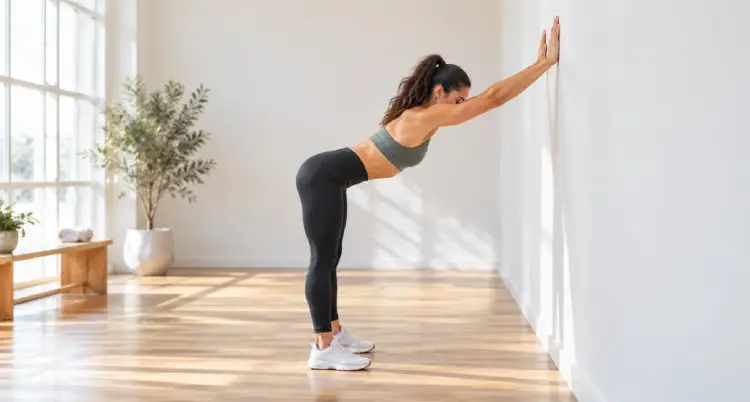
3. Wall Lat Stretch
You can do a wall lat stretch almost anywhere you can find a wall, so it’s a convenient exercise.
How to do it:
- Face a wall, about an arm’s length from the wall.
- Place both hands on the wall above shoulder height.
- Slowly step backward.
- Bend from your hips with the hands supported.
- Relax your chest slightly until you feel tension in the upper sides.
- Hold for 20–30 seconds.
- Don’t force or press shoulders into an awkward position.
To get a deeper stance, press your feet closer to the wall, or if you have a lot of arch in your lower back, make it less deep.
Useful hint: If it is easier for you to maintain this position with slightly bent knees, do so.
Ideal for: At-home workouts and those who want to work while standing.
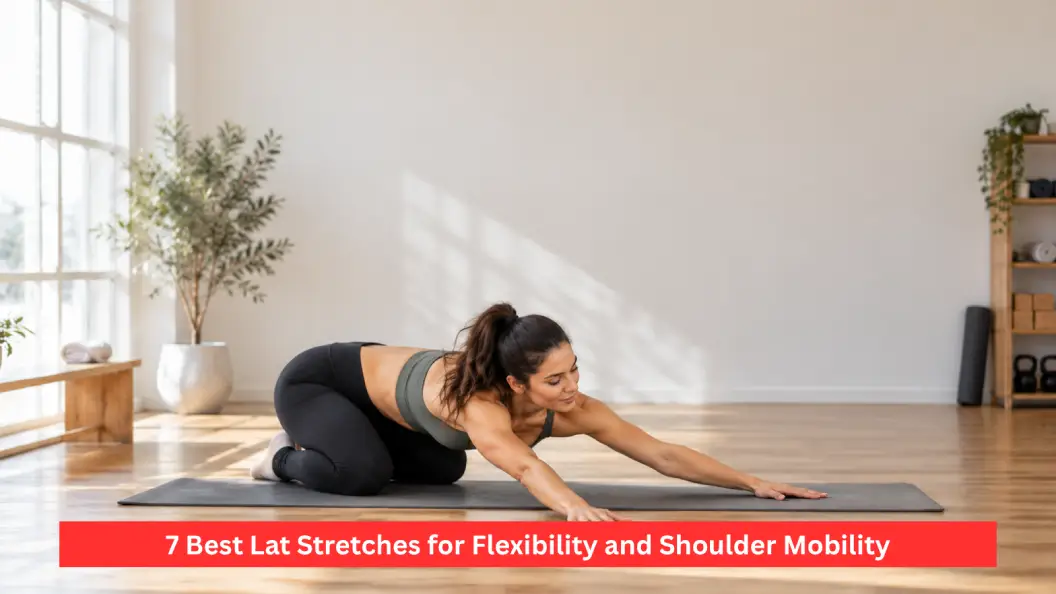
4. Child’s Pose With Side Reach
Child’s pose is a familiar yoga position. Adding a gentle side reach can emphasize one side of your back.
How to do it:
- Kneel on an exercise mat.
- Move your hips gently toward your heels.
- Reach both arms forward and lower your torso comfortably.
- Walk your hands a short distance toward the left.
- Hold for 15–30 seconds.
- Return to the center and repeat toward the right.
Moving your hands left may increase the stretch along the right side of your back.
Helpful tip: Place a folded blanket beneath your knees if needed. Don’t force your hips toward your heels.
Best for: Gentle stretching sessions and people comfortable kneeling.
5. Doorway Lat Stretch
A sturdy doorway can provide support for a single-arm lat stretch.
How to do it:
- Stand beside a secure doorway.
- Reach your right arm overhead and hold the fixed doorframe.
- Keep your grip comfortable and your feet firmly planted.
- Gently move your hips backward and slightly away from your raised arm.
- Stop when you feel a mild stretch along your right side.
- Hold for 15–20 seconds, then change arms.
Don’t hang your body weight from the frame or pull against loose trim.
Helpful tip: If the doorway position causes shoulder pinching, try the standing side-bend stretch instead.
Best for: People wanting a simple single-arm variation.
6. Seated Overhead Side-Bend Stretch
This one can be especially handy if you spend a lot of time at your desk.
Can be done from a stable chair.
How to do it:
- Sit up straight with both feet on the floor.
- Extend your right arm up overhead.
- Slowly bend to the left side.
- Both hips are touching the chair.
- Hold for 15–30 seconds.
- Come back to center and repeat on the other side.
- There should be a gentle stretch on the side of the upper body.
Helpful tip: Be sure not to turn your chest towards the ground. Work on a lateral movement with control.
Ideal for: Desk workers and beginners – seated stretchers.
7. Resistance Band Lat Stretch
A resistance band provides another way to explore a controlled overhead position.
Use a light band attached to an appropriate, secure anchor.
How to do it:
- Attach the band to a professionally designed overhead anchor.
- Hold the band with one hand.
- Step backward until the band has light tension.
- Gently shift your hips backward while allowing your arm to reach forward and upward.
- Keep your torso controlled and your shoulder comfortable.
- Hold for approximately 15–20 seconds before changing sides.
Avoid placing excessive force on the band.
Helpful tip: Inspect the band and anchor before use. A damaged band or unstable anchor can cause injury.
Best for: People familiar with resistance-band exercises.
Which Lat Stretch Is Right for You?
| Stretch | Best suited for |
| Standing overhead | Beginners and quick breaks |
| Kneeling bench | Supported bilateral stretching |
| Wall stretch | Simple home mobility |
| Child’s pose | Gentle floor stretching |
| Doorway | Single-side stretching |
| Seated side bend | Desk workers |
| Resistance band | Controlled equipment-based stretching |
The best option is the one you can perform comfortably with consistent technique.
Benefits of Lat Stretching
Lat stretches can support flexibility and comfortable upper-body movement when practiced regularly.
1. Helps Improve Flexibility
Stretching places your muscles into lengthened positions.
Over time, consistent flexibility training can improve your tolerance for these positions and may increase your available range of motion.
The goal is gradual progress rather than forcing a deeper stretch.
2. Supports Overhead Shoulder Movement
Your lats help control arm movement and can influence how you raise your arms overhead.
If limited lat flexibility contributes to your restriction, stretching may help you move more comfortably.
However, shoulder mobility also depends on your shoulder joints, shoulder blades, and surrounding muscles.
3. Complements Strength Training
Pull-ups, rows, and pulldowns all involve your lats.
Including stretching alongside strengthening gives your upper-body routine a flexibility component.
It won’t replace proper training technique or guarantee improved lifting performance, but it can be a useful addition.
4. Offers a Movement Break
Long periods at a computer can leave your upper body feeling stiff.
Standing up, reaching overhead, and moving gently provides a change from your usual seated position.
Stretching isn’t a cure for back pain, but it can fit into a broader routine of regular movement and exercise.
5. Fits Into a Simple Routine
Most lat stretches require little equipment.
You can practice them at home, at work, or after exercise.
Consistency matters more than completing a complicated routine.
Common Lat Stretch Mistakes
A few simple errors can make stretching less comfortable.
Arching Your Lower Back
Excessive lower-back arching may compensate for limited overhead movement.
Fix: Gently engage your abdominal muscles and reduce the depth of the stretch.
Forcing Your Arms Overhead
Lifting your arms beyond a comfortable range can create shoulder discomfort.
Fix: Move slowly and stop before you experience pinching or pain.
Shrugging Your Shoulders Forcefully
Some people tense their neck and shoulders while trying to stretch farther.
Fix: Avoid unnecessary tension and let your shoulder blades move naturally.
Holding Your Breath
Holding your breath often makes an already demanding position harder to control.
Fix: Relax your breathing and reduce the stretch if needed.
Using Unstable Support
A moving chair, loose doorway frame, or poorly secured band can make supported exercises unsafe.
Fix: Choose sturdy equipment designed to handle the exercise.
How long do you hold lat stretches?
If you’re new to the stretch, start with a comfortable stretch that you can hold for 15-30 seconds.
Repeat the exercise 1 or 2 times per side, depending on the exercise.
Begin 2-3 times a week and increase or decrease depending on how your body reacts.
General recommendations for stretching emphasize slow and controlled flexibility exercises rather than “crazy” movements.
No need to maintain a painful stretch position or stretch one muscle for several minutes.
Should You Stretch Before or After a Workout?
Start with gentle, dynamic activities to warm up shoulder girdles before strength training.
These static stretches can be more suitable after training or as part of a dedicated flexibility session, depending on the length of the stretch.
A controlled arm motion and/or a shorter static hold might be more beneficial than an extended static hold if you’re practicing overhead presses or pull-ups.
Who Should Avoid Lat Stretches?
Lat stretching isn’t appropriate for every situation.
If you have a recent shoulder injury, muscle tear, surgery, or significant pain, seek professional guidance before attempting these exercises.
Stop immediately if you experience sharp pain, numbness, tingling, or uncomfortable joint pressure.
A gentle stretching sensation is normal. Pain inside your shoulder joint isn’t something to ignore.
Conclusion
Lat stretches are a practical way to work on upper-body flexibility and comfortable shoulder movement.
Start with simple exercises such as the standing overhead stretch or wall stretch. Focus on good form, controlled breathing, and a comfortable range rather than trying to stretch as far as possible.
With consistent practice, these movements can become a useful part of your fitness routine.
For more beginner-friendly flexibility advice and stretching ideas, explore Stretchlee and build a routine that suits your needs.
Frequently Asked Questions
What Is the Best Stretch for Tight Lats?
These basic lat stretches can be performed while standing overhead or supported at the wall. Use whichever will make it easy to move about without hurting the shoulder.
Can You Stretch Your Lats Every Day?
Some people may benefit from gentle daily stretching, but this isn’t necessary. Begin with a couple of sessions a week and work up to it.
Do Tight Lats Affect Shoulder Mobility?
They may be a source of limited overhead motion. Shoulder mobility, however, relies on a number of muscles and joints, so it is not always due to tight lats.
How Long Does It Take to Improve Lat Flexibility?
The progression depends on how well one is able to start, technique, and consistency. A few people experience immediate improvement, and others will experience changes after a few weeks of the routine.