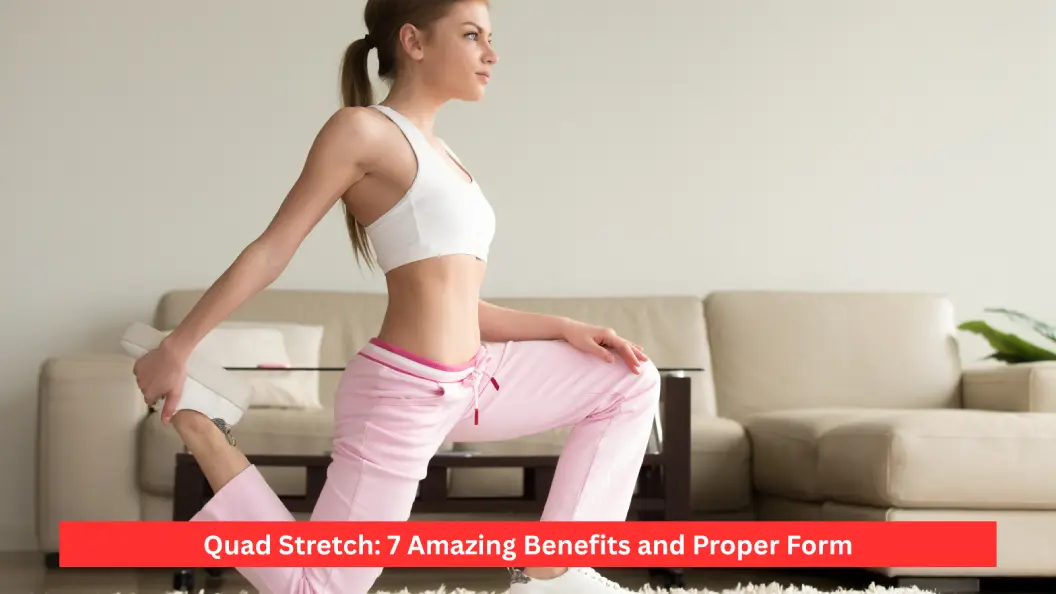

The quad stretch works the front muscles of the thighs and stretches them, which can help ease tightness in the front of the thighs after running, climbing stairs, or sitting for extended periods of time. Simple stretch with knee bent and bring heel towards buttocks. It can be easily incorporated into your normal stretch program with good technique.
- What is a Quad Stretch?
- How to Do a Standing Quad Stretch Correctly
- Which muscles does a quad stretch work?
- 5 Benefits of Quad Stretching
- 4 Effective Quad Stretch Variations
- Which Quad Stretch Should You Choose?
- Common Quad Stretch Mistakes to Avoid
- How Long Should You Hold a Quad Stretch?
- Before or After a Workout?
- Who should not and/or modify quad stretches?
- Conclusion
- Frequently Asked Questions
What is a Quad Stretch?
Quad stretch, or quadriceps stretch, stretches the muscles on the front of the upper leg.
The quadriceps muscle is active as soon as your knees straighten. They assist with walking, climbing up and down stairs, running, jumping, and standing out of a chair.
Your thighs can be stiff occasionally after exercise or extended periods of rest. Stretching can be helpful to prepare a range of motion that is comfortable for you.
The standing quad stretch is likely to be the one that you’ve seen the most of. A person stands on one foot, gripping the other ankle and drawing the heel to the buttocks.
The movement may seem simple, but proper alignment is more important than lifting the foot as high as possible.
How to Do a Standing Quad Stretch Correctly
You don’t need to be particularly flexible to learn this exercise. Start slowly and use a wall or sturdy chair if balancing on one leg feels difficult.
Step 1: Find a Stable Position
Stand upright with your feet approximately hip-width apart.
Place one hand against a wall or hold the back of a sturdy chair for support.
Keep your shoulders relaxed and look straight ahead.
Step 2: Bend One Knee
Shift your weight onto your supporting leg.
Slowly bend your opposite knee, bringing your heel toward your buttocks.
Avoid leaning forward or twisting your upper body.
Step 3: Hold Your Ankle
Reach behind and gently grasp your ankle or the top of your foot.
If you can’t comfortably reach it, loop a stretching strap or towel around your ankle.
There’s no need to force your knee into a deeper bend.
Step 4: Align Your Body
Keep your knees relatively close together and your torso upright.
Gently engage your abdominal muscles to prevent excessive arching in your lower back.
You should feel a mild pulling sensation along the front of your thigh.
Step 5: Hold and Breathe
Maintain the position for approximately 20–30 seconds while breathing normally.
Release your ankle slowly, return your foot to the floor, and repeat on the opposite leg.
Quick form check: Your standing leg feels stable, your lower back stays comfortable, and the stretch is noticeable without being painful.
Mayo Clinic recommends using stable support, keeping your knees close together, and holding a quadriceps stretch for approximately 30 seconds.
Which muscles does a quad stretch work?
The main muscles affected are the four muscles on the front of each thigh (quadriceps).
They include:
- Rectus femoris: Extends your leg and raises your thigh at the hip.
- Vastus lateralis: On the side of your thigh and helps extend your knee.
- Vastus medialis: On the inside of the front of the thigh and helps straighten the knee.
- Vastus intermedius: Under the rectus femoris and assists in straightening the knee.
These muscles work together to help with numerous daily and sporting activities.
Most quad stretches require flexion of the knee to stretch these muscles. The rectus also crosses your hip joint, so the position of your hip may affect how much the stretch is felt.
For one thing, it’s a reason why it’s helpful to keep the pelvis under control and not have too much arching of the lower back.
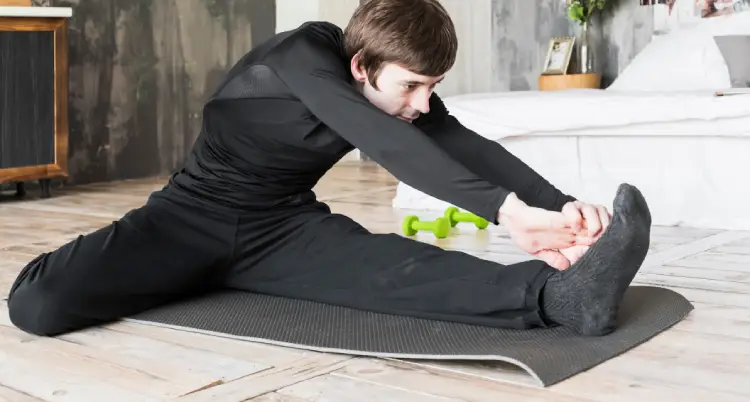
5 Benefits of Quad Stretching
You don’t need to be an athlete to benefit from quad flexibility exercises. They’re useful for anyone who wants to maintain comfortable movement.
1. Improves Thigh Flexibility
Stretching regularly can help improve your available range of motion.
When your quadriceps feel restrictive, fully bending your knee may feel uncomfortable.
Gentle, consistent stretching can help you become more comfortable moving through that range.
Progress usually happens gradually, so avoid judging your flexibility by a single session.
2. Supports Knee Range of Motion
Your quadriceps cross the knee joint and play an important role in controlling knee movement.
A comfortable quad stretch helps you practice bending your knee while lengthening the front-thigh muscles.
However, stretching isn’t a treatment for every type of knee stiffness or pain. Joint injuries and other conditions may require professional assessment.
3. Complements Lower-Body Workouts
Squats, lunges, cycling, and running all involve your quadriceps.
Including stretches in your overall training routine helps ensure that flexibility receives attention alongside strength.
For example, you might perform a gentle quad stretch after finishing a leg workout.
Stretching won’t replace proper training, recovery, or strengthening, but it can be a useful addition.
4. Encourages Movement After Sitting
Spending hours seated limits the variety of positions your legs move through during the day.
Standing up and performing a gentle stretch offers a change from that routine.
If your thighs feel uncomfortable after long periods at a desk, a short movement break may be more useful than remaining seated.
Just remember that persistent discomfort can have causes other than muscle tightness.
5. Requires Minimal Equipment
One of the best things about a quad stretch is its convenience.
You can perform the standing version beside your desk, at the gym, or at home.
A chair, wall, or stretching strap is helpful if you need additional support.
You don’t need expensive equipment or a complicated routine to start working on flexibility.
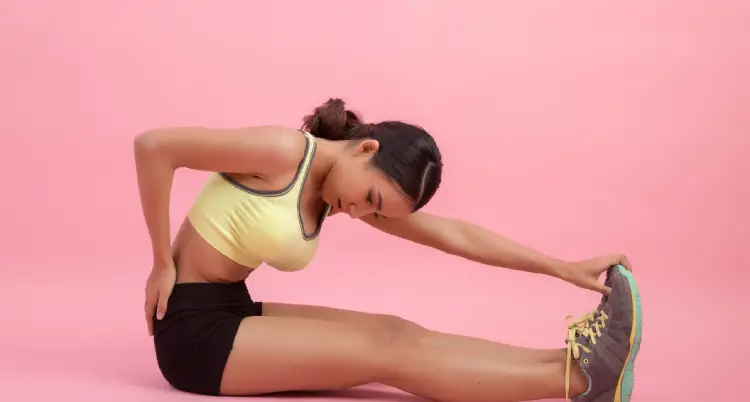
4 Effective Quad Stretch Variations
Not everyone finds the standing version comfortable. Fortunately, there are several ways to stretch your quadriceps.
1. Standing Quad Stretch
This classic variation works well if you’re comfortable balancing on one leg.
Stand upright, hold your ankle behind you, and gently draw your heel toward your buttocks.
Keep your knees aligned and avoid leaning backward.
Best for: People wanting a convenient stretch without getting onto the floor.
2. Side-Lying Quad Stretch
Lie on your side with your head supported comfortably.
Bend your upper knee and reach back to hold your ankle.
Gently bring your heel toward your buttocks while keeping your hips stacked.
Use a towel around your ankle if reaching your foot is difficult.
Best for: People who prefer not to balance while standing.
3. Prone Quad Stretch
Lie face down on a mat with your legs extended.
Bend one knee and carefully reach backward to hold your ankle or a strap.
Draw your heel toward your buttocks without lifting or twisting your hips.
You should feel the stretch along the front of your thigh.
Best for: People who prefer a floor-supported position.
4. Couch Stretch
Place one knee on a padded surface near a wall or sturdy couch, with that lower leg angled upward behind you.
Position your opposite foot in front for support.
Keep your torso controlled and gently adjust your hips until you feel a stretch along the front of your rear thigh or hip.
This variation can be intense, so begin with plenty of support and avoid forcing the position.
Best for: People already comfortable with basic quad stretches who want to explore a different hip and thigh position.
Which Quad Stretch Should You Choose?
| Variation | Main advantage | Difficulty |
| Standing | Quick and convenient | Beginner |
| Side-lying | No standing balance required | Beginner |
| Prone | Stable floor position | Beginner–Intermediate |
| Couch | Challenges thigh and hip flexibility | Intermediate |
Choose the variation that allows you to maintain control without pain. A more difficult stretch isn’t necessarily more effective.
Common Quad Stretch Mistakes to Avoid
Even a basic stretch becomes less comfortable when your technique slips.
Pulling Your Foot Too Hard
Trying to force your heel against your buttocks can create unnecessary pressure around your knee.
Instead, pull gently until you notice a comfortable stretch.
Arching Your Lower Back
Some people lean backward to make their thigh feel more stretched.
This can place extra stress on the lower back.
Keep your ribs and pelvis controlled, with your torso relatively upright.
Letting Your Knee Drift Outward
Allowing your bent knee to swing far to the side changes the position.
Try keeping your thighs relatively aligned rather than letting your leg rotate excessively.
Stretching Without Warming Up
Your muscles may feel less comfortable when you move immediately into a deep static stretch.
Walk or perform gentle movements for a few minutes before holding the position.
Ignoring Pain
A mild pulling sensation is expected. Sharp knee pain, pinching, or a sudden painful sensation isn’t.
Stop the exercise if it causes pain and seek professional advice when symptoms persist.
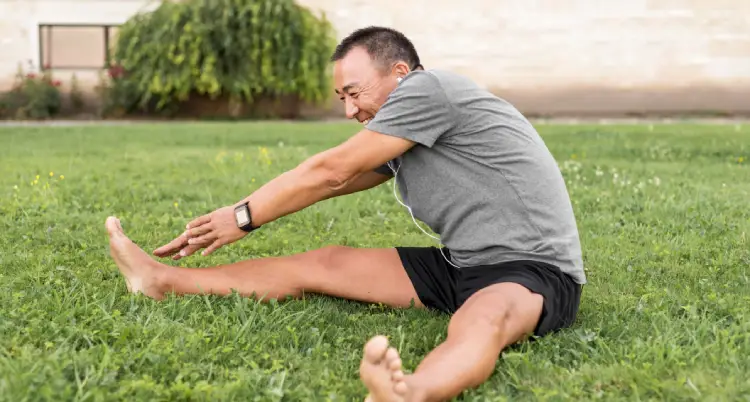
How Long Should You Hold a Quad Stretch?
A good starting point is to hold a comfortable static stretch for about 20-30 seconds, and this is generally recommended for most healthy adults.
If stretching is new to you, start with short stretches and slowly work your way up as tolerated.
Can repeat on each leg one or two times.
A few days a week is a good initial target.
The American Academy of Orthopaedic Surgeons recommends standing quadriceps stretches as part of their knee conditioning program, as it is supportive, but move with control, without back arching.
Before or After a Workout?
Before running or exercising, start with a general warm-up and controlled dynamic movements.
After exercise, a static quad stretch can fit naturally into your cool-down.
If you’re doing a dedicated flexibility session, warm up first rather than immediately attempting a deep stretch.
Who should not and/or modify quad stretches?
Quad stretching isn’t appropriate for every situation.
If you have a recent quadriceps strain, knee injury, have a lot of pain in the joints, or have recently had surgery in your lower leg, be careful.
Bending your knee should not be painful, so if it is, then don’t do it.
Individuals with injuries should follow instructions from the health care provider or physical therapist.
When stretching for general purposes, do stretches within a comfortable range, and don’t confuse joint pain with normal muscle tension.
Conclusion
A quad stretch doesn’t need to be complicated to be useful. Whether you prefer standing, side-lying, or floor-supported stretching, the important part is maintaining good form and working within a comfortable range.
Start gently, avoid pulling too hard, and give your flexibility time to improve.
With consistent practice, quad stretching can become a simple part of taking care of your legs and maintaining comfortable movement.
For more practical stretching advice and beginner-friendly fitness guidance, explore Stretchlee.com.
Frequently Asked Questions
How do you stretch your quads at home?
Stand beside a wall, bend one knee, and gently hold your ankle behind you. Keep your torso upright and your knees relatively aligned. Hold for about 20–30 seconds, then switch legs.
Can quad stretches help with tight thighs?
They may improve front-thigh flexibility when practiced consistently. However, tightness can have different causes, and stretching alone won’t address every problem.
Why do I feel quad stretches in my knees?
You may be bending the knee too far or placing pressure on an uncomfortable joint position. Reduce the range or stop. Persistent pain should be assessed professionally.
Can beginners do quad stretches?
Yes. Beginners can start with a supported standing stretch or a side-lying variation. Use a strap if reaching the ankle is difficult.