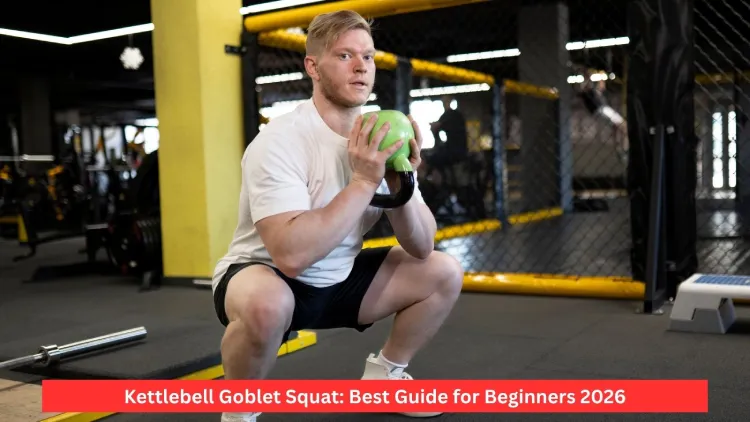

When performed correctly, kettlebell goblet squats are one of the most effective lower-body exercises for building strength, improving posture, reducing knee pain, and increasing core stability. They are a popular choice in fitness training due to their joint-friendly nature and adaptability for all levels, from beginners to elite athletes. The exercise increases flexibility in the hips, knees, and ankles, promotes spinal alignment, and can be integrated into almost any training program as an abdominal strengthening exercise.
- What are kettlebell squats?
- Muscles Worked in the Kettlebell Goblet Squat
- How to Perform the Kettlebell Goblet Squat (Step-by-Step)
- Tips for Performing the Exercise Correctly
- Common Mistakes to Avoid
- Benefits of Weighted Squats
- Kettlebell Goblet Squat Variations
- Who is the Kettlebell Squat Suitable For?
- Workout Planning
- Final thoughts
- Frequently Asked Questions
What are kettlebell squats?
Kettlebell squats are an abdominal strengthening exercise in which weights are held close to the chest in a controlled squat. The natural position of the weights helps maintain upright posture and makes it easier to learn proper squat technique than squats performed with free weights or machines.
One of the main reasons why kettlebell goblet squats are so widely recommended is that they are an effective teaching tool for proper squat technique. This exercise strengthens spinal alignment, promotes proper knee alignment, and provides a wide range of motion without putting too much stress on the spine.
Considered one of the best fitness exercises because it simultaneously engages multiple muscle groups, increases flexibility, and builds true functional strength, the squat is often called the “king of lower body exercises” because it mimics basic human movements such as sitting, standing, lifting weights, and climbing. By making the movement safe and easy, kettlebell goblet squats offer significant training benefits.
Key points about kettlebell goblet squats:
- This is a squat exercise suitable for beginners, performed with a kettlebell.
- Helps develop correct posture during squats.
- It naturally supports an upright torso.
- It improves spinal alignment and abdominal stability.
- It teaches proper knee movement during exercise.
- It safely develops lower body strength.
- It engages multiple muscle groups simultaneously.
- It is suitable for both home and gym workouts.
- It is easier to learn than barbell squats.

Muscles Worked in the Kettlebell Goblet Squat
Muscles involved in the kettlebell goblet squat:
The kettlebell goblet squat is a multi-joint exercise that engages several muscle groups simultaneously. For this reason, it is often included in full-body workout programs.
The main muscles involved are:
- Quadriceps (muscles in the back of the thigh): These muscles control knee extension and are most active during the upper phase of the kettlebell goblet squat.
- Hip muscles: The hip muscles provide the extension force needed to lift the kettlebell goblet from the squat position.
- Hip muscles: These muscles help control downward motion and stabilize the hips.
- Abdominal muscles: The abdominal muscles remain active throughout the kettlebell goblet squat to keep the torso upright.
- Lower back muscles: These muscles stabilize the spine and prevent rounding during the movement.
How to Perform the Kettlebell Goblet Squat (Step-by-Step)
In addition to building muscle mass, kettlebell goblet squats also improve neuromuscular coordination. This means that the brain learns to better coordinate motor patterns, improving athletic performance and reducing the risk of injury in everyday activities.
How to Do Kettlebell Goblet Squats (Step by Step): To maximize the benefits and prevent injuries, it is important to perform kettlebell squats correctly.
1. Starting position
Stand with your feet slightly wider than shoulder-width apart. 2. Hold the kettlebell by the handles or “horns” close to your chest. Keep your elbows bent and pointing downward.
2. Engage your abs
Brace your abs before you begin the movement. This provides stability for your spine and ensures proper posture during the kettlebell goblet squat.
3. Lowering Phase
Begin lowering your body by pushing your hips back slightly and bending your knees. Keep your chest straight and avoid leaning forward.
4. Reach the lowest point
Lower your body until your thighs are at least parallel to the floor. If your flexibility allows, you can lower yourself further while maintaining control. Kettlebell goblet squats are very effective for gradually increasing your depth.
Tips for Performing the Exercise Correctly
Correct form is crucial when performing kettlebell goblet squats. Without proper form, the benefits are reduced and the risk of injury increases.
The basic rules of correct form are:
- Always keep the kettlebell goblet close to your chest.
- Keep your torso straight throughout the movement.
- Ensure your knees are aligned with your toes.
- Press your heels firmly into the ground. Engage your abdominal muscles before each repetition.
- Avoid hunching your lower back.
- Kettlebell goblet squats are often recommended for posture correction as they naturally improve spinal alignment. Individuals with poor posture or weak abdominal muscles may find it easier to maintain balance in this position compared to other types of squats.
- Some rehabilitation and corrective exercise programs use controlled squat patterns to help individuals with spinal deformities such as mild scoliosis. While kettlebell goblet squats aren’t a cure-all, when performed under expert guidance, they can be part of a structured program that improves muscle balance and spinal awareness.

Common Mistakes to Avoid
While kettlebell goblet squats are great for beginners, doing them incorrectly can diminish their effectiveness.
1. Pushing forward
This puts the load on the lower back instead of the legs.
2. Using momentum
The rebound effect in the lower back reduces muscle activation and increases the load on the joints.
3. Lifting heels off the ground
This often indicates poor ankle flexibility or poor posture.
4. Shallow squat
Failing to reach full depth limits the benefits of activating and shaping the hip muscles.
5. Bending knees inward
This can increase the load on the knee joints and reduce stability.
Avoiding these mistakes ensures kettlebell squats remain a safe and effective exercise.
Benefits of Weighted Squats
Weighted squats offer a wide range of physical benefits, making them one of the most versatile strength exercises.
1. Increases overall lower body strength
Strengthens the quadriceps, hamstrings, and gluteus muscles simultaneously.
2. Improves posture and spinal alignment
Because the weight is in front of you, it naturally promotes an upright posture. This is beneficial for those looking to correct poor posture or weak abdominal muscles.
3. Supports joint health and knee function
When done correctly, weighted squats strengthen the muscles surrounding the knees, improve balance, and reduce discomfort caused by weak supporting muscles.
4. Increases range of motion
Improves overall mobility by increasing flexibility in the hips, ankles, and lower back.
5. Develops functional strength
The movements mimic everyday activities such as squatting, lifting, and bending.
6. Activates abdominal muscles
Weighted squats strengthen deep abdominal muscles by consistently engaging them.
7. A safe introduction to squats
This exercise is a good starting point before moving on to barbell squats.
In many fitness programs, squats are considered one of the most important abdominal strengthening exercises. Along with push-ups, pull-ups, and deadlifts, squats are a fundamental part of what is known as the “golden exercise” for overall body development.

Kettlebell Goblet Squat Variations
After learning the basic kettlebell goblet squat movement, you can add different variations to your training program.
1. Slow Squat
Slowing down the movement increases the duration of muscle contractions, which improves muscle growth and control.
2. Pause Squat
Stability in the low squat position improves balance and speeds up the movement.
3. Pulse Squat
Small pulse movements in the lower back increase muscle activation and endurance.
4. Upper Body Pressure Squat
Adding pressure to the upper body transforms this exercise into a full-body workout.
5. Kettlebell Squat
Holding the kettlebell sideways increases abdominal stability.
These modifications ensure the kettlebell squat remains effective while also increasing strength.
Who is the Kettlebell Squat Suitable For?
This exercise is suitable for almost everyone, from beginners to professional athletes.
It is especially beneficial for:
- Beginners learning proper squat technique.
- Individuals are improving posture and abdominal strength.
- Athletes are strengthening their lower bodies.
- Individuals focusing on joint-friendly strength training.
- Individuals overcoming a sedentary lifestyle.
For individuals with posture issues or minor muscle imbalances, controlled squats can help improve awareness and balance. However, any spinal condition, such as scoliosis, should always be managed under medical supervision, and exercises should be modified to individual needs.
Kettlebell squats are also beneficial for those who want to exercise effectively at home, as they require minimal equipment.

Workout Planning
Depending on your fitness level and goals, you can plan kettlebell squats in different ways.
Beginner Level
- 3 sets of 8-12 reps
- Focus on proper form and control
- Rest 60-90 seconds between sets
Intermediate Level
- 4 sets of 10-12 reps
- Add speed variations or rest periods
- Use a medium-weight kettlebell
Advanced Level
- 4-5 sets of 12-15 reps
- Add variations such as pulse squats or press squats
- Use shorter rest periods to increase your clinical level
When combined with other compound movements such as swings, push-ups, and pull-ups, kettlebell squats become part of a highly effective full-body workout program. Some training methods combine the five basic movement patterns into structured programs, often known as “full-body gold workouts,” designed to effectively improve strength, endurance, and flexibility. High-intensity interval training (HIIT) methods sometimes incorporate kettlebell movements into circuit training. Although not explicitly stated, this type of exercise typically consists of timed sets that combine squats, swings, and presses to improve overall fitness.

Final thoughts
In short, the kettlebell goblet squat is a powerful strength training exercise due to its simplicity, effectiveness, and versatility. It increases lower-body strength, improves posture, increases flexibility, and supports overall functional fitness.
It also serves as an excellent introduction to squat mechanics, helping develop better movement patterns before moving on to more advanced weightlifting exercises. Whether for fat burning, muscle growth, improving posture, or overall fitness, the kettlebell goblet squat fits into almost any training program.
This exercise, which focuses on controlled movements, proper form, and consistent execution, can build a solid foundation for long-term strength and stability.
Frequently Asked Questions
1. What are the benefits of weighted squats?
Weighted squats help develop lower body strength, improve squatting posture, and increase flexibility in the hips, knees, and ankles. They also strengthen the abdominal muscles and improve the overall range of motion.
2. Why are weighted squats better than other types of squats?
Weighted squats are easier to learn because holding the weight in front of the body naturally maintains an upright posture. This makes them more suitable for beginners and helps reduce strain on the lower back while improving posture, balance, and squat depth.
3. How many reps should I do for weighted squats?
Most people start with three sets of 8 to 12 reps. Beginners should focus on proper form, while more experienced athletes can increase the number of reps or sets based on their training goals.
4. Do weighted squats help improve posture or relieve knee pain?
Yes, weighted squats improve posture and balance by strengthening the muscles around the knees. However, these exercises must always be performed correctly and should not be used as a substitute for medical treatment for severe pain.