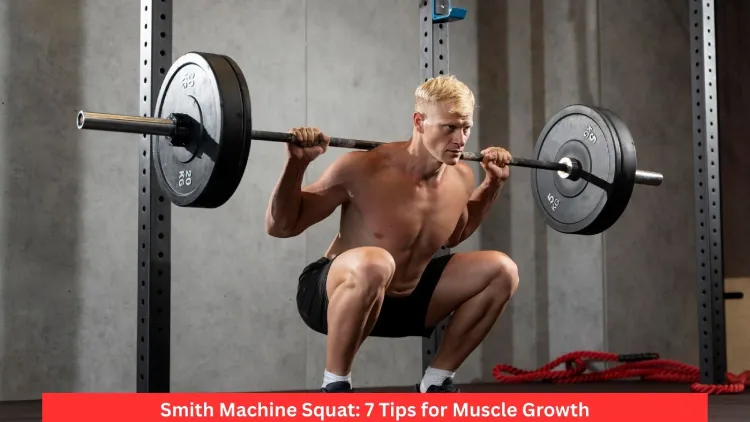

The lower-body exercise with additional stability and safety is the Smith machine squat, which develops the quads, glutes, and general leg strength. It may assist a beginner to learn squat mechanics and enable the advanced lifters to train right up to the edge. Although this contrasts barbell squats in muscle involvement and range of movement with the Smith machine squat, the exercise can still be applied in hypertrophy, strength building, and joint-friendly exercise when done properly.
- What Is a Smith Machine Squat?
- Muscles that are involved during the Smith Machine Squat
- The advantages of the Smith Machine Squat
- Proper Technique of Smith Machine Squat
- Errors that are common with the Smith Machine Squat
- Smith Machine Squat vs Barbell Squat
- Different versions of the Smith Machine Squat
- Adding Smith Machine Squat to the Workout
- Smith Machine Squat good for beginners?
- Does the Smith Machine Squat help in Muscle Growth?
- Who Can Do Without Smith Machine Squats?
- Conclusion
- Frequently Asked Questions
What Is a Smith Machine Squat?
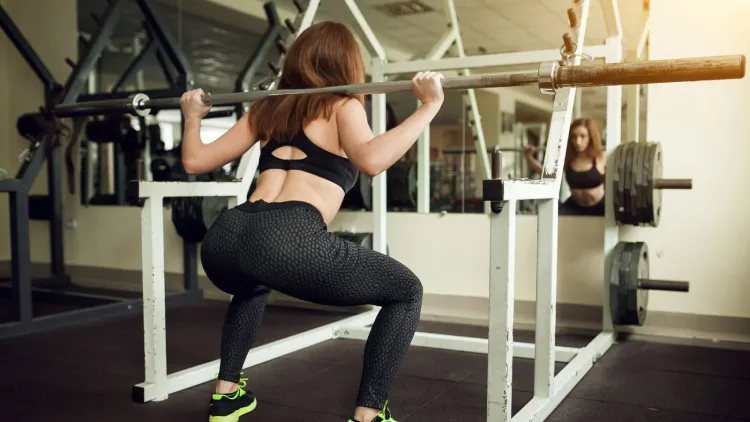
A Smith machine squat is a squat exercise that is done on a Smith machine with the barbell attached to the vertical or slightly sloping rails. The moving direction of this guided method limits the pattern of movement, decreasing the necessity to use balance and stabilisation in comparison with free-weight squats.
Due to the fixed bar route, the Smith machine squat enables the lifters to concentrate more on the pushing aspect using the legs and not bother about the control of the bar. This renders it the favourite of newcomers, bodybuilders, and people who can train alone.
The Smith machine squat eliminates a lot of the instability, unlike the traditional barbell squats that are done inside a squat rack. But the same stability may slightly modify the patterns of muscle activities and biomechanics as well.
Muscles that are involved during the Smith Machine Squat
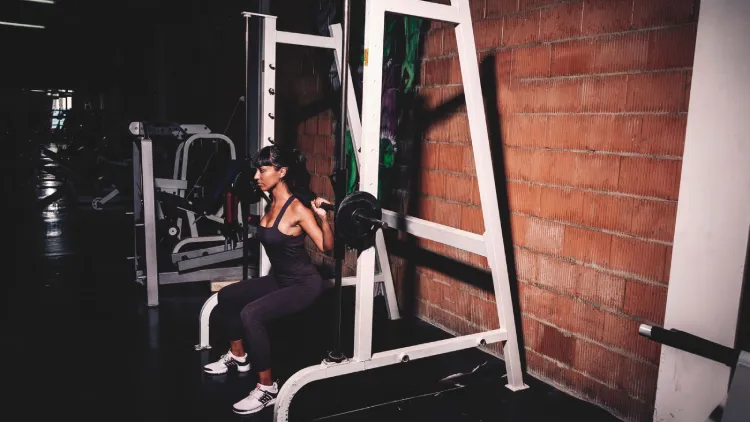
The Smith machine squat mainly involves the lower body, though supporting muscles are involved.
- Quadriceps: TheSmithh machine squat depends on the quads. Quad activation can be enhanced by adopting an anterior posture. This variation is useful to many lifters who attempt to expand the stubborn thigh muscles.
- Glutes: The gluteus maximus has a significant contribution, particularly in greater squatting and use of a wider position. When developing the glute, foot position can be adjusted in order to achieve greater outcomes.
- Hamstrings: Even though they are not the main muscle, the hamstrings also helpstabilisee the knee and extend the hips in the process.
- Calves: The ankle joint is stabilised with the help of the calves, and balance is preserved when going up and down.
- Core Muscles: Although there is less core involvement compared to barbell squats, abdominal and lower back muscles are engaged in the process of keeping your body straight during theSmithh machine squat.
When talking about which of the muscles is the most difficult to develop, people may think about calves or glutes because of the genetic factors and the muscle fibres’ distribution. The Smith machine squat would allow targeting the glutes to a greater degree with the help of adjusting the stance.
The advantages of the Smith Machine Squat
Lifters also use the Smith machine squat for a number of reasons.
- Increased Stability: The predetermined direction offers additional stability, and form is easier to concentrate on. Novices are always more sure of themselves when they are at the bar.
- Improved Muscle Isolation: As you do not have to stabilise the bar to the extent, you can focus tension on the quads or glutes more purposefully.
- Safer Solo Training: The safety stops that are built-in will enable you to train at approximate failure without a spotter. This renders the Smith machine squat useful in individual exercises.
- Less Strenuous progressive overload: It is easy to add small weight increments and thus gain strength in the long run.
- Potentially Easier on Knees: The Smith machine squat is also less damaging to the knees of some people since the position of the feet can minimise the forward movement of the knee. This, however, requires correct form and personal anatomy.
Most lifters want to know whether or not they can build muscle using this movement. The answer is yes. The more important factor than the equipment is progressive overload, proper nutrition, and consistency.
Proper Technique of Smith Machine Squat
Safety and effectiveness are guaranteed by proper implementation.
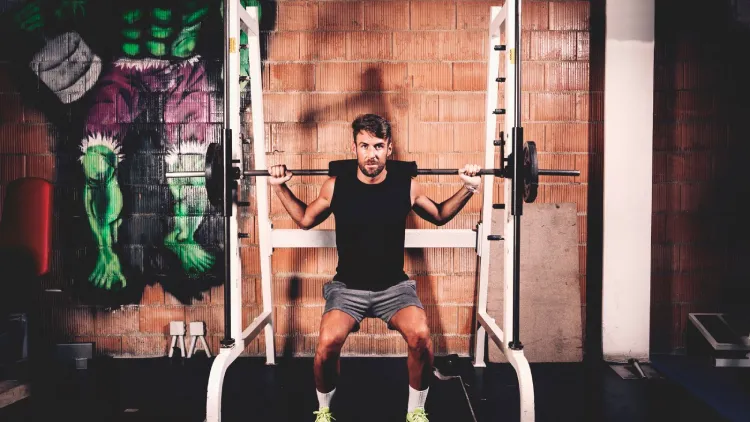
Step 1: Set the Bar Height: The height of the bar should be set at a height at which you can easily unrack it.
Step 2: Position Your Feet: Stand with your shoulders at a distance of half a foot. Minimal anterior positioning has the ability to minimise knee stress and maximise quad activity.
Step 3: Unrack the Bar: Turn the bar to open it and get on your feet in a neutral position.
Step 4: Lower Down: These are simultaneous bends of the hip and knee. Bend your chest forward and bring your thighs so that they are parallel or even a bit lower, according to your ability.
Step 5: Push Up: Pull upwards on your heels and mid foot and go back to standing. Do not bend your knees violently upwards.
A correct shape will allow avoiding typical errors and will ease the burden on the joints. TheSmithh machine squat can be included in a strength program and hypertrophy program when done properly.
Errors that are common with the Smith Machine Squat
Guide rails do not eliminate error, which must decrease effectiveness.
- Incorrect Foot Placement: Knee stress may be increased when being too close to the bar. Going too far forward can put the hips under strain.
- Rounding the Lower Back: To be safe, it is necessary to maintain spinal neutrality.
- Using Excessive Weight: Due to the stabilisation of the movement, there is an overloading of some lifters overload faster.
- Limited Range of Motion: Half squats decrease power and strength improvements.
- Ignoring Core Engagement: Although you get stability, it is still important to brace your core.
Quite a few individuals complain that the machine is heavier than it should be. This may be as a result of friction on the rails or a difference in the counterbalance system. Certain Smith machines come with prices as low as 1525 for just the bar, but the companies vary in the lowest weight.
Smith Machine Squat vs Barbell Squat
The comparison between these two exercises is common.
| Feature | Smith Machine Squat | Barbell Squat |
| Stability | High | Requires balance |
| Core Activation | Moderate | High |
| Functional Strength | Moderate | High |
| Beginner Friendly | Yes | Moderate |
| Movement Freedom | Fixed | Natural |
The barbell squat is often referred to as the king of all exercises due to its ability to engage more than one muscle group and the fact that it causes functional strength. It is frequently considered one of the best exercises in terms of full-body exercise, along with deadlifts.
Nevertheless, the Smith machine squat is a strength-building and muscle-building exercise. It may not be good or bad enough; it all depends on your purpose.
Smith squats are more difficult for some lifters because they do not give the body the chance to move naturally. Some people find it more difficult inthe barbell squat due to the balance requirements. Personal biomechanics is significant.
Different versions of the Smith Machine Squat
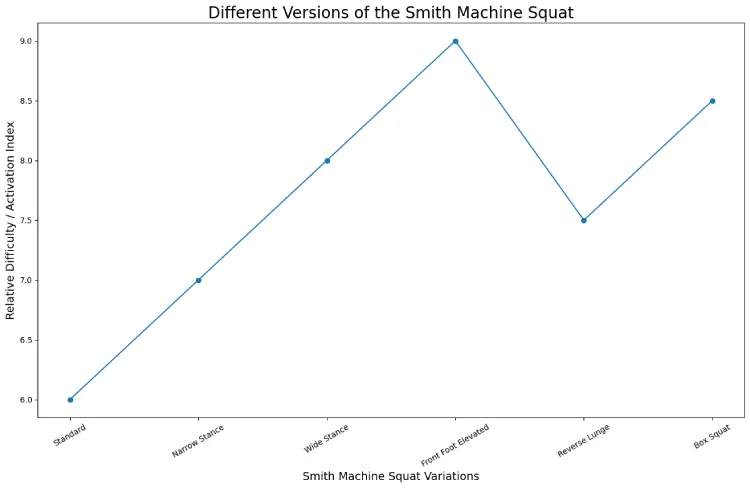
To get the best outcomes, consider the following options:
- Narrow-Stance Variation: Stimulates outside quads and raises knee flexion.
- Wide-Stance Variation: Focuses on buttocks and thighs.
- Heel-Elevated Variation: Enhances the quad muscle and involvement.
- Box Variation: Helps gain explosive strength and deep uniformity.
These modifications will enable you to adjust the smith machine squat to achieve certain muscle objectives, such as glute development.
Adding Smith Machine Squat to the Workout
This movement can be included in many ways.
- Strength Focus: 4–5 sets of 4–6 reps
- Hypertrophy Focus: 3–4 sets of 8–12 reps
- Endurance Focus: 2–3 sets of 15+ reps
Combining it with lunges, Romanian deadlifts, and calf raises makes it an equal leg workout. People will argue that you only need five exercises: lude squats, deadlifts, bench press, rows, and overhead press, but varietyimportant forr in long-term development.
If you want substitutes, you can use other exercises, such as goblet squats, hack squats, or leg presses instead of the Smith machine squat; however, the results are comparable.
Smith Machine Squat good for beginners?
Yes, newcomers usually get the additional stability. It creates trust and enables one to concentrate on detail and orientation. Yet, by using machines alone, there is a possibility of limited gains in functional strength in the long term.
Training machine and free-weight squats would bring about a more balanced base.
Does the Smith Machine Squat help in Muscle Growth?
Mechanical tension, metabolic stress, and recovery are required in muscle growth. The Smith machine squat can be used to do controlled repetitions, which are near failure and induce hypertrophy.
This machine will absolutely develop glutes and quads. Actually, some bodybuilders take it because they are able to isolate muscles of the body better than with free weight.
Who Can Do Without Smith Machine Squats?
Some of them might require a warning:
- Individuals who have serious knee or hip injuries.
- Patients suffering from low squat mobility.
- Lifters who feel troubled by pa redetermined bar route.
The primary problem with the Smith machine is that the movement pattern is limited, and it might not be compatible with your own squat movement. This may cause a person to experience joint stress.
Conclusion
The Smith machine squat is not a miracle workout, and it is not an ineffective machine. It is a tool. Properly utilised, it is able to develop strength, muscle bulk, and load confidence.
Barbell squats can be more functional in terms of carryover and have been regarded as the gold standard. However, smith machine squat is safe, controllable, and specific to muscle action.
To ensure long-term survival and fitness, the mixed-method exercises of squats, deadlifts, presses, rows, and pull-ups are quite effective. Strength training, per se, is firmly linked with an increased lifespan, metabolic health, and mobility.
Finally, the best squat is the type that one can do safely, consistently, and progressively. It does not matter whether you take free weights or the Smith machine squat; the outcome will depend on proper form and the program.
Frequently Asked Questions
1. Does the Smith Machine Squat build good muscle?
Yes, the Smith machine squat helps to build muscles, as it enables one to control the number of reps and the progressive overload. It is efficient in terms of targeting quads and glutes with lower balance requirements due to the safer training.
2. Is the Smith Machine Squat superior to barbell squats?
The Smith machine squat is more stable and isolated, whereas barbell squats are more functional. The superior one will be based on your objectives, experience, and mobility.
3. What position should I take my feet in when performing a Smith machine Squat?
The elevation of feet in a slightly forward position augments the activation of the quad, as well as minimises the load on the knee. A more extended position goes afterthe glutes. Spinal and proper alignment enhances the safety and outcomes.
4. Does the Smith Machine Squat pose a threat to newcomers?
Yes, novices are in favour of the led bar route and safety stops in place. It develops confidence and correct squat form, but with the addition of free weights enhances strength in the long-term.