
Lateral lunges are lower-body exercises that effectively strengthen the glutes, quads, hamstrings, and inner thighs, and improve hip mobility, balance, and joint stability. They work muscles that, in front movements, are usually overlooked and can help keep the knees healthy when used correctly.
- What Are Lateral Lunges?
- Lateral Lunges Muscles Worked
- Benefits of Lateral Lunges
- How to perform the Lateral Lunges the right way
- Common Mistakes to Avoid
- Lateral Lunge Variations
- How to Add Lateral Lunges to Your Workout
- Sample Lower Body Exercise with Lateral Lunges
- Tips for Better Results
- Who Should Do Lateral Lunges?
- Lateral Lunges vs Other Exercises
- Knee Health and Exercise
- Fat Loss and Body Changes
- Full Body Fitness Insights
- Conclusion
- Frequently Asked Questions
What Are Lateral Lunges?
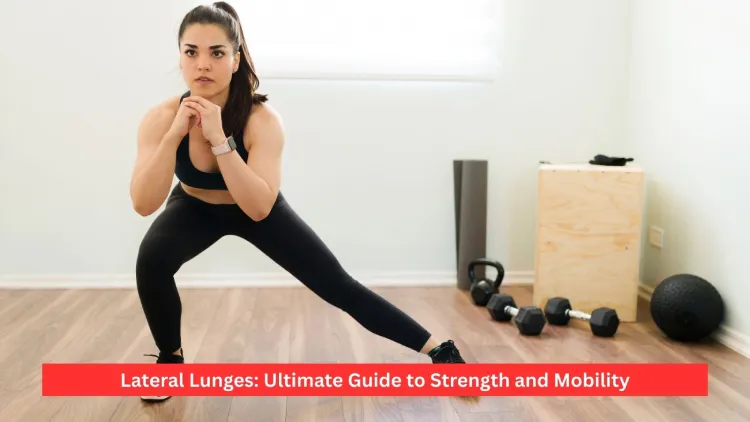
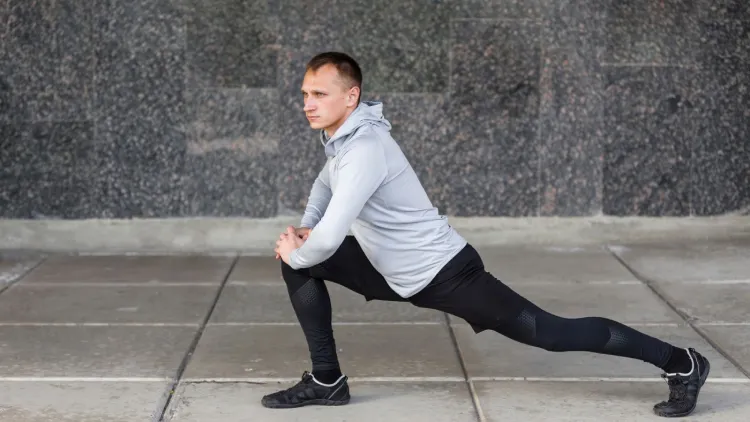
Lateral lunges, also known as side lunges, are a functional lower-body movement that involves stepping sideways rather than forward or backwards. This side-to-side action focuses on muscles that are not fully utilised in traditional exercises, and lunges are therefore a crucial inclusion in any balanced exercise regimen.
In a normal movement, you shift the weight to one leg while the other is straight. This provides a profound lengthening and contraction of the hips and thighs. Since the idea of lateral lunges is to train in the frontal plane, it trains your body to perform actions in real life, such as changing direction, taking a sideways step, or maintaining your balance when it changes unexpectedly.
Another fact of interest is that, in some cases, lunges are classified as unilateral exercises, i.e., exercises that train one half of the body at a time. This helps redress muscle imbalances and enhance coordination. This further provides an additional functional strength compared to bilateral exercises such as squats.
Lateral Lunges Muscles Worked
Lateral lunges are very effective as they simultaneously train several large muscle groups.
They primarily work:
- Quadriceps: These muscles also extend the knee and help stabilise the leg, allowing the leg to lower into motion.
- Glutes: The muscles of the glute are heavily engaged, and thus, the lunges are among the most effective exercises that work the hips and make them stronger.
- Hamstrings: These aid in regulating movement and supporting hip extension.
- Adductors (inner thighs): It is also the area where lateral lunges excel, as the inner thigh muscles are most engaged by the adductors.
- Abductors (outer hips): these muscles attach to your hips and stabilise them to prevent collapse.
- Core muscles: The core muscles are the lower back and abdominal muscles that work together to support the body and maintain posture.
If you are wondering which muscles are most affected during lunges, this depends on the variation, but for the lateral lunge, the glutes and inner thighs are most stressed. This makes them effective, especially when an individual wants to tighten their thighs or strengthen their hip muscles.
Fascinatingly, many consider the glutes among the most difficult muscles to develop. Some exercises can be performed to better mobilise them, compared with simple ones such as lateral lunges, particularly when combined with appropriate resistance training.
Benefits of Lateral Lunges
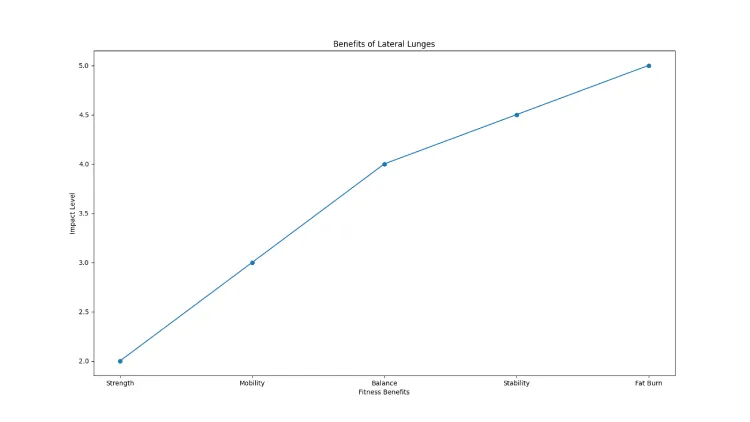
1. Enhances the strength of the Lower Body
Lateral lunges train muscles that are often neglected, such as the inner thighs and hip stabilisers. This becomes more stable and works on your legs.
2. Enhances Mobility
Enhanced hip mobility is one of the best things about lateral lunges. Deep side stretches constrictive hips and groin muscles, enabling daily movements and decreasing stiffness.
3. Increases Stabilisation and Dynamics
Laterals lunges involve coordination and control, thus enhancing body stabilisation. This will come in particularly handy for the elderly and athletes.
4. Supports Knee Health
Lateral lunges could, in fact, support the knee joint muscles when done properly. Tougher muscles provide better joint support, which can lessen pain over time.
5. Assists in losing weight and slimming
Although not all exercises target fat in one location, lateral lunges help burn fat and build overall muscle. When body fat is reduced, most people notice their thighs look slimmer and their muscles more defined.
6. Functional Strength for Day-to-Day Life
The latter movement is typical of real life, and it is usually overlooked in exercises. Lateral lunges are exercises that help your body prepare for such natural movements to enhance performance.
How to perform the Lateral Lunges the right way
To achieve the results and not to be injured, it is necessary to perform lateral lunges properly:
- Strauss upright with hips a hip-width.
- Have an upright chest position with the core on.
- Take one long stride to your right.
- Bend the step leg knee as you push your hips behind.
- Raise the other leg straight.
- Bend your body until your thigh is level with the ground.
- There is a push-up with your foot, back to the start point.
- Repeat on the other side.
Pay attention to deliberate and purposeful action. Lots of customers wonder how to use lunges with bad knees. The answer is simple: decrease the depth and maintain the correct position, and do not jump or move rectally.
Common Mistakes to Avoid
The most important thing is to avoid errors of this type, too, to be able to preserve your knees:
- And falling the knee within.
- Leaning too far forward
- Not stepping wide enough
- Moving too quickly
- Putting excessive control on the toes rather than the heel.
Poor alignment is one of the worst things that can worsen knee health. Make sure that you always have your knee tracking over your toes.
Lateral Lunge Variations
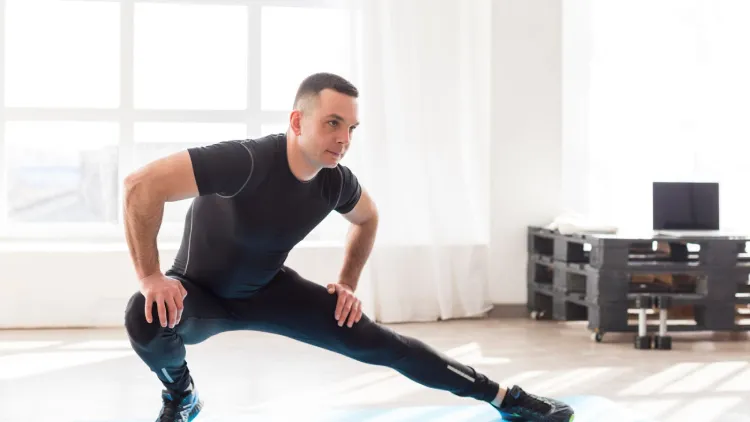
There are many variations to the lateral lunges, depending on your fitness and goals. To make your workouts effective, make sure to try various variations of the exercise:
1. Bodyweight Lateral Lunges
This variation is ideal because a beginner does not require the added resistance, so they learn good form, improve balance, and develop greater flexibility.
2. Dumbbell Lateral Lunges
The glutes, quads, and inner thighs gain more muscle and become stronger when dumbbells are added.
3. Barbell Lateral Lunges
An even more advanced version that enables heavier training and is excellent at creating optimal lower-body power.
4. Sliding Lateral Lunges
This variation is achieved by sliding the point or using a towel, which enhances control, stability, and muscle work while minimising joint impact.
5. Lateral Lunge to Balance
Such variation presents a challenge of balancing by elevating the leg return, enhancing balance and core stability.
The exercise is not the same, but you can choose what to do based on your fitness level. Any form of lateral lunge helps enhance lower-body mobility and strength.
How to Add Lateral Lunges to Your Workout
Beginner Routine
- 2–3 sets
- 8–10 reps per side
Intermediate Routine
- 3–4 sets
- 10–12 reps
Advanced Routine
- 4–5 sets
- 12–15 reps
When you are experiencing weak knees, you should start with fewer repetitions and learn to move with control. This may help strengthen the joint and the muscles around it over time.
Sample Lower Body Exercise with Lateral Lunges
- Squats – 3 sets of 12 reps
- Lateral Lunges 3 sets -10 reps on each side.
- Glute Bridges – 3 sets of 15 reps
- Step-Ups – 3 sets of 10 reps
- Calf Raises – 3 sets of 15 reps
Squats are known as the king of exercises, and some claim they are the mother of all exercises because of the muscle groups they target. Nevertheless, they should be performed alongside lateral lunges to make the exercise more balanced.
Tips for Better Results
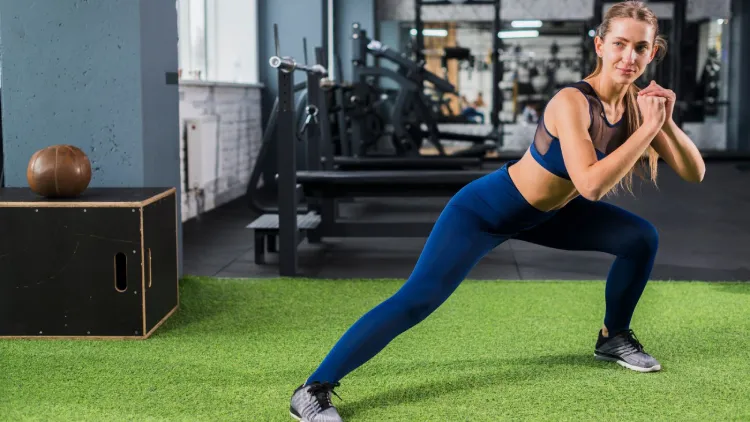
- Warm up before starting
- Maintain proper posture
- Breathe properly
- Stay consistent
- Stretch after workouts
Exercises such as lunges and squats can also reduce stress and boost the mood as a way of managing anxiety and depression, and this makes them beneficial to those in need of mental health benefits.
Who Should Do Lateral Lunges?
Lateral lunges have been applied in:
- Novices and experienced people.
- Athletes
- People improving mobility
- Those wanting stronger legs
Nevertheless, some ought to take care. If you experience severe knee pain, damage, or joint instability, it is not recommended to do lunges before seeking a specialist’s attention. Alternatives such as step-ups or partial squats may be preferred in these situations.
Lateral Lunges vs Other Exercises
Are They Better Than Squats?
Lateral lunges are not necessarily better than squats—they are complementary. Squats focus more on overall strength, while lateral lunges target mobility and side-to-side strength.
Better Alternatives for Bad Knees
If lunges cause discomfort, try:
- Glute bridges
- Wall sits
- Leg presses
These exercises reduce strain while still building strength.
Knee Health and Exercise
Strong knees depend on healthy muscles, proper movement, and consistency. Weak knees can result from inactivity, poor posture, or muscle imbalances.
To support knee health naturally:
- Maintain a healthy weight
- Strengthen surrounding muscles
- Stay active
- Stretch regularly
Avoid high-impact or poorly performed movements, as they can worsen knee pain.
Fat Loss and Body Changes
Fat loss happens gradually and varies from person to person. Some people lose fat first in the face, while others notice changes in the abdomen or thighs.
Signs your body is burning fat include:
- Increased energy
- Improved muscle tone
- Gradual weight loss
The hardest areas to lose fat are often the belly and thighs, but regular exercise—including lateral lunges—can help improve overall body composition.
Full Body Fitness Insights
While lateral lunges are excellent, many people look for a single “best” exercise. In reality, no single movement can perfectly train the entire body. However, compound exercises like squats, deadlifts, and lunges come close.For glute development, hip thrusts are often considered one of the most effective exercises. For overall strength, squats remain a top choice.
Conclusion
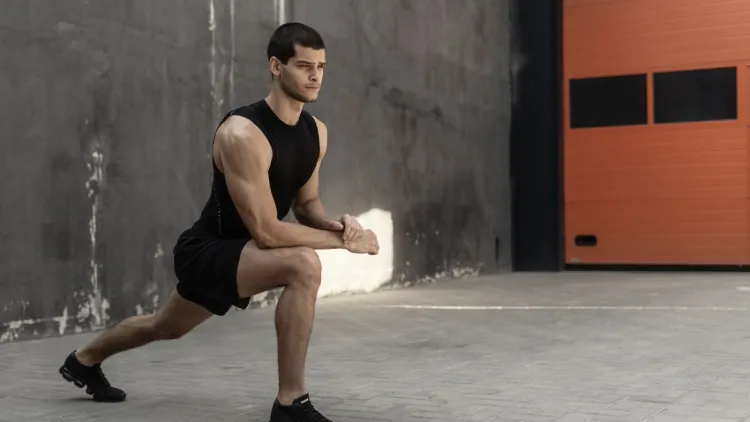
Lateral lunges are a highly effective exercise for building strength, improving mobility, and enhancing balance. They target key muscle groups that are often overlooked, making them a valuable addition to any workout routine.
Whether your goal is stronger legs, better flexibility, or improved knee stability, lateral lunges can help you achieve it. With proper form, consistency, and gradual progression, this simple yet powerful exercise can transform your lower-body strength and overall fitness.
Frequently Asked Questions
1. What muscles do lateral lunges work the most?
Lateral lunges primarily target the glutes, quadriceps, and inner thighs (adductors). They are especially effective for activating the inner thigh muscles and improving hip stability, while also engaging the hamstrings and core for balance.
2. Are lateral lunges good for knee health?
Yes, lateral lunges can support knee health when performed with proper form. They strengthen the muscles around the knee, improving stability and reducing strain. However, people with existing knee pain should start slowly, reduce depth, and focus on correct alignment.
3. Do lateral lunges help with hip mobility?
Lateral lunges are excellent for improving hip mobility. The side-to-side movement stretches tight hip and groin muscles, increasing flexibility and making everyday movements smoother and more efficient.
4. Are lateral lunges better than squats?
Lateral lunges are not necessarily better than squats—they serve different purposes. Squats are ideal for overall lower-body strength, while lateral lunges improve side-to-side movement, balance, and inner thigh activation. Including both in your routine provides the best results.