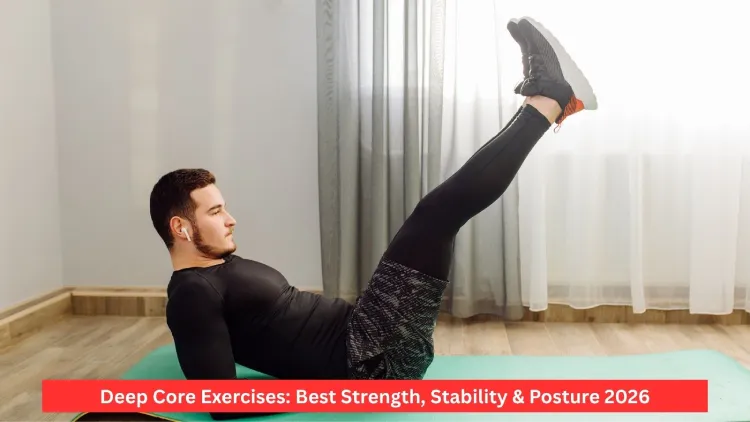

When performing deep core exercises, the muscles that stabilize the spine and pelvis are engaged to produce strength, stability, balance, and sagittal posture. The difference with these exercises and other ab workouts is that they target deeper core muscles, which provide stability and control in the movement. Frequent deep core exercises can enhance athletic performance, reduce the risk of injury, and provide general health benefits.
- What Are Deep Core Exercises?
- The importance of deep core exercises
- The Role of Breathing
- Progress Safely: How to
- Best deep core exercises with a dumbbell
- Beginner Deep Core Workout
- Advanced Deep Core Workout
- Common Mistakes During Deep Core Exercises
- Tips for Better Results
- Final Thoughts
- Frequently Asked Questions
What Are Deep Core Exercises?
Deep core exercises are movements that strengthen the muscles of the abdominal core. These muscles are all known to stabilise the spine, pelvis, and trunk during movement.
The deep core comprises:
- Transverse abdominis
- Multifidus
- Pelvic floor muscles
- Diaphragm
- Internal obliques
There is a natural way these muscles work as a kind of natural support around the torso. If they are trained right, they can assist you in keeping your spine properly aligned, balanced, and so on, and most importantly,y lower the tension on the lower back.
The importance of deep core exercises
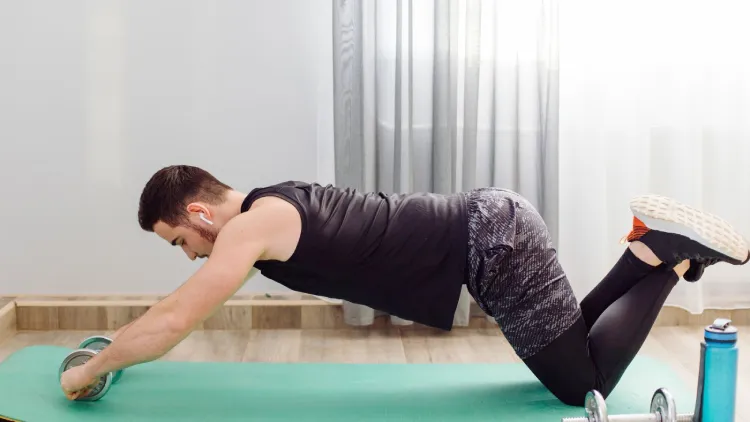
Deep core work is not like “crunches” but instead links the spine and pelvis with muscles that anchor the body: the skeletal system & the bones. Featuring exercises that develop the deeper muscles that support posture, balance, and movement, rather than just working on the abdominal muscles, all to one, visible.
Having good core strength contributes to the proper control of the body, decreases stress on the lower back, and makes lifting, walking,g and bending normal tasks straightforward. It also serves as a solid base for strength training and sports.
The Role of Breathing
Proper breathing is an important part of deep core exercises. The diaphragm helps stabilize and support the backbone, along with the abdominal muscles and pelvic floor. These muscles function together to enhance balance, posture, and core strength.
During exercises, it is common and an error to hold the breath: this may lower activation of the core and induce tension. Instead, concentrate on breathing slowly and controlled breaths through your mouth while maintaining a non-relaxed state of the core. You can use the correct breathing method for deep core exercises to make them more effective, plus practice greater control during each exercise.
Progress Safely: How to
Here are some easy exercises to begin with:
- Dead Bugs
- Toe Taps
- Glute Bridges
- Basic Planks
Once your strength is increasing, go on to:
- Bird Dogs
- Side Planks
- Pallof Presses
- Hollow Body Holds
- Keep your technique correct and only add difficulty later.
- In this clip, you’ll learn about the common signs of having a weak Deep Core.
If you suffer from/feel:
More deep core exercises training may be beneficial:
- Poor posture
- Lower back discomfort
- Difficulty balancing
This happens when someone becomes extremely fatigued while working out.
Improved stability in movement

Best deep core exercises with a dumbbell
1. Dead Bug
Refuse pollywogs are one of the most effective deep core training movements to enhance steadiness as well as control of the spine.
How to Perform
- Lie on your back.
- Extend the arm up as the pupil approaches the ceiling.
- Keep knees bent with a 90-degree angle.
- Tighten your core.
- Extend the right arm and left leg slowly.
- Go back to the starting point.
- Repeat on the other side.
Benefits
- Engages the muscles of the lower belly that are used for flair and full lift.
- Improves coordination
- Enhances spinal stability
Recommended Sets
- Performs 3 sets of 10-12 reps on each side
2. Bird Dog
Balance is tested, and deep core stabilizers are strengthened with the bird dog.
How to Perform
- Get on your hands and knees.
- Maintain a straight spine.
- Stretch your arm outwards.
- Straighten the left leg, pointing backward.
- Hold briefly.
- Go back to position 1.
- Switch sides.
Benefits
- Improves balance
- Strengthens core stabilizers
- Encourages good posture for the lower back
Recommended Sets
- Heated up to being good as gold as he performed 3 sets of 10 reps per side.
3. Plank
Plank is a classic workout that is designed to engage the whole core, including deep abdominal muscles.
How to Perform
- Rest forearms on the ground.
- Straighten your legs behind you.
- Keep the neck, chest, and spine straight.
- Tighten abs and buttocks.
- Hold the position.
Benefits
- Strengthens the entire core
- Improves posture
- Enhances endurance
Recommended Duration
- 20–60 seconds
- 3–4 rounds
4. Side Plank
The side plank targets the oblique and lower deep stabilizing muscles.
How to Perform
- Lie on one side.
- Cross the forearm just under the shoulder.
- Raise hips off the ground.
- Move from straightening your body.
- Hold the position.
Benefits
- Strengthens obliques
- Improves lateral stability
- Enhances balance
Recommended Duration
- 20–45 seconds per side
5. Hollow Body Hold
This is a challenging activity that requires great core strength and body control.
How to Perform
- Lie on your back.
- Squeeze your lower back down to the floor.
- Raise forearms and legs up and inwards.
- Maintain the stretch for a count of four, lengthening into a count of four.
Benefits
- Drills in-depth core strength.
- Improves body awareness
- Enhances athletic performance
Recommended Duration
- 15–30 seconds
- 3 sets
6. Glute Bridge
Although primarily known as a glute exercise, the glute bridge also engages important deep core muscles.
How to Perform
- While lying on your back with your knees bent.
- Keep feet flat on the ground.
- Tighten your core.
- Raise the pelvis.
- Concentrate on the squeeze of the buttocks at the top.
- Lower slowly.
Benefits
- Tightens stomach and buttocks
- Supports pelvic stability
- Improves posture
Recommended Sets
- 3 sets of 12–15 repetitions
7. Toe Taps
Toe taps are easy, while developing control and stability, which are beginner-friendly deep core exercises.
How to Perform
- Lie on your back.
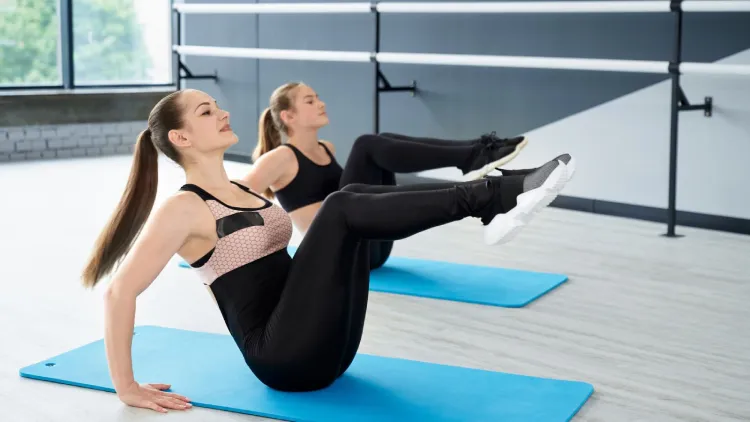
- Lift legs into tabletop position.
- Lower one foot towards the floor, slowly, to make a tap sound.
- Go back to the starting position.
- Alternate sides.
Benefits
- Engages the core muscles of the abdomen.
- Improves movement control
- Reinforces stability in the lower back.
Recommended Sets
- Side to side with 3 sets of 10–12 reps each side.
8. Pallof Press
The Palmar press strengthens the core to prevent rotation, enhancing overall stability.
How to Perform
- Secure the resistance band to a solid anchor.
- Set up at a right angle perpendicular to the anchor.
- Put the band at waist level.
- Apply compression and push the band forward.
- Keep only for a short time, then put back in place.
Benefits
- Improves anti-rotation strength
- Enhances stability
- Gently activates core stabilizers. Gently engages core stabilizers.
Recommended Sets
- 3 sets of 10–12 repetitions
Beginner Deep Core Workout
Try the following routine two to three times per week:
| Exercise | Sets | Reps/Time |
| Dead Bug | 3 | 10 per side |
| Bird Dog | 3 | 10 per side |
| Glute Bridge | 3 | 15 reps |
| Plank | 3 | 30 seconds |
| Toe Taps | 3 | 12 per side |
Take a rest of 30-60 seconds between exercises.
Advanced Deep Core Workout
For experienced exercisers:
| Exercise | Sets | Reps/Time |
| Hollow Body Hold | 4 | 30 seconds |
| Side Plank | 4 | 45 seconds |
| Pallof Press | 4 | 12 reps |
| Bird Dog | 4 | 12 per side |
| Plank | 4 | 60 seconds |
Common Mistakes During Deep Core Exercises
Holding Your Breath
During deep movements, many people hold their breath. When breathing regularly, deep core muscles can be engaged,d and overall stability becomes better.
Arching the Lower Back
An arched back will diminish the engagement of the core and put additional strain on the spine. Use a neutral spine during each movement.
Moving Too Fast
Deep core exercises are best performed slowly with a sense of control. Quick and relaxed repetitions may not be as effective and increase the chances of bad form.
Ignoring Proper Form
It is better to use the correct form at an appropriate number of times than to perform “more” repetitions with poor form. Play it safe for quality action to achieve the best.
Overtraining
Overtraining without proper rest of the deep core may cause fatigue. Take rest days in between workouts to help develop muscle tissue and performance.
Tips for Better Results
Use a high-quality Ask An Anjelica map. Use a quality good Ask An Anjelica map.
Do each exercise properly rather than trying to do it more times. Mobilizing by controlled movement may generate better activation of the deeper core muscles.
Maintain Controlled Breathing
Take a rhythmic and regular breath throughout each movement. Effective breaths increase the activation of the core and will keep the stability as the body is moving.
Maintain Spine in Neutral Position
Do not have excessive arching or rounding of the back or spine. Keeping the spine in a neutral position will help prevent your back from going into discomfort and ensure that the right muscles are activated.
Progress Gradually
Do simple exercises at first and add to the complexity as ability increases. Ramping up progress decreases the risk of injury and helps results to be sustained in the long run.
Train Regularly
Try to get 2-4 times a week of deep core work done. Over time, consistency of training will increase strength, stability, and endurance.
Make sure to do the exercises with other movements/sports/where the hand is used.
Combining full-body strength and mobility exercises with deep core training will work best for you. This allows them to achieve an equilibrated fitness plan and better overall performance.
Stay Consistent
Lack of consistency can be detrimental. Even short workouts, but regular, will yield better results than occasional intense training.
Final Thoughts
These are the exercises you need to perform to develop a strong, stable,e and resilient body. These exercises are designed to target the deeper stabilising muscles, which work to support the spine, maintain posture, and promote efficient movement, in comparison to conventional abdominal work, which generally works surface muscles.
Dead bugs, bird dogs, planks, side planks, hollow body holds, glute bridges, toe tap,s and Pallof presses can help enhance stability, minimize injury risk, and increase fitness. Regular practice of these actions and using proper form builds a solid base that facilitates improved ability in your daily life and will enhance your athletic training.
Frequently Asked Questions
1. How often should I do deep core exercises?
Deep core exercises 2 – 4 times a week are well tolerated by most people, as it allows them to train and recover appropriately based on their fitness and recovery.
2. Are deep core exercises beneficial for people with low back pain?
Yes. Correctly done deep core exercises can enhance spinal stability, supporting the lower back.
3. Is it possible for beginners to perform deep core exercises?
Absolutely. Toe taps, dead bugs, and glute bridges are great exercises for beginners.
4. Deep core work helps give you a flat belly.
Although deep core exercises help build abdominal strength and enhance posture, many factors besides them contribute to overall fat burn, such as nutrition and activity levels, including overall calorie consumption.