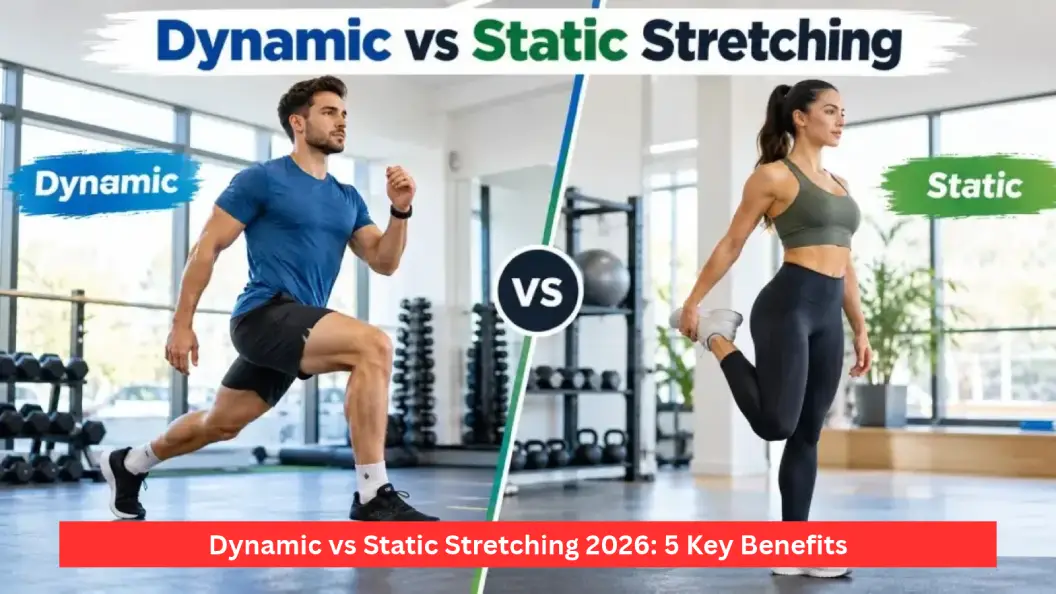

Dynamic vs Static Stretching depends on when and how you stretch. Dynamic stretches (like leg swings, arm circles) are great for warm-ups, and static stretches (where the stretch is held) are good for after exercise or flexibility sessions. Both can assist you in creating a productive stretching exercise.
- How does Dynamic Stretching work?
- Benefits of Dynamic Stretching
- What Is Static Stretching?
- Dynamic vs Static Stretching: Key Differences
- 5 Best Dynamic Stretching Examples
- 5 Best Static Stretching Examples
- Is Dynamic or Static Stretching Better Before a Workout?
- But does that mean static stretching is bad before workouts?
- Should You Do Static Stretching After Exercise?
- Simple Before-and-After Workout Routine
- After Your Workout: 5-Minute Static Routine
- Common Stretching Mistakes to Avoid
- Conclusion
- Frequently Asked Questions
How does Dynamic Stretching work?
Dynamic stretching is stretches that activate movement of your muscles and joints through a comfortable range of movement without holding the stretch for extended periods.
Try to take some time to swing your legs before running or to do some slow arm circles before the upper body workout.
These movements get you ready to participate in the activity that is to follow.
Dynamic stretching is not just bouncing; it should be smooth and controlled. You aren’t aiming to go beyond your usual range of motion.
Benefits of Dynamic Stretching
There are several practical benefits of dynamic movements:
- Sets the body up for activity: Gradually increases the temperature of muscles and circulation.
- Rehearses helpful movement patterns: Exercise can be similar to what you will do during your workout.
- Promotes ROM: Controlled repetitions allow movement of your joints.
- May promote athletic performance: Suitable dynamic warm-ups can enhance some speed, power and coordination exercises.
For instance, walking lunges can be used to prepare your legs for an overall lower body workout because they are similar in movements.
Dynamic stretching should NOT be a substitute for a full warm-up, however, which slowly builds up in intensity.
What Is Static Stretching?
Static stretching involves moving into a comfortable stretched position and holding it without repeated movement.
A familiar example is standing on one leg, holding your opposite ankle, and gently stretching your quadriceps.
You might hold that position for 20–30 seconds before switching sides.
Static stretches are commonly performed after workouts, during yoga sessions, or as part of a separate flexibility routine.
Benefits of Static Stretching
Static stretching offers several useful benefits:
- Improves flexibility: Consistent practice can increase your available range of motion.
- Targets specific muscles: You can focus on areas such as your hamstrings, calves, or shoulders.
- Supports flexibility goals: Longer-term stretching programs can help people become more comfortable in restricted positions.
- Requires little equipment: Many static stretches are suitable for home workouts.
Static stretching doesn’t have to be painful to be useful.
A gentle to moderate pulling sensation is usually sufficient. Forcing yourself into an extreme position can create unnecessary discomfort.
Dynamic vs Static Stretching: Key Differences
Although both methods involve stretching muscles, they serve different purposes.
| Feature | Dynamic stretching | Static stretching |
| Movement | Continuous, controlled | Position held steadily |
| Main purpose | Movement preparation | Flexibility development |
| Common timing | Before workouts | After workouts or separate sessions |
| Examples | Leg swings, arm circles | Hamstring stretch, quad stretch |
| Typical beginner approach | 8–12 controlled repetitions | 15–30-second holds |
| Primary focus | Active movement | Sustained stretch |
| Equipment | Usually none | Usually none |
Which is better? Dynamic stretching is generally the more practical choice before physical activity, while static stretching is particularly useful when improving flexibility is your goal.
Neither method is universally superior.
5 Best Dynamic Stretching Examples
The following exercises are easy to include in a warm-up. Start gently and increase your movement range only when comfortable.
1. Arm Circles
Arm circles prepare your shoulders for upper-body movement.
How to do it:
- Stand upright with your feet shoulder-width apart.
- Extend both arms out to your sides.
- Make small forward circles.
- Gradually increase their size without forcing the movement.
- Reverse direction.
Perform approximately 10 circles each way.
Best for: Upper-body workouts, swimming preparation, and general shoulder movement.
2. Controlled Leg Swings
Leg swings are exercise in which one leg swings forward and back while keeping the body balanced.
How to do it:
- Place your body next to a solid wall.
- Place one hand on it.
- Transfer the weight to one leg.
- Swing the opposite leg to and from the front and back.
- Maintain stable trunk.
- Swing 8-12 comfortably per leg.
Don’t swing so hard that you over arch your lower back.
Ideal for: Preparing for lower-body workouts and running.
3. Walking Lunges
Walking lunges involve your hips, knees, and ankles.
How to do it:
- Stand upright.
- Step forward into a comfortable lunge.
- Bend both knees without forcing a deep position.
- Push through your front foot to stand.
- Step forward with your opposite leg.
Complete 6–8 controlled repetitions per side.
Keep your front knee moving in the general direction of your toes.
Best for: Preparing for squats, lunges, and lower-body training.
4. Standing Hip Circles
Hip circles introduce gentle multidirectional movement.
How to do it:
- Stand with your feet hip-width apart.
- Place your hands on your hips.
- Slowly move your hips in a circular pattern.
- Complete 8 circles in one direction.
- Reverse direction.
Keep the circles small if you notice discomfort.
Best for: General hip mobility and lower-body warm-ups.
5. Gentle Torso Rotations
Torso rotations help you practice turning your upper body.
How to do it:
- Stand with your feet shoulder-width apart.
- Bend your elbows comfortably.
- Slowly rotate your torso toward one side.
- Return to the center.
- Repeat in the opposite direction.
Perform approximately 10 repetitions per side.
Keep your movement controlled rather than twisting forcefully.
Best for: Upper-body movement preparation.
5 Best Static Stretching Examples
Static stretches are convenient after exercise or during a dedicated flexibility session.
Hold each position within a comfortable range and breathe naturally.
1. Standing Quadriceps Stretch
Place hands on a wall for support.
Gently take one knee and bend it and hold it to the back of your body.
Maintain a relatively parallel relationship of thighs and an upright torso.
Wait until 20-30 seconds before switching sides.
Target: Quadriceps on the front of your thighs.
2. Standing Hamstring Stretch
Straighten one leg slightly forward, placing heel on floor.
Do not straighten your supporting knee leg.
Gently flex forward from your hips until you feel a slight stretch in your back of the long leg.
Maintain for 20-30 seconds on each leg.
Target: Back of thighs – the hamstrings.
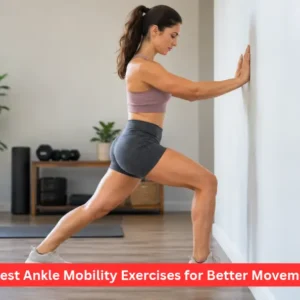
3. Standing Calf Stretch
Stand against a wall and bring hands to wall.
Step back on one foot, maintaining heel contact.
Keeping the front knee bent, step forward slowly.
Breathe out as you move to the other leg, holding the stretch for 20-30 seconds.
Target: Calf muscles (gastrocnemius in particular).
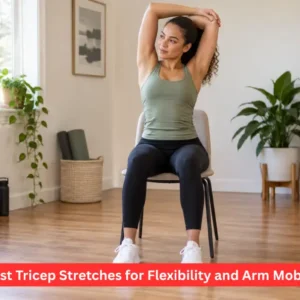
4. Overhead Triceps Stretch
Raise one arm overhead and bend your elbow so your hand moves behind your upper back.
Use your opposite hand to provide light support.
Avoid pulling aggressively or arching your lower back.
Hold for approximately 20 seconds before changing arms.
Targets: Triceps, particularly the long head.
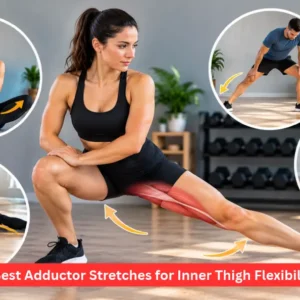
5. Seated Butterfly Stretch
Sit on the floor and bring the soles of your feet together.
Allow your knees to relax outward while maintaining a comfortable upright posture.
Avoid pressing your knees toward the floor.
Hold for approximately 20–30 seconds.
Targets: Inner-thigh muscles and hip adductors.
Is Dynamic or Static Stretching Better Before a Workout?
For most workouts, dynamic stretching is the better starting choice because it allows you to practice movements while gradually preparing your body for exercise.
For example, before running, you might begin with brisk walking, followed by controlled leg swings and walking lunges.
Before lifting weights, you might perform arm circles, hip movements, and lighter sets of your planned exercises.
But does that mean static stretching is bad before workouts?
Not necessarily.
Research suggests that prolonged static stretching immediately before maximal strength or explosive activities can temporarily reduce some strength measurements.
Shorter static holds incorporated into a complete dynamic warm-up generally have much smaller effects.
A 2025 international expert consensus recommends avoiding prolonged static holds exceeding 60 seconds per muscle immediately before isolated maximal or explosive contractions.
The practical lesson is simple: match your warm-up to your planned activity rather than following rigid stretching rules.
Should You Do Static Stretching After Exercise?
Static stretching is an exercise technique that can be helpful after working out to develop flexibility.
You are already warm and can take time to stretch muscles that you wish to stretch.
But it’s not necessary to perform static stretching at the end of all workouts.
Stretching after exercise doesn’t always improve recovery or reduce delayed onset muscle soreness.
Static stretching may be beneficial for improving flexibility when done after exercise, or as part of a separate session.
Simple Before-and-After Workout Routine
You don’t need a complicated routine to combine both stretching methods.
Before Your Workout: 5-Minute Dynamic Warm-Up
| Activity | Duration |
| Brisk walking or marching | 2 minutes |
| Arm circles | 30 seconds |
| Controlled leg swings | 1 minute |
| Standing hip circles | 30 seconds |
| Gentle walking lunges | 1 minute |
Increase your effort gradually, and add activity-specific warm-up movements when needed.
After Your Workout: 5-Minute Static Routine
| Stretch | Duration |
| Standing quadriceps stretch | 30 seconds each side |
| Standing hamstring stretch | 30 seconds each side |
| Standing calf stretch | 30 seconds each side |
| Overhead triceps stretch | 30 seconds each side |
| Seated butterfly stretch | 1 minute |
Adjust the holds according to comfort. The routine is intended for flexibility, not as a guaranteed recovery method.
Common Stretching Mistakes to Avoid
Stretching Through Pain
Sharp pain isn’t a sign that a stretch is working.
Reduce the range or stop if you experience painful pulling, pinching, or unusual joint discomfort.
Moving Too Fast During Dynamic Stretches
Rapid, uncontrolled movements can make it difficult to maintain proper technique.
Use smooth repetitions rather than aggressive bouncing.
Performing Long Static Holds Before Explosive Exercise
Extended stretching immediately before maximal efforts may temporarily influence strength performance.
Prioritize progressive movement preparation instead.
Skipping Your General Warm-Up
Dynamic stretching is useful, but a few leg swings alone may not adequately prepare you for demanding activity.
Begin with easy movement and build intensity gradually.
Assuming Stretching Prevents Every Injury
Stretching is only one part of physical fitness.
Appropriate strengthening, progressive training, balance, coordination, and recovery also matter.
Conclusion
Dynamic and static stretching aren’t competing methods. They simply serve different purposes.
Use controlled dynamic movements when preparing for activity, and choose static stretches when you want to work on flexibility.
The best routine is one that suits your goals, feels comfortable, and fits consistently into your schedule.
For more stretching techniques and beginner-friendly mobility ideas, explore Stretchlee and build a routine that works for you.
Frequently Asked Questions
A. Dynamic or Static Stretching Before Exercise?
Dynamic stretching is recommended before exercise as it is used to prepare the body to take part in the activity.
2. Do Static Stretches Decrease Athletic Performance?
Long-duration static stretches can have a temporary decrease in strength/explosive performance.
3. Before or after running – which should you do?
Use dynamic movements prior to running and static stretches after as needed to enhance flexibility.
4. Does Static Stretching increase flexibility?
Regular static stretching can help increase flexibility and joint mobility.