


Cable kickbacks are a unilateral glute workout that primarily targets the gluteus maximus, then the gluteus medius, hamstrings, and core. They have a low cable pulley and an ankle strap to offer adjustable resistance. To maintain proper form, keep the hips square, tighten the abdominals, move from the hips, and avoid swinging and arching of the lower back. A good place to begin is 2-4 sets of 10-15 reps per leg. They are best performed in conjunction with other exercises like hip thrusts, squats, and Romanian deadlifts.
- What is a Cable Kickback?
- Which Muscles are Worked by Cable Kickbacks?
- How to Do Cable Kickbacks Properly
- How to Set Up Cable Kickbacks
- How To Feel Cable Cable Kickbacks In Your Glutes
- Why Do I Feel Cable Kickbacks in My Hamstrings or Back?
- Do Cable Kickbacks Work For Glutes?
- Cable Kickbacks vs. Hip Thrusts: Are They Redundant?
- How Many Cable Kickbacks Should You Do?
- Cable Kickbacks for Upper Glutes
- Cable Kickbacks to the Side
- Cable Kickbacks Types
- Common Cable Kickback Mistakes
- Cable Kickbacks Tips for Better Results
- Cable Kickbacks vs. Other Glute Workouts
- Cable Kickbacks for Home Gyms
- What About Cable Kickbacks for Triceps?
- Cable Kickbacks Workout
- Conclusion
- Frequently Asked Questions
What is a Cable Kickback?
Cable kickbacks are a hip extension exercise using a cable machine and ankle strap that is done unilaterally. One ankle is connected to a low pulley, and one leg is used to support your body. You then extend the attached leg back with resistance, maintaining control of the torso and pelvis.
The gluteus maximus is the primary target of the main cable kickbacks, but the gluteus medius, hamstrings, and core are also engaged. As the bar is loaded on one leg, this can be beneficial to work on unilateral strength and control.
The cable offers variable resistance, making it convenient to slowly ramp up the difficulty as strength increases.
Quick Overview
| Feature | Cable Kickbacks |
| Main target | Glutes |
| Primary muscle | Gluteus maximus |
| Secondary muscles | Gluteus medius, hamstrings, core |
| Equipment | Cable machine + ankle strap |
| Movement | Hip extension |
| Training style | Unilateral isolation |
| Typical reps | 10–15 per side |
Which Muscles are Worked by Cable Kickbacks?
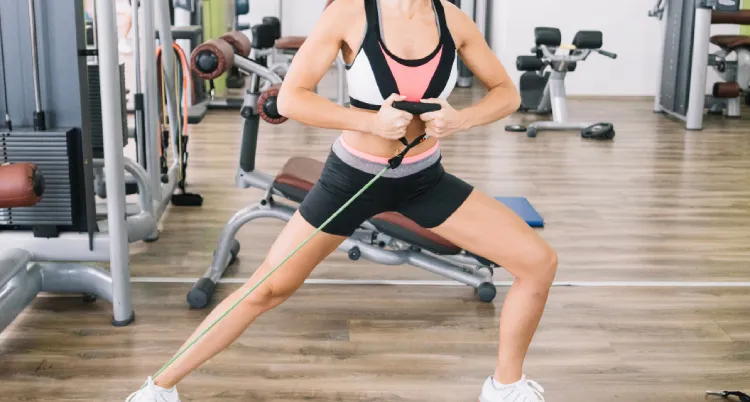
The main cable kickbacks target muscles are the gluteal muscles. This will enable you to utilize proper technique and eliminate momentum.
1. Gluteus Maximus
The gluteus maximus is the biggest muscle that stabilizes the hip and pulls the leg backwards. It gets the bulk of the training stimulus in the typical variation.
2. Gluteus Medius
The gluteus medius helps to maintain pelvic stabilization during single-leg standing. May be more complicated if the working leg is moving backward and slightly outward or with side variations.
3. Gluteus Minimus
Gluteus minimus helps with hip movement and stabilizes the pelvis. It is used in combination with other gluteal muscles in unilateral exercises.
4. Hamstrings
Some activation of hamstrings is normal, since they help to extend the hip. But they should not be the sole focus of a glute exercise.
5. Core
The lower-back and abdominal muscles are important for stabilizing your torso and pelvis. A well-braced core will minimize the need for unnecessary spine and hip movement.
How to Do Cable Kickbacks Properly
Using heavy resistance is not the best way to reap the benefits of the cable kickbacks technique. The movement has to be out of your hip and not out of your body.
Step 1: Set Up the Cable
Place the pulley at the bottom and attach an ankle strap. Tie the strap around one ankle and select a light to medium weight.
Step 2: Step Your Body
Stand in front of the machine and brace it for stability. Maintain a slight bend in the knee that is on the ground and a slight tilt forward at the hips.
Tighten your core and maintain a neutral back.
Step 3: Push back your leg
Tighten your working glute and push your leg towards the rear of the hip. Consider moving your heel back rather than raising your foot.
Step 4: Squeeze the Glute
Take a short break at the end position that is comfortable. Tighten your glute while keeping the lower back flat.
Step 5: Return Slowly
Move your leg forward in a controlled manner. Be sure not to pull your leg back to the starting position too quickly when using the cable.
A controlled return will allow for tension and not allow momentum to overtake.
How to Set Up Cable Kickbacks
Control of the movement is easier if it is set up properly.
Place the pulley at its lowest position.
- Attach an ankle cuff.
- Tie it around one ankle.
- Turn your body towards the cable machine.
- Hold the frame for support.
- Slightly bend the knee of the standing leg.
- Hinge forward slightly.
- Brace your core.
- Maintain the hips in a square position.
- Start with a level of resistance that is easy to handle.
If you’re new to the exercise, try a lighter weight first, before adding resistance.
How To Feel Cable Cable Kickbacks In Your Glutes
If this is the case, and the buttocks are difficult to feel, the weight generally should not be raised. Rather, work on your position and precision.
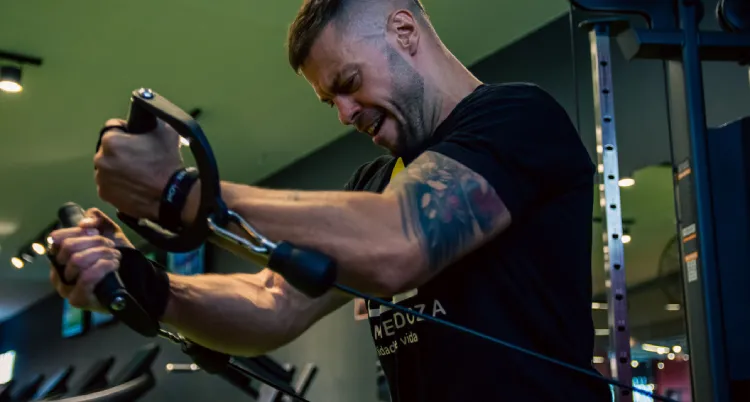
Here are some tips on cable kickbacks:
- Reduce the resistance.
- Pull into and keep hips square.
- Brace your core.
- Move slowly.
- Pause at the top.
- Avoid swinging.
- Maintain a fixed body trunk.
- Concentrate on hip extension.
Try to push your heel towards the back wall. Check the resistance; if your body begins to move with the leg, it is too heavy.
Why Do I Feel Cable Kickbacks in My Hamstrings or Back?
There is a normal amount of hamstring activation as this helps with hip extension. If the hamstring or knees or the back of the thighs are over-involved, however, this may be due to incorrect positioning or too much resistance.
Common causes include:
- Using too much weight
- Swinging the leg
- Lifting the pelvis up and backwards
- Rotating the hips
- Snapping the leg too high up.
- Losing core tension
If you notice the cable kickbacks feeling more in the hamstrings than in the glutes, reduce the resistance and the speed of the exercise.
If you notice the exercise primarily in your low back, concentrate on maintaining a stable pelvis and spine. If you tend to arch your back too much, it is likely that you are going too far with your hip motion.
Do Cable Kickbacks Work For Glutes?
Yes. Cable kickbacks are a great option to add some body to the glutes during a lower body workout. They can be used for one side at a time and have adjustable resistance.
They are especially helpful as a complementary exercise after more intense exercises.
To complete a glute workout, pair them up with:
Cable kickbacks are most effective for strengthening the glute muscles when combined with a regular resistance-training routine.
Cable Kickbacks vs. Hip Thrusts: Are They Redundant?
Not necessarily. Both exercises train the glutes, but they have different roles.
| Cable Kickbacks | Hip Thrusts |
| Isolation movement | Compound movement |
| Usually unilateral | Usually bilateral |
| Lower loading | Higher loading |
| Targeted glute work | Overall glute strength |
| Useful as accessory | Useful as main exercise |
Hip thrusts are generally better suited to heavier loading, while cable kickbacks allow focused single-leg work.
Using both can make sense. Perform hip thrusts earlier in the workout and use kickbacks afterward for additional glute volume.
How Many Cable Kickbacks Should You Do?
A good rule of thumb is 2–4 sets of 10–15 reps per leg.
The pairing for beginners is 2–3 sets, and for experienced lifters it is 3–4 sets, depending on their training volume.
Resistance should be at a level of difficulty that is challenging but not so difficult that technique is compromised. If you must swing or arch your back to lift the weight, decrease the weight.
Cable Kickbacks for Upper Glutes
Many people use cable kickbacks to target upper glutes. While it is not possible to isolate any specific area of the glute, it’s also important to note that it is possible to alter the muscles that contribute to the movement by changing the direction of the movement.
Attempt to move the leg backward, slightly outwards (outward rotation) without moving the pelvis. This may include the lateral gluteal muscles, including the gluteus medius.
Don’t make the swing a big side-to-side swing. It’s more important that controlled movement is greater than height.
Cable Kickbacks to the Side
Side cable kicks are more on hip abduction and may recruit more gluteus medius and minimus.
This variation is done by:
- Put an ankle cuff on a low pulley.
- Make sure you are on the side of the machine.
- Stand in a frame for stabilization.
- Brace your core.
- Push the working leg outwards.
- Pause briefly.
- Return slowly.
Maintain body stability and refrain from hip turns.
Cable Kickbacks Types
If you are looking to get some cable kickbacks, there are a number of different types to choose from.
Standard Cable Kickback
The leg is raised straight backward. This is the most basic one, and it’s a great stepping stone.
Slightly Outward Kickback
The leg swings back and at an angle to the side to engage more of the lateral glutes.
Straight-Leg Cable Kickback
The working leg stays fairly straight when the hip extends. Controlled resistance and don’t push the range.
Bent-Knee Cable Kickback
Knee remains bent with hip extended. This alters the movements of the body and could make it easier for some to concentrate on the glutes.
Side Kickback
Leg does not extend backwards but laterally, thus emphasizing hip abduction.
Machine Kickback
A dedicated glute kickback machine ensures more stability and may be easier to load. A cable machine has the added flexibility of being able to be set up in different ways and have different directions of movement.
Common Cable Kickback Mistakes
1. Too Much Weight
One of the most frequent errors made is using too much resistance. The swing of the body is usually caused by heavy weight.
Fix: Reduce weight and emphasize controlled reps.
2. Swinging
Momentum reduces the amount of work performed by the glutes.
Fix: Slow down movement and control return.
3. Arching Lower Back
Attempting to kick up higher may lead to overextending the spine.
Fix: Tighten core and stop when it feels comfortable.
4. Rotating the Hips
When the pelvis is opened up, the pattern of the movement changes.
Fix: Maintain hip bones facing forwards and allow the leg to move.
5. Excessive ROM in
The more range, the better, is not always the rule. If back arches or hips turn, it’s too big.
Fix: If possible, le use the widest range you can control.
6. Losing Tension
If the leg is pulled forward by the cable too soon, there will be less control.
Fix: Slowly return and keep tension throughout the set.
Cable Kickbacks Tips for Better Results
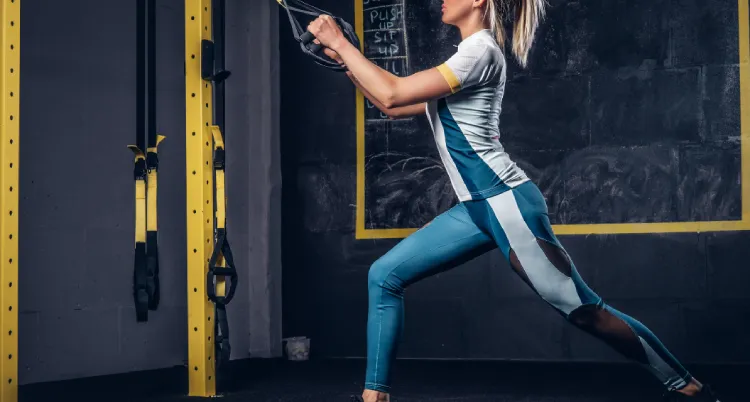
These are some easy cable kickback tips to follow during the workout:
- Begin at a lower level of resistance.
- Do not move your standing leg.
- Brace your core.
- Don’t let your pelvis tilt.
- Drive from the hip.
- Press the opposite glute on top.
- Control the return.
- Avoid excessive range.
- Increase resistance gradually.
The objective is not to lift the heaviest weight! The objective is to get the targeted muscle to do the action.
Cable Kickbacks vs. Other Glute Workouts
- Cable kickbacks vs hip thrusts: Hip thrusts tend to offer greater loading, whereas cable kickbacks offer greater unilateral work.
- Cable kickbacks vs. squats: Squats work several muscles in the lower body; kickbacks work the hips with more specificity.
- Cable kickbacks and Romanian deadlifts: Romanian deadlifts are done with a loaded hinge, and cable kickbacks are more of an isolation exercise.
- Cable kickbacks vs resistance bands: They both work the glutes, but cable machines let you easily adjust and progress the resistance.
Using several exercises can provide a more balanced glute-training program.
Cable Kickbacks for Home Gyms
If you work out at home, find a functional trainer or low pulley cable machine.
Important features include:
- Stable construction
- Adjustable pulley height
- Smooth cable movement
- Secure ankle attachment
- Appropriate resistance capacity
This is one of the most versatile attachments for the exercise and includes an adjustable ankle cuff.
While shopping for equipment that fits your budget, not just price, consider machine stability, the quality of the cable, attachment compatibility, warranty, and the available resistance.
What About Cable Kickbacks for Triceps?
Cable kickbacks for triceps are a workout that can be performed on the triceps, but it is not the same as a workout done on the glutes.
Glute kickbacks involve hip extension and take the leg backward. A triceps kickback is an elbow extension movement that brings the forearm back behind the body to strengthen the triceps.
Thus, cable kickback triceps Jeff Nippard can be associated with triceps training instead of glute training.
If you are looking to train triceps, avoid using the cable glute variation with ankle cuffs.
Cable Kickbacks Workout
Try this simple glute-focused workout:
| Exercise | Sets | Reps |
| Hip thrust | 3 | 8–12 |
| Romanian deadlift | 3 | 8–12 |
| Bulgarian split squat | 3 | 8–12/side |
| Cable kickback | 3 | 10–15/side |
| Side kickback | 2 | 12–15/side |
Perform the heavier compound exercises first, then use cable work for additional glute volume.
Beginners can reduce the number of exercises and gradually increase volume as their strength improves.
Conclusion
Cable kickbacks are a useful isolation exercise for focused glute training. They primarily work the gluteus maximus while the gluteus medius, minimus, hamstrings, and core contribute to movement and stability.
For the best results, use a manageable weight, keep your hips square, brace your core, avoid swinging, and control both the lifting and lowering phases.
They work especially well alongside compound movements such as hip thrusts, squats, Romanian deadlifts, and split squats. Standard, side, bent-knee, and slightly outward variations can also add variety to your glute routine.
The goal is simple: controlled movement, consistent progression, and proper technique rather than simply using the heaviest cable setting.
Frequently Asked Questions
1. Are cable kickbacks good for glutes?
Yes. Primarily, they work the gluteus maximus and are great additions to exercises such as hip thrusts or squats.
2. How many cable kickbacks should I do?
Begin with 2-4 sets of 10-15 reps per leg with controlled resistance.
3. Why do I feel cable kickbacks in my hamstrings?
It is normal for there to be some hamstring activation. If they are strong, lighten the load and get better form.
4. Are cable kickbacks upper glute exercises?
They are able to highlight the glutes, particularly if there is some lateral motion in the movement, but they cannot completely isolate one area of the glute.