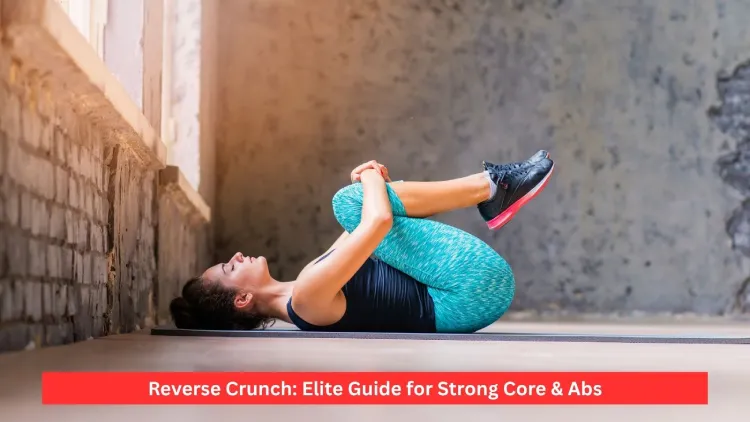

The reverse crunch works to strengthen the core, with a focus on lower abdominals, with a bodyweight. Elevating the knees/body toward the chest, instead of the shoulders, minimises strain on the neck whilst simultaneously positively enhancing core stability, posture, and balance. A reverse crunch can be done with ease at the gym or at home and is great for both beginners and advanced fitness buffs. It supports core strength and fitness when used in combination with other sets of fitness training and good nutrition.
- What is a Reverse Crunch?
- Benefits of Reverse Crunch
- Muscles Worked During Reverse Crunch
- How to Perform a Reverse Crunch Properly
- Reverse Crunch Proper Form Tips
- Common Reverse Crunch Mistakes
- Reverse Crunch Variations
- Who Should Perform Reverse Crunches?
- Here is an effective reverse crunch exercise routine
- Reverse Crunch vs Traditional Crunch
- Tips for Better Results
- Final Thoughts
- Frequently Asked Questions
What is a Reverse Crunch?
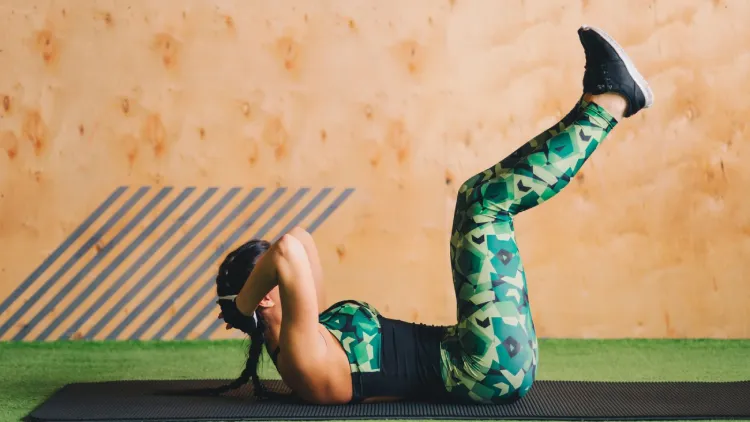
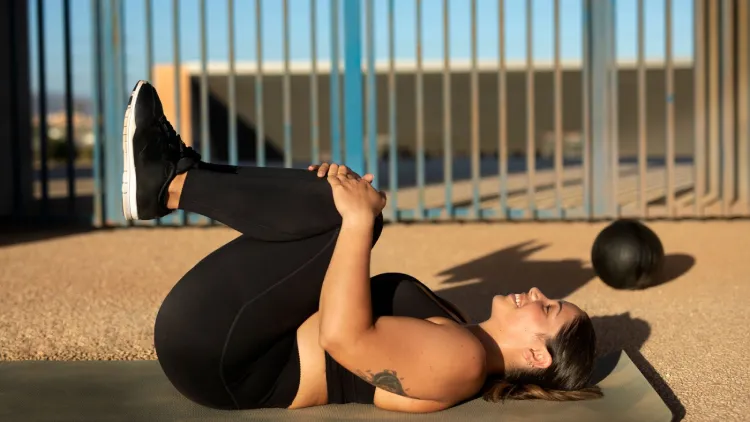
Reverse Crunch is a bodyweight core workout that helps build abdominal strength through lifting the knees and hips towards the chest, while the upper body remains on the floor. Compared to a normal “crunch”, a reverse crunch is more about a movement of the pelvis rather than the shoulders and places more focus on the lower abs and less on the lower neck and back.
The reverse crunch doesn’t need any equipment and can be performed by beginner and advanced fitness enthusiasts. It is also done in the gym, at home, and can be made part of strength training routines, pilates programs, and general fitness programs.
Key Highlights
- Focusses on lower abs: involves the lower section of the Rectus Abdominis with more focus than the rest of the core.
- Equipment-free: a simple move that doesn’t involve equipment and that can be done nearly anywhere.
- Enhances core stability: Tones all belly muscles, side muscles, and hip flexors to stabilize and improve posture and balance.
- Minimizes neck strain: Head and shoulders will remain on the ground, which will be more comfortable than conventional crunches for many individuals.
- Requires no experience: Great for novices, intermediate exercise enthusiasts, and advanced athletes to easily progress.
- Enhances functional fitness: Core strength that benefits daily function, sports activity, and weight training.
Benefits of Reverse Crunch
The reverse crunch is a great exercise for the core, a great stability workout, and a very good overall fitness builder. It has several key advantages,
some of which are:
- Involves lower abs: Focuses on the lower abs with an emphasis on the core.
- Enhances core stability: Strengthening of the core to improve balance, posture, and daily activities.
- Lessens neck pressure: Head and shoulders remain on the ground during the exercises, which is more comfortable than shoulder crunches.
- Improves sitting posture: strengthens muscles that stabilize the spine and pelvis so that one can sit better.
- Improves athletic functioning: increases core strength, coordination, and balance in playing games and physical activities.
- Can be done at any fitness level: Good for people to do in their homes or gyms that don’t have a lot of equipment.
- Supports toned abs: Creates the abs, adding to a more toned and defined midsection if combined with appropriate nutrition and workout.
Muscles Worked During Reverse Crunch
Multiple muscles are engaged with the reverse crunch.
Primary Muscles
Rectus Abdominis
A long abdominal muscle to give the famous “six-pack” effect when levels of body fat have reduced to a satisfactory state. It is engaged during the “reverse crunch” exercise to draw the pelvis upward.
Transverse Abdominis
The deepest of the abdominal muscles encircles the waist like a belt for weight-lifting. Will hold the spine steady all the way through the repetition.
Secondary Muscles
Other muscles that are involved are:
- Internal obliques
- External obliques
- Hip flexors
- Pelvic stabilizers
- Deep spinal stabilizers
The muscles involved in the reverse crunch work together to produce a comprehensive core workout, not an isolation exercise for just one.
How to Perform a Reverse Crunch Properly
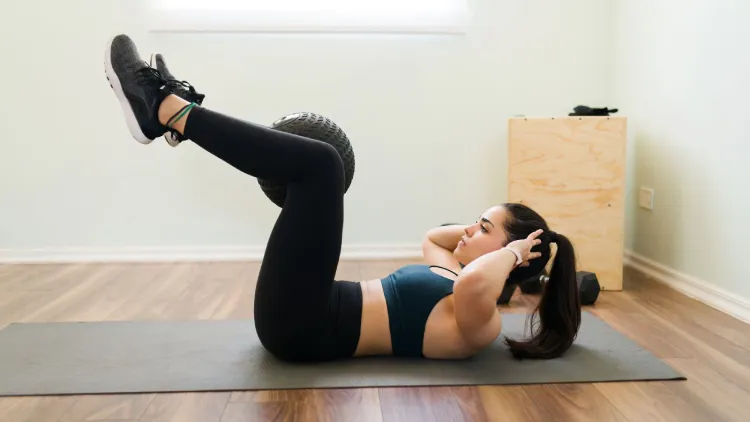
In order to achieve optimal muscle engagement and to minimise the risk of injury, it is important to learn how to perform a reverse crunch correctly.
Step 1: Starting Position
Start on your back on an exercise mat.
A reverse crunch starting position should have:
- Head resting comfortably
- Arms at the sides of the body
- Palms facing downward
- The knees were at a right angle (90 degrees)
- Feet elevated
- Core gently braced
The collage is used for the foundation before beginning movement.
Step 2: Lift Knees
Slowly lower knees to chest as you begin a gentle pelvic (tilt) motion.
Don’t extend the legs on the swing.
Instead, try to tuck your buttocks towards your ribs.
Step 3: Lift the Pelvis
Keep lifting until your hips have lifted a few inches off the ground.
The exercise is not a reverse crunch hips lift with the legs thrown, it is a controlled lift using the hips only.
The abdominal muscles are engaged better with a small motion that is done well, rather than a big, uncontrolled motion.
Step 4: Pause
Pause in the top position, squeezing the belly muscles while holding.
This rest between movements helps to create greater tension and mind-muscle connection.
Step 5: Lower Slowly
Become fully under control in the starting position.
The lowering portion of the movement is at least as long as the raising portion.
Low reps prevent relying on momentum and help to activate the abs.
Reverse Crunch Proper Form Tips
The perfect technique produces better results than completing more repetitions.
Follow these guidelines:
- Keep your neck in a neutral position
- Press your lower back toward the ground in a relaxed manner
- Do a controlled (squeeze) pelvic tilt
- Raise your hips just a few inches
- Exhale while lifting
- Inhale while lowering
- Move slowly
- Don’t swing the legs
- Keep abdominal muscles tight for all reps
It is easier to progress with the reverse crunch when form is mastered at the start.
Common Reverse Crunch Mistakes
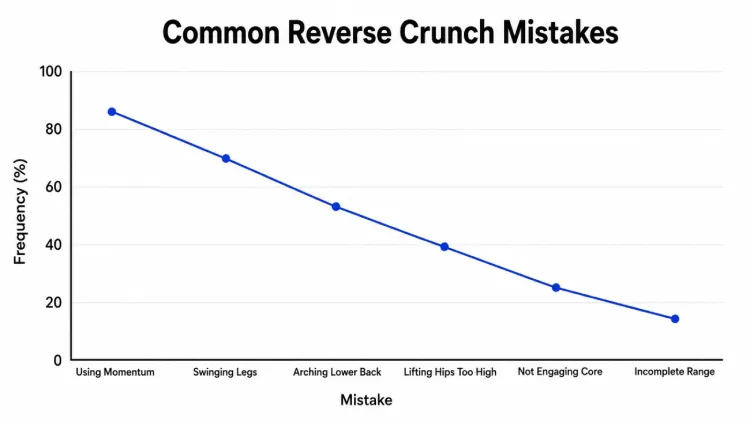
The reverse crunch is a popular exercise for toning the abdomen, but many people don’t do it correctly or rely on momentum to accomplish the task. Recognizing and eliminating these errors is key to achieving optimal results and decreasing risk for developing lower back issues.
Key Mistakes to Avoid
- Utilisation of momentum: Leg swinging decreases tension in the abs and decreases muscle activation.
- Too high: Dropping too far onto the shoulders alters the exercise, distracting focus from the core.
- Breathe out and do not breathe in: having reduced control in your core leads to poor breathing and ultimately an uncontrolled movement.
- Too fast reps: When reps are done quickly, the amount of time spent under tension is limited, decreasing the effectiveness of the exercise.
- Do not arch in the lower back: When the core muscles are not engaged, excess tension can be placed on the spine.
- Failure to control the bottom: If you do not control the bottom, most of the muscle building will be lost as you lower into that position quickly.
- Poor movement while pelvic tilt is missing: In the absence of the pelvic tilt, the lower abdominal unit is not activated, as this is part of the pelvic control.
Why Proper Form Matters
- Strengthens glutes and thighs
- Provides good core stability and balance
- Helps prevent lower back pain and reduces the risk of lower back strain
- Causes more muscles to be involved overall
- Boosts triggers, leads to greater visibility, and improved speed of results.
Slow, controlled, and focused movements make for greater effectiveness when performing the reverse crunch to develop a strong and stable core.
Reverse Crunch Variations
There are some variations possible, which focus on increasing difficulty or providing variation.
Cross Leg Reverse Crunch
It’s a reverse crunch that uses the cross ankle lift and will engage the core muscles by crossing the ankles first, then lifting the pelvis. It alters body positions, but not body movement patterns.
Reverse Crunch on straight Legs
When the legs are extended, a greater leverage is created, making it a much more challenging exercise.
Bench Reverse Crunch
Bench reverse crunch offers more range of motion with upper body stability.
Decline Reverse Crunch
Depending on the bench, you can put more resistance into the movement by doing it while it’s on a decline bench.
Weighted Reverse Crunch
Use of a light medicine ball or ankle weights makes it tougher.
Cable Reverse Crunch
A reverse cable crunch is a cable resistance movement that will place constant tension on the cable to work.
Reverse Crunch Machine
Some gyms have a reverse crunch machine to facilitate movement and allow varying levels of resistance.
Seated Reverse Crunch
This is a seated variation on the exercise that focuses on the central control muscles.
Reverse Crunch Pilates
Pilates emphasis is on breath coordination, pelvic control, and slow, quality of movement.
Who Should Perform Reverse Crunches?
Reverse Crunches can be performed by:
- Beginners
- Athletes
- Healthy adults over 65 years of age (with medical clearance)
- People are getting ready in their own homes
- Gym enthusiasts
- Women and men looking for improved core muscles
A woman who wants to do reverse crunches at home can enjoy the same advantages as an athlete who performs at a professional facility, and it can be done regardless of various capabilities.
Here is an effective reverse crunch exercise routine
Beginner
- 3 sets
- 10–12 repetitions
- 60 seconds rest
Intermediate
- 4 sets
- 12–15 repetitions
- 45 seconds rest
Advanced
- 4–5 sets
- 15–20 repetitions
- Add weight to exercise with ankle weights or move onto an ankle weight back crunch.
To develop balance, use reverse crunches along with plank, side plank, squat, row, push-up, and hip-hinge exercise. Select a few key compound movements, and these movements can efficiently allow a total body workout pattern; with a few anti-extension exercises, anti-rotation exercises, and controlled spinal flexion exercises, one can have a resilient core.
Reverse Crunch vs Traditional Crunch
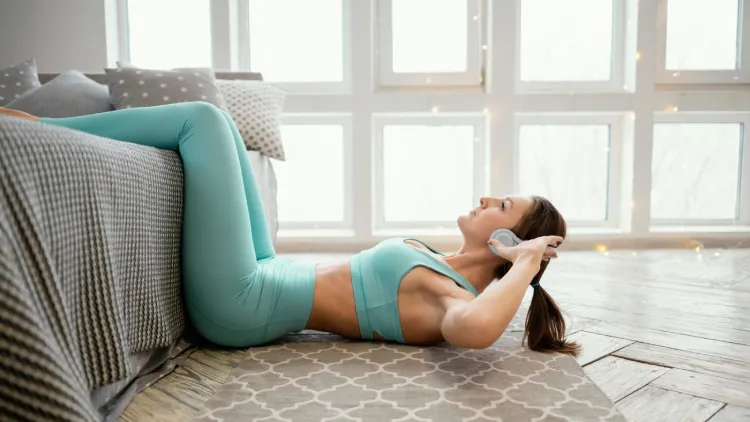
Both exercises strengthen the abdominal muscles, but each emphasizes different movement patterns.
| Reverse Crunch | Traditional Crunch |
| Greater emphasis on lower abdominal activation | Greater emphasis on upper abdominal movement |
| Less neck strain | Higher chance of neck discomfort |
| Pelvis moves | Shoulders move |
| Excellent for beginners | Effective when performed correctly |
Many complete training programs include both because they complement each other.
When compared with a hanging leg raise, the reverse crunch is generally easier for beginners because it requires less grip strength and hip-flexor endurance while still effectively training the abdominal muscles.
Tips for Better Results
To maximize progress:
- Do reverse crunches 2-3 times per week.
- Emphasize slow, measured repetitions.
- Increase difficulty gradually.
- Consume an adequate amount of protein for muscle development.
- Add fruits and vegetables, whole grains, lean proteins, healthy fats, and proper hydration.
- Eat within a healthy calorie range according to your targets.
- Get 7 to 9 hours of sleep per night.
- Stay consistent.
Keep in mind that visible abs are the result of muscle development and decreasing body fat levels. Consuming foods that are rich in nutrients promotes training performance and recovery, whereas too much alcohol, insufficient sleep, poor nutrition, and inadequate protein intake can hinder muscle development and recovery.
It is also important to keep using strength training exercises on a regular basis, even as people get older. Many older people maintain their strength and muscle-building activity well into their sixth, seventh, and eighth decades and beyond with proper programming and medical oversight as needed.
Final Thoughts
The reverse crunch is a basic, but effective core exercise, core stabilization, and lower abdominal workout. Reverse crunches are a great exercise to incorporate into any fitness program, whether you are a beginner or an advanced exerciser, to help support a strong core that can assist you in maintaining balance. Emphasize technique, take it slow, eat a nutritious diet, and do the same training to make sure you get long-lasting benefits.
Frequently Asked Questions
1. The reverse crunch will work which muscles?
The lower abs are primarily engaged, while the upper abs, obliques, hip flexors, and deep core muscles are also engaged in the reverse crunch.
2. Are there any benefits to a reverse crunch?
A reverse crunch places more emphasis on the lower abs and causes less neck strain, while a regular crunch focuses more on the upper abs.
3. Can Beginners perform reverse crunches?
Yes. The reverse-crunch exercise is simple to learn and is a very good exercise that can be done at home without any equipment.
4. When is the best time for doing?
Most people do reverse-crunches 2-3 times a week and can generate core strength and stability as a result.