
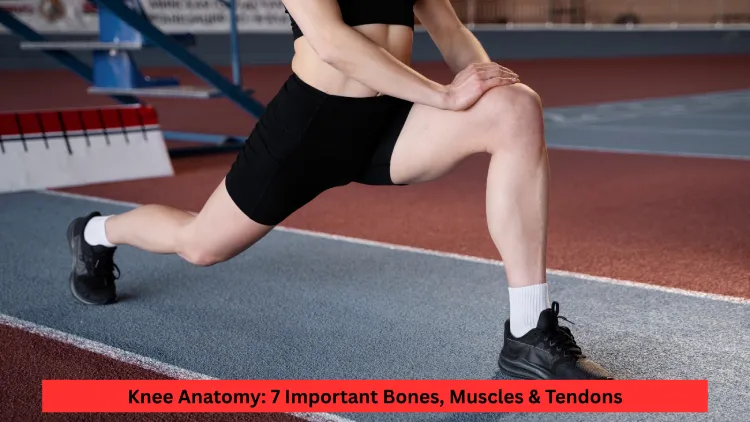

The knee joint is a complex structure of bones, ligaments, cartilage, muscles, and tendons that allows the knee to move and bear weight. Any weakness or damage to any of these parts leads to pain and stiffness, such as arthritis. The majority of knee issues can be alleviated via correct exercise, diet, and lifestyle habits. Regular exercise and muscle toning will keep the knee joint healthy for the long-term.
- What Is Knee Anatomy?
- Which Bones Form the Knee Joint?
- What Ligaments Support the Knee?
- Well, the Knee is a site of cartilage.
- The muscles around the knee
- What Are Knee Tendons?
- Knee Joint Movements
- The system of blood circulation and nerves
- The most frequent knee injuries and issues
- Knee Anatomy and Natural Pain Recovery
- Physically Strengthening the Knee
- Nutrition, vitamins, and joint health
- Natural oils and lubrication of the knee joint
- Movement is the best way to keep joints lubricated
- Knee pain symptoms include:
- Knee Health Tests and Diagnosis
- Conclusion
- Frequently Asked Questions
What Is Knee Anatomy?
The knee joint is a synovial hinge joint. This is because it is surrounded by a capsule containing synovial fluid, which provides lubrication and facilitates easy movement.
It acts as a weight-bearing structure, it enables the leg to be bent and straightened, it absorbs the shock of movement, and it provides overall stability. It is mainly a hinge, but it is able to rotate a little bit, making the knee more complicated.
The cooperation of the bones, cartilage, ligaments, and muscles is essential for a healthy knee. When any of these structures becomes weak, it becomes painful and unstable to move.

Which Bones Form the Knee Joint?
The knee consists of three main bones: the femur, the tibia, and the patella.
The femur is the upper part of the joint and is the thigh bone. It is the strongest bone in the human body and supports the upper body’s weight. The tibia, or shin bone, is the lower part of the knee joint and is the major weight-bearing bone in the body for standing and walking. The kneecap (patella) is located in front of the joint and acts as a protective shield and enhances the efficiency of the muscles of the thigh.
The ends of these bones are covered in cartilage and don’t rub against one another directly. If the bones aren’t aligned correctly or their cartilage is lost, pain and stiffness start to occur. Properly nourishing the body is crucial to keeping the knees in good shape.
What Ligaments Support the Knee?
Ligaments are strong fibrous tissues that attach the knee joint and give stability. They are essential for maintaining the stability and integrity of the knee; otherwise, it would be unstable and unable to support body weight.
The anterior cruciate ligament prevents the tibia from sliding excessively forward and maintains the rotational stability. The posterior cruciate ligament helps to prevent the tibia from sliding backwards and also helps to keep it stable when it bends at the back. The medial collateral ligament (MCL) is located on the inside of the knee and helps to stabilise it from collapsing inwards. The lateral collateral ligament stabilizes the lateral side and keeps the knee moving laterally.
Sports and sudden twisting movements are common causes of ligament injuries. If ligaments are not strong, then even walking is susceptible to being out of balance. There is a need to strengthen the surrounding muscles as they serve as secondary stabilizers in knee anatomy.
Well, the Knee is a site of cartilage.
Cartilage is important to protect bones and enable smooth movement. Articular cartilage covers the ends of bones and acts as a lubricating medium. The meniscus serves as a shock absorber between the femur and tibia and helps to balance body weight.
If the cartilage is damaged, the bones start to rub together, causing pain, inflammation, and conditions such as osteoarthritis. Cartilage is a slow-healing tissue, but by moving the joints appropriately, engaging in low-impact physical activity, and eating a nutritious diet, cartilage will not degenerate as quickly, and its function over time will be beneficial.
The muscles around the knee
Muscles play a key role in providing stability and control of the knee. The front of the thigh has a set of four muscles called the quadriceps, which straighten the leg and help to support the kneecap. The hamstrings on the back of the thigh are responsible for controlling the movement and bending. The calf muscles also help with balance and support when walking and running.
The weakened muscles put pressure on the ligaments and cartilage, making the knee more prone to injury. Strength training is one of the best methods to relieve knee pain naturally, as it offers support to the knees and decreases the tension on the interior structures.
These controlled exercises, such as straight leg raises, wall sits, and step-ups, can help build strength in the knee while avoiding overloading the joint.
What Are Knee Tendons?
Tendons join muscles to bones and are essential for efficient movement. The quadriceps tendon joins the thigh muscles to the kneecap, and the patellar tendon joins the kneecap to the tibia.
Well-functioning tendons help to move things smoothly. The pain and stiffness are caused by overuse, inflammation, or weakness of tendons. Good warm-up, stretching, and progressive exercise will encourage tendon health and avoid injury.
Knee Joint Movements
The knee has three basic motions — flexing, straightening, and a slight turning of the knee joints. These movements rely on the cooperation of bones, ligaments, and muscles.
Flexion is bending the knee, like when sitting or walking. When you straighten the leg, it is said to extend. The knee is allowed to move slightly in other directions, which will enable it to cope with more complex movements, such as turning and changing direction.
Any damage to the knee’s anatomy hinders or causes pain with this motion. A normal range of motion is maintained through regular range-of-motion exercises, and stiffness is prevented.

The system of blood circulation and nerves
The popliteal artery provides blood to the knee, providing oxygen and nutrients to all the tissues. The nerves that control movement and sensation include the femoral, tibial, and peroneal nerves.
With good blood circulation, healing will result, and the stiffness will be lessened. A lack of circulation may delay healing and cause pain. Exercise, a walk, and massage are gentle ways to improve circulation and joint health.
The most frequent knee injuries and issues
The knee is a complicated and weight-bearing joint and is prone to several diseases. Ligament injuries, meniscus tears, osteoarthritis, patellar issues, and tendonitis are the most common issues.
The pain may give a clue to the structure affected, as its location often does. Front knee pain may indicate patellar/palpation issues and/or tendon issues. Pain on the inside of the knee is usually associated with problems with the medial ligament or meniscus. The lateral ligament (outside of the knee) can tear, causing pain on the outside of the knee. Cartilage wear or OA can be accompanied by deep joint pain.
Knowing the anatomy of the knee aids in uncovering the cause of the pain versus just treating the symptoms.
Knee Anatomy and Natural Pain Recovery
Natural recovery focuses on restoring balance within the knee structure. Exercise plays a critical role in reducing pain when performed correctly. Movement improves blood flow, strengthens muscles, and enhances joint lubrication.
Low-impact exercises such as walking, cycling, and controlled strengthening movements are highly beneficial. Stretching tight muscles around the knee also reduces pressure on the joint.
Rest alone is not a long-term solution. Controlled movement is essential for healing and maintaining knee function.
Physically Strengthening the Knee
Strong knees depend on balanced muscle development. The quadriceps, hamstrings, and gluteus muscles must work together to support the joint.
Effective exercises include straight leg raises, wall squats, step-ups, hamstring curls, and glute bridges. These exercises increase stability and reduce stress on ligaments and cartilage.
If severe pain is present, high-impact exercises or heavy squats should be avoided. Gradual progression is important for safe strengthening.
Nutrition, vitamins, and joint health
Diet plays an important role in maintaining knee health. Vitamin D supports bone health, vitamin C promotes collagen production, vitamin B12 supports nerve function, and calcium strengthens bones. Omega-3 fatty acids reduce joint inflammation.
A deficiency in vitamin D or B12 can lead to joint pain, weakness, and stiffness. A balanced diet rich in whole foods supports long-term knee function. Foods that support joint health include fish, eggs, leafy greens, nuts, seeds, and fruits. Processed foods, excess sugar, fried foods, and refined carbohydrates can increase inflammation and worsen knee pain. Common supplements for joint health include glucosamine, chondroitin, collagen, turmeric, omega-3s, and magnesium. These help reduce inflammation and support cartilage health.
Natural oils and lubrication of the knee joint
Joint lubrication is necessary for the movement to be ok. It is possible to improve it naturally: by hydration, physical activity, and healthy oils.
For reducing stiffness and improving blood flow, commonly used oils in massage are olive oil, coconut oil, and mustard oil. Oils won’t regenerate cartilage, but they can help to increase comfort and provide temporary relief.

Movement is the best way to keep joints lubricated
Follow safety precautions and avoid common mistakes when exercising.
Some bad habits can aggravate knee pain down the road. Long periods of sitting decrease flow and make muscles weak. Rest is necessary to avoid injury due to overtraining. The incorrect shoes may reduce alignment and overstress the knee joint.
One of the most common mistakes that causes chronic knee issues is ignoring pain signals. Extra weight places pressure on the anatomy of the knee, which can cause it to wear faster.
If you experience pain or injury, avoid jumping or deep squats.
Knee pain symptoms include:
Certain symptoms will need medical treatment and should not be overlooked. These include if the knee is suddenly injured with a popping noise, the knee has persistent pain at rest, the knee is locked, the knee is not able to bear weight, or the knee is very swollen.
All of these symptoms could be signs of severe damage to the ligaments or cartilage of the knee and should be assessed right away.
Knee Health Tests and Diagnosis
To determine knee stability and injuries, doctors use several tests. These include functional movement tests, including ligament stability tests, meniscus tests, and figure-four tests.
Simple tests at home, like balance tests, range-of-motion tests, and pain mapping, can give some basic information regarding knee health.
Conclusion
The knee is a very complex and basic system that facilitates almost every motion we make throughout the day. Depends on correct balance of bones, ligaments, muscles, cartilage, and nutrition. But when this balance is disturbed, pain and mobility issues arise.
The majority of knee issues can be improved naturally by using the correct strengthening exercises, mobility training, nutrition, and lifestyle changes. Knee anatomy enables the identification of the cause of the knee pain and allows the development of an effective rehabilitation plan. Many knee problems, if treated properly, can be managed or improved without the need for invasive treatment, which will help to achieve long-term mobility and joint health.
Frequently Asked Questions
What are the parts of the knee?
The knee is made up of bones, ligaments, cartilage, muscles, and tendons that ensure mobility and stability.
So what is going on with the knee that is causing it to hurt?
Ligament injuries, cartilage damage, arthritis, tendon injury, and muscle weakness are all possible causes of knee pain.
How to build up weak knees?
Strengthening the muscles that support the knees can be done with low-impact exercises such as leg raises, step-ups, and wall sits.
Is it possible to cut down on knee pain through exercise?
Yes, exercise is a good way to train strength, flexibility, and joint function, which helps to decrease knee pain in the long run.