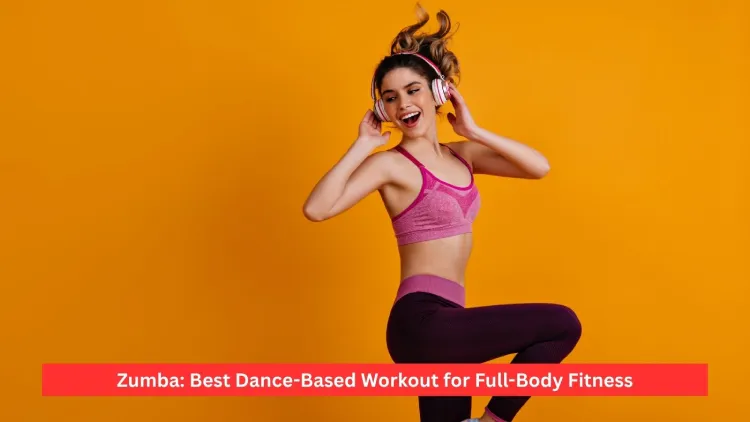

Zumba is an enjoyable, dance-based cardio exercise that uses upbeat music and body motions in its entirety to increase fitness, calories burned, and coordination. It appeals to newcomers as well as users of high status, enables weight loss, enhances the heart, and can aid in shaping the figure upon regular use. Although it is very effective and entertaining, one should have good form, consistency, and moderation to achieve maximum results.

- What is Zumba Exercise?
- How Zumba Works as a Workout
- Benefits of Zumba Exercise
- Muscles Worked
- Basic Movements
- How to Start
- Zumba Fitness Workout Ideas
- Common Mistakes to Avoid
- Zumba vs Traditional Workouts
- How Often Should You Do Zumba?
- Can Zumba Benefit Anyone?
- Advantages and Limitations of Zumba
- Zumba to lose weight and body shape.
- Conclusion
- Frequently Asked Questions
What is Zumba Exercise?
Zumba is an intense fitness program that incorporates styles of dance with balanced workout programs. It is more of a heart-timing exercise that uses motions that are based on Latin and international dances like salsa, reggaeton, cumbia, and hip-hop. It is aimed at making exercise fun enough that individuals can remain consistent as opposed to exercising conventionally.
As far as fitness is concerned, it is categorized under aerobic exercise. This translates to it raising your heart rate, enhancing blood circulation, and boosting heart endurance. But it also incorporates the components of muscle strengthening by use of bodyweight exercises such as squats, leg lifts, and moves involving the arms.
It puts more emphasis on rhythm and movement instead of perfection, unlike giving workout programs. The choreography that the participants follow is combined with both fast and slow movements to provide a well-balanced workout that enhances stamina and burns calories.
Zumba does not bind to a particular group. It can fit men and women, young adults, and even older people who wish to be on the go. It can be enjoyed by beginners and still provides enough intensity to advanced users due to its malleability.
How Zumba Works as a Workout
Coupled with dancing movements, it is based on interval training principles. In one session, your body would have periods of high-intensity efforts with a period of moderate-intensity recovery. Such an arrangement assists in burning as many calories as possible and increasing the time span of work.
The general Zumba workout consists of three stages:
- Warm-up: Involves movements as a prelude to other activities aimed at warming up muscles and joints.
- Main exercise: Dance workouts involving dancing at a high intensity that targets several muscle groups.
- Cool-down: Making slower movements and stretching with the purpose of body relaxation.
This mix would help Zumba not only to burn calories, but to also to help in flexibility and recovery.
As Zumba is a rhythmic exercise, it also helps improve neuromuscular coordination. Your body and brain get training on how to work together in a more efficient manner, enhancing balance and reaction time.
Zumba is arguably both cardio and light strength training. Although it is mainly aerobic, exercises such as squats, jumps,s and arm extensions also offer some elements of resistance which help in tightening the muscles.

Benefits of Zumba Exercise
1. Full-Body Workout
It involves virtually all muscle groups. Because of the constant movement, your upper part of the body, lower part of the body, and centre are all active during the session.
2. Burns Calories Effectively
It is also one of the most fun methods of burning calories. A session is effective in fat loss because it can burn a great number of calories, depending on the intensity.
3. Enhances Heartomenis.
It increases the heart rate, hence making your heart strong, er and ensures a good flow of blood is carried to the various body organs. This, in the long term, decreases the risk of heart-related problems.
4. Enhances Flexibility
The active contraction enhances the flexibility and mobility of the joints and muscles and decreases stiffness and potential injury.
5. Enhances Co-ordination and self-regulation
Zumba classes compel you to dance to beats and to steps that enhance body coordination, balance, and agility.
In addition to these key benefits, it is also an effective exercise, which contributes to better mental health, decreases stress, and boosts energy levels. The social and musical component of Zumba classes gives a sense of a better workout.
Muscles Worked
It is a whole-body exercise that will train several muscles at the same time:
- Legs: Other back and forward action activities, such as stepping, lunging, and jumping, work on the quadriceps, hamstrings, and calves.
- Glutes: Hip, the action, exercises of the lower body build and shape the glutes.
- Core: It is the twisting and rotational motion that involves the abdominal muscles, which support the maturity and stance.
- Arms and Shoulders: Swings and rhythmic movements of arms make the upper body tight.
- Back: Helps develop a better posture and supports the muscles.
Due to the resistance of bodyweight used in Zumba, it is suitable for toning, but not for creating bulky body muscles. It has particularly positive effects on the shape of the entire body and the formation of a slim, athletic outline.
Basic Movements
These workouts consist of straightforward yet useful moves that are simple to master:
1. Salsa Steps
Side-wise exercises with hip turns to enhance coordination and use the lower body.
2. Merengue March
A marching movement with a steady rhythm keeps our bodies constantly in motion.
3. Squat and Reach
It is a motion that incorporates both the lower and upper body, which makes it very effective in tightening the body.
4. Twist Movements
These are aimed at the core and assist in enhancing abdominal strength and flexibility.
5. Jump Steps
These are very intense and burn more calories, but they can also be adjusted to make them easier.
The sequences of these movements are repeated, so it would be easier to follow and learn the movements to achieve better results.
How to Start
It is easy to start with Zumba and does not require prior experience.
Novices can start down the path following these steps:
- Wear athletic wear that is comfortable and free.
- Put on sports shoes.
- Begin with playing easy sessions or videos.
- Just relax and listen to the music instead of mastering all of the moves.
- Progressively augment the exercise length and vigour.
Zumba can be a little bit challenging when starting because you will have to be coordinated and require stamina. Nonetheless, it is made less difficult and something one enjoys with practice.
When done correctly, Zumba is actually not that hard of a workout. It may be scaled to fit various fitness levels, making it easy-to-follow, yet still with more challenging elements.
Zumba Fitness Workout Ideas
To make the most out of Zumba, you might want to reflect on the following tips:
- Keep hydrated during, after, and before exercises.
- Keep the proper posture to prevent strain.
- Use of your core to promote better balance and effectiveness.
- Begin at a low level and work up.
- Keep yourself regular.
Assuming you are targeting to lose weight, you need to do Zumba alongside an appropriate diet. Although Zumba is effective in calorie burning, a consistent loss of fat is only sustainable when a calorie deficit is created by proper nutrition.
Common Mistakes to Avoid
Some individuals fail to get any results with Zumba as a result of mistakes they can avoid:
- Leaving out warm-up and cool-down.
- Making unsuitable form in movements.
- Overexerting too early
- Uneven exercise pattern.
- Ignoring rest and recovery
By avoiding these errors, you will reap all the benefits of Zumba and reduce the chances of sustaining an injury.

Zumba vs Traditional Workouts
| Feature | Zumba | Traditional Workout |
| Style | Dance-based | Structured exercises |
| Intensity | Moderate to high | Varies |
| Fun Factor | Very high | Moderate |
| Equipment | None required | Often required |
| Muscle Focus | Full body | Targeted muscle groups |
Zumba is much more interactive and a more accessible workout than regular exercise. But more effective may be gym exercise, which is better at building strength through heavier resistance training.
Zumba is more active and holistic than running or walking. Training can burn more calories and in a shorter period, but Zumba offers the variety and exercises more than one muscle group at the same time. Zumba is more intensive and gives faster results compared to walking, which is easy and has low impact on beginners.
Zumba is more cardio and calorie-burning than yoga, which is more about flexibility, relaxation, and mindfulness. They each have distinct advantages, and they can be used in combination. Zumba is more active and cardio-based than Pilates, which is slower and emphasises core fitness and control strength.
How Often Should You Do Zumba?
Check out how often you want to do Zumba based on what you want to achieve:
- Beginners: 2–3 sessions per week
- Intermediate: between 3 and 4 sessions a week.
- Advanced: 4–5 sessions per week
The ideal length of each session is 30 to 60 minutes. In terms of weight loss, it is more about the consistent than the intense. Scheduling sessions plus a proper diet can yield certain results.
Although others are concerned with how fast they can lose weight (perhaps by several kilograms in a few weeks), it is always wise to take safe and gradual steps. Zumba could help in losing weight, although the extreme short-term objectives should be avoided without appropriate advice.
Can Zumba Benefit Anyone?
Zumba can fit many categories of people, including beginners and adults. There is no serious age restriction, and lots of individuals continue doing Zumba until late in their 50s.
But some people ought to exercise precautions:
- People with joint injuries
- Patients with across-the-board heart problems.
- Mellowed people.
There are also low-impact versions of Zumba that can accommodate those in need of a lighter workout. Zumba has no restrictions on gender. Anyone who likes moving and feels the need to keep things moving will like it.
Advantages and Limitations of Zumba
Zumba is an enjoyable and efficient workout; just like any other workout, it has its merits and demerits.
Advantages
Zumba is most involving as music accompanies the movements and working out becomes fun instead of a bore. It also burns a lot of calories and is used for weight loss and in general fitness. As it maintains your heart rate high, it increases your cardiovascular health and fitness in the long run.
The other advantage here is better coordination, because the dance movements help to coordinate your body to move rhythmically and effectively. Zumba can also accommodate a wide range of fitness levels since the moves can be adjusted and are therefore available to people of all levels of fitness and fitness enthusiasts.
Limitations
Certain Zumba drills involve jumping or high-impact action and might not be appropriate for those with joint problems. It is also more cardio-oriented than strength-oriented and may not be the best choice when you are out to put on a lot of muscle.
Moreover, novices can find the choreography a little bit challenging initially, since it involves coordination and timing.
Zumba to lose weight and body shape.
With a healthy diet, Zumba is very effective for weight loss. It will aid in the development of a calorie deficit, which is vital in fat burning.
It also helps to shape the body through toning and burning of fat. Through sessions every day, the stomach can be flattened by involving the core to accelerate fat loss in the body.
Although Zumba itself might not replace strength training altogether, it is a great supplement to any exercise regimen aimed at body composition.

Conclusion
It is an effective and fun workout that integrates cardio, motion, and rhythm into a single effective workout. It can be practised by individuals of all ages and levels of fitness, and it has numerous advantages, such as a healthier heart, losing weight, becoming more coordinated,d and having a better body figure.
In comparison to running, walking, gym exercises, or other workout techniques, it is distinguished by the possibility to enjoy exercising and keep it as long as possible. When done with consistency and adequate technique, it can be a major component of a healthy lifestyle.
Frequently Asked Questions
1. Can relatively inexperienced people attend Zumba?
Zumba is friendly to beginners, yes. They are simple movements and can be slowed down or sped up, and the new members can learn to have stamina and coordination over time.
2. Will Zumba aid in losing weight?
Absolutely. It is a cardio exercise that burns fat and maintains muscle tone when paired with proper dieting and healthy food choices.
3. How often should I do Zumba?
Beginners should also begin with 2 to 3 sessions a week, intermediate/advanced with 3 to 5 sessions each, and each session should take 30 to 60 minutes.
4. Can elderly people be taken to Zumba?
Yes, you can do Zumba with older adults with low-impact moves. Individuals with joint problems, heart or balance problems are advised to seek the advice of a professional before beginning.