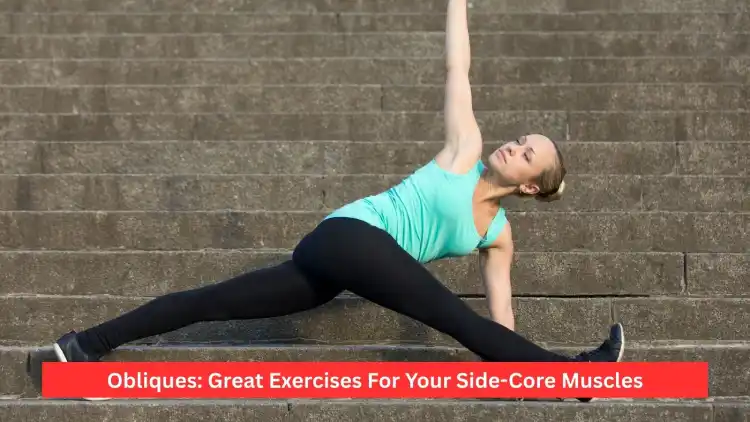

This paper will describe obliques, their importance and how to train them through effective exercises. It mentions only oblique exercises, proper posture, the most frequent errors, and recovery, as well as the impact of these muscles on the appearance of the waist, the strength of the abdomen, sports results, and the exposure of the abdomen. It also explains the frequency of training the core, the exercises that are beneficial or harmful to the waist appearance, and those where people can see obliques rather than abs. It also includes safe training, pregnancy, and growth considerations.
1. Side Plank
How It Works
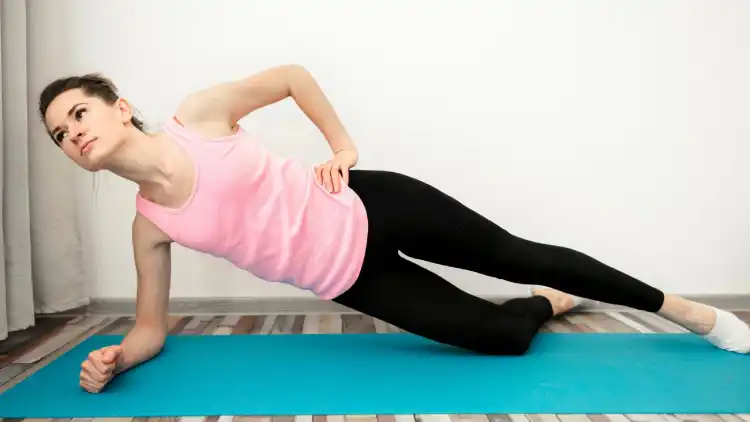
One of the most effective exercises that can be used in strengthening the obliques is the side plank, since it requires your body to stabilise on a different side. It can eliminate muscle imbalances, reinforce the spine and condition the body to oppose unwanted rotation, which is valuable in day-to-day activities and to perform in sport.
How to Do It
- Lie down on one side, making your elbow right underneath your shoulder.
- Bend no longer, make your hips straight with your head and feet.
- Keep your core tight, and do not turn.
- Switch sides after each hold.
Reps/Time
Wait 20 to 40 seconds on each side 3 times.
Weak obliques can be detected with this exercise, as well, whereby one side of the body drops at a quicker pace; this side needs more building up.
2. Russian Twists
How It Works
Russian twists are considered an effective exercise that specifically targets the obliques, as they engage the core during a rotational motion. They also enhance the coordination of the upper and lower body. On the days when you realise your waist is expanding as a result of training, then do your controlled twists to focus on muscle involvement rather than using momentum.
How to Do It
- Be seated, keeping the knees curled and feet raised or slightly on the ground.
- Sit back slightly to stimulate the core.
- Turn your body left and right, hitting the ground with each side.
Reps
Aim for 20–30 twists per set.
The use of a dumbbell enhances intensity, but in the early stages of the training, one should use the body weight to achieve correct form.
3. Bicycle Crunches
How It Works
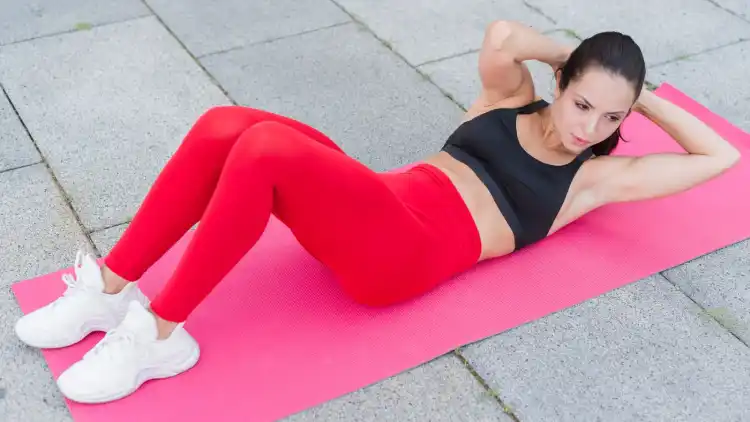
Activation of the upper abs and obliques would be good with bicycle crunches. The obliques can be viewed before the abs by many people since they often protrude more (when the body is overweight or when an individual does not consume enough fats, including proteins, which increase fat covering). The activity will assist in balancing the strengthening of the muscles throughout the core.
How to Do It
- Lie in a position of rest, but with your hands behind your head.
- Raise your legs and cross, bringing your elbow to the other knee.
- Keep the movements slow and restrained.
Reps
3 sets of 15–20 per side.
It is also the best of the effective movements towards the enhancement of rotational strength.
4. Standing Side Crunch
How It Works
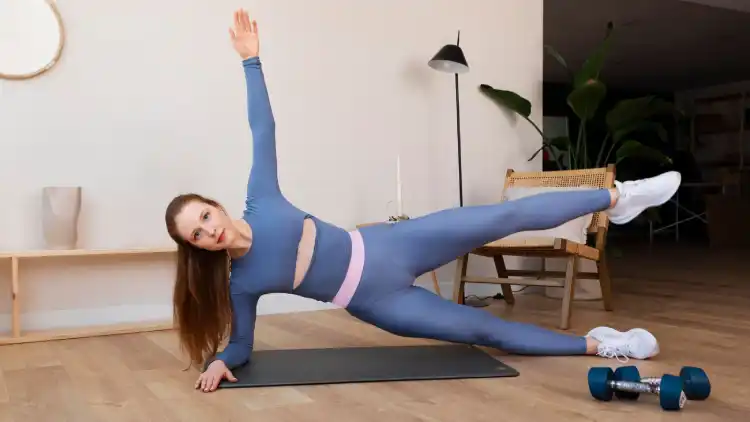
Side crunches only go around the obliques and enhance the mobility of the hips. They are effective among individuals who enjoy standing up or avoid exercising on the floor. This activity improves the muscles that assist in tightening the waist and enhances the core stability on the side-to-side.
How to Do It
- Stand erect, keeping your hands behind your.
- Bend across the knee, lifting the torso.
- Engage your obliques during every repetition.
Reps
Do 3 sets with 12-15 reps on each side.
Do not use heavy weights when you want a thinner waist, since heavy weights will lead to muscle growth.
5. Heel Taps
How It Works
The obliques are worked with the help of heel taps and are bent sideways without taking control. The exercise can be performed when your core is weak, as it will train your obliques to contract without using the flexors of the hips.
How to Do It
- Lift your shoulders and bow with your knees high.
- Tap to your sides, tapping with heels.
- Maintain a steady rhythm.
Reps
3 sets of 20–30 taps.
This is a safe exercise that most human beings can perform even when they are new to core exercises, and it can be incorporated into any core routine.
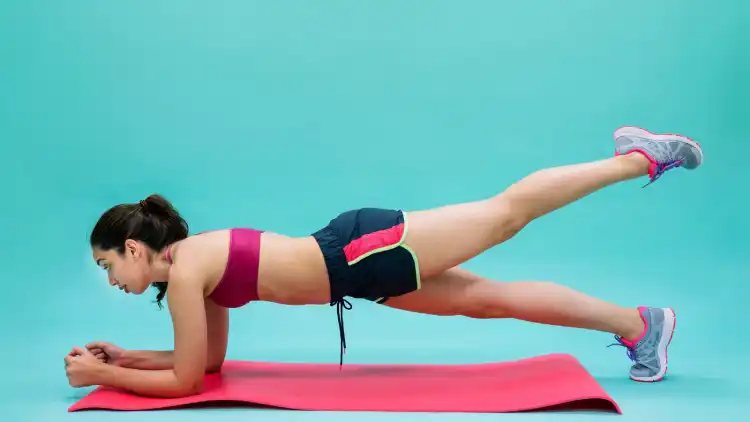
6. Side Leg Raises
How It Works
This practice builds the abdominal muscles and enhances the stability of the hips and the pelvis. It comes in particularly handy with individuals who sit frequently and have difficulties with lower back pain brought about by a weak core muscle set.
How to Do It
- Lying in the extended position.
- Raise the legs and keep them together.
- Less under control and repeat.
Reps
12–15 reps per side for 3 sets.
Side leg raises can also be used to lessen the chances of lower-back stress when using heavier exercises such as squats and deadlifts.
7. Woodchoppers
How It Works
Woodchoppers make use of the rotation of the whole oblique chain diagonally. They assist in developing strong inner core muscles that are able to create the waist and rotate the spine. It is also among the most effective exercises in functional sport strength building.
How to Do It
- Keep a cable or dumbbell between your hands.
- Begin at the top of one side and draw on the diagonal downwards.
- Return slowly and repeat.
Reps
10–12 reps per side.
Woodchoppers also enhance the use of coordination, as well as deepen in training of the oblique by making them not work in a static position.
8. Side Bends
How It Works
One old-fashioned isolation exercise of the oblique involves side bends. Watching extremely heavy weights can, however, increase the waistline line particularly in individuals who put on muscle easily. In case you want to have a smaller waist, you will need a lightweight and emphasis or control as opposed to the load.
How to Do It
- Hold a dumbbell in one hand, and stand on the heels.
- Bend at right angles when decreasing the weight.
- Using your obliques, get back to the starting position.
Reps
3 sets of 12–15 per side.
Moderate weight should be used to ensure that muscles are working without being overworked.
9. Mountain Climbers (Cross-Body)
How It Works
The mountain climbers in a cross position increase the heart rate and use the obliques in all the knee drives. They are further useful in calorie burning that leads to the reduction of the waistline in association with the overall fat burning.
How to Do It
- Start in plank position.
- Get your knee towards the other elbow in a rhythmic movement.
- Maintain your core throughout.
Reps/Time
30–45 seconds for 3 sets.
The exercise also promotes mobility, stability and endurance.
10. Hanging Oblique Knee Raises
How It Works
This is an enhanced workout, which uses obliques and makes the legs raise, and at the same time holds the upper body in a steady position. It creates good and firm obliques and enhances overall body control.
How to Do It
- Hang from a pull-up bar.
- Get your knees raised to one side of your chest.
- Lift down gradually, and then on the other side.
Reps
10–12 reps per side for 3 sets.
This motion needs the power of the grip and the control of centricity; beginners need to develop in steps.
How to create an Oblique Workout
Beginner Routine
- Side Plank – 20 seconds each
- Heel Taps – 20 reps
- Standing Side Crunch –12 reps each
- Repeat 2–3 times.
Intermediate Routine
- Russian Twists – 25 reps
- Bicycle Crunches – 15 reps each
- Cross-Body Mountain Climbers – 40 seconds.
- Repeat 3 times.
Advanced Routine
- Woodchoppers – 12 reps each
- Hanging Oblique Knee Raise- 10 reps each.
- Side Plank – 40 seconds each
- Repeat 3–4 times.
Such exercises will allow you to build the obliques without excessive work. The optimal growth is 3-4 days weekly of core training; excessive exercising of the abdominals daily can be tiring or not healthy. When such is combined with proper nutrition and whole body training, 20 minutes of core work is sufficient. The stomach can be flattened through sit-ups and crunches to tighten the muscles, and hence, only a loss of fat brings out the definition.
Others can notice their obliques before their abdomen due to a pattern of fat distribution. A wider waist can be due to fat at the mid area, bloating, muscle structure or heavy lifting being improperly performed. Having a great core enhances good posture, minimises the risk of injury and visible abs when the body fat is less. The majority consider abs to be about 1214 per cent in men and 1822 per cent in women.
Lastly, core exercises are usually safe to practice in pregnancy with the guidance of a medical professional without excessive twisting. Spinal support may be provided with the assistance of an oblique. Oblique training also helps in developing the six-pack, although it is determined by genetics, body type and even the fat percentage of the body, which determines the visibility of the abs.
Final Thoughts
The core is also vital in having a powerful, functional, and aesthetically balanced core by strengthening the obliques. The exercises will enable you to gain some stability, enhance some rotation and have a more specified waistline. Whether you are a novice or an advanced athlete, the proper technique of training your obliques will result in improved posture, a low chance of injuries, and improved athletic performance. The movements should be combined with nutritious food, safe exercise routines, and whole-body workouts to attain the optimal results.
Frequently Asked Questions
1. What is the frequency of oblique training?
Oblique training (3-4 times a week) is sufficient to become strong and defined. He or she does not need to train every day, which can hinder recovery.
2. Will weight loss exercises increase my waist?
Not usually. The extended waist is primarily brought about by fat or improper lifting posture. Bends on the side that are very heavy may increase muscle size.
3. Do oblique exercises flatten the stomach?
Yes. Powerful abdominal muscles make the waist lean and enhance posture. And they do not directly burn fat, as they help in making it more defined as the body fats reduce.
4. Do oblique exercises make the beginner friendly?
Yes. Exercises such as side planks, heel taping and standing side crunches pose no danger when performed correctly by a beginner.