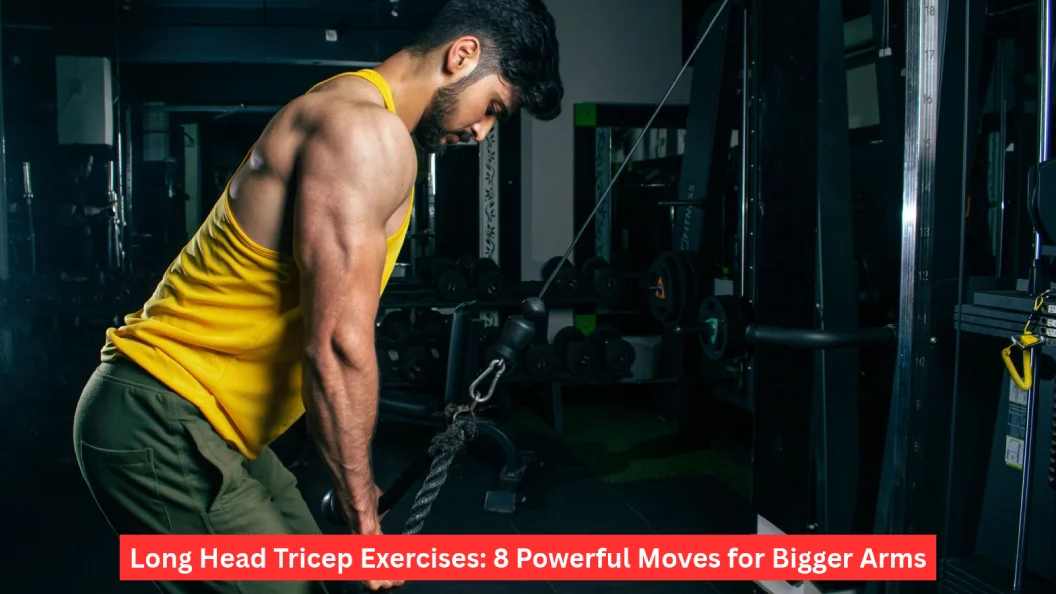

The best long head tricep exercises put your arm overhead, like cable overhead extensions and seated dumbbell overhead extensions. In that position, the long head is stretched more than the other two heads, and research links that stretch to greater muscle growth.
- What is the Long Head of the Tricep?
- Why Do Overhead Exercises Target the Long Head Best?
- The Arm-Position Rule: How to Rank Any Triceps Exercise
- The 8 Best Long Head Tricep Exercises
- What About Close-Grip Bench Press and Dips?
- How to Build a Long Head Triceps Workout
- How Long Does It Take to See Results?
- Common Mistakes With Long Head Tricep Exercises
- Who Should Be Careful With These Exercises?
- Build Bigger Triceps With the Right Arm Position
- Conclusion
- Frequently Asked Questions
What is the Long Head of the Tricep?
The long head of the triceps brachii muscle is one of the three portions of the triceps located on the back of the upper arm. It’s the only head that crosses two joints: the shoulder and the elbow. This is why variations in arm position create differences in the amount of effort exerted.
According to StatPearls (NIH), the long head starts at the infraglenoid tubercle, a small bump on the shoulder blade just below the shoulder socket. The lateral and medial heads both start on the upper arm bone (humerus). All three combine together and form one tendon which attaches to the olecranon (bony point of the elbow).
All heads extend the elbow. The extra function of the long head is to contribute to arm pulling, or shoulder extension and adduction. All three heads are supplied by the radial nerve.
For your training, why it’s important:
- It’s located on the inner posterior side of the arm, which influences the arm’s fullness when viewed from the side.
- It is a good addition for pushing and pressing – including push-ups and overhead lifts.
- Standard pushdowns train it short; overhead work trains it long, due to its crossing the shoulder.
Why Do Overhead Exercises Target the Long Head Best?
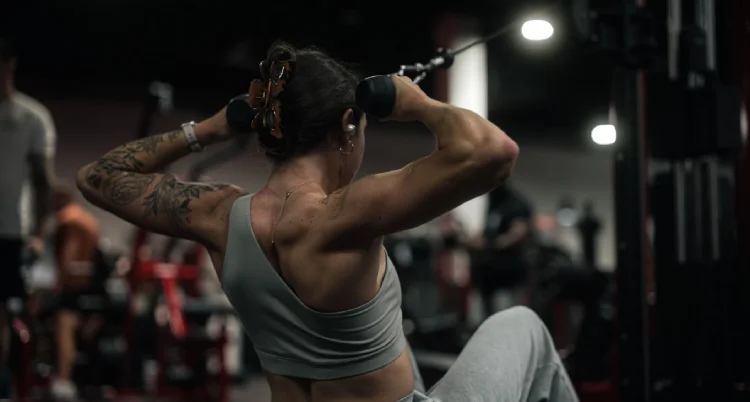
Overhead exercises work the long head best, as it is stretched first at the shoulder even before bending the elbow when you lift the arm overhead. A muscle that is stretched lengthwise will develop more. In the 2023 study, overhead cable extensions were able to notably increase the volume of triceps compared to pushdowns, particularly the long head.
In this study, which was published in the European Journal of Sport Science, participants were asked to work one arm with overhead cable extensions and the other arm with cable pushdowns. Despite performing lighter loads, triceps growth was significantly higher on the overhead side, especially in the long head.
The BarBend report of the study indicated that it was a 12-week study, with both arms strengthening. Therefore, the pushdown is still relevant. If you’re trying to increase size, then this is not your only triceps exercise.
The Arm-Position Rule: How to Rank Any Triceps Exercise
Most lists throw a dozen exercises at you with no system. A simpler approach is to look at one thing: where your upper arm points during the lift. That single detail tells you how stretched the long head will be.
There are three main positions:
- Arm overhead: The shoulder is fully raised, so the long head is at its longest. Overhead extensions live here.
- Arm in front: The upper arm points forward or up while you lie on a bench, so the stretch is moderate. Skull crushers live here.
- Arm at your side or behind you: The shoulder is neutral or pulled back, so the long head is short. Pushdowns and kickbacks live here.
| Arm position | Long head stretch | Example exercises | Best use |
| Overhead | Highest | Cable overhead extension, dumbbell overhead extension | Main growth work |
| In front | Moderate | Skull crusher, incline skull crusher | Heavy secondary work |
| At side or behind | Lowest | Pushdown, kickback | Finishers and lockout strength |
A smart routine uses at least one overhead move, then adds work from the other positions for complete development.
The 8 Best Long Head Tricep Exercises
The eight moves below are grouped by arm position, starting with the ones that stretch the long head most. Begin with lighter weights than you think you need. Overhead positions can feel awkward at first, and smooth control matters more than load.
Overhead Exercises (Most Stretch)
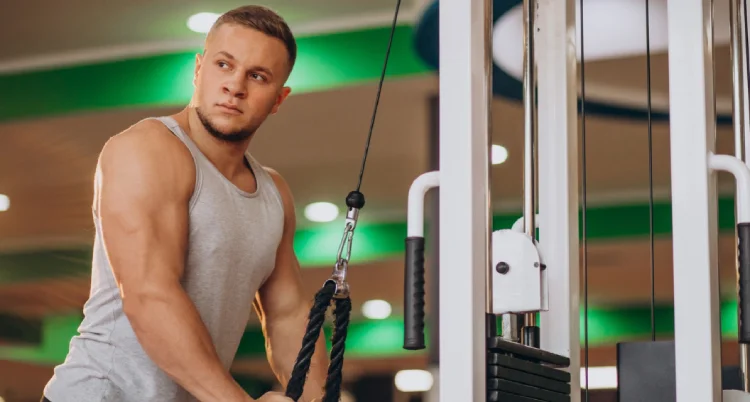
1. Cable Overhead Triceps Extension
This is the exercise used in the 2023 study, and it keeps steady tension through the whole rep.
How to do it:
- Attach a rope to a low cable pulley and face away from the machine.
- Hold the rope behind your head, elbows pointing up, and step forward into a split stance.
- Brace your core and straighten your elbows until your arms point up and slightly forward.
- Lower slowly until you feel a deep stretch along the back of your arms.
Sets and reps: 3 sets of 10–15.
Avoid this: Letting your elbows flare wide or your lower back arch.
Variation: Use a straight bar or EZ-bar attachment if the rope feels unstable.
2. Seated Dumbbell Overhead Extension
A single dumbbell held in both hands makes this an easy option for most gyms and home setups.
How to do it:
- Sit on a bench with back support and hold one dumbbell by the top plate with both hands.
- Press it overhead, then bend your elbows to lower it behind your head.
- Keep your upper arms close to your ears.
- Straighten your arms back to the top without locking out hard.
Sets and reps: 3 sets of 8–12.
Avoid this: Dropping the weight fast into the bottom position.
Variation: Stand up for more core work, or use an EZ-bar for heavier loads.
3. Single-Arm Dumbbell Overhead Extension
Single arm exercises target imbalances in arm strength.
How to do it:
- Stand or sit upright with a light Dumbbell in your left hand, arm extended overhead.
- Support the working arm with your free hand below the elbow.
- Bring the dumbbell down to the opposite side behind your head.
- Straighten back, but do not move the upper arm.
Sets and reps: 2–3 sets of 10–12 per arm.
DO NOT DO THIS: Letting the elbow move towards the front when tired.
Variation: Cable or resistance band for a smoother pull.
4. Resistance Band Overhead Extension
This is the best at-home choice when you don’t have dumbbells or cables.
How to do it:
- Stand on one end of a resistance band, or anchor it low behind you.
- Hold the other end with both hands behind your head, elbows up.
- Straighten your arms overhead against the band’s pull.
- Return slowly until your hands are behind your head again.
Sets and reps: 3 sets of 15–20.
Avoid this: Using a band so light that the last reps feel easy.
Variation: Step on the band with a wider stance, or choke up on it for more tension.
Arm-in-Front Exercises (Moderate Stretch)
5. EZ-Bar Skull Crusher
The skull crushers allow you to lift more weight than most overhead exercises and are a great second exercise.
How to do it:
- Set up with an EZ-bar over your chest with a narrow grip while lying on a flat bench.
- Rotate upper arms slightly back towards head.
- Bend elbows to bring the bar down slightly over the top of your head.
- Straighten arms back to original position with the slight backward tilt.
Sets and reps: 3 sets of 8–12.
Don’t do this: Reduce the bar to your forehead, reducing the range and stretching the elbows.
Variation: If you have any wrist discomfort with a bar, use dumbbells.
6. Incline Dumbbell Skull Crusher
If you’re lying on an incline, your arms will be closer to overhead, so you’ll get more stretch than on a flat bench.
How to do it:
- Place a bench at a 30-45 degree incline and, with your dumbbells above your chest, lie back.
- Facing palms to each other.
- Lower the dumbbells next to your head with a bend in your elbows.
- Upper arms remain stationary; press back up.
Sets and reps: 3 sets of 10–12.
This is not a good idea: attempting to swing the dumbbells rather than just the elbows.
Variation: Use one dumbbell with both hands to make it easier.
Arm-at-Side Exercises (Least Stretch)
7. Cable Triceps Pushdown
Pushdowns train the long head in a shortened position, which makes them a useful finisher for strength and lockout.
How to do it:
- Attach a rope or bar to a high pulley and stand tall facing the machine.
- Pin your elbows to your sides.
- Push the handle down until your arms are straight, then spread the rope at the bottom.
- Let it rise slowly to about chest height.
Sets and reps: 2–3 sets of 12–15.
Avoid this: Leaning over the handle and pushing with your body weight.
Variation: Do it one arm at a time with a single handle.
8. Dumbbell Triceps Kickback
Kickbacks pull the arm behind you, so the long head works hard at the very top of each rep.
How to do it:
- Hinge forward with one hand on a bench and a light dumbbell in the other.
- Lift your upper arm until it’s parallel to the floor, elbow bent.
- Straighten your elbow until your arm points straight back.
- Squeeze for one second, then lower slowly.
Sets and reps: 2–3 sets of 12–15 per arm.
Avoid this: Letting your upper arm drop as you lower the weight.
Variation: Use a cable for steady tension at the top.
What About Close-Grip Bench Press and Dips?
The close-grip bench press and dips are great triceps exercises that target all three triceps heads. Arms remain in front of or next to the body, not extended as they would be with overhead moves. Use compound strength movements and then add an overhead extension to focus on the long head.
These presses are listed as some of the top long head moves. They are excellent for overall pressing strength, but for the simple reason that an overhead extension is a more direct approach to training the long head.
How to Build a Long Head Triceps Workout
Do 2 or 3 triceps exercises per session, starting with an overhead move. Aim for 8 to 15 controlled reps per set, and stop 1 or 2 reps before your form breaks down. Train triceps 2 days a week with at least 48 hours between sessions.
Gym workout:
- Cable overhead triceps extension: 3 x 10–15
- EZ-bar skull crusher: 3 x 8–12
- Cable triceps pushdown: 2 x 12–15
Home workout:
- Resistance band overhead extension: 3 x 15–20
- Single-arm dumbbell overhead extension: 3 x 10–12 per arm
- Dumbbell triceps kickback: 2 x 12–15 per arm
To progress, add a rep or two each week. When you reach the top of the rep range on every set, increase the weight slightly. Keep a simple training log so you can see your progress.
How Long Does It Take to See Results?
Strength usually improves first, often within the first few weeks, as your body gets better at the movement. Visible size takes longer. The overhead study measured its results after 12 weeks of training, which is a fair minimum to judge any new arm program. Consistent training, enough protein, and good sleep all affect how fast you progress.
Common Mistakes With Long Head Tricep Exercises
- Skipping overhead work entirely: Pushdowns alone leave the long head under-trained in its stretched position.
- Cutting the range short: The deep stretch at the bottom of an overhead extension is where much of the benefit comes from.
- Going too heavy too soon: Heavy overhead loads can stress the elbows and shoulders. Build up gradually.
- Flaring the elbows: Wide elbows shift work away from the triceps and can irritate the shoulder.
- Arching the lower back: Brace your core during overhead moves, or switch to a seated, back-supported version.
Who Should Be Careful With These Exercises?
Most healthy adults can do these moves safely. With overhead positions, however, there is a lot that is required of the shoulder. If this is your only shoulder or elbow tendon pain, or if you already have an injury to your shoulder, you should consult your doctor or physical therapist before doing heavy overhead work.
Incline skull crushers are an alternative to overhead extensions if overhead extensions cause a pinch in the shoulder. Still has long head but less shoulder range. Discontinue if exercise results in sharp pain, numbness, or tingling down the arm.
Stretchlee Tip: Check your overhead range first
A good overhead extension needs your arms to rise fully without your ribs flaring or your lower back arching. If you can’t reach that position comfortably, your shoulders, not your triceps, may be the limit. Spend a few weeks on the best shoulder mobility exercises and add moves from our serratus anterior exercises guide to improve shoulder blade rotation. Better overhead range means a deeper, safer stretch for the long head.
Build Bigger Triceps With the Right Arm Position
If you want fuller arms, start each triceps session with an overhead extension, follow with a skull crusher variation, and finish with a pushdown or kickback. That simple order covers all three positions and puts the long head first. Track your reps, add load slowly, and give it at least 12 weeks. For more training and mobility guides, browse the Stretchlee fitness section.
Conclusion
Build bigger, stronger triceps by prioritizing overhead extensions, skull crushers, and pushdowns. Focus on proper form, gradual progression, and consistent training to develop fuller, more defined arms.
Frequently Asked Questions
1. What exercises work the long head of the triceps the most?
Overhead cable extensions and seated dumbbell overhead extensions are best, as they stretch the long head more.
2. Do tricep pushdowns work the long head?
Yes, pushdowns work all three heads of the triceps, but all three in a shortened position. It is better emphasized by overhead extensions.
3. Can you isolate the long head of the triceps?
No, all three heads are to function in unison. Overhead exercises, however, help to focus on the long head since they stretch it more.
4. How can I train the long head of the triceps at home?
Strengthen your triceps at home with resistance band overhead extensions, single-arm dumbbell extensions, and the diamond push-up.