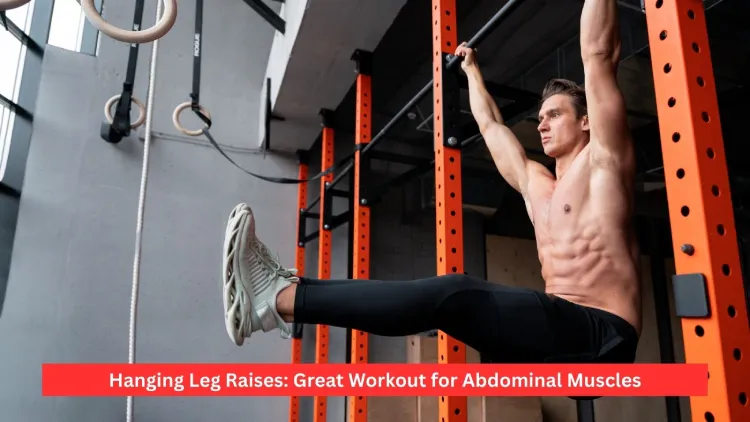

Hanging leg raises are quite an effective exercise that trains the lower and upper abdominal muscles and works on the strength of the hip flexor, the grip and general core stability. It is a very easy but tough exercise that could be done at home or at the gym with little equipment, and this is one of the important exercises that should be added to the fitness regime to create a strong and defined midsection.
- What Are Hanging Leg Raises?
- Advantages of Hanging Leg Raises
- The Proper Technique of Hanging Leg Raise
- Tips for Beginners
- Common Mistakes to Avoid
- Variations of Hanging Leg Raises
- What is the Recommended Frequency of Hanging leg raises?
- Weight Loss and Aesthetic Benefits
- Safety Considerations
- Hanging Leg Raises in the Workout
- Conclusion
- Frequently Asked Questions
What Are Hanging Leg Raises?
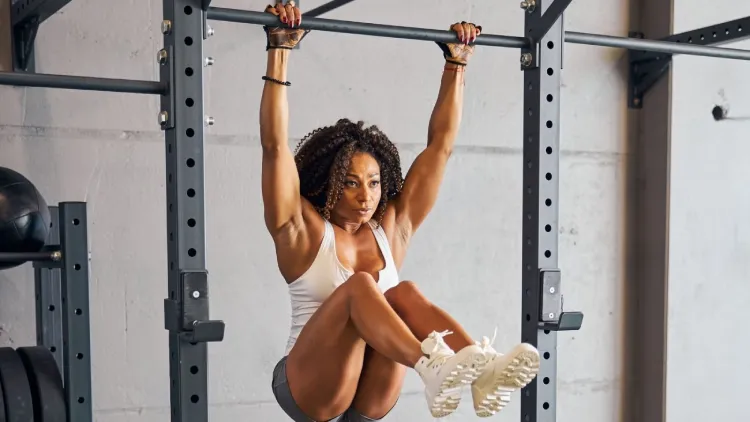
Hanging leg raises are a bodyweight exercise in which you are forced to be suspended to a bar and then raise your legs to your chest. The main target that this movement has is the rectus abdominis, which is the muscle that creates the six-pack appearance, and it also targets the hip flexors, obliques and the shoulder stabilisers. Hanging leg raises are more advantageous to a range of motion than the traditional floor crunches or sit-ups, which assist in building strength and flexibility in the core.
Various ways can be used to adapt the exercise, which are bent-knee raises, straight-leg raises, and twisting leg raises, based on your level of fitness. Novices can begin with knee raises, whereas professional athletes can use straight-leg raises and add weights to the ankles in order to make them resistant.
Advantages of Hanging Leg Raises
Adding hanging leg raises to your exercise plan not only has a variety of aesthetic virtues.
This is the reason why such an exercise is so effective:
1. Strengthens Core Muscles
Hanging leg raises produce a deep core workout as the upper and lower abs are targeted. This is unlike conventional ab exercises, which mainly aim at the upper part, but this exercise targets the lower abdominal area, thereby making it hard to activate. A well-built centre enhances the posture, balance, and overall strength, minimising the chances of injury in other exercises.
2. Enhances the Strength of Hip Flexors
Hanging with the legs raised uses the hip flexors, which play a critical role in such activities as running, squatting, and climbing. Making these muscles stronger increases the mobility of the lower body and athletic performance.
3. Improves the Grip and the Shoulder Strength
Hanging leg raises involve suspending yourself on a bar; hence, your grip, forearms and shoulder stabilisers are all actively involved during the exercise process. In the long term, it enhances general body strength and stamina.
4. Encourages Operational Conditioning
In comparison to exercises of machines, hanging leg raises enhance functional fitness, i.e. the obtained strength can be directly applied to actual life movements. This may also be very beneficial, especially to sportsmen, martial art practitioners and those who want to improve core stability and balance.
5. Minimal Equipment Required
The simplicity of hanging leg raising can be considered one of the greatest advantages. They can be done with a pull-up bar or an overhead support that is strong and, therefore, can be used both at home and at small gyms.
The Proper Technique of Hanging Leg Raise
The correct execution of hanging leg raises will ensure that one attains maximum results and does not get hurt in the process.
Follow these steps:
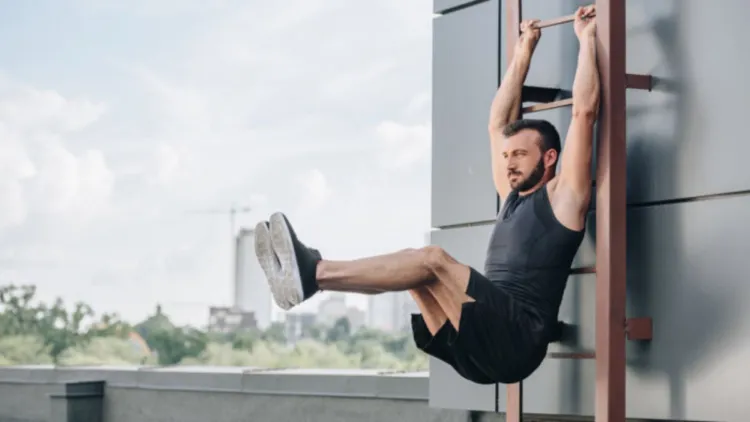
- Begin by holding on to a pull-up bar, using your hands that are at a distance of your shoulders, with your arms stretched all the way.
- Have Sean use the core and have his shoulders just slightly drawn down to avoid tension.
- Pull up your legs one by one, slowly lifting towards the chest, but straight, or slightly bending, according to your flexibility.
- Movement with the leg slowly brings it down to the position of the starting point. Swings should be avoided because of reduced momentum.
- Do the same number of reps that you want.
Tips for Beginners
- Bent-knee raises are to start with, to take the lower-back stress off.
- Movement should be slow and controlled to maximise muscle activity.
- Breathing: exhale, lifting of legs, inhale, lifting of legs.
- Do not use momentum or swing, as this decreases the effectiveness and makes it more prone to injury.
Common Mistakes to Avoid
- Swings: It involves swinging the body, which reduces core work.
- Arching the back: your back needs to be kept straight to prevent lower back tension.
- Partial range of motion: This is achieved by raising legs in the fullest possible way.
- Gripping too hard: When you become an over-gripper, before you get your abs exercised, your forearms fatigue.
Variations of Hanging Leg Raises
Added variations may also add complexity and strike various sections of the core:
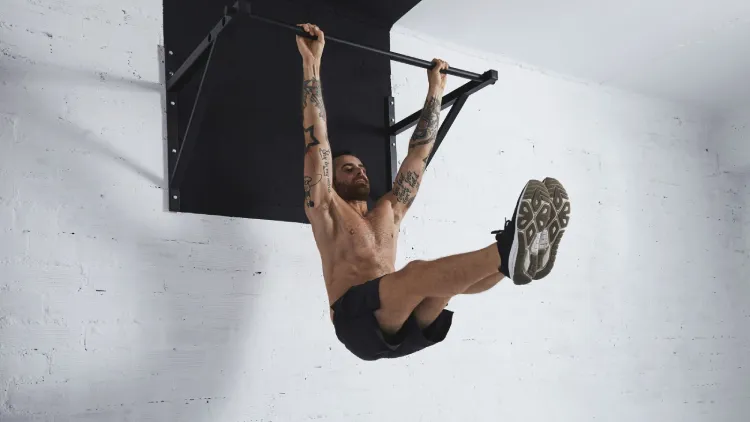
- Knee Raises: Bend your knees and lift, in case you are a beginner.
- Straight-Leg Raises: Straightly raise legs upwards and maximise lower ab.
- Oblique Raise: This time, you will lift, raising your hips as you twist to get at the side abs.
- Weighted Raise: Place ankle weights or carry a medicine ball as an added resistance.
- Toes-to-Bar: Further stage, in which you press your feet against the bar and use the entire core.
What is the Recommended Frequency of Hanging leg raises?
To get the best results, use hanging leg raises; use them 2-3 times a week in your routine. This rate enables your muscles to rejuvenate as well as stimulate growth and strength. Novices could have 2-3 sets of 8-12 repetitions, more advanced trainees could have 3-5 sets of 15-20 and more reps depending on their physical condition.
Hanging leg raises can be combined with other abdominal exercises such as planks, bicycle crunches and Russian twists to give a balanced workout on the abdomen.
Weight Loss and Aesthetic Benefits
Although hanging leg raises will not target fat, they will work well to tighten and shape the abdominal muscles. Together with a healthy diet, cardiovascular workouts, and general fitness, hanging leg raises can be used in order to achieve a more cut-up waist and a more body-built figure.
Also, the abdominal core will aid in posture and muscle balance, which is important in making the abs and the general physique look better.

Safety Considerations
Despite the fact that hanging leg raises tend to be safe, injuries might come about due to a wrong form or over-training.
Care of the following warnings should be observed:
- Before the hanging leg raises, it is a good idea to warm up before straining the muscles.
- Begin at a low pace and then build up in incremental stages so that your hip flexors or lower back do not overwork.
- In case of lower back problems or shoulder injuries, you should seek a professional in the field of fitness to advise you on the exercise.
- It is always good to make form rather than reps the priority.
Hanging Leg Raises in the Workout
Hanging leg raises could be incorporated during the core and strength training programs.
The following is an example of a core routine that makes use of them:
- Warm-up: 5-10 minutes of light cardio.
- Hanging Leg Raise 3 sets of 12 reps
- Plank: 3 sets, 30–60 seconds each
- Bicycle Crunches: sets of 15-20 reps each side.
- Russian Twists: 3 sets of 20 reps
This is the combination that guarantees core activation and gradual strengthening of both upper and lower abdominal muscles.

Conclusion
The hanging leg raises are a good and diverse, and convenient workout and can be performed by anyone who wants to develop a tight and strong core. They aid in functional strength, posture, and overall fitness by focusing on the lower abs, hip flexors, and muscles responsible for muscle stabilisation. Hanging leg raises can become part of your core workout with the need to get the form, gradual advancement, and exercise regularly.
Be it an intermediate, who starts with bent-knee raises, or a professional sportsman who can do toes-to-bar, this is an exercise of unsurpassed value to abdominal strength, looks and functional fitness. Hanging leg raises are a good exercise that you should incorporate in your training regimen to have a core that is stronger, lean as well and resilient.
Frequently Asked Questions
1. Can beginners do hanging leg raises?
Yes, beginners can start with bent-knee raises to reduce lower-back strain and gradually progress to straight-leg raises as their strength improves.
2. How many sets and reps should I perform?
Beginners should aim for 2–3 sets of 8–12 reps, while advanced athletes can perform 3–5 sets of 15–20 reps or more, depending on their fitness level.
3. Can hanging leg raises help with lower abs?
Absolutely. Hanging leg raises are particularly effective for targeting the lower abdominal muscles, which are often difficult to activate with conventional exercises like crunches.
4. Do I need equipment to do hanging leg raises?
Yes, a sturdy pull-up bar or overhead support is required. This exercise requires suspension to lift your legs effectively and safely.