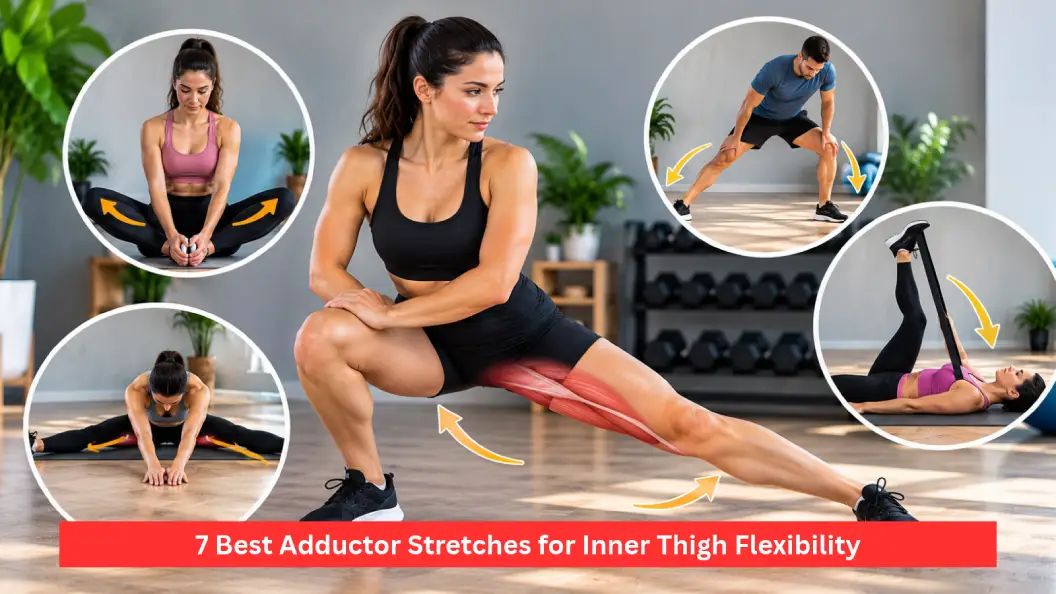

Adductor stretches gently stretch the inner thigh muscles, increase flexibility, and help the hip move comfortably. All of these are basic exercises; no special equipment is required, and they are suitable for beginners.
- What is the Adductor Stretch?
- What Muscles Does an Adductor Stretch Target?
- 7 Best Adductor Stretches to Try
- Which Adductor Stretch Is Best for You?
- Adductor Stretches: Benefits
- Common Adductor Stretch Mistakes
- How Long Should You Hold an Adductor Stretch?
- When Should You Stretch Your Adductors?
- When not to use or change Adductor stretches?
- Conclusion
- Frequently Asked Questions
What is the Adductor Stretch?
An adductor stretch is a stretch of flexibility workout aimed at the muscles in the inside of your thighs that pull your legs to the middle of your body.
These muscles also assist in stabilizing and regulating your hips during walking, turning, or lower-body exercises.
The majority of the stretches for the adductors will require you to pull your thighs apart slowly. One leg can be stretched, or both legs together, depending on the position.
There are two basic methods:
- Static stretching: Maintaining a stretch for a few seconds.
- Dynamic stretching: Slow and repeated, controlled range of motion.
Dynamic stretches can be helpful in a warm-up; static stretches can be helpful after exercise.
It is crucial to stretch comfortably, not so wide that the legs are stretched too far.
What Muscles Does an Adductor Stretch Target?
Your hip adductors are a group of muscles located along the inner thighs.
The main muscles include:
- Adductor longus: Helps draw your thigh inward and contributes to hip movement.
- Adductor brevis: Supports hip adduction and assists with hip flexion.
- Adductor magnus: A large muscle involved in bringing the thigh inward and controlling hip movement.
- Gracilis: Crosses both the hip and knee and helps with hip adduction and knee flexion.
- Pectineus: Assists with hip flexion and adduction.
These muscles work together during everyday activities and exercise.
When you perform a side-lunge stretch, for example, the adductors of your extended leg are placed in a lengthened position.
Although different positions can emphasize different tissues, no single stretch completely isolates one adductor muscle.
7 Best Adductor Stretches to Try
Start with gentle movements and choose positions that feel comfortable for your hips and knees.
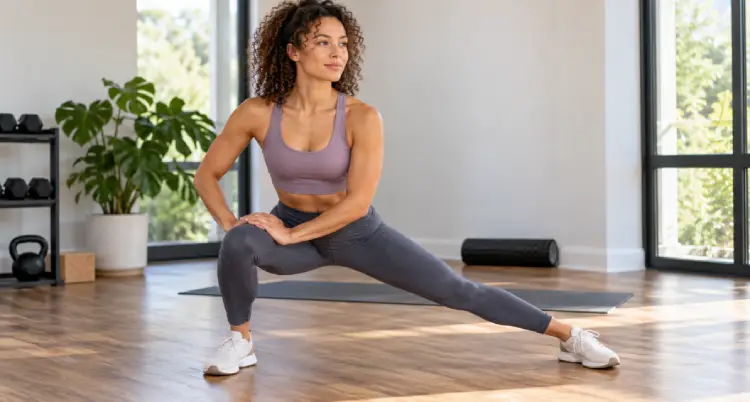
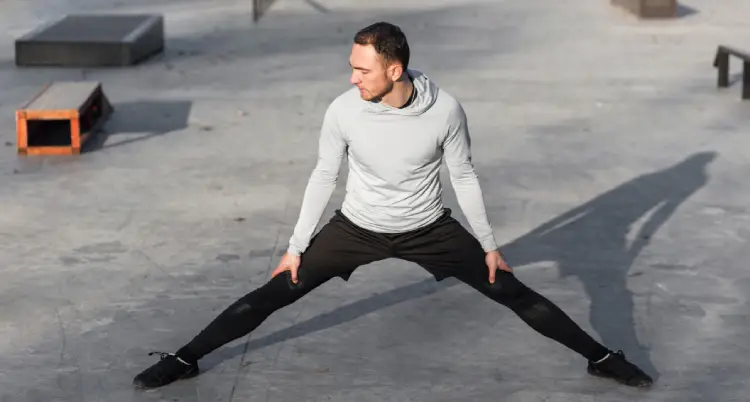
1. Standing Side-Lunge Adductor Stretch
The standing side-lunge stretch is a convenient stretch of one inner thigh at a time.
How to do it:
- Keep your feet spaced more than shoulder width apart.
- Rotate toes toward the front and perhaps slightly outwards.
- Begin to bend the right knee and move towards the right.
- Keep the left leg extended with the left foot on the floor.
- Hold when a comfortable stretch is felt along the inner thigh on the left.
- Hold for 15-30 seconds, then cross over to the other side.
- Maintain a comfortable arch in the chest and don’t cave over into the chest.
For beginners: Keep hands on a solid surface like a chair or countertop for stability.
Best suitable for: General flexibility in the inner thigh and wide stance movements.
2. Seated Butterfly Stretch
The butterfly stretch is one of the most accessible options for beginners.
How to do it:
- Sit on an exercise mat with your back upright.
- Bend your knees and bring the soles of your feet together.
- Hold your feet or ankles gently.
- Allow your knees to relax outward.
- Maintain the position for 15–30 seconds.
You should feel a mild stretch along your inner thighs.
Don’t push your knees aggressively toward the floor.
Beginner tip: Sit on a folded towel if maintaining an upright posture feels difficult.
Best for: Beginners and people who prefer seated stretching.
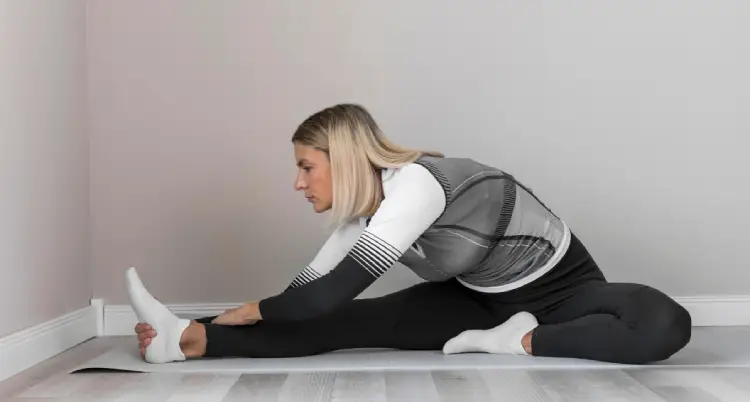
3. Wide-Leg Seated Adductor Stretch
This variation stretches the inner thighs while challenging your ability to maintain a comfortable upright position.
How to do it:
- Sit on the floor with both legs extended.
- Gradually separate your legs into a comfortable V shape.
- Keep your knees relaxed and pointing upward.
- Sit tall, then lean slightly forward from your hips.
- Stop when you notice gentle tension along your inner thighs.
- Hold for approximately 20 seconds.
There’s no need to reach for your toes or lower your chest toward the floor.
Beginner tip: Use a cushion beneath your hips or reduce the width of your legs.
Best for: Exploring seated hip-abduction flexibility.
4. Reclined Butterfly Stretch
If you don’t feel comfortable sitting up, go for a butterfly stretch on your back.
How to do it:
- Rest on an exercise mat.
- Squeeze both knees together, feet on the ground.
- Place the soles of your feet together.
- Slowly allow your knees to move outward.
- Place arms beside your body.
- Breathe as you normally would and hold for 20-30 seconds.
- You’ll feel a subtle stretch around the inner thighs and hips.
Tips for beginners: Use cushions under your knees to make the exercise easier.
Indications for use: gentle, supported stretching.
5. Standing Wide-Stance Adductor Stretch
This exercise stretches both inner thighs while keeping you in a standing position.
How to do it:
- Stand with your feet comfortably wider than your shoulders.
- Keep your toes pointing slightly outward.
- Maintain a small bend in both knees.
- Slowly hinge forward from your hips.
- Stop when you feel manageable tension along your inner thighs.
- Hold for 15–20 seconds before returning upright.
Avoid rounding your back excessively or reaching toward the floor simply to increase the stretch.
Beginner tip: Rest your hands on a sturdy support if balance is difficult.
Best for: People comfortable with basic standing flexibility exercises.
6. Supine Single-Leg Adductor Stretch
This lying-down variation lets you stretch one inner thigh at a time.
How to do it:
- Lie on your back with both knees bent.
- Extend your right leg toward the ceiling.
- Place a stretching strap around your right foot if needed.
- Slowly move your right leg outward toward the right side.
- Keep your pelvis relatively stable.
- Stop at a comfortable stretch and hold for 15–20 seconds.
- Return to the center and repeat with your left leg.
Use your opposite leg and the floor to help stabilize your body.
Beginner tip: Keep the stretching knee slightly bent if a straight leg feels uncomfortable.
Best for: Controlled single-leg stretching with floor support.
7. Dynamic Side-to-Side Adductor Rock
Unlike static stretches, this exercise involves gentle movement between two positions.
How to do it:
- Stand with your feet wider than hip-width apart.
- Keep your torso comfortably upright.
- Bend your right knee slightly and shift your weight toward it.
- Return to the center.
- Shift slowly toward your left leg.
- Continue alternating for 8–10 controlled repetitions per side.
Use a small range initially and avoid bouncing into the deepest position.
Beginner tip: Hold a stable countertop for support.
Best for: Adding controlled side-to-side movement to a warm-up.
Which Adductor Stretch Is Best for You?
| Stretch | Main advantage | Level |
| Standing side lunge | Stretches one side at a time | Beginner |
| Seated butterfly | Accessible seated position | Beginner |
| Wide-leg seated | Explores wide-leg flexibility | Intermediate |
| Reclined butterfly | Comfortable floor support | Beginner |
| Standing wide stance | Stretches both inner thighs | Intermediate |
| Supine single-leg | Controlled single-side stretch | Beginner–Intermediate |
| Dynamic side-to-side rock | Adds active lateral movement | Beginner |
Choose exercises based on comfort, not how advanced they look.
Adductor Stretches: Benefits
Adductor stretches can have a few interesting advantages if incorporated into a well-rounded mobility routine.
1. Improves Inner-Thigh Flexibility
Stretching regularly will help build up tolerance for positions that elongate the adductor muscles.
This will allow wide leg movements to become more comfortable over time.
Adjustments in flexibility typically take practice.
2. Supports Hip Mobility
Your adductors contribute to controlling movement around the hip joints.
Stretching them may help you explore greater comfortable hip-abduction range when restricted adductor flexibility is a contributing factor.
Remember that hip mobility also depends on strength, joint structure, and other muscles.
3. Complements Lower-Body Training
Squats, lunges, and lateral movements involve the hips and inner thighs.
Including adductor stretches alongside appropriate strengthening exercises provides a flexibility component to your routine.
Stretching alone won’t guarantee improved athletic performance or injury prevention.
4. Adds Variety to Your Movement Routine
Many daily activities involve moving forward rather than sideways.
Adductor stretches encourage you to explore different hip positions.
This makes them a practical addition to a broader flexibility program, especially when combined with strengthening and controlled movement.
Common Adductor Stretch Mistakes
A deeper stretch isn’t necessarily a better stretch.
Spreading Your Legs Too Far
Forcing an extremely wide position may create excessive groin tension.
Fix: Start with a smaller range and increase gradually.
Allowing Painful Knee Positioning
Some positions place unnecessary pressure on your knees.
Fix: Adjust your stance, use support, or choose a lying-down variation.
Bouncing Into the Stretch
Aggressive bouncing can make your movements difficult to control.
Fix: Hold static stretches steadily and perform dynamic movements slowly.
Rounding Your Lower Back Excessively
Leaning forward by collapsing your spine can make seated stretches uncomfortable.
Fix: Sit taller, reduce the forward bend, or elevate your hips with a cushion.
Ignoring Groin Pain
Sharp pain isn’t a normal sign of effective stretching.
Fix: Stop immediately if you notice sharp pain, joint pinching, or unusual discomfort.
How Long Should You Hold an Adductor Stretch?
Some healthy adults may find that a 15-30 second static stretch of the adductor is a good amount of time to start with for a comfortable stretch.
Start with 1 or 2 reps on each side.
Generally speaking, it is good to be flexible and practice regularly, but you should not involve extreme positioning or stretching daily.
Begin at 2-3 sessions per week and increase or decrease as tolerated.
When Should You Stretch Your Adductors?
Gentle dynamic movements can be incorporated into the warm-up prior to exercise.
A longer static stretch may be more suitable after exercising or when focusing on flexibility.
Start with some light exercise or walking if muscles are cold or stiff.
When not to use or change Adductor stretches?
Adductor stretching isn’t suitable for every situation.
Take extra precautions with a recent injury to the groin, hip, major joint pain, or recent lower-body surgery.
If it causes sharp pain, numbness, swelling, or symptoms get worse, stop exercise.
Injured individuals should not do general stretching to rehabilitate themselves. A person recovering from injuries should not follow a general stretching routine in lieu of an appropriate health care professional’s advice.
Conclusion
Adductor stretches are a simple way to work on inner-thigh flexibility and comfortable hip movement.
Start with beginner-friendly options such as the seated butterfly or standing side-lunge stretch. Focus on controlled movement, comfortable tension, and consistent practice rather than forcing your legs wider.
With time, these exercises can become a useful part of your regular mobility routine.
For more practical stretching advice and beginner-friendly fitness guides, explore Stretchlee and choose exercises that match your goals.
Frequently Asked Questions
1. What is the most beginner-friendly adductor stretch?
The seated butterfly stretch and supported standing side lunge are good for beginners.
2. How Long Should You Hold an Adductor Stretch?
Hold each stretch for 15–30 seconds without forcing the movement.
3. Are Adductor Stretches Good for Hip Mobility?
They might be beneficial for improving flexibility in the inner thighs and promoting hip movement without discomfort.
4. Can You Stretch Your Adductors Every Day?
Stretching can be done daily, but avoid it if it is painful or uncomfortable.