
One of the best lower-body exercises for strengthening, creating body balance, and flexibility is the split squat. It works the quads, glutes, hamstrings and hips in addition to enhancing core stability and coordination. Split squat Training, whether you train to develop a bigger and more powerful body, athletic power, or functional fitness, the split squat can be used to shape stronger legs and firmer lower body. When the form is perfected, this motion can be as competitive as conventional squats and leg press, and it can outdo these conventional exercises.
- What Is a Split Squat?
- Muscles Worked in Split Squat
- How to do a split Squat Step by Step
- Benefits of Split Squat
- Split Squat Common Mistakes
- Split Squat vs Lunge: What is the difference?
- Split Squat Variations
- Incorporating Split Squats in Your Workout
- Safety and Form Tips
- Final Thoughts
- Frequently Asked Questions
What Is a Split Squat?
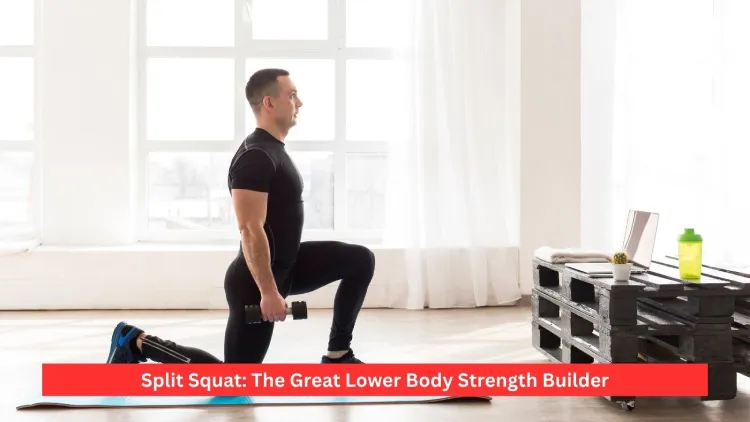
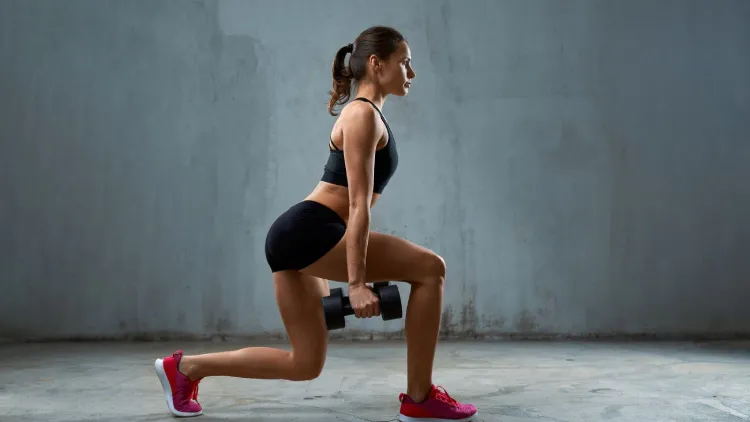
A split squat is a single-leg strength exercise where you stand on one leg, forward, and the other leg back and in an upright position. The movement entails flexing the back knee downward in relation to the floor but keeping your torso straight, thereafter making a push off using the front heel to revert to the original position. The feet would remain stable as compared to lunges.
Such a position makes the stationary design more balanced and more activated in the muscular activities, particularly the glutes and quads. Although the split squat may seem easy, it is a very powerful exercise to develop strength, symmetry, and control in the lower body. It can also be helpful later on to enhance the flexibility of hip flexors and improve athletic performance.
The squat is believed by most fitness enthusiasts to be a poorly appreciated treasure, a compound workout which is a combination of stability and power. You can do it with bare and simple weight of the body, with a dumbbell or a weight bar, and that is all; the training targets and your experience level of the body determine it.
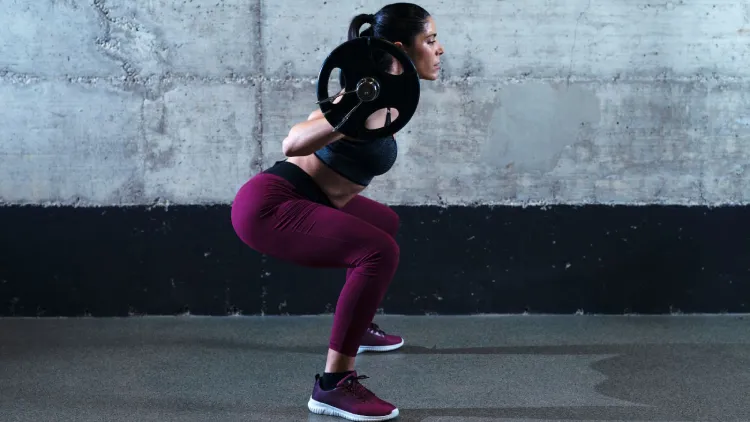
Muscles Worked in Split Squat
The split squat serves multiple important muscle groups, and is, therefore, a very effective exercise for the full leg:
- Quadriceps: These are the front-thigh muscles which do the bulk of the work, whereby you can stretch out your knee to stand up.
- Glutes: Gluteus maximus and gluteus medius are the most active ones and are made to propel the hip and maintain the pelvis.
- Hamstrings: Activities are stabilisers in lowering and rising.
- Hip flexors: Have been stretched deeply and become loose with time.
- Calves: Help to preserve the balance and control.
- Core muscles: These are the muscles that are particularly engaged to stabilise your spine and produce an upright position of the upper body.
Since the squat involves using one leg at a time, it tries to create a correction of the strength imbalances that normal two-legged squats may not address. This subjects it as one of the best selections among athletes and any individual who wants to enhance components of symmetry and coordination.
How to do a split Squat Step by Step
To receive the maximum benefits of a split squat, form is a factor:
- Preparation: Sit on the straight back with feet wide at the hips. Take a step forward with one leg of two or three feet, and make sure that you are steady.
- Position: make the torso straight (with shoulders reclined) and core.
- Lower down: Bring both legs forward, bringing the crook knee to the floor. The front knee is to make contact at the ankle.
- Go deep: Aim at getting 90 90-degree bend of both knees, and this time with the front foot in contact with the ground.
- Rise: Using the front heel, push yourself up so that you are back to the beginning position.
- Repeat: Do 8-12 reps each of the two legs, proceed in 34 sets (resting 3060 seconds between sets).
Hint: You should keep your weight on the front heel, and not the toes. This will keep your glutes active, and your knees will not get strained.
When you are new to this exercise, you should start with bodyweight. Add resistance, squatting on the ground, and gradually on the dumbbells, kettlebells or a barbell.
Benefits of Split Squat
Split squat offers many physical performance advantages:
- Tones the whole lower body: It is a good workout for quads, glutes, hamstrings, and hips.
- Enhances stability and balance: To balance one leg at a time, you have to provide your body with control.
- Develops glute size and strength: The deep range of movement will engage the glutes more than most regular squats will do.
- Develops athletic performance: Increases speed in sprinting, jumping, strength and speed, and rapidness.
- Reduces muscle imbalances: Strengthens on both sides, dominance and non-dominance of the body.
- Orthotics- Helps in improving posture and core integrity: The erect position works your core all the way.
- Enhances functional activity: The divided position representation of real-life activities as climbing stairs or running.
Even others refer to the squat as the queen of all exercises due to its flexibility and efficiency. It makes a full leg machine and develops strength as well as symmetry.
Split Squat Common Mistakes
Although it might seem easy to do, most individuals commit mistakes that either diminish the effectiveness of this exercise or, at worst, make it unpleasant. Avoid these mistakes:
- Knee in front of toes: This puts undue strain on the knee joint.
- A narrow stance limits your motion and balance.
- Bending forward: Minimises the use of the Glutes and can be a strain to your lower back.
- Asymmetry of weight loads: Put emphasis on the forward heel and not the hind foot press.
- Rushing reps: Do slow and controlled movements to have optimum muscle involvement.
Competition Good form does not just make things better; it also helps to prevent injury and maintain healthy joints.
Split Squat vs Lunge: What is the difference?
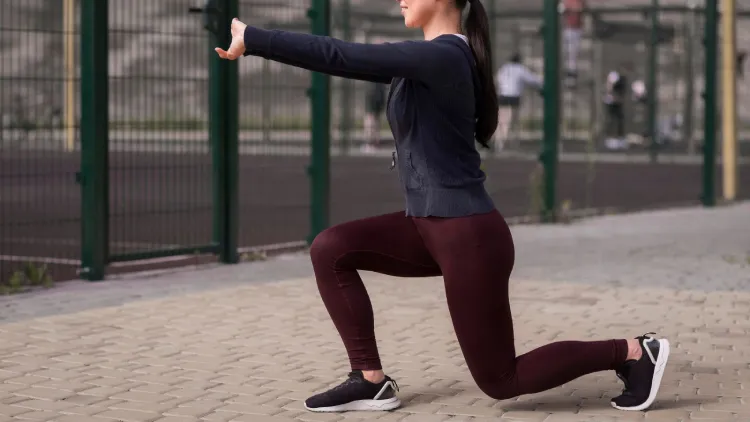
Despite the similarity of the appearance of both exercises, the split squat and the lunge are not that similar in movement mechanics. In split squat, you hold your feet still during the process of the set – you squat down, then body up. In a lunge, forward or reverse steps occur with every cycle, adding more dynamic motion.
It denotes that the split squat is rather balance, control, and strength-oriented, and lunges are focused on coordination of movements and functional stability. The two exercises used are supplementary to each other, whereas split squats are more able to isolate the muscles and activate the quads and the glutes to a greater extent.
Split Squat Variations
After learning the basic split squat, the following are the popular modifications that you can attempt to make the exercise harder and more active:
- Bulgarian Split Squat: Put your back foot on a bench. The version intensifies the load on your front leg and enhances glute activity.
- Front-Foot Elevated Split Squat: Take your front foot high so that your flexibility is increased to reach deeper into the muscle.
- Goblet Split Squat: Gripping a dumbbell, hold it near your chest. This makes it harder, yet more comfortable to hold at this position than a barbell.
- Barbell Split Squat: This type of squatting position becomes more challenging by placing the weight (a barbell) on your shoulders to ready yourself with strength quickly.
- Jump Squat: Between reps, insert an explosive leap to develop power and athleticism.
The Bulgarian split squat, specifically, is considered to work the quads and the glutes hard. It is also used by many women to sculpt and shape the lower body; it involves the hip and glute muscles and is therefore effective.
Though confusion can be made between the Bulgarian split squat and the original one, the elevation is the key, a rather significant difference between the two, as the elevated back leg makes the Bulgarian squat more challenging and glute-centred.
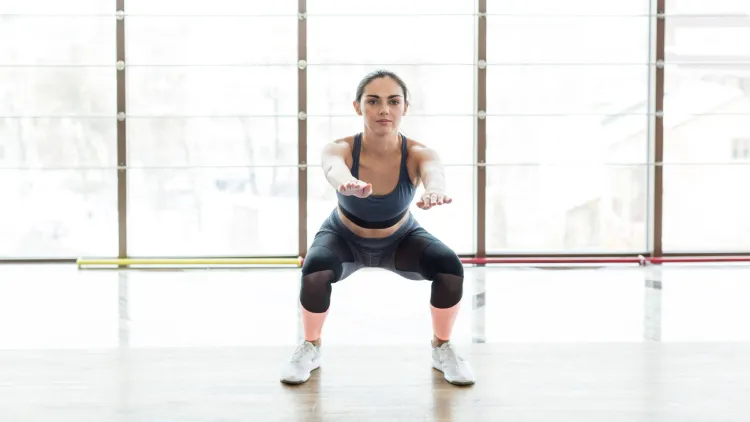
Incorporating Split Squats in Your Workout
The split squat may be included in every exercise program based on what you need:
- Warm-Up: Do some light body height split squats to warm up leg muscles before heavy lifts.
- Leg Day: Weighted split squats are used after such compound exercises as squats or deadlifts.
- Workouts at Home: Ideal when there is little space, no equipment is needed.
- Finisher Sets: Burn your legs and enhance your endurance with high-rep split squats.
- To grow the muscles, target the 3-4 sets of 8-12 reps per leg at the middle to heavy intensity. When you are training to run long distances, then go lighter and do 15/20 reps.
Split squats alone will help you develop massive leg size and glutes. Not only does this make them an excellent substitute for squats, but they are also more helpful to others because the range of movement and unilateral focus is greater.
Safety and Form Tips
- Before doing split squats, warm up your legs; otherwise, it is harmful.
- Maintain a straight posture of the torso; rounding back is to be avoided.
- Do not allow your knee on your front to creep inward; keep it straight with your toes.
- Begin using bodyweight, then move on to either dumbbells or barbells.
- Have a post-workout stretch and flex your hip and butt muscles.
- Form should always be used more than weight. Having fewer quality reps is good, whereas rushing to finish poor reps is not good.
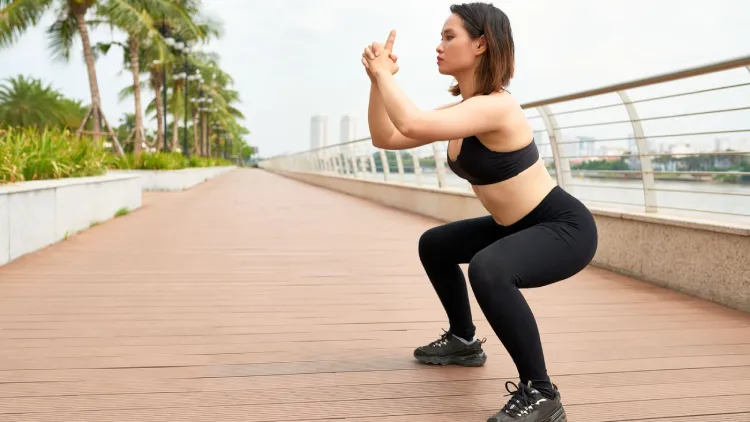
Final Thoughts
Split squat is a wonderful exercise that will give any individual who wants to develop strength, balance and stability in the lower body. It competes with conventional squats and leg presses in the ability to achieve better results when it comes to glute and quad development.
The movement not only helps get larger legs but also improves athletic performance, strengthens the hips, and helps with posture. Skipping to the gym or working at home, include split squats into your mix, and this will enhance mobility and symmetry and power throughout the lower body.
The split squat is one exercise that should be included in every fitness program; indeed, it is practical, demanding and very gratifying.
Frequently Asked Questions
1. What are the most advantageous muscles with split squats?
Split squats are beneficial to your quads, glutes, hamstrings and hips.
2. Is it better than squats that there are split squats?
They may be particularly beneficial for balance enhancement, gluteal engagement, and correcting muscle imbalances.
3. What is the number of split squats?
Begin with 3 or 4 groups of 8-12 reps in each leg. Gradually build up resistance with the growth of strength.
4. Will split squats make big legs and butt?
Absolutely. Split squats are capable of producing well-shaped and hard buttocks with good resistance.